




Can Higher Critical Mineral Prices Create Value Without a Profitable Main Mine?



Higher prices cannot expand critical mineral byproduct supply without viable host mines, processing capacity, and project financing.
- Ruthenium rose from approximately US$560 to US$1,750 per ounce over 12 months as the market faced a forecast 203,000-ounce deficit for 2026, but higher prices cannot independently increase mine supply because the metal is recovered only alongside platinum and palladium.
- More than 90% of mined platinum group metal (PGM) supply comes from South Africa, Russia, and Zimbabwe, so stronger ruthenium demand cannot increase its output unless platinum or palladium prices justify additional mining.
- Building more light rare earth mines cannot increase supplies of dysprosium, terbium, or yttrium when those elements are absent from the orebody, leaving high-temperature magnet manufacturers dependent on separate heavy rare earth sources.
- When a byproduct can be recovered from an existing tailings stream without another mine or processing plant, it can add revenue at limited additional cost that valuations based only on the primary resource may overlook.
- Byproduct potential cannot generate revenue until the host project is financed and built, so developers and explorers with limited funding may need to issue additional shares, diluting existing shareholders even when byproduct grades are strong.
AI Data Center Growth Raises Ruthenium Demand While PGM Co-Production Limits Supply
Ruthenium rose from approximately US$560 to around US$1,750 per ounce over the 12 months to March 2026, while Metals Focus projected a 203,000-ounce deficit for 2026, showing how constrained supply can produce large price moves. The International Energy Agency (IEA) projects global data center electricity consumption to nearly double from 485 terawatt-hours in 2025 to 950 terawatt-hours in 2030, with AI-related consumption tripling as storage expansion raises demand for ruthenium in hard disk drives and platinum in advanced magnetic recording layers.
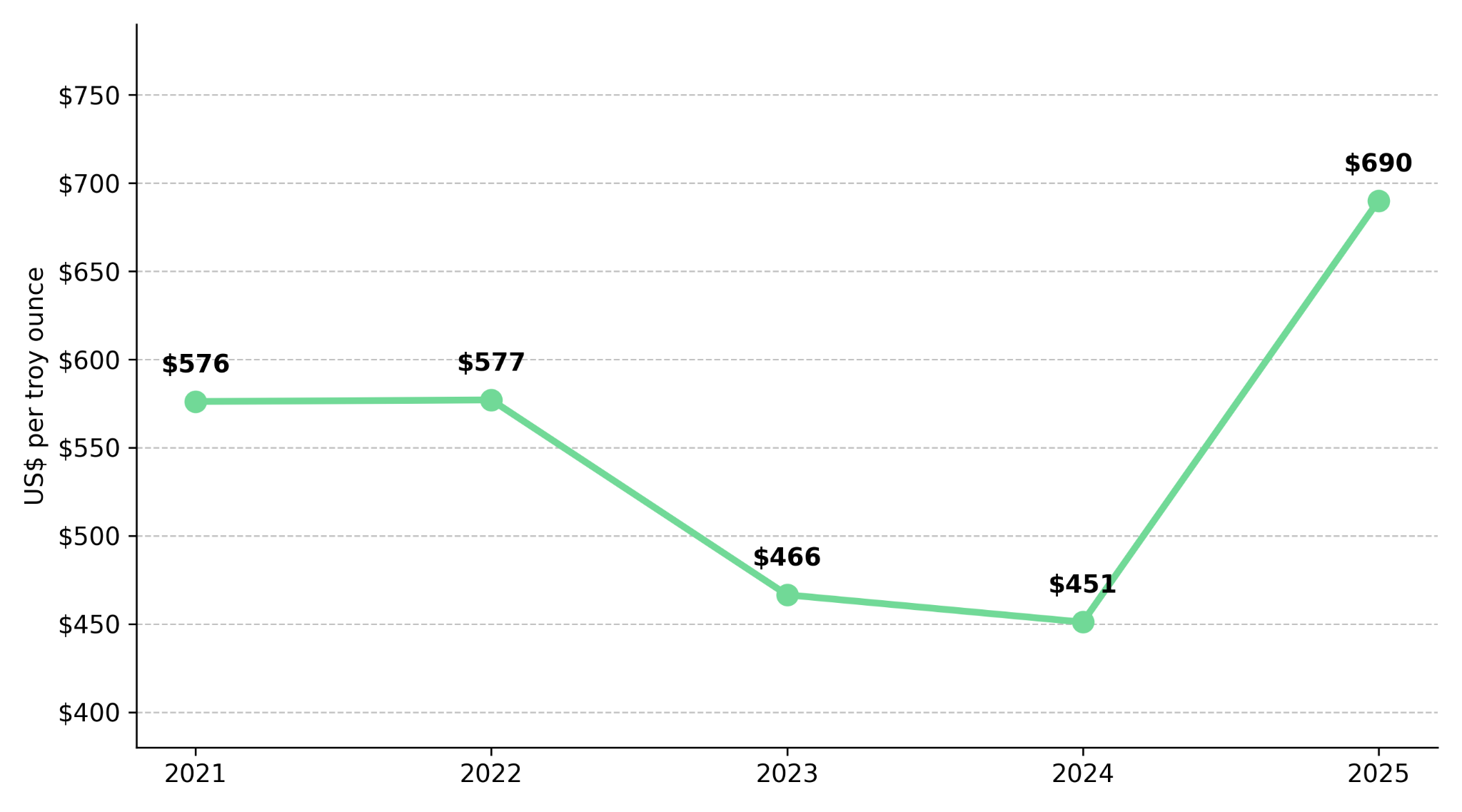
Mine supply cannot respond directly because the six PGMs occur together in different proportions, while platinum and palladium dominate output and determine whether new production is financed. Ruthenium and iridium are scarcer co-products used in applications with few substitutes, but their output cannot increase independently of platinum and palladium production. Data center and electrolyzer demand can raise ruthenium and iridium prices without independently increasing their output, while Johnson Matthey’s 2026 report forecasts iridium to remain in deficit.
Automotive Demand Supports PGM Production While Geographic Concentration Limits New Supply
According to the US Geological Survey (USGS), catalytic converters for internal combustion engine vehicles are the largest US use of PGMs, making automotive demand a key revenue source for the platinum and palladium output that supports South African mine economics. Johnson Matthey’s 2026 report forecasts platinum demand to exceed supply in 2026, while palladium shifts from years of deficit to a small surplus as gasoline vehicle production declines and recycling increases. Because ruthenium and iridium are recovered alongside platinum and palladium, weaker automotive demand could reduce the economic incentive to maintain or expand the co-product supply required for AI data storage and electrolyzers.
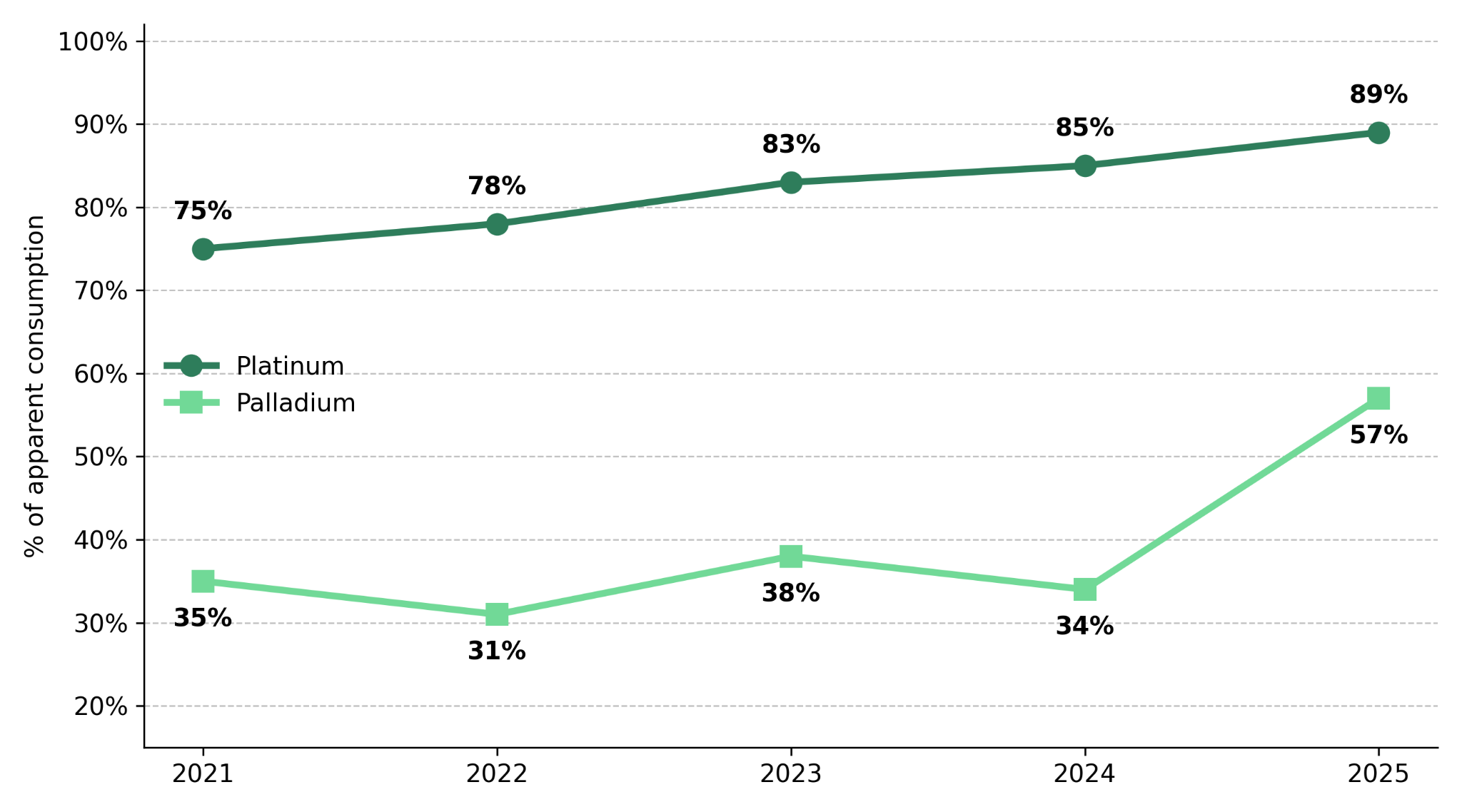
USGS estimates show that South Africa, Russia, and Zimbabwe supplied more than 90% of mined platinum and palladium in 2025, leaving global output dependent on mining decisions in three countries. Only one Montana operation mined and processed PGMs in the US that year, while net import reliance reached approximately 89% for platinum and 57% for palladium, exposing domestic users to foreign supply disruptions. Recycling recovered roughly 140,000 kilograms of platinum and palladium globally in 2025 and can respond to higher prices without financing a new mine. However, spent catalytic converters recover platinum, palladium, and rhodium rather than the ruthenium and iridium required by AI data storage and electrolyzers, limiting recycling’s ability to relieve shortages in those metals.
ValOre Metals is advancing the Pedra Branca Project toward a preliminary economic assessment (PEA) targeted for the fourth quarter of 2026. Its current March 8, 2022 inferred resource contains 2.198 million ounces of palladium, platinum, and gold in 63.6 million tonnes grading 1.08 grams per tonne. Five additional zones drilled in 2023 are excluded from the current estimate, so the planned resource update will determine whether the stated resource has increased, while the PEA will provide an initial assessment of project economics. Thiago Diniz, Vice President of Exploration at ValOre Metals, explains why geographic diversification matters to PGM supply:
“Palladium and platinum are produced only in certain regions of the globe. Being able to advance a project outside of that small space is actually an opportunity.”
China’s Heavy Rare Earth Supply Control Exposes the Limits of Light Rare Earth Mines
Outside China, dysprosium, terbium, and yttrium are not produced at commercial scale as standalone products, so higher prices cannot independently increase supply. MP Materials reports no measurable quantities of these elements in its orebody, showing that light rare earth capacity cannot fill the heavy rare earth gap. China shipped no dysprosium oxide to Japan for nine months and no terbium oxide for eight. On February 24, 2026, Michael P. Cadenazzi Jr., US Assistant Secretary of War for Industrial Base Policy, said China controls 95% of global heavy rare earth output, while the US imports almost all of its requirements and sources 90% from China, leaving US manufacturers exposed to Chinese export restrictions.
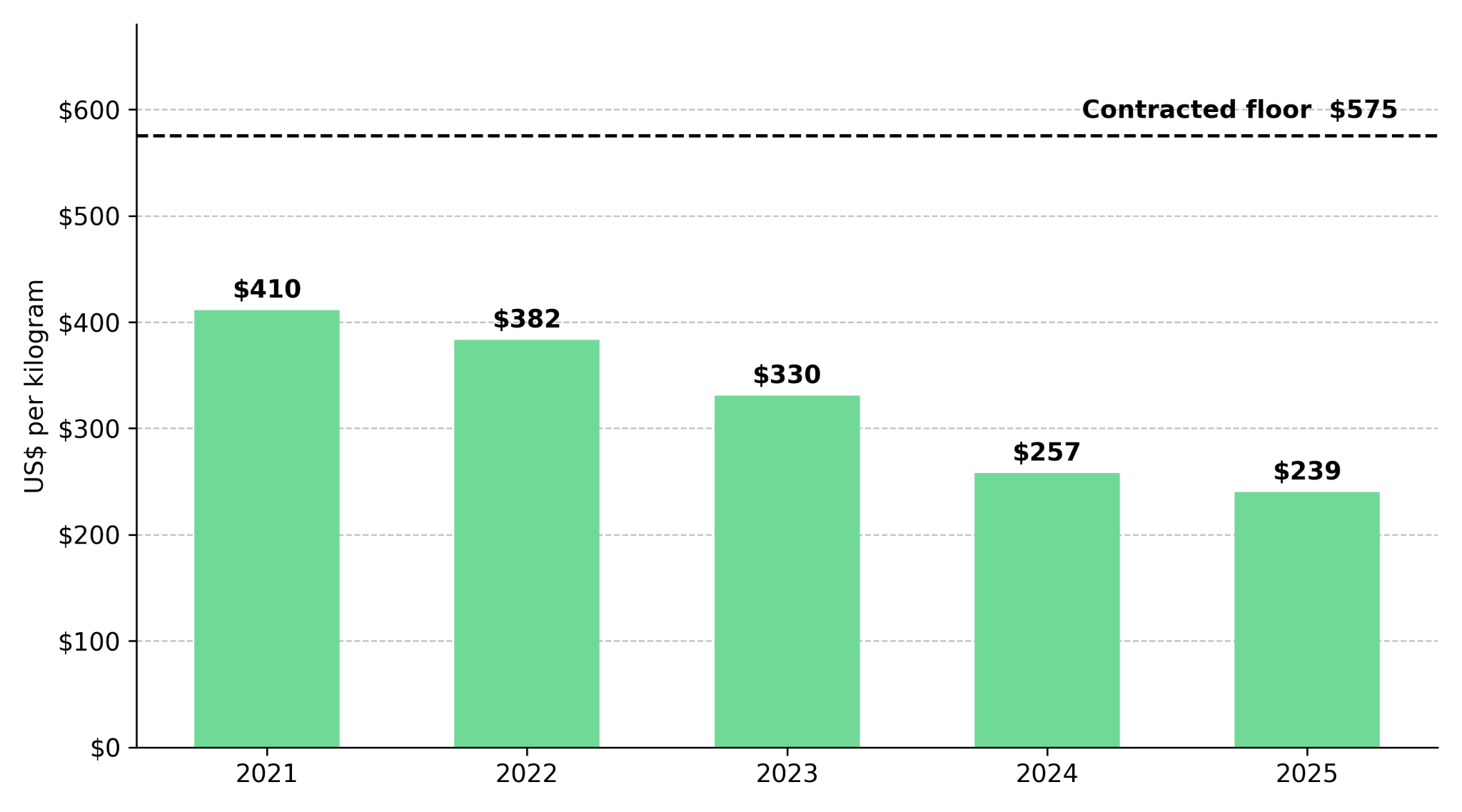
Benchmark Mineral Intelligence’s second-quarter 2026 Rare Earths Forecast concluded that price floors can support light rare earth mines, but new heavy rare earth capacity requires higher ex-China prices for dysprosium and terbium to justify production. A price floor can protect the minimum selling price of a primary product, but it cannot create co-product supply unless the host mine or plant is operating. Government-backed floors of US$575 per kilogram for dysprosium and US$2,050 per kilogram for terbium have therefore been tied to named counterparties rather than offered across the market, directing support toward specific sources of supply.
Energy Fuels announced that terbium oxide produced at its White Mesa Mill passed qualification by one of the world’s largest rare earth permanent magnet manufacturers outside China, requiring no further validation for commercial use. Following earlier qualification of its neodymium-praseodymium and dysprosium oxides, the milestone reduces product-acceptance risk and moves the company closer to supplying a broader range of high-value magnet materials through an ex-China supply chain. Mark Chalmers, President and Chief Executive Officer of Energy Fuels, explains why integrated processing matters for supply security:
“To really compete with China, you have to have all those steps. You can’t be missing a step in the middle of it. We’ve got all the skill sets required, from mining all the way through alloys.”
Rutile Economics Lower Graphite Costs While Tailings Preserve Heavy Rare Earth Upside
A co-product can add value when the host project is economical without it, the material already enters an existing processing or tailings stream, and recovery requires no additional mining, primary processing circuit, or separate refinery. When these conditions are met, recovery can add revenue with limited additional capital because the host project already carries the main mining and processing costs. If recovery requires new infrastructure, the co-product becomes a separate capital commitment whose returns must be demonstrated before it adds value.
Sovereign Metals completed the Kasiya definitive feasibility study (DFS), outlining a pre-tax net present value at an 8% discount rate (NPV8) of US$2.2 billion against US$727 million in capital to first production, a 23% internal rate of return (IRR), and operating costs of US$450 per tonne over an initial 25-year mine life. The results strengthen the project’s development case by showing that rutile and graphite support the base economics, while potential heavy rare earth recovery offers additional value not included in the DFS. Ben Stoikovich, Chairman of Sovereign Metals, describes the scale of known graphite supply:
“Graphite isn’t scarce. In 2023, natural graphite demand was 1.6 million tonnes, but global known resources were over 800 million tonnes.”
Price Floors & Stockpiles Support Output but Leave Byproduct Supply Unfunded
US and allied policy now relies on price floors and strategic stockpiles to support primary products, directing assistance toward materials already planned for production. The July 2025 US Department of Defense agreement with MP Materials sets a 10-year minimum price of US$110 per kilogram for neodymium-praseodymium, while the revised 2026 agreement between Lynas Rare Earths and Japan Australia Rare Earths applies the same minimum through 2038 and shares 30% of revenue above US$150 per kilogram, capped at US$10 million annually. These contractual floors reduce price risk for the named primary producers but do not apply across the wider market or independently create co-product supply.
Backed by a US$10 billion loan from the Export-Import Bank of the US, Project Vault will buy qualified materials selected from the USGS list of 60 critical minerals when prices are low and release them during supply disruptions, with purchase volumes tied to commitments from participating industrial companies. S&P Global’s May 2026 report notes that each critical mineral has different quality and processing requirements, so stockpiling low-purity ore cannot protect manufacturers unless facilities can process it into qualified material. Price floors and stockpiles support material that is already produced, but neither finances the host mine needed to increase co-product supply.
China’s suspension of the export controls under Ministry of Commerce Announcement No. 70 of 2025 expires on November 10, 2026, the same day the US suspension of higher reciprocal tariffs ends, creating a defined date for renewed policy risk. . IEA estimates that full implementation of the expanded controls could place approximately US$6.5 trillion of annual manufacturing output outside China at risk. If the controls return, restricted co-product prices could rise, but supply would remain tied to host mine output, limiting the volume response. Project value therefore depends more on host orebody quality, incremental recovery costs, and financing capacity than on co-product spot prices, because those factors determine whether new supply reaches the market.
The Investment Thesis for Critical Minerals
- Ruthenium, iridium, dysprosium, and terbium are recovered mainly as co-products, so higher prices cannot increase their output unless production of the host metals also expands.
- Producers with licensed processing facilities can turn existing co-product material into oxides approved by customers without building a dedicated mine, reducing the time and capital required to reach commercial sales.
- Developers can gain additional value from co-products recovered from an existing tailings stream when the primary products already support the project’s economics and recovery requires little additional capital.
- Explorers with multi-metal resources outside dominant producing regions may provide new sources of co-product supply, but project value remains uncertain until an economic study shows that the host metals can support development.
- Government price floors and strategic stockpiles support material that is already being produced, but they do not finance the host mines required to increase co-product supply.
- Companies with limited cash relative to project costs may need to issue additional shares to fund development, diluting existing shareholders even when the underlying metal prices rise.
Ruthenium prices tripled, terbium was quoted near US$1,000 per kilogram in China, and dysprosium shipments to Japan stopped for nine months, yet supply remained tied to host mines and processing streams. Valuation should therefore start with the host project: whether primary-product economics justify construction, whether the byproduct can be recovered through an existing process at limited additional cost, and whether the balance sheet can fund development without excessive shareholder dilution. Byproduct prices can increase upside, but host-asset quality and financing capacity determine whether that value reaches shareholders.
TL;DR
Ruthenium, iridium, dysprosium, and terbium cannot respond independently to higher prices because output depends on host mines and processing streams. AI data storage, magnets, and strategic manufacturing are increasing demand while platinum group metal production remains concentrated and China controls most heavy rare earth supply. Existing licensed processing can shorten the route to qualified material, while rutile-supported graphite and tailings recovery can add value when the host project already supports development. Price floors and stockpiles protect existing output but do not finance new host mines. Project economics, recovery costs, processing capability, and financing capacity therefore determine whether higher prices create actual supply.
FAQs (AI-Generated)
Analyst's Notes





Subscribe to Our Channel











Stay Informed



