




Proposed EU Battery Regulations Could Open New Markets for Diversified Miners


Nickel, lithium, and graphite projects could support Europe’s battery plans through secured funding, competitive costs, and processing access.
- Proposed European Union (EU) battery-origin requirements would link access to certain public procurement and support schemes to EU-made components, creating an incentive to invest in battery materials alongside cell factories.
- S&P Global Mobility’s September 2026 study estimates EU cathode active materials (CAM) supply could cover roughly half of 2030 demand in its lower-demand public- and corporate-fleet scenario, supporting investment in additional CAM capacity.
- Geographically diversified nickel, lithium, and graphite projects could expand future sourcing options for battery manufacturers, provided downstream facilities can convert their output into qualified battery materials.
- Funding for engineering, permitting, and equipment orders helps developers prepare for construction while limiting reliance on future capital raises.
- Competitive delivered costs support project margins, while eligibility for procurement and support incentives under the proposal depends on component-origin rules rather than mining location alone.
Proposed EU Battery Rules Encourage Investment in Upstream Supply
The proposed Industrial Accelerator Act (IAA) would tie access to certain public procurement and support schemes to EU-origin requirements for vehicle and battery components, creating an incentive to fund battery-material production alongside cell assembly. Competitively priced materials and reliable mineral supply also help manufacturers control production costs.
The September 2026 study IAA Impact Assessment: European Battery Supply Chain Outlook, prepared by S&P Global Mobility for the European Automobile Manufacturers’ Association (ACEA), identifies gaps in EU cathode materials, anode materials, and graphite processing. Expanding these facilities could create additional markets for diversified nickel, lithium, and graphite feedstock.
EU Content Requirements Increase the Need for Battery-Material Capacity
Under the European Commission’s proposed IAA, covered vehicle procurement and support schemes would initially require at least three EU-origin battery components, including cells, rising to at least five, including cells, CAM, and battery-management systems (BMS). Making CAM origin a condition for eligibility would encourage investment in cathode-material capacity alongside cell factories.
Under the study’s lower-demand Public Core scenario, which covers public and corporate fleets, EU CAM supply would meet approximately half of 2030 demand. The study also identifies capacity gaps in precursor cathode active materials (pCAM), anode active materials (AAM), and graphite processing, supporting investment in the facilities that convert mineral feedstock into battery materials.
Partner-Country Origin Rules Could Expand Eligible Battery Sourcing
The proposed IAA would recognize qualifying content from EU free-trade or customs-union partners as equivalent to EU origin for covered procurement and support schemes. Public procurement would also recognize qualifying content under the Agreement on Government Procurement (GPA), where relevant EU commitments apply. Eligibility would depend on product or component origin under EU customs rules and any country exclusions, rather than mine location alone.
The study models localization phases beginning in 2027 and 2030, while the proposed IAA would apply the initial battery requirements six months after entry into force and the expanded requirements three years afterward. Financing and sourcing plans therefore need to reflect the eventual legal timetable.
Battery Chemistry Choices Shape Future Nickel Demand
Of the 18 planned European gigafactories identified in the study, 13 focus on nickel-manganese-cobalt (NMC) batteries, indicating potential demand for nickel inputs. The study also projects lithium-iron-phosphate (LFP) batteries reaching approximately 40% of the EU vehicle-production mix by 2036. Battery-related sales potential for nickel projects therefore depends on customers’ battery chemistries and purchase volumes.
Nickel Demand Strengthens the Case for Construction Preparation
Canada Nickel selected Komatsu and SMS Equipment on September 14 to supply Crawford’s mining fleet, advancing preparations for a targeted 2027 construction decision. The company expects to finalize equipment, support and fleet-financing agreements by the first quarter of 2027 (Q1 2027). The suppliers’ experience and technologies are expected to reduce start-up risk and diesel consumption, supporting a more efficient transition into operations.
Lifezone Metals advanced construction preparations at Kabanga in Tanzania, releasing approximately US$854 million in contracts for bidding and progressing financing discussions with international development lenders and export credit agencies. Its July 29 update targets a final investment decision (FID) in the first quarter of 2027 (Q1 2027), subject to lenders’ assessment of an amended government agreement. The company also filed an application for Strategic Project status under the Critical Raw Materials Act (CRMA), alongside work to secure construction funding.
Ingo Hofmaier, Chief Financial Officer of Lifezone Metals, highlights demand for nickel outside Indonesia and China:
“There's plenty of demand outside Indonesia and China. China has started dominating some of the supply chain aspects, especially around batteries, but they're also very strong in stainless steel.”
Battery Localization Favors Lithium Projects With Secured Funding
Both NMC and LFP batteries require lithium, giving lithium suppliers potential customers across both chemistries. Concentrate requires conversion into battery-grade chemicals, making processing access and conversion costs central to its commercial value.
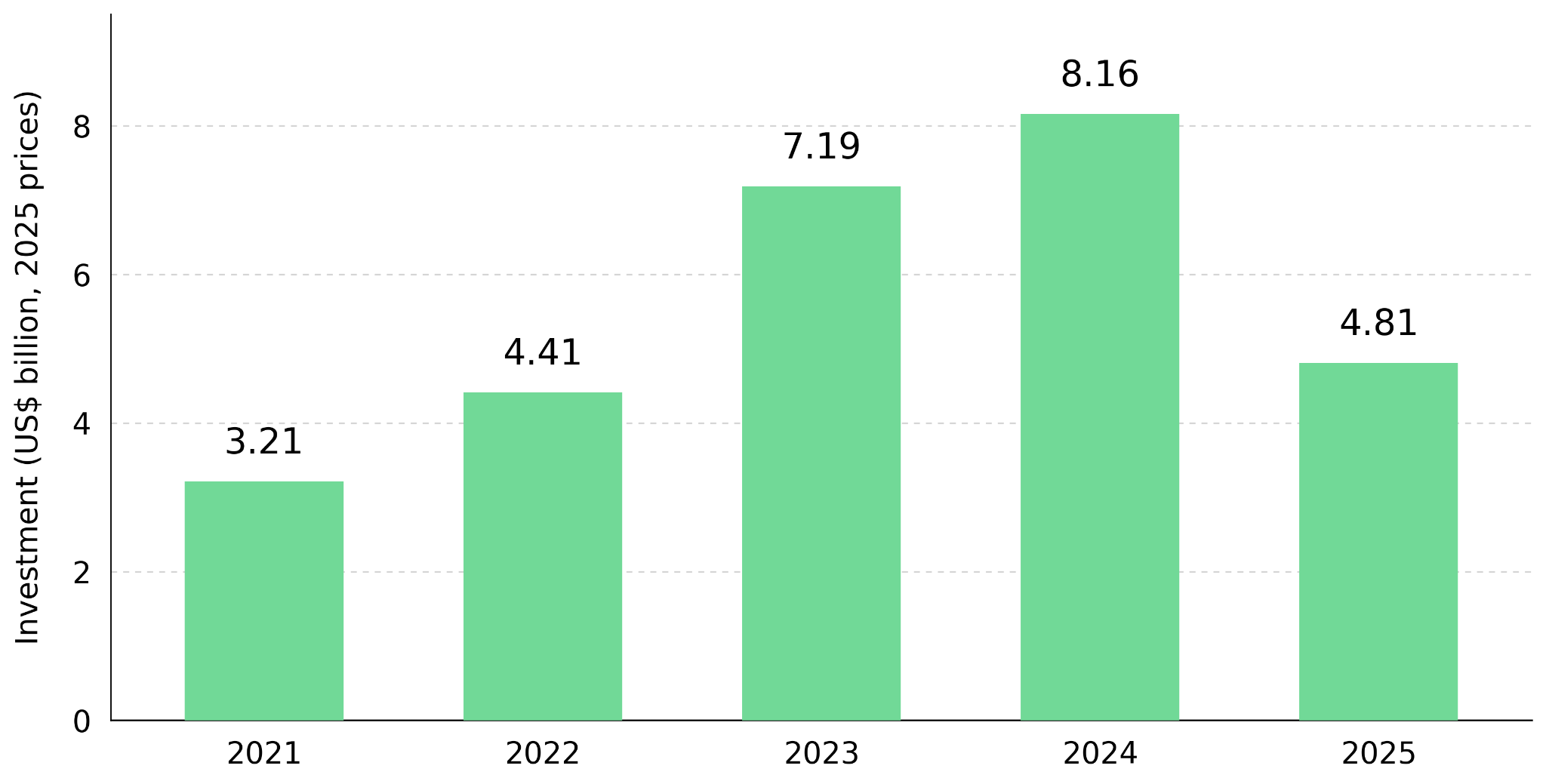
The International Energy Agency (IEA), in its Global Critical Minerals Outlook 2026, reports that lithium-company investment fell approximately 40% in 2025 and battery-metal capital spending fell more than 20%. Secured cash allows explorers advancing toward development to fund engineering, permitting, and early equipment orders while arranging construction financing.
Lithium Ionic’s August 25, 2026, sale-completion announcement confirmed receipt of US$30 million from its Salinas divestment, strengthening its balance sheet without issuing new shares as it advances Bandeira toward a construction decision. The transaction also includes US$7.5 million in deferred consideration and a retained 2% royalty, preserving potential income from future production at the sold properties.
Graphite Processing Concentration Favors Diversified Supply Routes
The study identifies capacity gaps in EU AAM production and graphite processing, while the IEA’s 2026 outlook reports that China accounts for more than 90% of global graphite refining supply. Additional mining sources can broaden feedstock options as processing facilities expand their capacity to produce qualified anode materials.
Natural graphite shares the anode market with synthetic material, so battery demand does not translate directly into demand for mined graphite. Concentrate suppliers can serve downstream processors without owning anode plants, provided their products meet buyers’ specifications and delivery requirements.
Sovereign Metals’ September 25, 2026, annual report confirmed completion of Kasiya’s Definitive Feasibility Study (DFS). At full capacity and on a 100% project basis, the DFS models annual graphite production of 275,000 tonnes and operating costs of US$450 per tonne of combined rutile and graphite output, including transport to the Port of Nacala. Planned use of existing rail and port infrastructure supports access to export markets.
European Cell-Cost Premiums Favor Competitive Battery Inputs
The study’s September 2026 cost comparison reports European-manufactured cell costs up to 26% higher for NMC and 33% higher for LFP than lower-cost global imports. Higher battery costs can compress vehicle manufacturers’ margins or raise vehicle prices, reinforcing the need for competitively priced materials and processing. Feedstock suppliers can compete for orders by controlling mining and delivery costs, while buyers must also account for conversion and qualification expenses.
EU Raw Materials Targets Support Diversified Battery Metals Investment
The CRMA sets 2030 EU capacity benchmarks of at least 10% of annual strategic raw-material consumption for extraction, 40% for processing, and 25% for recycling. Its diversification benchmark calls for no more than 65% of annual consumption from a single third country, supporting a broader supplier base.
The CRMA’s Strategic Project framework includes developments outside the EU, with selected projects eligible for support in accessing finance. Recognition can assist project financing, while the proposed IAA separately governs component-origin eligibility for covered procurement and support schemes.
The Investment Thesis for Battery Metals
- Developers and explorers could expand future nickel, lithium, and graphite supply for Europe’s battery industry, provided their feedstock meets processing customers’ requirements and can secure commercial buyers.
- Geographically diversified projects can broaden sourcing options in concentrated mineral markets, while export infrastructure and permitting progress help determine delivery costs and the timing of production.
- Secured funding allows prospective suppliers to advance engineering, permitting, and equipment procurement before arranging the larger financing package needed for construction.
- Competitive mining, conversion, and transport costs support supplier margins, while metallurgical recovery affects how much saleable material a project can produce from its ore.
- Coordinating mine commissioning with customer qualification and processing capacity reduces the risk of producing feedstock before buyers can use it, supporting the timely start of sales revenue.
Europe’s proposed battery-localization rules would strengthen the case for investment in the mineral supply and processing facilities needed to support cell production. Diversified nickel, lithium, and graphite projects could gain new commercial opportunities as manufacturers expand their sourcing options, with disciplined spending and competitive delivered costs supporting their ability to serve those markets. The long-term investment opportunity lies in connecting resource development with processing capacity and qualified customers, turning additional mineral supply into revenue as Europe builds its battery industry.
TL;DR
Europe’s proposed battery-origin rules would encourage investment in materials and processing alongside cell factories. Expanding cathode and anode capacity could create future customers for geographically diversified nickel, lithium, and graphite supply. Secured funding helps projects advance engineering, permitting, and procurement, while competitive delivered costs support their ability to win orders. Nickel’s opportunity depends on battery chemistry, and graphite requires further processing and customer qualification. The investment case rests on connecting mineral projects with viable processing routes and buyers. EU-origin eligibility depends on the final component-origin rules, rather than mining location alone.
FAQs (AI-Generated)
Analyst's Notes





Subscribe to Our Channel








Stay Informed


