




Chesapeake Gold Awaits Phase 3 Results That Could Unlock Metates


Chesapeake's oxidative leach tech cuts Metates capex 90% to $360M, boosts recovery to 74% gold. Third-party licensing underway; Mexican permits improving. PFS advancing.
- Metates hosts over 500 million ounces of silver (ranked #1 globally) and 19 million ounces of gold (ranked #18 globally), making it one of the largest precious metals endowments worldwide
- Proprietary oxidative leach technology supports reducing the capital requirements on Metates from $3.5 billion to $360 million while solving long-standing refractory ore challenges
- Technology results published to date have improved gold recovery from 33% to 74% and silver recovery from 35% to 50%, with Phase 3 results showing further improvements
- Third-party licensing strategy targeting 200+ refractory deposits; three companies currently testing technology with results expected in two months
- Mexican permitting environment improving under Sheinbaum administration; metallurgical hurdles resolved; PFS work advancing
Chesapeake Gold Corp. is advancing one of the world's largest undeveloped precious metals deposits through a proprietary technology that addresses refractory ore processing challenges that have stymied development attempts since 1980. In a recent interview, CEO Jean-Paul Tsotsos and Chief Metallurgical Officer Justin Black outlined how the company's oxidative leach technology has transformed the economics of the Metates project while creating a potentially significant licensing business targeting similar deposits globally.
The Metates deposit in Mexico represents a world-class precious metals endowment that has frustrated development efforts by multiple major mining companies over four decades. The refractory nature of the ore - where gold and silver are locked within sulfide minerals that resist conventional processing - made previous development attempts economically unviable. Chesapeake's technology-driven approach appears to have cracked this metallurgical challenge while dramatically reducing capital requirements.
The Metates Deposit: A Global-Scale Precious Metals Endowment
Metates ranks as one of the largest precious metals deposits globally, containing over 500 million ounces of silver and approximately 19 million ounces of gold. These figures place the project first globally for silver endowment and 18th for gold. The deposit was discovered in 1980, but its refractory nature prevented successful development by many developers despite multiple attempts spanning decades.
The deposit's scale attracted investor Eric Sprott, who maintains a significant position in Chesapeake Gold. The company's challenge has been finding an economically viable processing solution that could unlock value from ore that delivers only 33% gold recovery and 35% silver recovery through conventional methods.
Technology Evolution: From $3.5 Billion to $360 Million
Chesapeake initially pursued a traditional pressure oxidation (POX) autoclave route, completing a prefeasibility study in 2016. That scenario envisioned a $3.5 billion capital expenditure for a 90,000 ton-per-day operation requiring a desalination plant on the Pacific coast, water pipeline infrastructure, and an on-site power plant. While technically viable, the project presented formidable financing and permitting challenges.
Chairman Randy Reifel recognised the need for an alternative solution, leading to the in-licensing of oxidative leach technology from Alderley through a 2020 merger. In 2024, Chesapeake acquired the underlying intellectual property portfolio outright from Hycroft, bringing the technology fully in-house. This acquisition included nearly a decade of development work and $50 million in combined investment to datebetween Hycroft and Chesapeake.
The revised development plan based on oxidative leach technology targets a 15,000 ton-per-day starter operation with $360 million in capital requirements. This step-wise approach significantly reduces water requirements, eliminates the need for on-site power generation, and creates a more manageable permitting pathway.
Metallurgical Performance: Proven Results at Hycroft and Metates
Justin Black joined Chesapeake after nearly a decade developing the oxidative leach technology at Hycroft, where he served as Chief Metallurgical Officer. At Hycroft, the technology successfully increased recovery from 20-25% to over 80% through extensive column testing and nearly one million tons of commercial-scale test pad operations.
At Metates, baseline recoveries of 33% gold and 35% silver have been improved to 74% gold and 50% silver using the technology. Phase 3 testing currently underway shows further improvements in both recovery rates and processing kinetics. Black indicated that preliminary results demonstrate better recoveries achieved in shorter timeframes, though final assay results are pending.
"The recovery is going to be better than that. The timeline to achieve that's going to be better," Black stated regarding Phase 3 results expected within two months.
Critically, both executives emphasised that metallurgy is no longer the constraint on project advancement. Black confirmed: "This is no longer a technology issue." The company has commenced prefeasibility study work, with completion dependent primarily on regulatory processes with the Mexican government rather than technical uncertainties.
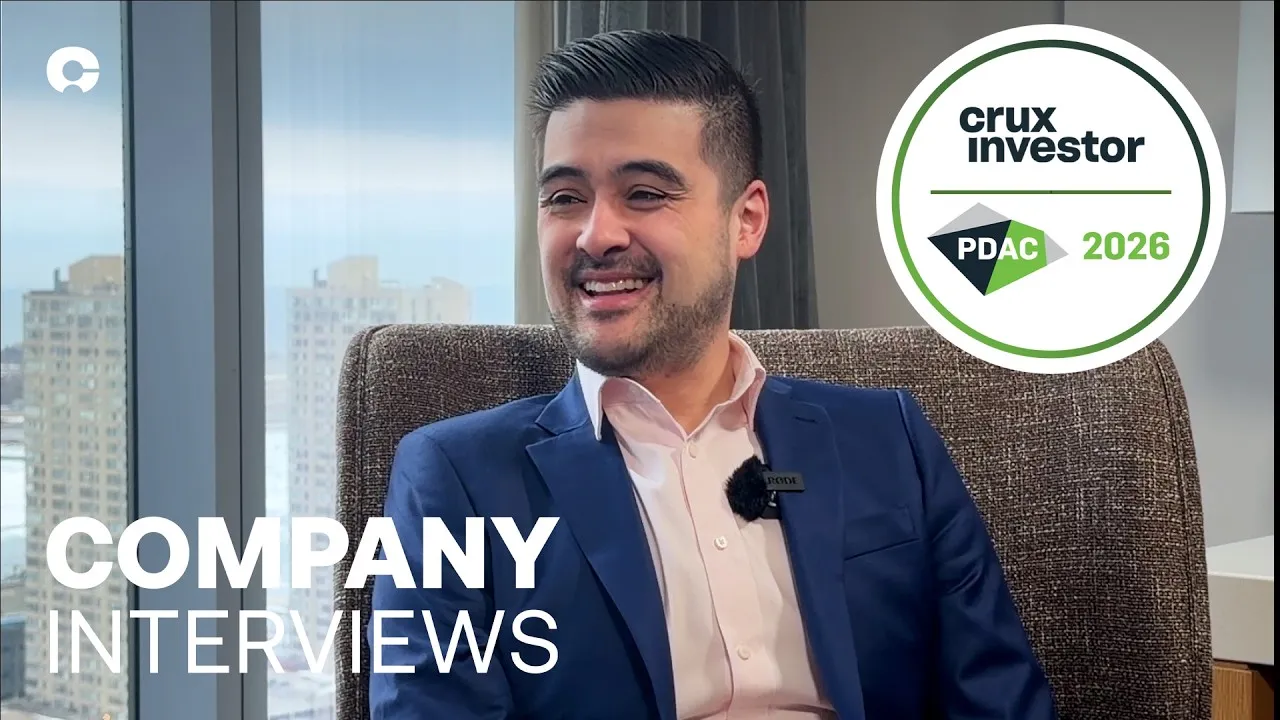
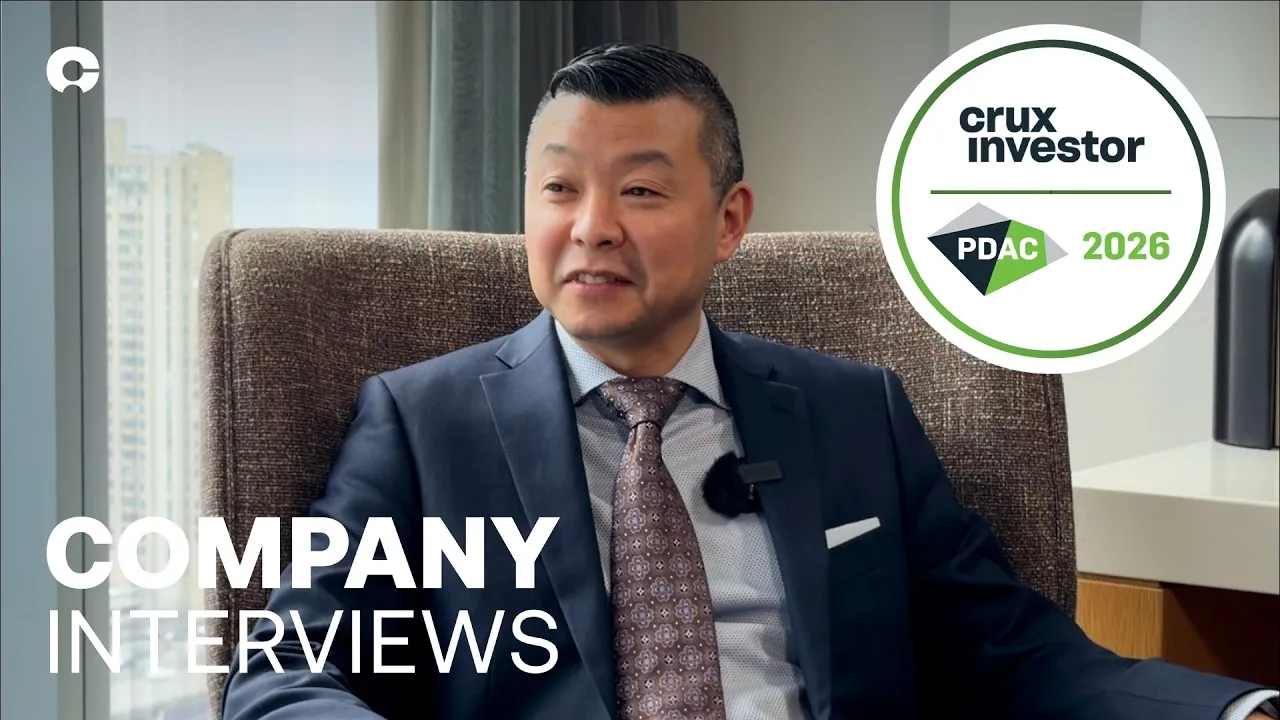
Interview with Jean-Paul Tsotsos, CEO & Justin Black, CMO, Chesapeake Gold
Third-Party Licensing: Creating a Parallel Revenue Stream
Chesapeake is pursuing a technology licensing strategy that serves dual purposes: validating the technology at operating sites ahead of Metates development while creating potential revenue through royalties and equity participation. The company has compiled a database of approximately 200 refractory deposits where the oxidative leach technology may be applicable.
Three companies are currently conducting amenability testing - all existing mining operations facing refractory ore challenges, typically having depleted oxide resources while possessing remaining sulfide material. Results from these third-party programs are expected within two months.
The commercial framework offers flexibility based on jurisdiction and partner preferences. Licensing arrangements may include net smelter return royalties, technical support services on a cost-plus basis, and participation in incremental recovery value. Alternatively, Chesapeake may take minority equity positions where jurisdictional risk is acceptable and partnership makes strategic sense.
The capital requirements for third-party sites should be substantially lower than Metates given existing infrastructure, equipment, permits, and workforce. Black noted these sites might require only a tenth of Metates' $360 million capex to implement oxidative leach processing.
Mexican Regulatory Environment: Improving Permitting Dynamics
The Mexican regulatory landscape has improved significantly following the appointment of President Claudia Sheinbaum. According to Tsotsos, state and federal officials are demonstrating increased openness to industry dialogue after years of limited engagement.
CAMIMEX (the Mexican Mining Chamber) reported that over 170 permits were backlogged under the previous administration. Approximately two-thirds have been resolved, leaving about 50 permits remaining in the queue.
Mexico's position as the world's leading silver producer creates strategic incentives for supporting projects like Metates. Government officials have indicated that metal production represents a security concern and economic priority, particularly for silver and critical minerals. Upcoming USMCA (formerly NAFTA) renegotiations may further incentivise Mexico to demonstrate resource development capacity.
Chesapeake maintains strong community, municipal, and state government support for Metates. The company is working through a claim issue regarding the San Vicente 3 concession with backing from local stakeholders. The technology's environmental profile - requiring minimal water, generating no tailings, and operating at lower energy intensity than conventional processing - aligns with Mexico's sustainability priorities.
Lucy Project: Early-Stage Optionality
The Lucy property represents an earlier-stage skarn development project that Chesapeake continues advancing despite primary focus on Metates. Recent work included 20 drill holes extending mineralisation over 700 meters, structural analysis identifying folding geology, and soil geochemistry surveys.
The company identified a second skarn zone in the central area with mineralisation showing above one gram per ton gold at surface. Western portions of the property exhibit copper signatures potentially indicating proximity to porphyry mineralisation at depth. Geophysical surveys including induced polarisation and magnetics support this interpretation.
While Lucy receives limited capital allocation relative to Metates and technology development, Tsotsos indicated the project retains strategic value: "Lucy is still an important part of our story." The property could potentially be advanced independently, serve as a Metates funding mechanism through disposition, or provide additional production capacity in the future.
Path to Development: Timeline and Next Steps
Chesapeake anticipates releasing Phase 3 metallurgical results in Q2 2026, demonstrating continued recovery improvements and processing kinetics enhancements. Third-party licensing program results should emerge on a similar timeline, providing external validation of technology performance across different ore types and operating environments.
The prefeasibility study for Metates is underway, with completion timing dependent on regulatory progress rather than technical work. The company was recently recognised on the TSX Venture 50 list, highlighting strong market performance among 1,600 listed companies and potentially expanding investor awareness.
Conclusion
The mining industry faces an escalating refractory ore challenge as near-surface, easily processed oxide deposits become depleted. Chesapeake's oxidative leach technology addresses a fundamental constraint affecting hundreds of deposits globally where gold and silver are locked in sulfide minerals resistant to conventional cyanide leaching. Traditional solutions - roasting, bio-oxidation, or pressure oxidation - require significant capital investment, extensive water resources, and high energy consumption while generating substantial greenhouse gas emissions.
Chesapeake's approach operates at ambient temperature, requires minimal water, produces no tailings, and reduces capital intensity by approximately 90% compared to autoclave processing. With 200 identified target deposits and growing industry focus on processing efficiency and environmental sustainability, the technology's applicability extends well beyond Metates, creating a potentially transformative solution for an industry-wide metallurgical challenge that will only intensify as oxide resources continue depleting.
TL;DR: Executive Summary
Chesapeake Gold has developed proprietary oxidative leach technology that solves the refractory ore processing challenge at Metates (500M+ oz silver, 19M oz gold), reducing capital requirements from $3.5B to $360M while improving recoveries from 33% to 74% for gold. With metallurgical hurdles resolved and Mexican permitting improving, the company is advancing toward PFS completion while simultaneously pursuing a technology licensing strategy targeting 200+ refractory deposits globally, creating both near-term validation and long-term revenue potential.
FAQs (AI Generated)
The deposit's refractory nature locks gold and silver in sulfide minerals resistant to conventional processing, delivering only 33% gold and 35% silver recovery. Prior operators couldn't economically justify development without viable processing solutions.
The technology uses ambient-temperature chemical oxidation to break down sulfide minerals, liberating precious metals for cyanide leaching. It operates in heap leach pads rather than requiring expensive autoclaves, flotation circuits, or roasting facilities.
Results are expected in late Q1 or Q2 2026. Preliminary data shows improved recoveries and faster processing kinetics compared to previous phases, with final assay results pending.
Third-party implementations validate technology at operating sites, reducing perceived risk for Metates financing. They also create near-term revenue through royalties or equity while requiring minimal capital from Chesapeake.
Lucy provides exploration upside (high-grade skarn at surface, copper signatures) and optionality. It could become a standalone development, funding source for Metates, or future production supplement while receiving limited capital allocation.
Analyst's Notes





Subscribe to Our Channel


.png)

.png)




Stay Informed






















