




Copper Falls Below $6.55 as Record -$175.7/t Charges Shift Margins to Miners: Can Gains Hold?


Copper falls below $6.55/lb as record -$175.7/t treatment charges shift margins to miners despite weaker Chinese demand and falling refined output.
- Copper futures fell below $6.55/lb as elevated prices weakened Chinese buying, while tight concentrate supply limits the downside signal.
- Imported concentrate treatment charges fell to a record -$175.7/t from -$38.4/t a year earlier, shifting margin from smelters to mine owners.
- China’s August refined copper output is forecast at 1.05 million tons, down 2.83% year-on-year for a second straight annual decline, reinforcing tight refined supply despite weaker buying.
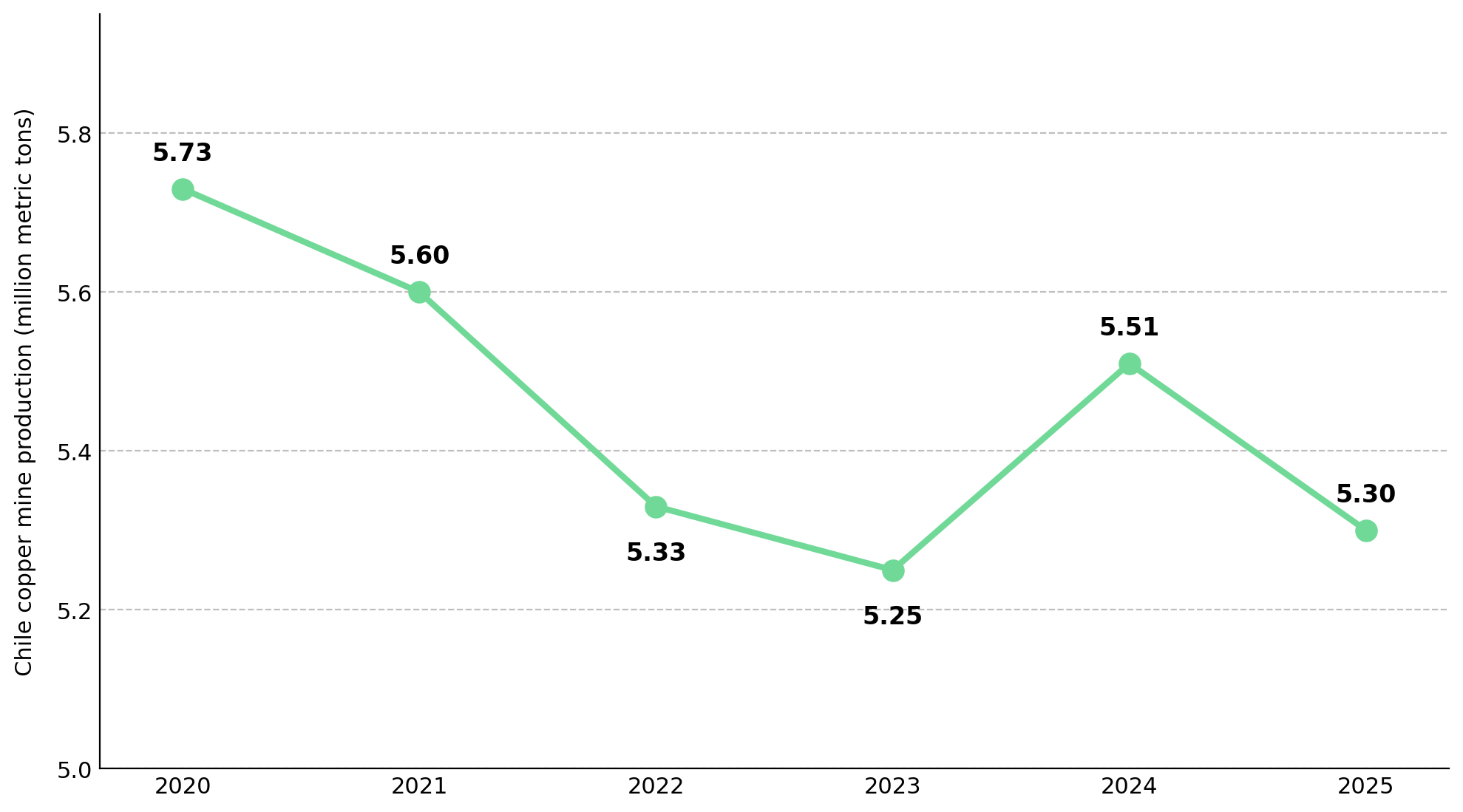
- A Chilean producer cut 2026 copper output guidance to 625,000-655,000 metric tons, while higher prices lifted pretax profit 72% to $2 billion and its dividend to 30.1 cents a share.
- Copper supply tightness weakens if the Yangshan premium falls below $96/t or treatment charges recover toward -$38.4/t.
Weak Chinese Buying Pulls Copper Below $6.55 as Falling Output Limits Downside
Copper futures fell below $6.55/lb as elevated prices reduced Chinese buying. The Yangshan premium, paid above London Metal Exchange (LME) prices for copper imported into China, fell to $96/t from $115/t, confirming weaker import demand.
China’s August refined copper output is forecast at 1.05 million tons across producers representing 81.97% of national capacity, down 2.83% year-on-year for a second straight annual decline. July output also fell 3.18% year-on-year, below the earlier 1.07 million ton forecast. Lower prices therefore reflect weaker buying even as refined output continues to decline.
Record -$175.7/t Treatment Charges Cut Smelter Utilization, Tightening Refined Copper Output
Copper treatment charges, normally paid by miners to smelters for processing concentrate, have remained negative for 19 months, meaning smelters are paying miners for feed. Imported concentrate treatment charges fell to a record -$175.7/t from -$38.4/t a year earlier, shifting more value from smelters to concentrate producers. Chinese smelters lowered utilization as scarce concentrate pressured processing economics, limiting refined copper output.
Tighter tax-invoice rules are constraining value-added tax-compliant recycled copper, limiting an alternative feedstock for smelters. Codelco also dropped its 1.34 million metric ton production target after producing 1.307 million tons last year, adding pressure to primary supply.
Weather Cuts Copper Guidance, but Tight Concentrate Supply Preserves Price Upside
Antofagasta cut 2026 copper guidance to 625,000-655,000 metric tons from 650,000-700,000 tons after extreme rain and power outages shut Los Pelambres. Production resumed within days, but repairs to pipeline platforms and water systems continue to limit annual output. The lower output removes concentrate from an already tight market, supporting stronger economics for mine owners.
Base case: China’s refined copper output records a third straight annual decline, treatment charges stay below -$100/t, and the Yangshan premium recovers from $96/t toward $115/t within one quarter, supporting tighter supply and stronger copper pricing.
Bear case: Chinese buying remains weak, the Yangshan premium falls below $96/t, and the projected 96,000 metric ton refined surplus materializes, keeping copper below $6.55/lb through year-end.
Higher Metal Prices Offset Lower Copper Volumes, Preserving Producer Cash Flow
Chinese smelters face -$175.7/t concentrate treatment charges while the import premium has fallen to $96/t, compressing processing margins. Mine owners benefit from the same pricing imbalance, with Antofagasta’s first-half pretax profit rising 72% to $2 billion as copper prices increased 36% and gold prices rose 46%.
The key test is whether higher metal prices can offset lower production and preserve cash generation. Antofagasta cut 2026 copper guidance by 25,000-45,000 metric tons, yet operating cash flow rose 53% to $2.77 billion and its interim dividend increased to 30.1 cents from 16.6 cents a share.
Potential US copper tariffs have encouraged metal flows into US warehouses, but no published decision schedule gives the market a clear timing signal. A 4.6% share-price decline against a firmer resources sector provides less confirmation than physical copper indicators. The positive producer setup weakens if copper prices fall enough to compress the margins and cash flow supported by recent price gains.
Reassess -$100/t Treatment Charges as Concentrate Supply Recovery Restores Smelter Margins
Negative treatment charges support mine-owner margins by shifting processing value from smelters to concentrate producers. If treatment charges stay below -$100/t while Chinese refined output continues annual declines, concentrate producers retain more processing value. Antofagasta’s first-half core earnings rose 27% to $2.84 billion despite lower output guidance.
Treatment charges recovering toward -$38.4/t would signal improving concentrate availability, restoring smelter margins and reducing mine-owner pricing power. An upward revision to the 0.4% refined production growth forecast would provide further evidence that concentrate availability is improving.
Watch imported concentrate treatment charges, China’s monthly refined copper output, and the Yangshan premium for confirmation of supply conditions. Reassess if treatment charges remain above -$100/t for a full month, signaling improved concentrate availability.
Analyst's Notes





Subscribe to Our Channel



Stay Informed


