




Visionary Copper & Gold Phase 2 Drilling to Define Kraken Copper Zone in Pt. Leamington Resource


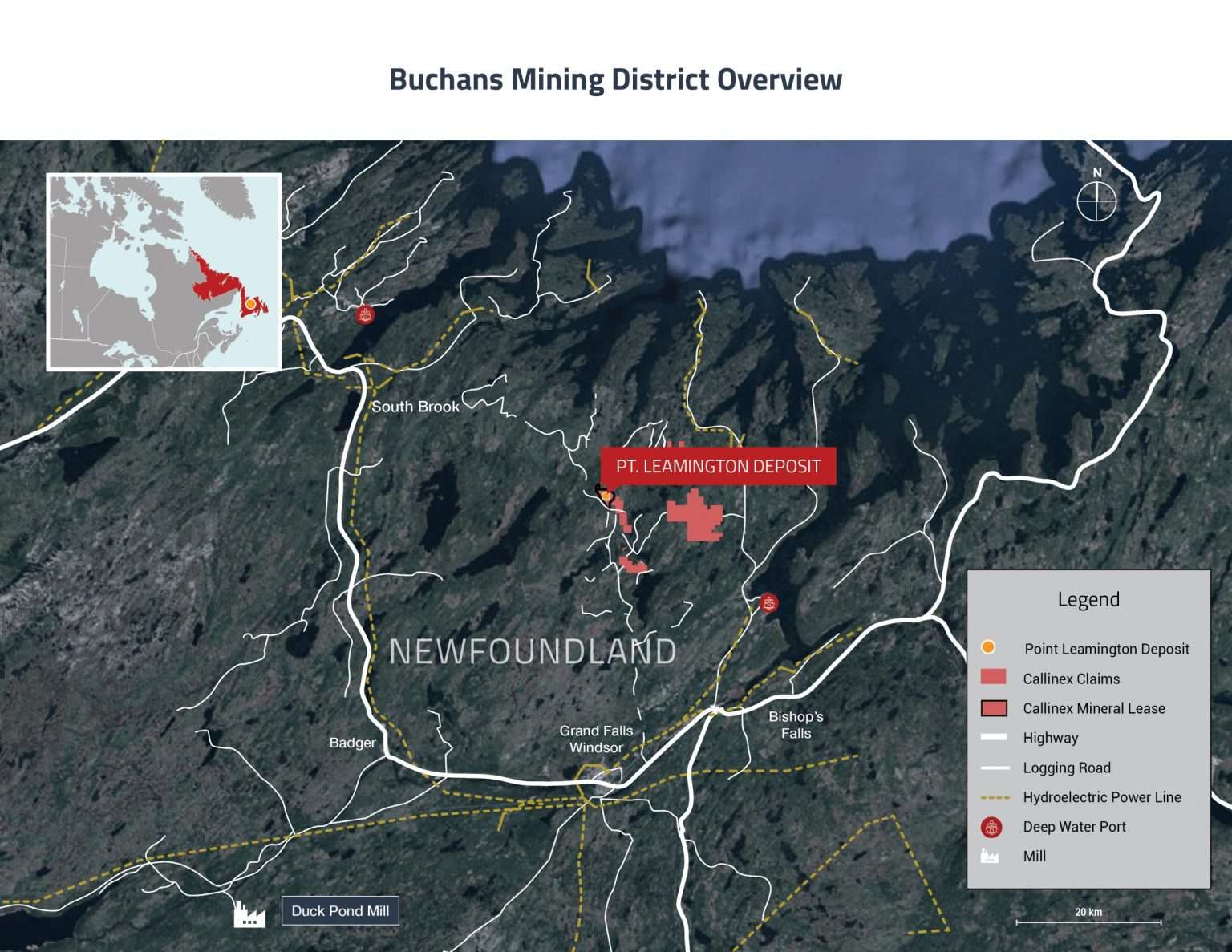
Visionary Copper & Gold (TSXV:VCG) plans 20,000m of Phase 2 drilling to grow its Pt. Leamington VMS resource and define the Kraken copper zone in Newfoundland.
- Visionary Copper & Gold's Pt. Leamington deposit in central Newfoundland already hosts 5.0 Mt of Indicated and 15.4 Mt of Inferred resources with tonnage comes entirely from the massive sulphide lens.
- Phase 1 drilling discovered the Kraken copper zone in the footwall of the deposit, with discovery holes returning 75.8 metres at 0.45% copper. None of this mineralisation is in the 2021 resource estimate making Kraken the main potential source of new tonnage in the next update.
- The 20,000-metre Phase 2 programme aims to convert about half of the 13.7 Mt of pit-constrained Inferred resources to Indicated while defining Kraken in the same holes.
- Visionary plans to resample up to 2,000 metres of historical core that was never fully assayed. It will also test five untested airborne electromagnetic (EM) conductors along trend, two of which have historical massive sulphide boulders nearby.
- Phase 2 financing is still being completed, and Kraken's moderate copper grades mean its value depends on bulk-tonnage pit economics.
The broad copper zones that often sit beneath volcanogenic massive sulphide (VMS) lenses were frequently left unassessed by earlier explorers. Visionary Copper & Gold Mines Inc. (TSXV:VCG, OTCQB:VCGMF) is testing whether that pattern holds at its 100%-owned Pt. Leamington deposit in central Newfoundland. The company is preparing a 20,000-metre Phase 2 diamond drilling programme for this autumn. It follows a Phase 1 campaign that extended the known massive sulphide system beyond 1 km of strike and discovered Kraken, a copper-bearing stringer zone in the deposit footwall that sits entirely outside the 2021 resource estimate.
President and CEO Max Porterfield set out a plan to upgrade the existing resource, add Kraken to it and test untouched targets across a regional land package of roughly 33,000 hectares.
A Deposit Revisited After Two Decades
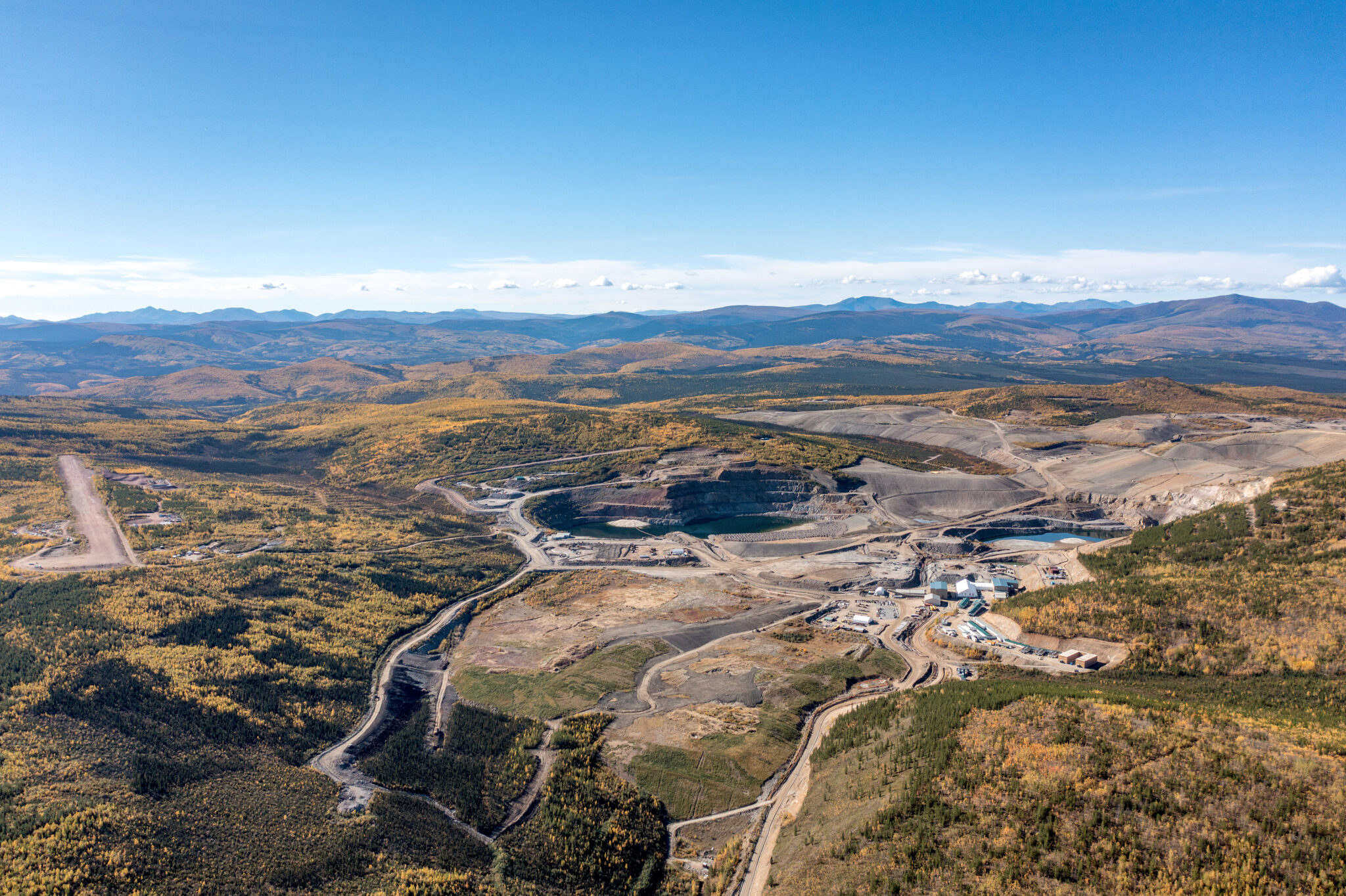
Pt. Leamington was discovered by Noranda in the 1970s after an airborne electromagnetic (EM) anomaly led geologists to massive sulphide boulders at surface. Porterfield noted that no exploration had taken place there since 2004. Visionary's Phase 1 programme of 10 holes totalling 3,556 metres was the first systematic drilling at the deposit in more than two decades. The starting point is a 2021 NI 43-101 Mineral Resource Estimate prepared by P&E Mining Consultants. It outlines 5.0 million tonnes (Mt) of Indicated resources grading 1.42% copper equivalent (CuEq) for 156.8 million pounds (Mlb) CuEq, and 15.4 Mt of Inferred resources grading 1.32% CuEq for 450.5 Mlb CuEq. The pit-constrained portion contains roughly 500,000 ounces of gold at grades of 0.80-0.90 g/T, about 170 Mlb of copper, around 680 Mlb of zinc and approximately 8 million ounces of silver. Porterfield stressed that this entire tonnage represents the massive sulphide lens alone. The deposit has been drilled to a vertical depth of only about 400 metres and remains open at depth.
Kraken: A Copper Zone Outside the Resource
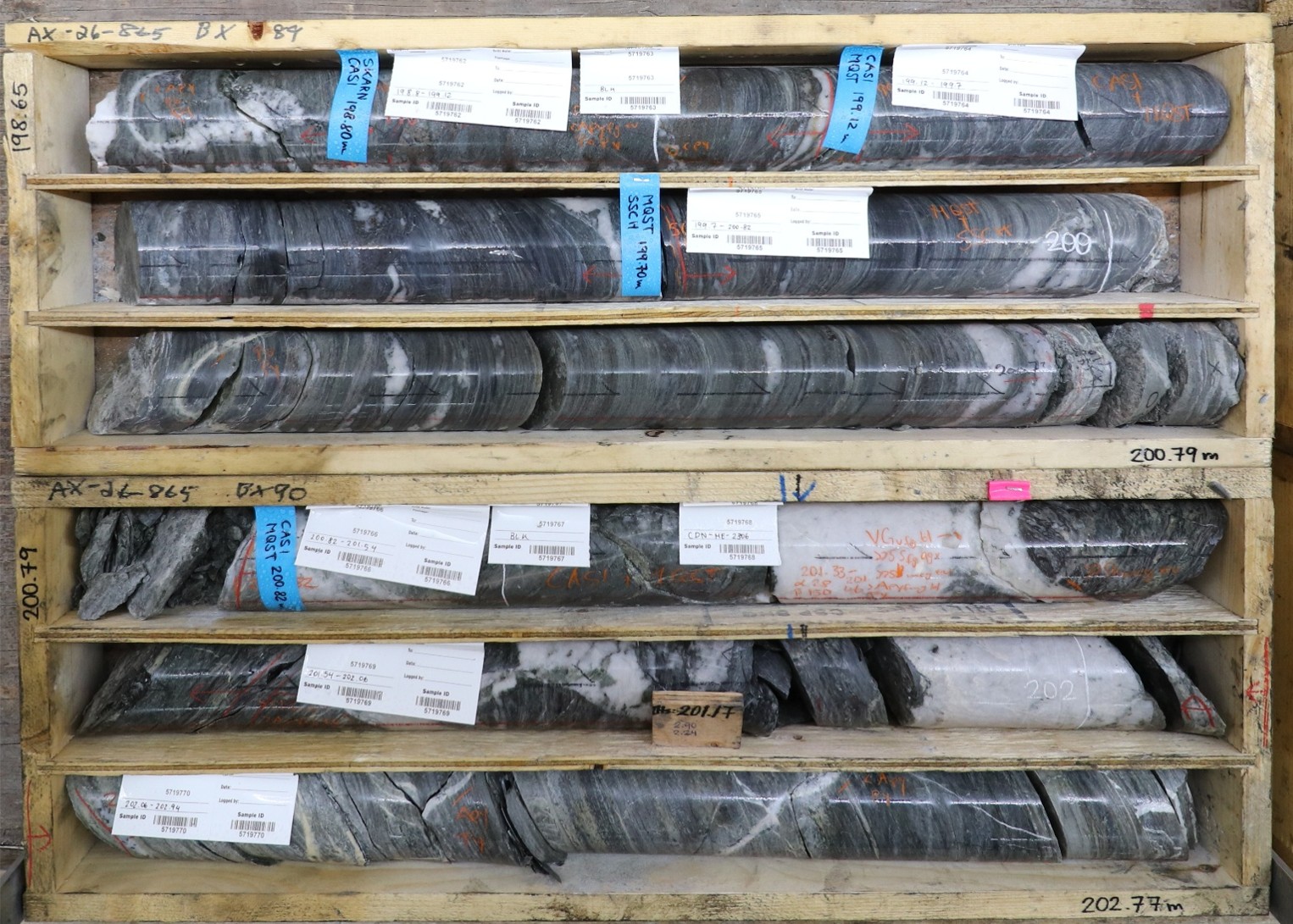
The most consequential Phase 1 result came from below the lens. Hole PL-112 discovered Kraken with 75.8 metres grading 0.45% copper, including 12.0 metres at 1.09% copper, followed by a further 23.5 metres at 0.43% copper. PL-115 returned 52.7 metres at 0.30% copper, including 12.0 metres at 0.61% copper. Follow-up hole PL-118 intersected 22.5 metres at 0.53% copper and 41.5 metres at 0.39% copper, including 7.5 metres at 0.89% copper. Porterfield said subsequent step-outs of more than 300 metres continued to hit wide intervals of mineralisation. A review of hyperspectral data and core photography from 48 historical holes has since identified eight with wide, visibly mineralised stringer intervals that were never fully sampled. Historical hole PL-010 passes about 20 metres from PL-118 and contains an altered interval of roughly 80 metres (core length) that was never assayed. Visionary plans to resample up to 2,000 metres of historical core, although no grade can be assigned until assays are received.
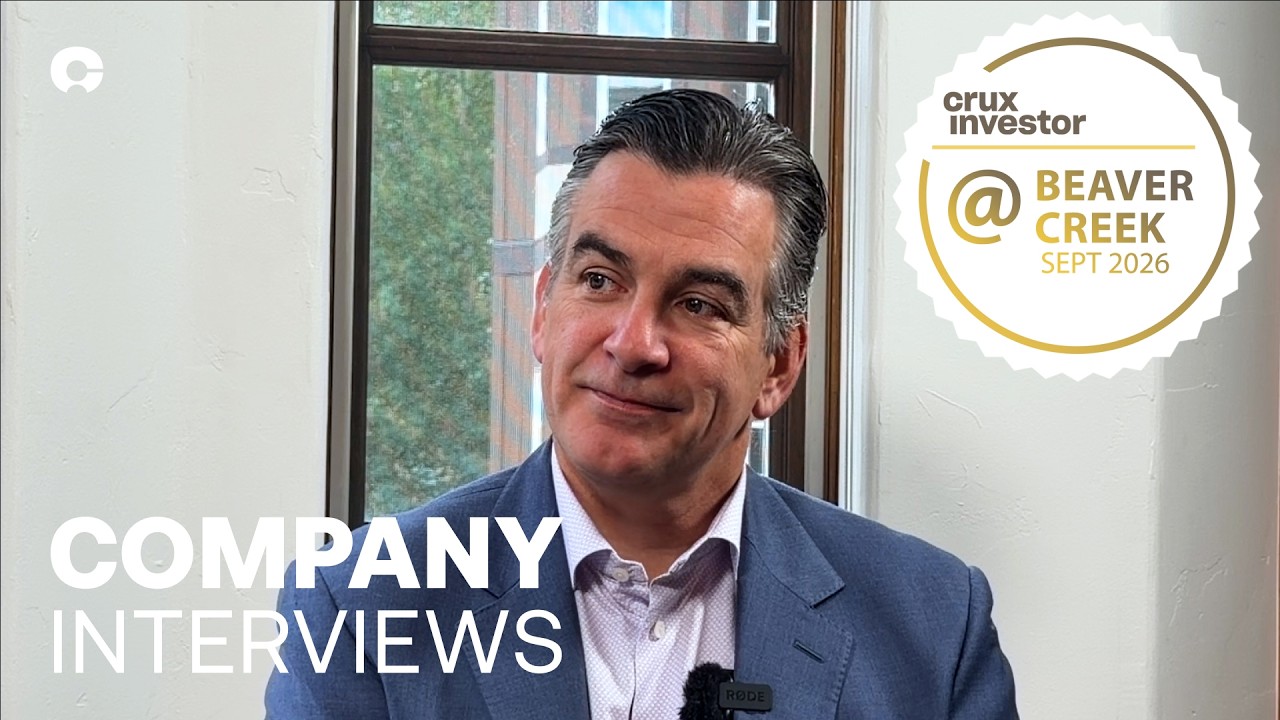
Interview with Max Porterfield, CEO, Visionary Copper & Gold Mines
Phase 2: Conversion, Growth and Kraken Definition
Roughly 90% of the Phase 2 budget will be spent at Pt. Leamington. Each hole will pass through the massive sulphide lens before continuing into Kraken. The company is targeting conversion of about 50% of the 13.7 Mt of pit-constrained Inferred resources to the Indicated category. Porterfield believes the existing lens itself also has room to grow, partly because of how it was originally sampled.
"We actually think the current resource is going to grow as well as we expand along strike, and a lot of the middle material was hand split back in the '70s. They weren't cutting with a saw but they're hand-splitting the core, and they're really focusing on that high-grade material."
Kraken's location also matters for pit design. Because it sits immediately adjacent to the existing resource, material that would previously have been classed as waste could be brought into the mine plan. Porterfield framed the expected result of the programme in those terms.
"Aside from growing the resource significantly over the next six to eight months, we believe positive implications in terms of your overall strip ratio of the deposit because a lot of what would be previously waste rock in your pit design will then be now mineralised potentially money-making rock."
Alongside drilling, Visionary has begun mineralogical work that Porterfield said was never properly completed historically, to refine recovery assumptions. On timing, Porterfield said the company would be well on its way toward economic studies after Phase 2, and would move into them when it chooses to.
Regional Upside Along the Pt. Leamington Trend
isionary announced that it had consolidated around 3,575 hectares across six mineral licences comprising 143 claims. The new ground covers the interpreted down-plunge extension of the deposit and a roughly 3 km segment of the trend immediately to the south. A 2007 helicopter-borne EM survey flown for a previous operator identified five isolated conductors there, interpreted to lie on the same volcanic horizon that hosts Pt. Leamington. Historical exploration reported massive sulphide boulders near two of them. That combination mirrors the original discovery. Porterfield compared the setting to Manitoba's Flin Flon belt, where VMS mines cluster along strike like a string of pearls. Part of the new ground is being acquired from a private vendor for C$10,000 in cash, C$40,000 in shares and a 1% net smelter return royalty that can be repurchased for C$1 million. That transaction remains subject to TSX Venture Exchange acceptance. The company also cautions that EM conductors can be caused by graphitic or clay-rich rocks rather than sulphides.
Team, Jurisdiction & Route to Market
Vice President of Exploration Jason Flight joined from Galway Metals and previously worked at the Ming deposit, about 80 km from Pt. Leamington. Porterfield noted that Flight was at Ming as it grew from a 3-4 Mt massive sulphide lens, with much of that growth coming from a footwall copper stringer zone similar to Kraken. FireFly Metals' August 25, 2026 update for Ming reported 57.3 Mt of Measured and Indicated resources grading 2.4% CuEq and 17.3 Mt of Inferred resources grading 2.8% CuEq. Visionary stresses Ming is an analogue only. The team also includes Peter Jones, former founding CEO of Hudbay Minerals, who Porterfield said oversaw the building of the 777 mine and the early development of Lalor.
Looking further ahead, Porterfield suggested FireFly's planned mill could one day offer excess capacity. Pt. Leamington also sits close to a deep-water port at Botwood. Porterfield described Newfoundland's permitting support as extremely positive and said baseline environmental work will start early.
Investment Thesis for Visionary Copper & Gold
- At 20.4 Mt, Pt. Leamington is already large by VMS standards, where Porterfield put typical deposits at 3-5 Mt, giving Visionary a substantial base even before Kraken contributes.
- Kraken sits entirely outside the current resource, so any tonnage defined there would be additive and could turn planned pit waste into mineralised material, improving the strip ratio.
- Phase 2 drills the lens and Kraken in the same holes, allowing resource conversion and Kraken definition to advance together rather than in sequence.
- Resampling of up to 2,000 metres of historical core offers a relatively low-cost route to additional data, and investors should monitor the first assays from previously unsampled intervals such as PL-010.
- Five untested EM conductors on the host horizon, two with nearby historical sulphide boulders, provide discovery upside alongside resource growth.
- The key near-term watch-items are securing the Phase 2 financing, early Phase 2 assays from Kraken, and TSX Venture Exchange acceptance of the southern trend acquisition.
- Risks include financing dilution, Kraken's moderate copper grades, dated resource price assumptions and the possibility that EM targets prove barren.
Macro Thematic Analysis
Copper supply growth has become harder to deliver. Large new discoveries are rare, permitting timelines in many jurisdictions have lengthened, and major producers have increasingly turned to acquisitions to replenish their pipelines. That backdrop has drawn renewed attention to VMS systems in established Canadian districts, where infrastructure, skilled labour and permitting frameworks already exist. Porterfield pointed to a common thread in several recent VMS success stories.
"If you look at the emergence of a lot of these major VMS systems more recently, a portion of what was overlooked was the feeder system to the massive sulfide lens. And the 20 million tons that exist today at Point Leamington is exclusively the massive sulfide lens.
FireFly Metals has grown Ming from a small massive sulphide deposit into a resource of roughly 75 Mt, with much of that growth in its footwall copper zone. In Saskatchewan, Eldorado Gold's acquisition of Foran Mining and its McIlvenna Bay project showed that majors are willing to pay substantial sums for copper-rich VMS assets in Canada. Neither example predicts what Pt. Leamington will become, but both show why the market has become more receptive to polymetallic stories with a copper growth angle.
Polymetallic deposits can be harder for investors to value, since their worth is spread across several metals. Porterfield argued this is also a source of resilience, noting that weakness in one metal price is often offset by strength in another. At Pt. Leamington, gold is a meaningful contributor to value alongside copper and zinc, which gives the project exposure to both precious and base metal cycles. Newfoundland adds a further tailwind. The province now hosts active mine development and restart activity, and Visionary reports that both government and local communities have been supportive. For investors, the macro case rests on whether juniors with large, underexplored VMS systems in stable jurisdictions can demonstrate enough copper scale to attract strategic interest.
TL;DR
Visionary Copper & Gold is preparing a 20,000-metre Phase 2 programme at Pt. Leamington, a Newfoundland VMS deposit with 5.0 Mt Indicated and 15.4 Mt Inferred resources. Phase 1 extended the system beyond 1 km of strike and discovered Kraken, a footwall copper zone that returned 75.8 metres at 0.45% copper and sits outside the current resource. Phase 2 aims to convert about half of the pit-constrained Inferred tonnes to Indicated, define Kraken, and test five untested EM conductors along trend. Core resampling adds low-cost upside. Financing for the programme is still being completed, and Kraken's grades are moderate.
FAQ (AI-generated)
Analyst's Notes





Subscribe to Our Channel

Stay Informed






















