




Copper Hits 10-Day Low, Yet Metal Outside the US Tightens


With 70% of visible copper stocks held in US warehouses, buyers elsewhere pay extra for immediate delivery, rewarding miners that sell at current prices.
- Three-month LME copper was down 1.5% at $14,279.50 a ton in afternoon trading on October 15, a 10-day low. Profit-taking followed a labor deal at the world’s largest copper mine and faster September US inflation.
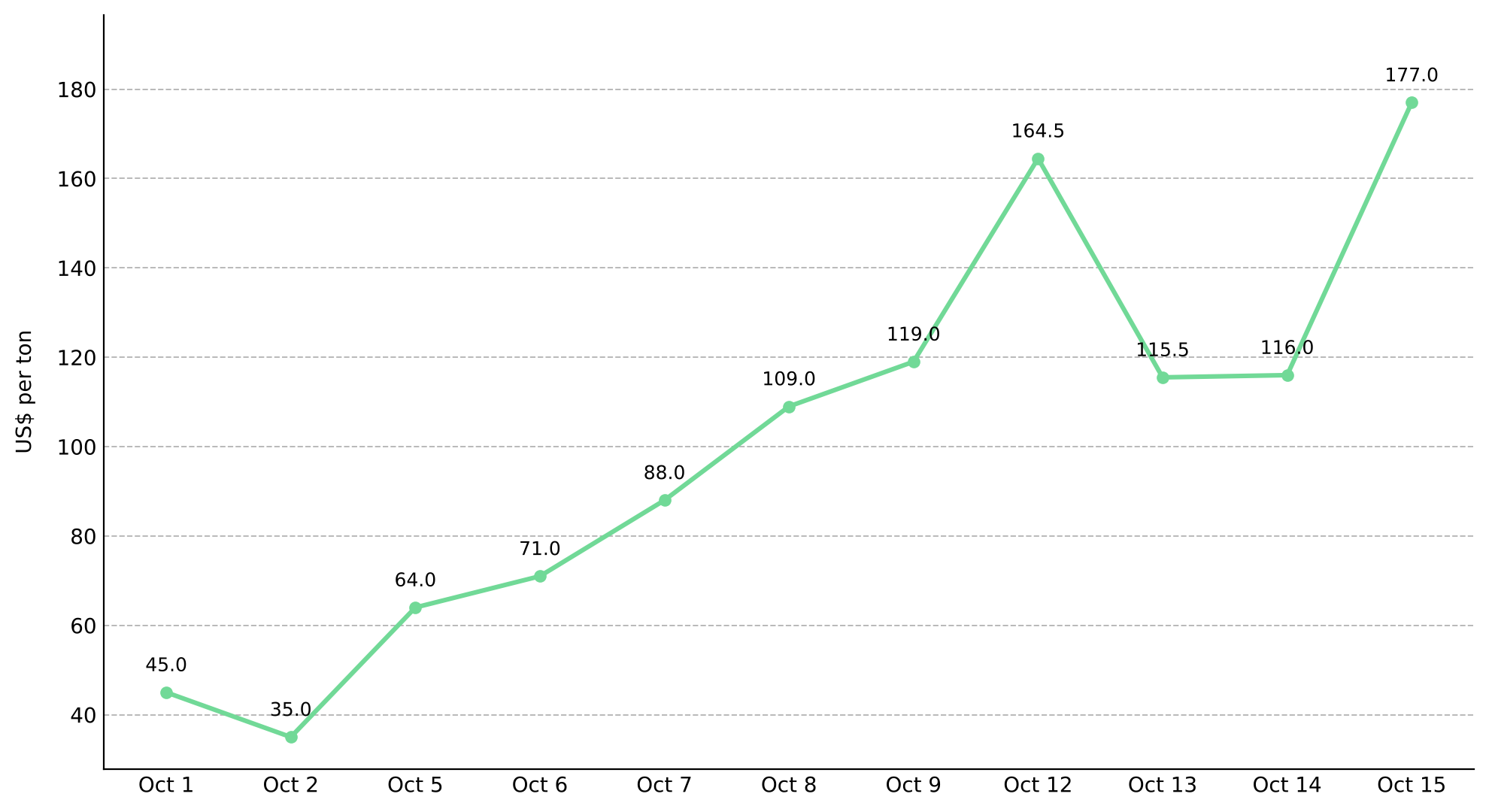
- Metal for immediate delivery tightened even as the price fell. LME cash copper held a $177 premium over three-month metal, up from an $8.50 discount on September 17.
- US tariff policy is holding copper inside the US. Comex warehouses store roughly 70% of global visible stocks, and no tariff decision has followed the Commerce Department’s June 30 review.
- Strategic buying adds to the pull, with the US Project Vault reserve taking delivery of 12,000 tons of Congolese copper in the week of October 12.
- Producers selling copper for immediate delivery outside the US collect the extra price buyers are paying, which miners that locked in future sale prices do not receive.
Copper Profit-Taking Follows Chile Labor Deal & Hotter US Inflation
Copper fell to a 10-day low on October 15. Three-month copper on the London Metal Exchange (LME) dropped 1.5% to $14,279.50 a ton after touching $14,256, the weakest since October 2, Reuters reported. BHP and the supervisors' union at Chile's Escondida, the world's largest copper mine, reached a deal averting a strike, while hotter September US inflation put a Fed rate hike back in play.
The selloff priced in lower supply risk, yet immediate-delivery metal tightened. LME cash copper settled 1.4% lower at $14,539 a ton but held a $177 premium over three-month metal, up from an $8.50 discount on September 17, LME data compiled by Westmetall show. A cash premium, or backwardation, means buyers pay more for metal now than later, the standard signal of scarce prompt supply.
US Tariff Threat & Strategic Buying Drain Copper From Global Exchanges
The scarcity sits outside the US. The prospect of import levies has left Comex-approved US warehouses holding roughly 70% of global visible copper stocks, with Comex inventory up nearly 750% since February 2025 to more than 714,000 tons. Nearly 130,000 tons of LME stock also sit in New Orleans and Baltimore, leaving roughly 100,000 tons anywhere else. Total LME stocks fell 11% between September 17 and October 15.
The US Commerce Department delivered its copper review by June 30 so the White House could decide on a 15% tariff on refined copper imports from January 1, 2027, rising to 30% in 2028, and no decision has followed. Project Vault, the US critical minerals reserve backed by a $10 billion Export-Import Bank loan, took delivery of 12,000 tons of Congolese copper from trading house Mercuria in the week of October 12. Surplus US metal leaves only once LME prices trade well above Comex.
January Tariff Deadline Keeps the US Copper Stockpile Locked In
Strategic flows run on contracts, not daily prices. Congo's state miner Gecamines committed in January to ship 100,000 tons of copper to the US in 2026 with Mercuria's support. VaultCo Executive Chairman Brett Lambert told Bloomberg the reserve is preparing up to $1 billion in loans to manufacturers. Kostas Bintas, Global Head of Metals at Mercuria, told the FT Metals and Mining Summit in London, per CNBC Africa:
"A lot of policy initiatives started to work, started to have real effects on the market."
The Comex-LME price gap, now about $310 a ton, dips and then recovers enough to hold US metal without drawing more. A 15% levy would likely widen the gap and restart inflows. A ruling against levies frees US stocks that Macquarie estimates at about 1.6 million tons.
The daily LME cash-to-three-month spread shows which path is unfolding, over a horizon running to the January 1, 2027 tariff date. The reversal trigger is Comex trading below LME for a sustained period, which makes US stocks exportable.
Shortage Outside the US Rewards Unhedged Producers
Copper producers outside the US selling against nearby LME prices collect the cash premium, so a 1.5% dip in the benchmark understates their realized price. Developers carrying lender-required forward hedges sell along a curve sitting below cash, leaving hedged revenue trailing spot.
The operating test is whether a producer can deliver contracted tons when one mine stops. Antofagasta lifted third-quarter copper output 7% and kept annual guidance despite a strike at its Centinela mine. Producers able to hold volume through labor disruption keep selling into a tight prompt market; single-asset producers facing a stoppage cannot.
The constraint for holders of copper equities is timing. The tariff decision rests with the White House, has no fixed date, and cannot be modeled from market data. Positions built on tightness outside the US can lose value quickly if the levy question resolves against them, with about 1.6 million tons of US stock, per Macquarie, able to move.
Copper Split May Turn the US Stockpile into a Valuation Opportunity
US trade policy has split copper into two physical markets. Metal inside the US is abundant and held there by policy, while metal elsewhere is scarce enough for buyers to pay above forward prices for immediate delivery.
Value accrues to producers with unhedged, nearby-priced output and dependable delivery outside the US. A copper thesis built on the LME headline price alone misses where the margin sits. The policy-held US stockpile belongs in valuations as a latent supply overhang rather than a risk footnote.
Over a longer horizon, metal sitting in US warehouses is metal unavailable to every other buyer, which keeps scarcity outside the US a funding argument for new mine supply.
Analyst's Notes





Subscribe to Our Channel







.png)
Stay Informed


