Prospectiva Resources: Drilling Towards Brazil's São Francisco Maiden Copper-Gold Resource by Mid-2027


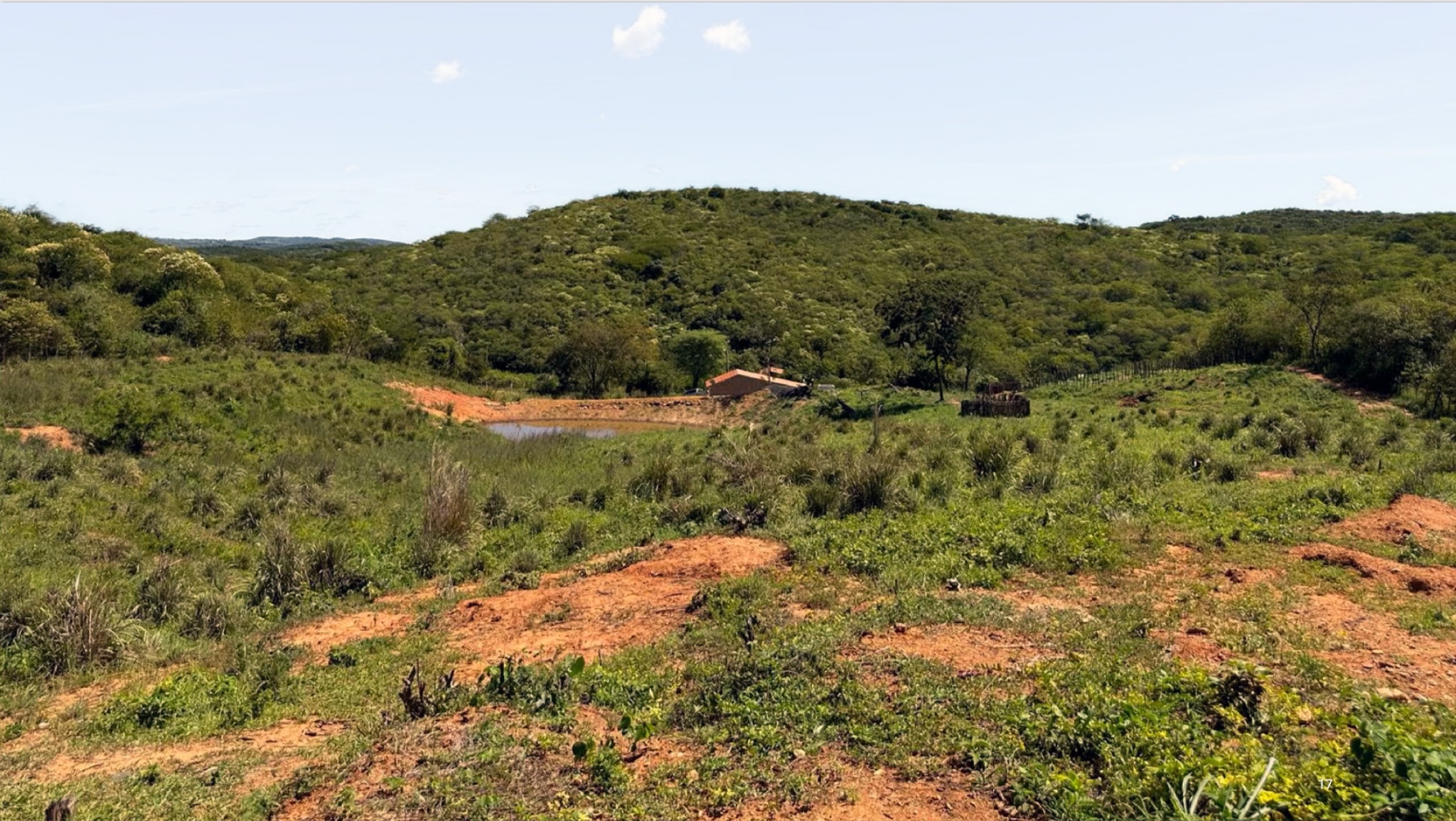
Prospectiva Resources (TSXV:PSVA) is drilling a high-grade copper VMS target at São Francisco, Brazil, aiming for a maiden resource by mid-2027.
- Prospectiva Resources owns 100% of the São Francisco Copper-Gold Project in northeastern Brazil, acquired from Pan American Silver on staged terms that defer the largest payment to a 1 million ounce gold-equivalent milestone.
- The company inherited 5,900 metres of Yamana-era diamond drilling and an extensive geochemical database, giving it an unusually well-documented starting point for a new listing.
- A new interpretation of the deposit as a fold-controlled volcanogenic massive sulphide (VMS) system, combined with a strong correlation between electromagnetic conductors and historical intercepts, is guiding drilling along a 3 km trend.
- Management is targeting a maiden resource around mid-2027 with an initial goal of a 5-10 million tonne core grading 1% to 2% copper.
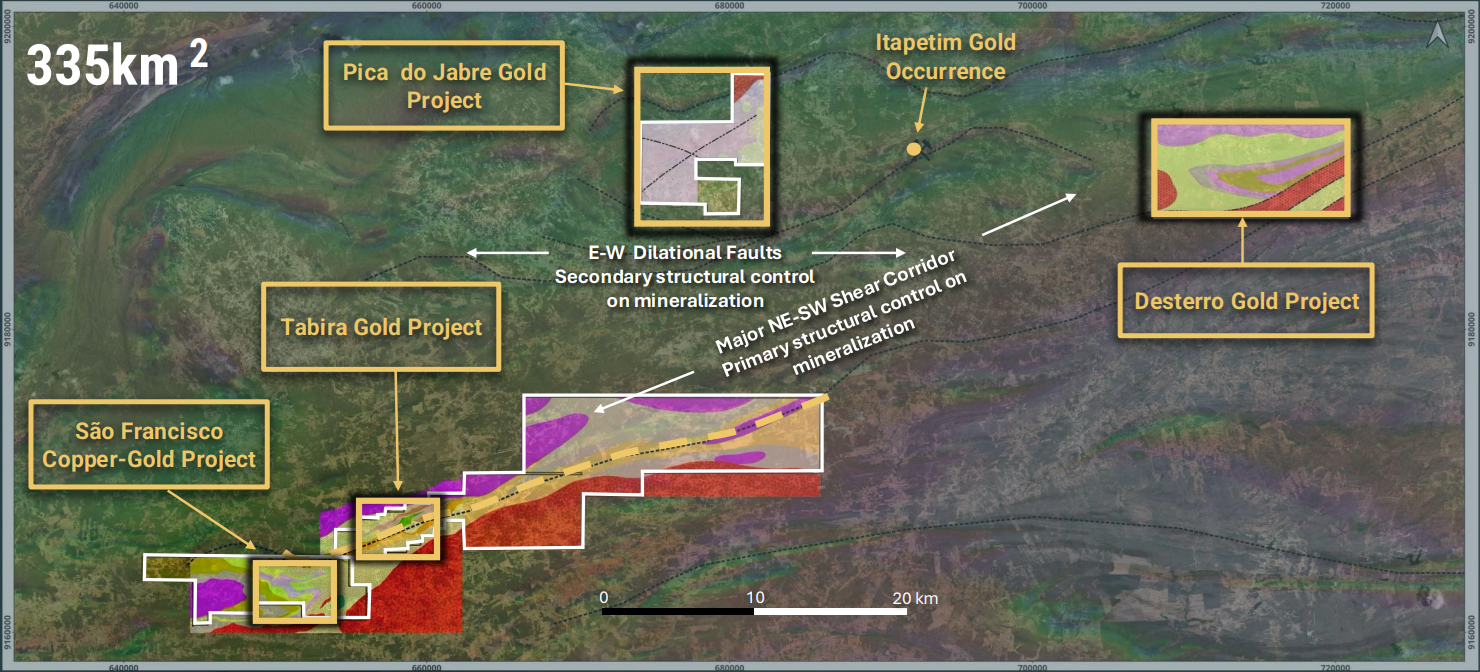
Near-surface, high-grade copper discoveries remain rare among junior explorers, and recent takeovers of modest-sized volcanogenic massive sulphide (VMS) deposits have shown what acquirers are prepared to buy. Prospectiva Resources Ltd. (TSXV:PSVA), a newly listed explorer, is drilling its flagship São Francisco Copper-Gold Project in northeastern Brazil with that type of deposit in its sights. CEO Dan James, a geologist with close to 30 years in the industry, told Crux Investor that the company has reinterpreted São Francisco as a structurally controlled VMS system. That interpretation underpins a drill programme the company expects to feed into a maiden mineral resource around the middle of 2027. Prospectiva’s land package covers approximately 335 km² across 35 exploration licences in the Borborema Province, with two early-stage gold projects sitting alongside the copper flagship.
Acquiring a Drilled Copper Project
James and co-founder Jeremy Martin spent about 18 months generating targets in Brazil with a copper-gold remit. They were open to several deposit models, including iron oxide copper-gold (IOCG), VMS and orogenic gold, provided the project sat in an area with a workable route to mining. São Francisco was discovered by Yamana Gold in 2019 and passed to Pan American Silver when it acquired Yamana in 2023. James said the project had never been marketed, and Prospectiva entered the sale process through an existing contact inside the company. The transaction closed in January 2026, giving Prospectiva 100% ownership. The initial payment of about $500,000 has been made, and a second payment of US$350,000 falls due early in 2027. A further US$3 million is payable only if the company identifies 1 million ounces of gold equivalent, and a 1% net smelter return (NSR) royalty sits over the project. For a company of Prospectiva’s size, those terms limit near-term cash calls while preserving full exposure to discovery.
Inheriting 5,900 Metres of Drilling
Yamana’s work gives Prospectiva a substantial head start. The discovery followed a surface rock-chip sample grading about 5% copper from outcropping mineralisation. Yamana then collected thousands of rock and soil samples, building a multi-element geochemical database across the project area. It went on to complete two phases of diamond drilling totalling 5,900 metres and a 29 line-kilometre induced polarisation (IP) survey. Highlights from that drilling include 7.5 metres at 6.41% copper. James said the drilling quality is high enough that Prospectiva has chosen not to twin any historical holes. He described Yamana as excellent data collectors but said interpretation was the weaker part of the earlier work. No structural model or mineral-system model was put in place, and the project was never documented as VMS. Prospectiva brought in technical advisers, including Dr Richard Sillitoe, and completed petrological work that led it to classify the system as VMS. That classification changes how the company models and explores the deposit.
A Fold Hinge That Concentrates the Mineralisation
A structural geologist recently spent three weeks on the ground, and his work points to strong structural control on the deposit. James said the structural overprint has acted as a secondary control on the original VMS geometry.
“It’s squeezed the mineralisation and concentrated it into a fold hinge... From an exploration perspective, that kind of makes our job a little bit easier because all we need to do now is follow this fold hinge.”
The broader significance lies in how VMS deposits behave. James noted that they typically occur in clusters rather than in isolation, form close to the surface and carry a distinctive alteration halo and mineral suite. Prospectiva is seeing several of those signatures elsewhere in its ground. Its first objective is to define the full footprint of the main São Francisco zone. Its second is to test whether separate geochemical anomalies in copper and associated elements represent additional VMS bodies.
“If we can demonstrate multiple clusters of these VMS systems then obviously we can massively improve the overall tonnage potential of the project.”
Interview with Chief Executive Officer, Dan James
Drilling Electromagnetic Conductors
Prospectiva’s exploration model combines geochemistry with a fixed-loop electromagnetic (FLEM) survey. The method passes a current into the ground and measures how slowly it decays, and massive sulphide lenses typically show up as strong conductors. When the company overlaid the survey on the historical drilling, it found a very strong correlation between conductors and known mineralisation. Those conductors now define a target corridor of roughly 3 km, of which historical drilling tested approximately 2 km. The massive sulphide is roughly an even mix of pyrite and chalcopyrite, the copper-bearing mineral. James said massive sulphide intervals can potentially carry double-digit copper grades, grading outward through semi-massive and disseminated zones. The current fully funded programme of about 2,500 metres has three aims. The first is to fill gaps of around 200 metres between historical holes. The second is to confirm that the conductors coincide with mineralisation. The third is to step out systematically along the trend. Six holes had been completed at the time of the interview, and James said results were due imminently.
Defining a Commercially Relevant Starting Point
James framed his commercial target against recent VMS transactions. He cited a Brazilian VMS asset that changed hands after starting at about 6 million tonnes, and two recent acquisitions of deposits of roughly 15 million tonnes that were bought outright. Prospectiva’s initial goal is a core of 5 to 10 million tonnes grading 1% to 2% copper, with gold and silver credits. The company plans a second drill programme of about 5,000 metres early in 2027. Combined with Yamana’s drilling and the current campaign, that would take total drilling to roughly 13,000 metres across the initial 3 km strike. James believes that would be enough to support a maiden mineral resource around mid-2027. He was clear that a first resource would be presented as a starting point rather than a ceiling, given the kilometres of untested strike and additional targets. Drilling costs of about C$300 per metre in Brazil mean each dollar raised buys a meaningful number of metres. Prospectiva, as James describes, got a management team who focuses its strength on exploration and resource definition.
Funding, Metallurgy & the Gold Portfolio
Prospectiva raised about C$3.6 million when it went public, which James said provides around 12 months of runway and fully funds the current drilling. The company expects to raise again early in 2027 to fund the follow-up programme. No metallurgical testwork has been completed yet. The system carries copper, gold and silver with minor zinc, and petrology shows a chalcopyrite-pyrite assemblage carrying gold. James said nothing in the assay data has raised concern over deleterious elements, and preliminary metallurgical results are expected early in 2027. Until then, recoveries and concentrate quality remain open questions.
The regional gold projects take roughly 10% to 20% of the exploration budget. At Pico do Jabre, rock-chip sampling returned up to 9.72 g/t Au along a target trend of about 500 metres. At Desterro, samples returned up to 6.09 g/t Au with 867 ppm bismuth. James said Desterro will be prioritised because handheld portable X-ray fluorescence (pXRF) analysis allows bismuth to serve as a low-cost proxy for gold in soil sampling. The in-country team, led by long-standing colleagues of James and Martin, includes chief geologist Robert Selwyn.
Investment Thesis for Prospectiva Resources
- Prospectiva holds 100% of a drilled copper discovery on staged terms, with the largest payment of US$3 million triggered only by a 1 million ounce gold-equivalent milestone.
- Yamana’s 5,900 metres of diamond drilling and extensive geochemistry give the company a data foundation that few explorers at this stage possess.
- The reinterpretation of São Francisco as a fold-controlled VMS system provides a clearer drilling vector and opens the possibility of additional clustered deposits.
- Investors should monitor the imminent assay results for confirmation that EM conductors coincide with copper mineralisation away from the historical holes.
- A financing early in 2027 is likely, and its size and pricing will depend heavily on the current drill results.
- Preliminary metallurgical results expected early in 2027 are a key de-risking milestone because no testwork has been completed to date.
- A maiden resource around mid-2027, targeting a 5 to 10 million tonne core at 1% to 2% copper, is the company’s stated primary value catalyst.
Macro Thematic Analysis
Copper’s investment case rests on demand from grid expansion and electrification meeting a supply base that has struggled to bring new mines into production. Larger producers have increasingly turned to acquisitions to replenish their pipelines. That dynamic favours juniors holding high-grade, near-surface deposits that could be mined by open pit with modest capital. VMS deposits fit that profile when grades are strong. They tend to be compact, can often be mined from surface and frequently occur in districts rather than as single bodies. The transactions James cited suggest buyers have been willing to acquire VMS deposits of around 15 million tonnes outright, which sets a practical benchmark for what a junior needs to demonstrate.
“If we can identify resources in a jurisdiction that rewards high-grade open pit systems, I think that we’ll be on to a real value driver for the company there.”
The Borborema Province remains less explored than Brazil’s established mining districts, which leaves room for district-scale discoveries. The constraint for Prospectiva, as for most juniors, is capital. Financing windows for early-stage explorers tend to favour companies that can show grade, continuity and a credible route to a resource. The next six months will show whether São Francisco can meet that standard.
TL;DR:
Prospectiva Resources acquired 100% of the São Francisco Copper-Gold Project in northeastern Brazil from Pan American Silver, inheriting 5,900 metres of Yamana-era diamond drilling including 7.5 metres at 6.41% copper. The company has reinterpreted the deposit as a fold-controlled VMS system and is drilling electromagnetic conductors along a 3 km trend in a fully funded programme of about 2,500 metres, with assays due imminently. It targets a 5 to 10 million tonne core at 1% to 2% copper and a maiden resource around mid-2027.
FAQ (AI-generated)
Analyst's Notes





Subscribe to Our Channel






Stay Informed