




Copper’s $207.50 Premium Defies 96,000-Tonne Surplus Forecast, Favoring Producers



Copper’s $207.50 spot premium and falling inventories challenge a 96,000-tonne surplus forecast, favoring producers with secure supply.
- London Metal Exchange (LME) cash copper settled at $14,424.50 per tonne on August 11, 2026, as the cash-to-three-month premium rose from $69 to $207.50 per tonne.
- The International Copper Study Group (ICSG) forecast a 96,000-tonne refined copper surplus for 2026 on April 23, 2026, revising its previous forecast of a 150,000-tonne deficit.
- Chinese refined copper output among producers representing 81.97% of capacity fell for a second month to 1.05 million tonnes in August 2026, down 2.83% year on year as concentrate availability constrained smelters.
- Exchange inventories fell from more than 244,000 tonnes on August 3, 2026, to 214,550 tonnes on August 11, 2026.
- A cash premium back at $69 per tonne would weaken evidence of tight immediate copper supply and support the 96,000-tonne surplus forecast.
Congo Export Ban Draws Attention & $207.50 Cash Spread Points to Broader Copper Tightness
LME cash copper settled at $14,424.50 per tonne on August 11, 2026, while the cash-to-three-month premium rose from $69 to $207.50 per tonne, signaling tighter immediate copper supply despite the forecast refined surplus.
The $207.50 per tonne premium reflects what buyers paid for immediate copper delivery rather than a forecast of future supply. Exchange inventories fell from more than 244,000 tonnes on August 3, 2026, to 214,550 tonnes on August 11, reinforcing tighter immediate copper availability. The Democratic Republic of Congo's copper concentrate export ban drew market attention, but Goldman Sachs assessed no significant impact on global copper balances, shifting the focus to broader concentrate availability.
Zero Treatment Charges & 2.83% Output Drop Identify Copper Concentrate as the Supply Constraint
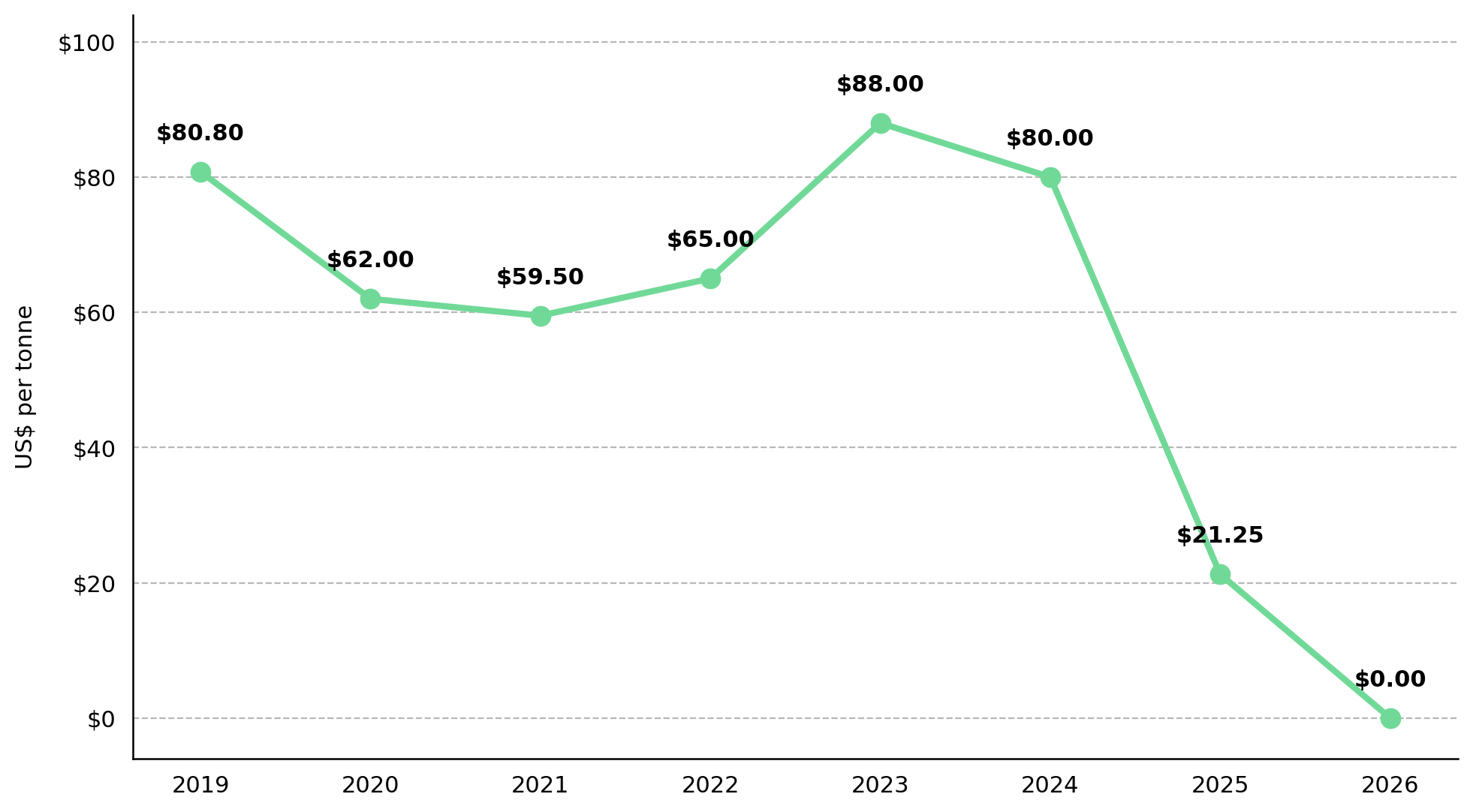
The tighter supply signal sits in copper concentrate, which limits feed available to smelters. Treatment and refining charges (TC/RCs) fell to a record-low $0 per tonne for the 2026 annual benchmark after spot rates turned negative in 2024, signaling tight concentrate availability. Antaike reported that refined copper output among Chinese producers representing 81.97% of capacity fell 2.83% year on year to 1.05 million tonnes in August 2026, following a 3.18% decline in July.
Replacement copper supply faces a roughly 17-year discovery-to-production timeline. Average global copper ore grades have fallen 40% since 1991, while brownfield capital intensity has risen 65% since 2020. Only 5% of deposits discovered over the past 35 years were found in the last decade, limiting how quickly new supply can respond.
96,000-Tonne Surplus Forecast & LME Spread Define Copper’s Base and Bear Cases
Annual balance forecasts estimate refined supply against demand, while the LME cash-to-three-month spread measures the premium for immediate copper delivery. ICSG forecast a 96,000-tonne refined surplus for 2026 on April 23, 2026, revising its previous 150,000-tonne deficit forecast, followed by a 377,000-tonne surplus in 2027. ICSG forecasts refined production growth of 0.4% in 2026, constrained by concentrate availability. The IEA reported broad consensus that low TC/RCs could continue over the medium term, extending the concentrate constraint beyond current spot conditions.
Base case: concentrate availability remains tight into the fourth quarter of 2026, Chinese refined output stays near 1.05 million tonnes per month, the cash premium remains above $100 per tonne, and copper holds $6.61-$6.83 per pound.
Bear case: Chinese smelter output cuts of more than 10% reduce competition for concentrate, exchange stocks rise above 244,000 tonnes, the cash premium falls to $69 per tonne, and the 377,000-tonne 2027 surplus develops as forecast.
47.33% Copper Rally & Aluminum Substitution Risk Favor Producers Converting Prices Into Margins
Fabricators and cable makers buying spot copper absorb the $207.50 per tonne premium as a higher input cost, while custom smelters face negative spot TC/RCs because they depend on external concentrate. Integrated smelters can source feed internally, and producing miners with sufficient grade and throughput can convert higher copper prices into current revenue, making feed control and production exposure the stronger filters at record prices.
Aluminum traded near $3,373 per tonne without a comparable spot premium, and its lower weight and metal cost increase substitution risk in some cable applications. With copper up 47.33% over the year to August 11, 2026, the stronger opportunity lies in producers that can convert high prices into margins through grade, throughput, cost control, and secure concentrate supply.
Track the $69 Spot Premium & Exchange Stocks to Test Immediate Copper Tightness
A cash-to-three-month premium above $100 per tonne confirms continued tightness in immediate copper availability. At $207.50 per tonne, the premium favors producing miners and physical copper exposure because immediately available metal trades above three-month delivery.
$69 per tonne, the premium at the start of August 2026, is the reversal threshold for current tightness in immediate copper supply. A return to that level with exchange stocks above 244,000 tonnes would support the ICSG's 96,000-tonne 2026 surplus forecast and weaken the pricing case for copper producers and development-stage valuations that assume continued tight supply.
An LME cash premium below $100 per tonne for five consecutive trading days would weaken the immediate supply signal, while Chinese refined output above 1.07 million tonnes would indicate improving concentrate availability. The next ICSG forecast will show whether the 96,000-tonne 2026 surplus still holds as physical-market conditions change.
Analyst's Notes





Subscribe to Our Channel





Stay Informed


