




Copper's Record Run Masks a 639,000-Tonne Surplus Risk


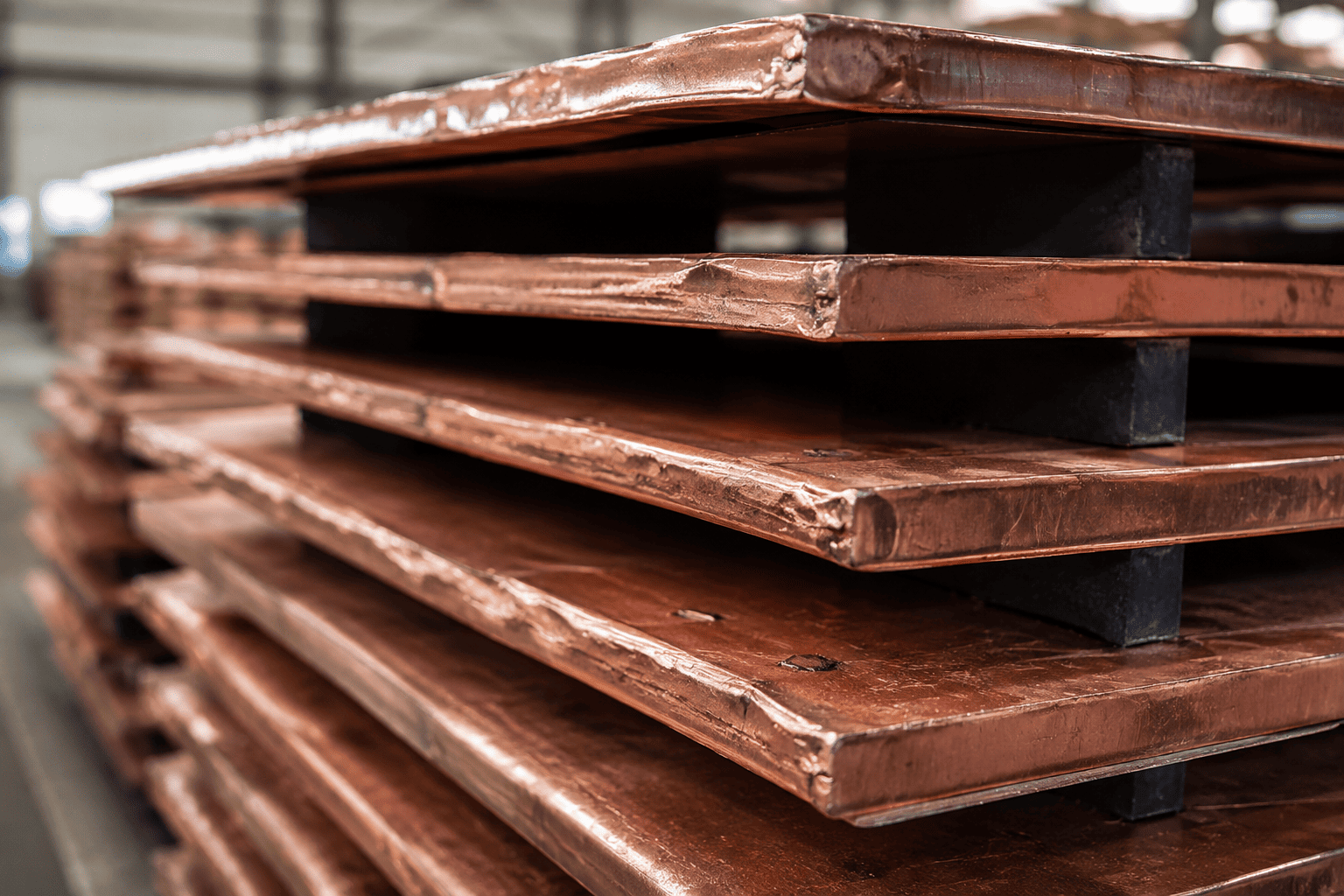
Copper trades near record highs, but a 639,000-tonne 2026 surplus, record COMEX stockpiles, and a looming US tariff ruling threaten to reverse the rally.
- LME copper fell 0.64% to $14,232.50 per tonne on August 27, 2026, after the US Personal Consumption Expenditures (PCE) price index rose 3.7% year on year, reviving Fed hike bets and strengthening the dollar; the pullback is a currency headwind for copper-linked equities, with underlying copper demand unchanged.
- Commodity Exchange (COMEX) copper stockpiles hit a record 675,185 metric tonnes on August 25, 2026, built through tariff arbitrage rather than new mine supply; unwinding that stockpile, not new production, is the mechanism most likely to cap further price gains.
- CRU projects a 639,000-tonne global copper surplus for 2026 even as copper traded within $185 of its all-time record that same week, a gap investors should read as valuation risk rather than confirmation of scarcity.
- The US Commerce Department is due to rule on a copper tariff targeting 15% from January 1, 2027, rising to 30% from 2028; the catalyst investors should position around.
Copper's $185 Record Gap Flags Downside Risk
Three-month copper on the London Metal Exchange (LME) reached $14,343 per tonne on August 25, 2026, just $184.50 below its $14,527.50 record, after traders withdrew 65,400 tonnes from LME warehouses within days. Two trading days later, that strength reversed: LME copper settled at $14,232.50 per tonne on August 27, 2026, down 0.64%, after the US PCE price index rose 3.7% year on year in July, reviving Fed rate hike bets and strengthening the dollar.
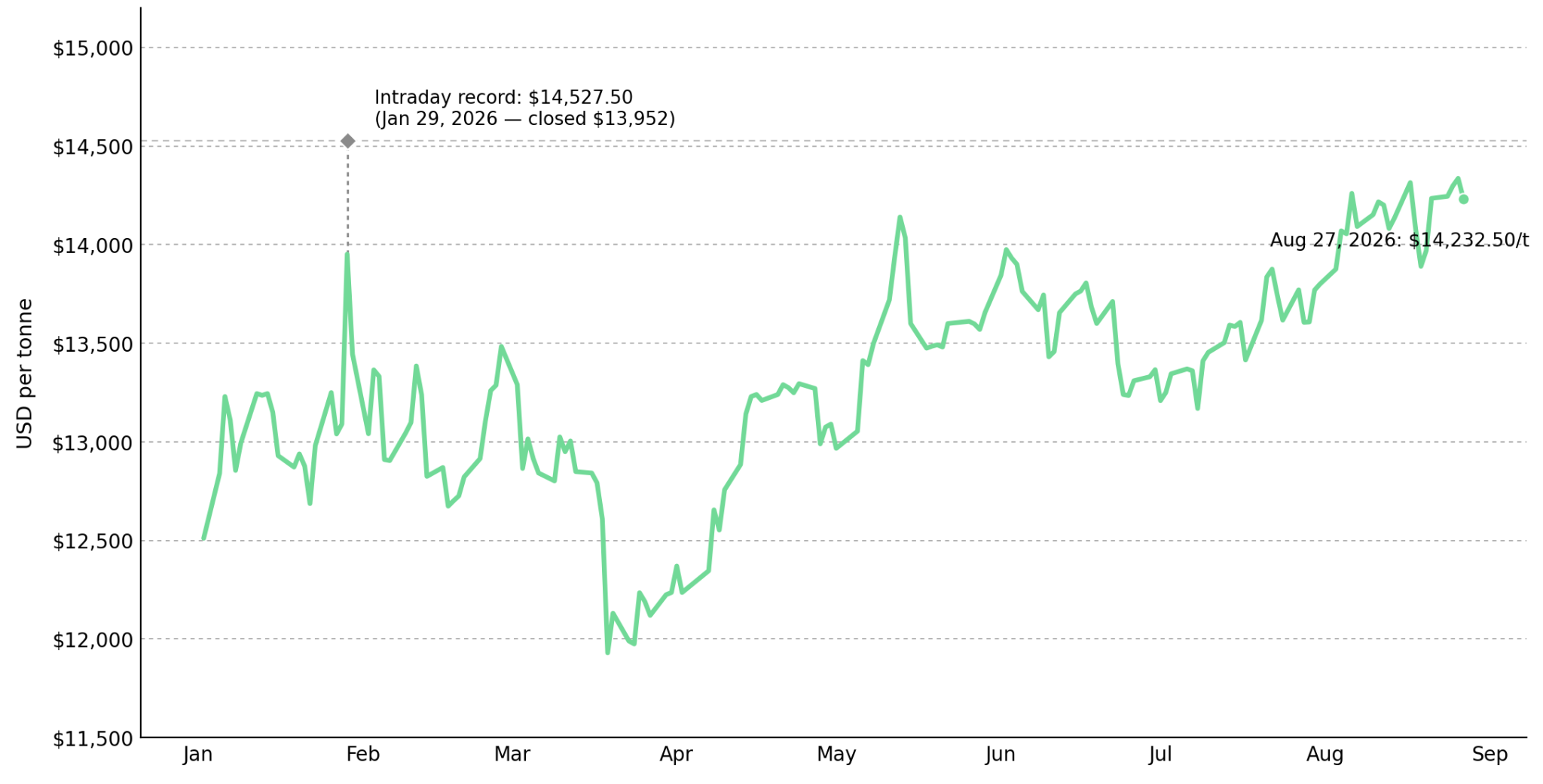
A $14,000-plus metal swing on a single US inflation print is being priced on interest rate expectations, not on copper's physical balance, and further dollar strength from here compresses margin for copper miners without any matching support from real demand.
675,185 Tonnes of COMEX Copper Could Reverse the Rally
Commodity Exchange (COMEX) copper inventories climbed for a 46th consecutive session to a record 675,185 metric tonnes by August 25, 2026, built through arbitrage that ships metal into the US ahead of a proposed tariff rather than through any increase in mined output. US refined copper imports reached almost 885,000 tonnes in the first half of 2026 and a record 1.64 million tonnes for full-year 2025, tonnage that remains refined and deliverable inside US borders.
The stockpile is a standing source of supply that can reappear outside the US the moment the tariff outlook clears, and a thesis built on today's tight non-US premiums should treat that reversal as a base case, not a tail risk.
A 639,000-Tonne Surplus Undercuts the Case for Record Prices
Amelia Fu, head of commodities market strategy at Bank of China International, told Reuters that low stocks, mine disruption, and an outage at Indonesia's Gresik smelter were tightening the market, adding that "we could see new record highs in copper prices in coming weeks or months".
CRU principal copper analyst Robert Edwards puts the global copper surplus at 639,000 tonnes for 2026 and told Reuters that the tariff threat has turned a surplus year into little more than a balanced one, adding that if US imports keep coming in at this pace, the market outside the US will look like a deficit even though the metal has only relocated
The takeaway is that today's price reflects a policy premium built on hoarding, not a demand premium built on scarcity, and that premium is priced to compress once the tariff decision removes the reason to hoard.
A 25% Deficit by 2035 Still Anchors the Long Case
The International Energy Agency (IEA) still projects a 25% copper supply deficit by 2035 in its base case, narrower than last year's 30% estimate but the widest gap among the minerals it tracks.
Ore grades have fallen 40% since 1991, and brownfield capital intensity is up 65% since 2020, on timelines price cannot compress. Almost half of the narrower gap comes from pledged expansions in the Democratic Republic of Congo and Zambia, the same jurisdiction whose output missed its target this quarter.
The trade should be separated from the thesis. A tariff-driven correction would not close this deficit, only make developers with funded growth cheaper to own against it.
January 2027 Tariff Rate of 15% Should Drive Position Sizing
The US Commerce Department was due to report to the White House on copper tariffs by June 30, 2026, ahead of a decision on the proposed duty; a previous tariff exemption for refined copper sent prices sharply lower the day it was announced, evidence that the ruling itself, not the metal's fundamentals, is the market-moving event.
Strength is best faded if the rate lands at or near zero: the 675,185 tonnes sitting in COMEX warehouses would then begin moving back into a market CRU already prices as 639,000 tonnes long. A rate at the high end of 30% by 2028 points to the opposite outcome. With the metal staying locked onshore, it would support firmer realized prices for non-US supply.
The Commerce Department's ruling date is the calendar event worth tracking, not a technical price level, since that ruling has moved this market before and is likely to again. Underneath that near-term trade, the IEA's 25% supply deficit for 2035 remains the relevant backdrop: it is the reason a near-term pullback is better read as a re-entry point into copper-exposed developers actually adding mined tonnes than as a signal to exit copper exposure altogether.
Analyst's Notes





Subscribe to Our Channel





Stay Informed


