




Copper Supply Gap & Financing Terms Determine Upside Shareholders Retain



Chile's copper output hit its lowest since 2011 as China's smelters slow. Financing terms now decide how much copper upside developer shareholders retain.
- Chile's August copper output fell 12.8% year on year to 369,500 tonnes, the lowest monthly figure since February 2011, while LME three-month copper traded at US$14,319 a tonne on 2 October, showing near-record prices cannot quickly restore supply lost to aging infrastructure, mine accidents and labor disputes.
- China's refined copper output is forecast to grow only 3% to 3.4% in 2026, down from 10.4% in 2025, as concentrate and scrap tighten together and treatment and refining charges remain negative, shifting commercial leverage toward miners with saleable concentrate.
- Construction capital reaches copper developers in exchange for a stake in the asset or its output through offtake commitments, precious metal streams, royalties, and partner claw-back rights, so financing terms determine how much of the copper price reaches shareholders.
- Processing routes set commercial exposure and cash-flow timing, as cathode producers bypass the smelter market, concentrate producers gain leverage from negative treatment charges, and partner-funded production can repay financiers before cash flow reaches shareholders.
- Funding, permitting and construction schedules place new supply from projects still at study or permitting stage years beyond the current shortfall, leaving attributable cash flow per share after financing, rather than headline project value, as the measure of shareholder returns.
Supply Constraints Limit the Response to Higher Prices
Chile, the world's largest copper producer, mined 369,500 tonnes of copper in August 2026, down 12.8% from August 2025 and below July's 403,424 tonnes. The decline coincided with copper trading near record levels on the London Metal Exchange (LME), showing price strength alone does not restore lost tonnes.
Copper supply responds to physical capacity, ore quality and operating continuity. A higher price can justify investment but cannot restore mine access or commission replacement infrastructure within a year.
Chile's Output Decline Separates Structural Weakness From Temporary Disruption
Bloomberg attributed August's shortfall to severe winter weather and port disruptions, layered on top of declining ore grades and setbacks at the largest operations. Weather outages can reverse within months, while grade decline compounds over years.
Lower head grades force operators to mine and process more rock per tonne of recovered copper, increasing pressure on mining fleets, mill throughput, energy use, and tailings capacity. Rising prices can therefore coincide with lower volumes and higher unit costs, separating revenue growth from margin growth.
Concentrate Tightness & Refined Balances Measure Different Markets
Concentrate is the copper-bearing product of mineral processing, and a cathode is a refined metal. Treatment and refining charges, or TC/RCs, are the fees miners pay smelters to convert concentrate into metal, and lower charges raise miners' realized revenue while compressing custom-smelter margins.
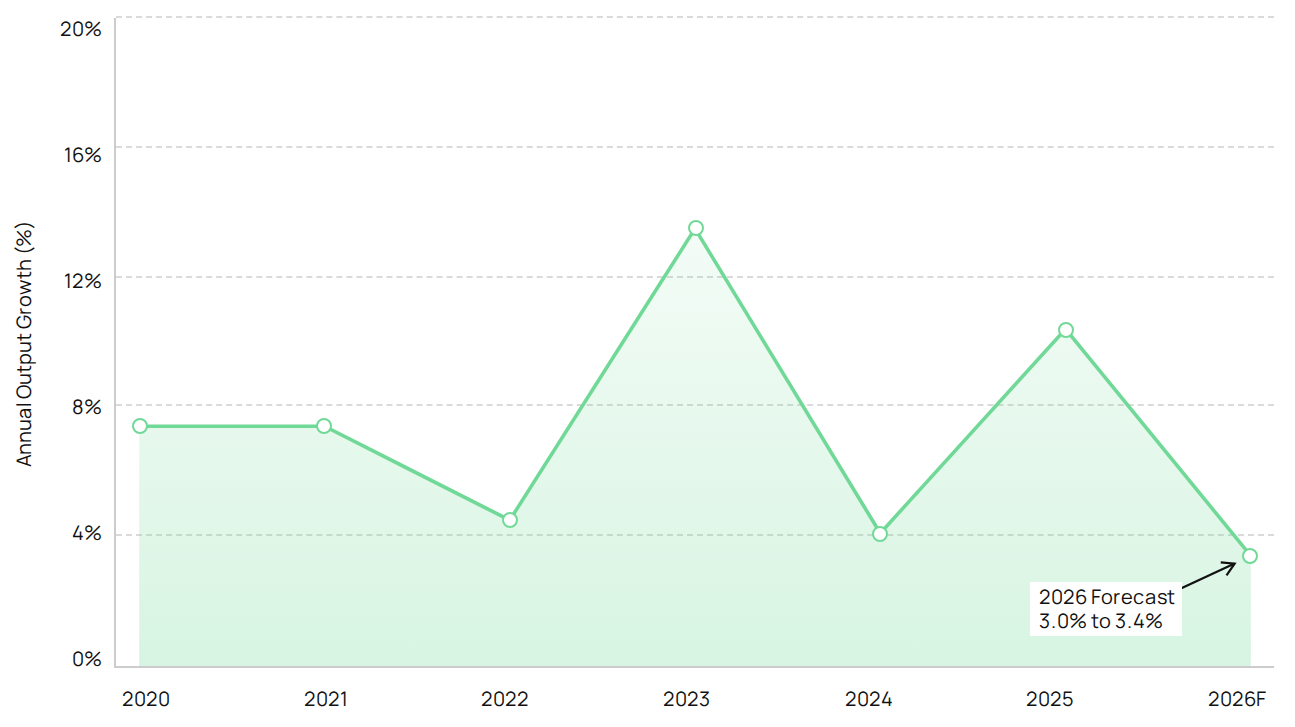
The International Copper Study Group's April 2026 forecast projected a 2026 refined surplus of about 96,000 tonnes, consistent with tight concentrate supply because refined output also draws on scrap. A refined surplus does not measure mine supply, and neither balance alone sets a price floor.
Smelter competition for feed now shows in contract terms Don Hyma, Managing Director of Caravel Minerals, has not encountered in three decades of industry experience:
"They have been negative now for a couple of years and remembering that in my career of 30 years, we've never seen negative treatment and refining charges. That's how much in demand copper concentrate is for these downstream smelters."
Financing Determines Which Economic Interests Remain With Shareholders
Strategic capital trades earlier development for a share of future economics, and signed construction funding differs from financing still under negotiation.
Equity dilution spreads a company's value across more shares, while a project stake reduces ownership of one asset. A royalty grants a contractual share of revenue or another defined economic basis, and a stream grants rights to buy specified future metal volumes at agreed-upon prices. Offtake is a sales agreement, and its cost depends on pricing, payability, deductions, duration, exclusivity and any linked prepayment.
Hot Chili, a prefeasibility-stage developer in Chile, carries several financing layers on one project. Its agreement with Glencore covers 60% of Costa Fuego concentrate for eight years at benchmark terms, a sales commitment rather than a transfer of 60% of project value.
A separate arrangement with OR Royalties carries a 1% royalty on payable copper and 3% on payable gold, extended to the La Verde project in 2026 for an additional US$15 million in consideration.
Unencumbered Copper Offtake Can Coexist With Other Financing Obligations
KGL Resources, a funded developer advancing Jervois in Australia's Northern Territory, retains marketing flexibility over its copper. Wheaton Precious Metals agreed to pay US$275 million upfront, plus a contingent US$25 million facility, for a gold and silver stream on Jervois, with stream percentages stepping down once delivery thresholds are reached.
Retained copper flexibility coexists with reduced precious-metal revenue, so by-product credits must be assessed after stream payments, and completion tests and cost-overrun provisions still apply to a fully funded project.
Offtake has also become a regulatory lever, with China's State Administration for Market Regulation seeking concentrate supply commitments as a condition of approving Anglo American's US$54 billion merger with Teck Resources.
Processing Routes Change Market Exposure & Cash-Flow Timing
Producing cathode on-site avoids custom-smelter negotiations, but processing independence does not eliminate the need for construction capital or partner funding.
Cathode Production Bypasses Smelters but Still Requires Construction Capital
Marimaca Copper, a definitive feasibility study (DFS) stage developer in Chile's Antofagasta region, plans an oxide heap-leach and solvent extraction and electrowinning (SX-EW) operation. Heap leaching passes acid solution through stacked oxide ore to dissolve copper, which SX-EW recovers as cathode, whereas sulfide ore usually requires concentrating and smelting.
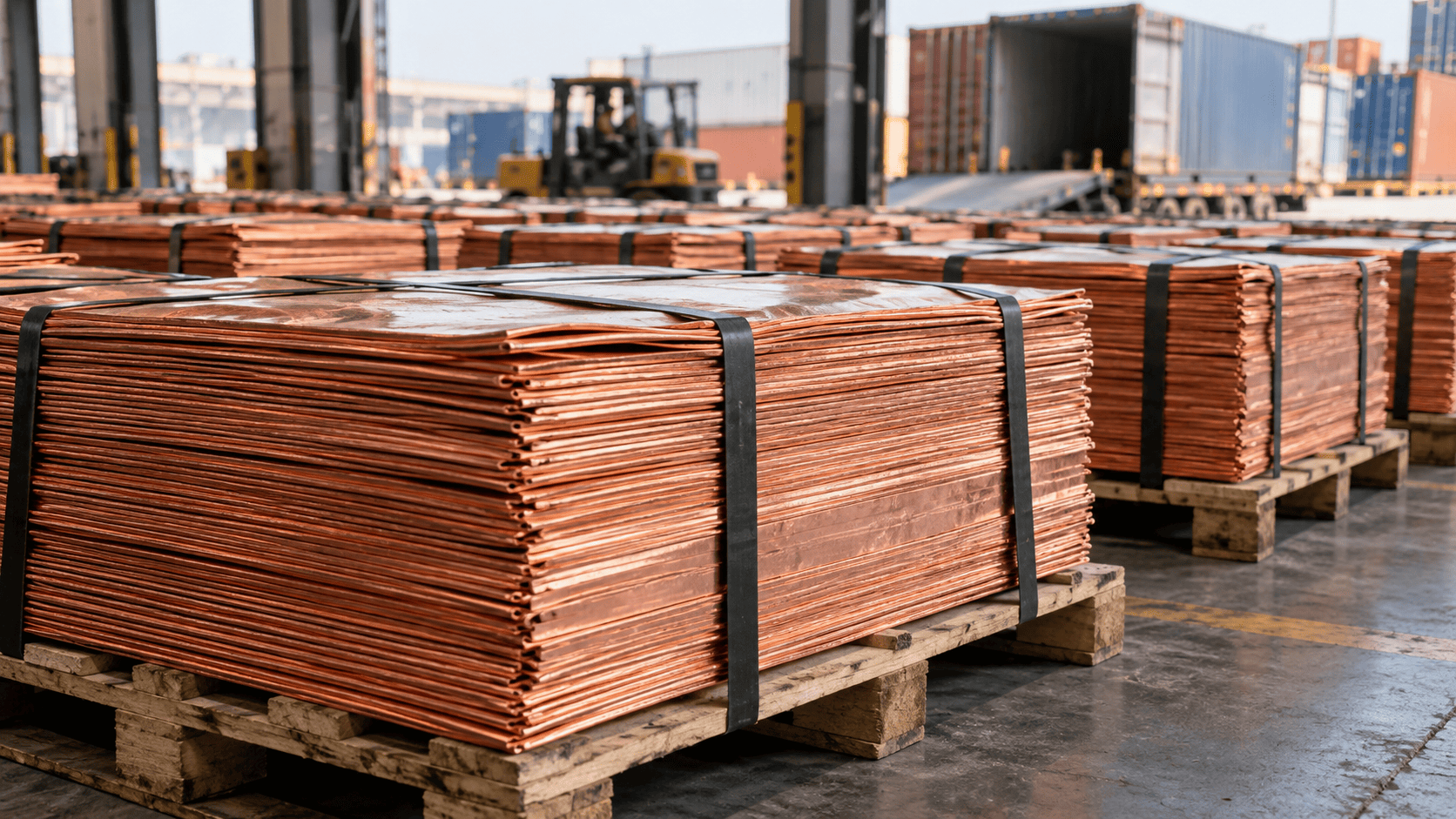
Marimaca's DFS outlines US$587 million in initial capital for approximately 50,000 tonnes of annual cathode output and a post-tax NPV of US$709 million at US$4.30/lb copper.
Partner-Funded Production Can Precede Shareholder Cash Generation
Gunnison Copper produces cathode at Johnson Camp in Arizona using Nuton, Rio Tinto's technology, to leach primary sulfide copper on-site rather than shipping the concentrate to a smelter. Johnson Camp's nameplate capacity is approximately 25 million pounds (about 11,300 tonnes) per year, separate from the larger Gunnison flagship, still at the preliminary economic assessment (PEA) stage.
Under the Nuton agreement outlined in Gunnison's March 2026 corporate presentation, mine cash flow repays Nuton's investment until the earlier of full repayment or June 2030. Sales at the COMEX price leave any US tariff premium as a scenario, not a contracted benefit.
The repayment terms place Nuton ahead of shareholders on Johnson Camp cash flow until mid-2030, a sequence Craig Hullworth, Chief Executive Officer of Gunnison Copper, sets out
"Up until mid-2030, any profits from the mine have to go towards repaying the investment, which is over $200 million so far from Nuton, and so the earlier of we fully repay that investment or mid 2030, that's when all the cash flows of the mine accrue to us."
Delivery Schedules Determine Whether Projects Address the Current Gap
Execution readiness determines when a project contributes to supply. Permitting windows, the periods regulators take to approve a project, set the earliest construction start, and funding must precede procurement, commissioning, and ramp-up.
Infrastructure & Partnerships Can Shorten Development Without Removing Risk
Selkirk Copper is preparing to restart the Minto mine in the Yukon, where existing processing, access, and tailings infrastructure reduce capital requirements. The company is targeting a 38% copper concentrate grade, offering a commercial advantage subject to metallurgical and impurity confirmation, while restart approvals, plant condition, and final financing remain unresolved.
Colin Judrey, Chief Executive Officer and President of Selkirk Copper, quantifies the capital benefit of a site with prior investment:
"We're not building from the ground up. We're leveraging over $330 million of above-ground investment by prior operators... Our capital costs are lower than we guided."
At Fitzroy Minerals' Buen Retiro project in Chile, an advanced development asset, ownership is conditional and production imminent. Under a letter of intent, Pucobre holds an option to claw back 30% of the project by reimbursing 90% of eligible expenditure, an arrangement funding studies and route to revenue, but is still subject to definitive documentation.
Longer-Dated Resources Remain Options on Future Supply
Hot Chili is targeting a 2029 investment decision and 2031 first production at Costa Fuego, after the current shortfall. Coda Minerals, a scoping-stage developer advancing prefeasibility work at Elizabeth Creek in South Australia, outlines A$615 million in initial capital and production from approximately 2030, with scoping figures carrying wider uncertainty than a DFS.
Caravel Minerals rescheduled the release of its DFS for the Caravel project in Western Australia to the fourth quarter of 2026, with a final investment decision targeted for the end of 2027. Its scale places prospective joint venture funding at the center of its financing path.
Kodiak Copper, an explorer, is advancing resource work at its MPD porphyry project in British Columbia. In porphyry systems, large low-grade intrusion-related deposits, cut-off grades (the minimum grade treated as ore), gold grades in grams per tonne (g/t Au), and conversion of inferred to higher-confidence indicated resources shape mine plans. A proposed consolidation of US copper assets into K Copper, in which Kodiak would hold 26.4%, is an asset consolidation rather than construction funding.
The Investment Thesis for Copper
- Chile's lowest monthly output since February 2011 and China's slowest refined copper growth since at least 2000 raise the scarcity value of new mine supply able to reach production within the current supply gap.
- Financing structures streaming by-product gold and silver rather than copper keep project economics exposed to the copper price, preserving more upside per share during periods of elevated copper prices.
- Cathode-producing heap-leach and sulfide-leaching routes avoid smelter treatment charges, while high-grade, clean concentrate projects stand to benefit from smelter competition for feed as concentrate and scrap tighten together.
- US-based cathode producers selling at COMEX prices have optionality on any domestic premium stemming from a pending decision on a refined copper tariff.
- Brownfield restarts reusing existing infrastructure, lower capital intensity and shortens the path to cash flow while prices remain elevated.
- Offtake agreements, royalties, partner claw-backs, and joint venture partnering set reference points for how much project value developers retain when strategic partners pay for exposure to new copper supply.
- Scoping-stage developments and exploration-stage porphyry assets offer longer-dated optionality on future supply, with economics carrying wider uncertainty than feasibility studies.
Chile's August trough and China's slowest refined output growth since at least 2000 support scarcity value for copper developers able to reach production within the current shortfall. Permits granted, debt closed, and construction started on schedule, separate executable projects from longer-dated options on future supply, and the market prices each accordingly.
The share of copper each project retains now matters more than copper exposure itself. Project debt and by-product streams preserve the share, while project stakes, claw-back rights, and concentrate offtake transfer part of it. Attributable NPV per share under the expected funding structure measures how much of a tight copper market reaches equity holders.
TL;DR
Chile's copper output fell 12.8% year on year to 369,500 tonnes in August, the lowest monthly figure since February 2011, while China's refined output is forecast to grow just 3% to 3.4% in 2026, the slowest pace since at least 2000. Near-record prices improve project economics years before new supply arrives, because funding, permitting and construction set delivery dates. Developers pay for construction capital with offtake commitments, precious metal streams, royalties and partner stakes, while cathode and concentrate routes carry different exposure to smelter terms. Attributable cash flow per share after financing and ramp-up, rather than headline project value or the copper price alone, determines how much of a tight copper market reaches shareholders.
FAQs (AI-generated)
Analyst's Notes





Subscribe to Our Channel













Stay Informed


