




Copper's Tariff Selloff Repriced Futures While Concentrate Suppliers Gain Margin


COMEX copper fell 4.2% on the stalled US refined tariff decision, but cash settlement held flat. Zero treatment charges move margin from smelters to miners.
- October copper fell 4.2% to US$6.5 per pound and LME three-month copper fell 3.1%, after Reuters reported the White House has not decided on refined copper tariffs.
- The LME cash settlement was US$14,390 per tonne that day against US$14,371 a week earlier, so the physical price was flat while the futures curve broke.
- Tariff expectations pulled a record 696,259 tonnes into COMEX warehouses, more than double LME and Shanghai stocks combined, leaving copper abundant inside the US and scarce outside it.
- ICSG data show mine production down 1.1% in the first half, against a 131,000-tonne refined surplus. Treatment charges at or below zero move margin from smelters to the mines feeding them.
Stalled Tariff Decision Breaks the Futures Curve While Cash Settlement Holds
COMEX October copper futures fell 4.2% to US$6.5355 per pound on Thursday 10 September, after trading above US$6.87 earlier that week, while LME three-month copper fell 3.1% to US$14,312 per tonne from a US$14,875 peak reached that morning.
The physical market barely moved. The LME cash settlement was US$14,390 per tonne on Thursday against US$14,371 a week earlier, so the 3.1% break in the futures curve came with a flat cash price. The selloff repriced policy expectations, not supply or demand. Copper is still up about 16% year to date. The TSX materials group fell 3.6% on Thursday, with Freeport-McMoRan and Teck Resources down about 7%, per Reuters.
Tariff Uncertainty Traps Record Copper Inventory in US Warehouses
The tariff expectation moved metal rather than creating it. COMEX warehouse stocks reached a record 696,259 tonnes in the week to 11 September, more than double the combined 235,000 tonnes on the LME and 63,000 tonnes on the Shanghai Futures Exchange, per ICAA. Shanghai stocks are down 85% since mid-March, the lowest since January 2024. US refined copper imports have risen 16-fold since 2015 while domestic production fell 20%, per US Geological Survey data cited by Reuters.
The stall is political. The Commerce recommendation was due 30 June and remains unpublished. The proposal is 15% from 1 January 2027, rising to 30% in 2028. Reuters reported on 10 September that the White House is weighing higher manufacturing costs against reshoring ahead of November midterms.
Mine Output Fell 1.1% While the Refined Market Ran a Surplus
Mined and refined supply tell different stories, and the distinction decides the thesis. ICSG data show world mine production down 1.1% in the first half of 2026, with Chile down 6.6%.
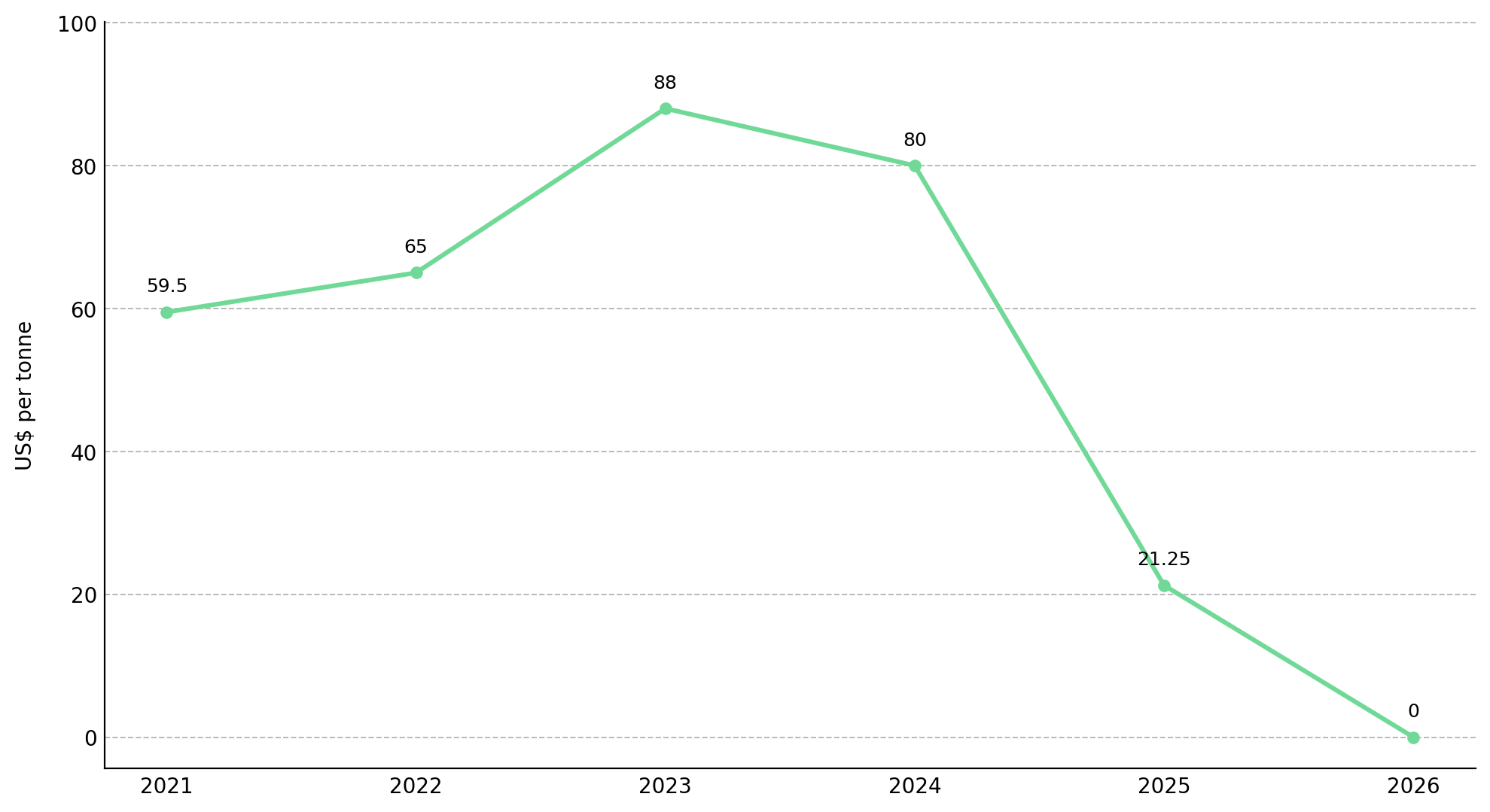
Treatment and refining charges, the fees a miner pays a smelter to convert concentrate into metal, settled at zero for 2026, the first zero in the benchmark's history, with spot terms below that. The charge is deducted from the miner's proceeds, so at zero the miner keeps more per tonne shipped. Smelters still earn from by-product credits and cathode premiums, but they have lost their largest fee line, and CSPT members are targeting 2026 output cuts above 10%. The same ICSG data put the refined market in a 131,000 tonne surplus over the first half. Concentrate is scarce; cathode is not.
Unresolved Tariff Policy Leaves Copper Equities Priced for Two Outcomes
Exposure splits by where a producer sells, not by what it mines. Producers shipping cathode into the US capture the tariffed price if the levy lands; those selling into Europe and Asia capture the LME price. Volume is the other risk: Chilean output fell 9.4% in July to 403,424 tonnes, and August export earnings fell 14% to US$4.62 billion.
What separates copper producers under this policy is whether they own US refining capacity. Freeport-McMoRan and Rio Tinto run the only two operating US smelters, so a refined tariff lifts the earning power of those assets while raising costs for the US fabricators they supply.
Policy Sets Copper's Price Now: Scarcity Sets Where Value Accrues
When policy decides where metal sits rather than how much exists, mining share prices move on headlines that touch no asset they own. Copper equities fell about 7% on Thursday against a cash settlement that was flat. Copper ran this episode before, when the market priced a blanket tariff and got levies on semi-finished products instead. Reversibility depends on the US stockpile being stored rather than consumed. Consecutive COMEX draws while LME stocks hold near 235,000 tonnes would mean US industry is absorbing the metal, and the reversal case fails.
The tariff premium paid whoever held metal in a US warehouse, not whoever mined it. The assumption that fails is that a higher copper price lifts every copper producer. With treatment charges at or below zero, smelters are surrendering margin to the mines feeding them, so a concentrate seller captures what an integrated producer hands back. Sorting copper holdings by whether they sell concentrate or cathode, and whether they carry smelting capacity, separates the two, and no replacement concentrate arrives before 2028 to close the gap.
Analyst's Notes





Subscribe to Our Channel




Stay Informed


