Rio Tinto Optioned Mogotes a Montana Porphyry Before the Filo Sur Deal


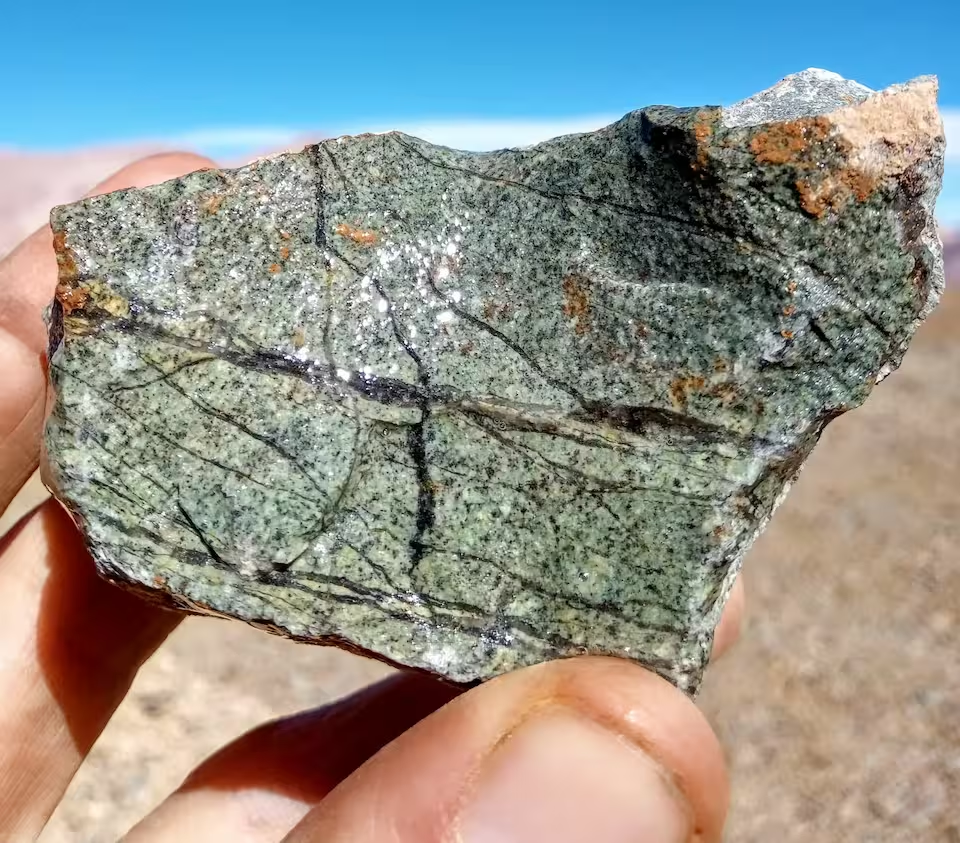
Rio Tinto's US$15 million placement in Mogotes Metals closed in August, but the two companies were already counterparties on a Montana porphyry option.
Rio Tinto's US$15 million placement in Mogotes Metals closed in August, but the two companies were already counterparties on a Montana porphyry option.
- Rio Tinto subscribed for approximately US$15,000,000 in a placement that closed on August 27, 2026, taking an initial approximately 5% interest in Mogotes Metals.
- The agreement gives Rio Tinto a 15-month period of exclusivity over Filo Sur, extendable by mutual agreement for a further 6 months, plus a right to match rival proposals.
- Rio Tinto discovered the Copper Cliffs gold-copper porphyry in Montana in 2013 and later granted Mogotes an option over the project.
- Both parties intend to explore extending the alliance to further mineral belts, including Kazakhstan, where Mogotes holds an option over Beskauga.
- The Filo Sur season closed on 6,208 meters (m) drilled, with up to 20,000 m planned for 2026 to 2027.
What the August Closing Transferred
Mogotes Metals (TSXV: MOG | FSE: OY4 | OTCQB: MOGMF) closed the placement on August 27, 2026, with Rio Tinto Canada Inc. subscribing for 30,387,857 units at C$0.70 per unit for gross proceeds of approximately US$15,000,000, equivalent to C$21,271,500. That buys an initial interest of approximately 5% in the company. Each unit combines one common share with one-half of one warrant, so the placement also issued 15,193,928 warrants exercisable at C$1.00 for 18 months from closing, worth a further C$15,193,928 to the treasury if all are exercised. The proceeds are directed to work programs at Filo Sur, and every security issued is subject to a statutory hold period expiring four months and one day from closing. The placement received all necessary regulatory and other approvals, including conditional approval from the TSX Venture Exchange.
Three definitive long-form agreements sit behind the money: a subscription agreement, an investor rights agreement, and an exclusivity agreement. The last of those gives Rio Tinto a 15-month period of exclusivity over Filo Sur, extendable by mutual agreement for a further 6 months, and inside that window, Rio Tinto can match any third-party proposal involving the project or the subsidiaries that hold it. A top-up right allows it to increase its position to up to 9.99% of common shares on a partially diluted basis, priced at the greater of the volume-weighted average trading price over the prior 20 days and a 20% premium to the previous close, subject to TSX Venture Exchange approval. Customary pre-emptive rights allow it to hold that proportion through subsequent offerings. Customary standstill restrictions bind it for the same period, which caps what it can do with the position while the clock runs.
The alliance built on top of the placement is technical work, not a change of ownership. A joint technical committee advises the Filo Sur exploration program, drawing on Rio Tinto's record of porphyry discovery and development, and Rio Tinto's proprietary geochemistry, geophysics, and targeting workflows are applied across the project. The two companies will also work together to add ground in prospective areas they have identified. Filo Sur adjoins the southern limit of the resource at the neighboring Filo del Sol deposit, the biggest copper discovery in 30 years, in one of the most prospective copper-gold-silver belts in the world.
The Montana Option Rio Tinto Wrote First
Copper Cliffs is a gold-copper porphyry target on a large claims package in western Montana, and Rio Tinto discovered it in 2013. Mogotes signed its option over the project with Kennecott Exploration Company, a Rio Tinto subsidiary, which made the two companies counterparties on a second asset, on a different continent, before any money moved in the Vicuña district. The property sits in a part of the United States where exploration and mining activity has been picking up again.
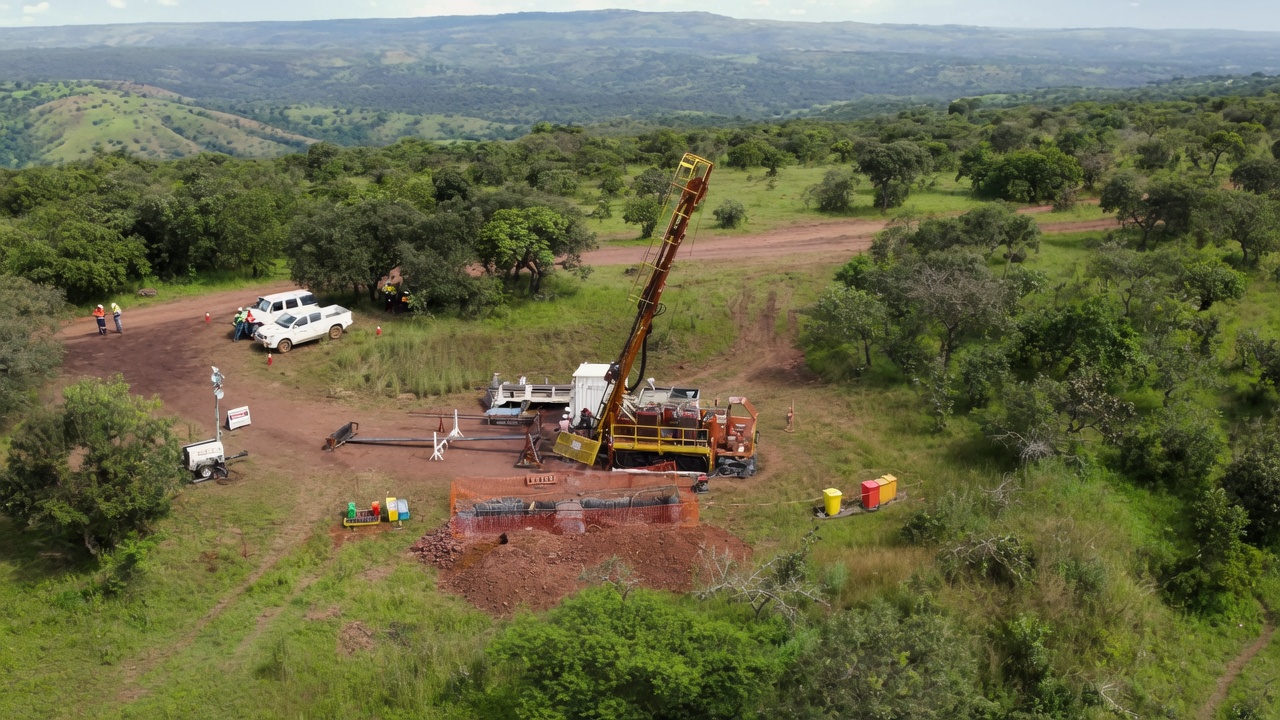
The claims package holds 42 drill holes totaling 36,468 meters (m). Highlight drilling returned 1,048.2 m at 0.46 grams per metric ton (g/t) gold and 0.34% copper from 785 m depth, including 513.5 m at 0.64 g/t gold and 0.43% copper from 831.6 m depth. Nobody has drilled the project since 2017, which leaves the defined porphyry mineralization open to step-out drilling in every direction the earlier program did not reach. For a company whose flagship is an exploration-stage property with no resource, a second asset already carrying a kilometer of continuous mineralized drilling is a different kind of holding.
The structure is an option for a joint venture rather than a purchase. Mogotes can earn 51% of the project by spending US$16 million over 3 years, and can earn up to 60% in total, in each case for exploration expenditure only. Kennecott can reverse that: within 90 days of each earn-in it may buy back to 51% for US$32.0 million, or to 60% for US$140.0 million. The cost to Mogotes is money spent in the ground, not a payment to a vendor, so the entry price is drilling, which it would have to fund anywhere it chose to work. That is the arrangement Rio Tinto made with this company in April 2026, four months before it took an equity stake in it.
Kazakhstan & the Second Belt the Alliance Names
With the Filo Sur documentation completed, the two companies intend to explore extending the alliance concept to additional highly prospective mineral belts, including in Kazakhstan. A data-sharing agreement covering prospective targets there is named only as a potential negotiation. Neither statement is a commitment, and nothing in the August agreements binds either side to a second belt.
Mogotes already holds ground in that country: the Beskauga project in the Republic of Kazakhstan, in Pavlodar Province, has completed 150 holes totaling 67,995 m of diamond and reverse-circulation drilling, and Mogotes holds a 3-year option over 100% of it. Its higher-grade gold-copper-silver core starts 40 m below surface, and highlight drilling has returned 957.0 m at 0.58 g/t gold, 0.34% copper, and 1.92 g/t silver from 44 m depth, and 751.5 m at 0.56 g/t gold, 0.25% copper, and 1.86 g/t silver from 48.5 m depth. A historical estimate prepared for a previous owner in February 2022 put Beskauga Main at 111.2 million metric tons (t) grading 0.30% copper, 0.49 g/t gold, and 1.34 g/t silver in the indicated category. A further 92.6 million t at 0.24% copper, 0.50 g/t gold, and 1.14 g/t silver is classified as inferred. Mogotes has not completed the work to verify those figures, does not treat them as current, and says they should not be relied upon.
President and Chief Executive Officer of Mogotes Metals, Allen Sabet, puts the market's valuation of the two non-Andean projects at zero:
"I feel as we've added two high-potential new projects, one of which I spoke to you about in Toronto, which is in Kazakhstan, and the other, which is in Montana and is a very compelling copper gold porphyry that we are not receiving value for those as well."
An extension of the alliance into Kazakhstan would put a major's targeting work behind an asset its holder says the market currently prices at nothing. Neither company has signed anything covering Kazakhstan, and both have stated the intention only.
The Portfolio the Partnership Fits
Mogotes explores three projects in porphyry belts on three continents: Filo Sur in the Andes, Beskauga in Kazakhstan, and Copper Cliffs in Montana. Filo Sur is the flagship and takes priority funding and focus, and its ground is either owned outright or held under option. The other two drill in the Northern Hemisphere summer, the half of the year the Andean program cannot operate.
Management treats that design as a cost-of-capital measure and as a way of de-risking from a single asset. A share price tends to languish through a silent half-year, and continuous results across three projects remove the 6-month silence most single-asset explorers accept. Cash and equivalents stood at C$40.1 million as of June 5, 2026, and the bulk of it is committed to the Andes. Filo Sur drills through the Southern Hemisphere summer, and its 2025 to 2026 program closed in early September. Management's argument is that the two Northern Hemisphere belts buy a year of news flow for a small fraction of the budget.
Sabet prices the off-season half of the portfolio against the Andean half:
"We're in jurisdictions like Kazakhstan where we drop $100 a meter. I can put 15,000 m out with $3 million kind of thing."
Those figures describe a company already organized around more than one belt.
What the Window Has to Produce
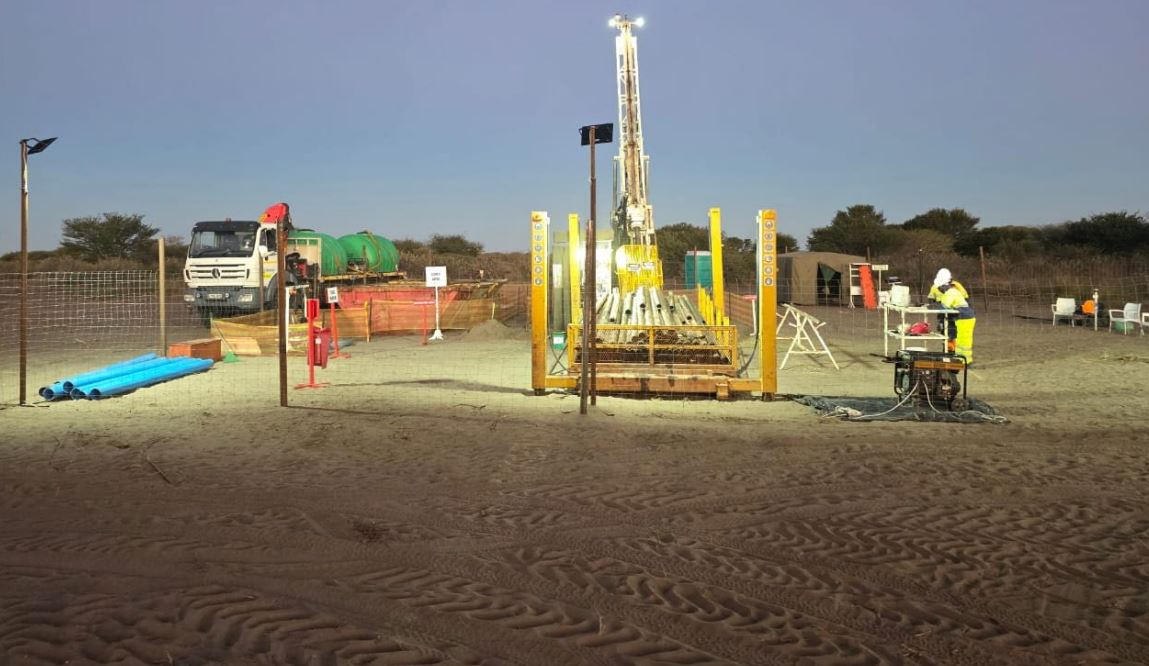
The Filo Sur season closed on September 4, 2026, with 6,208 m drilled, 4,746 m of it in Argentina and 1,461 m in Chile. The 2026 to 2027 program targets as much as 20,000 m against the 6,208 m just completed. All of that drilling falls within the exclusivity period established by the August agreements.
The season produced two discoveries. Albor returned 180 m at 0.98% copper equivalent from a depth of 108 m, with a combined grade that includes gold, silver, and molybdenum alongside copper, including 58 m at 1.77% copper equivalent. Cruz del Sur returned 308 m at 0.46% copper equivalent and 334 m at 0.45% copper equivalent, more than 640 m of porphyry in a single hole, above which a near-surface gold-zinc breccia begins 24 m below surface. The two discoveries fall on the Macho Muerto Fault Zone, a corridor roughly 10 kilometers (km) long running from Meseta in the north through Luz del Sol and Albor to Cruz del Sur.
The size of the 2026 to 2027 program follows from a decision Sabet made before the last one started:
"One of our objectives going in is drill as much as possible in that narrow season. And that's why we capitalize ourselves to do that, and also we're now equipped to follow up."
Five priorities take those meters: extension drilling at Albor; expansion drilling at Cruz del Sur; a first porphyry test at Luz del Sol and Cuenca; completion drilling at Meseta; and reconnaissance along the length of the fault zone for additional breccias and porphyries. Cuenca has grown to approximately 1.3 km by 0.5 km, with road-cut channel sampling returning 153 m averaging 0.31 g/t gold and 0.11% copper, including 54 m at 0.46 g/t gold and 0.14% copper, and two further cuts of 123.4 m at 0.32 g/t gold and 61.7 m at 0.19 g/t gold. At Luz del Sol, leached breccias carrying anomalous copper overlie an untested geophysical anomaly, and two holes there returned 18 m at 0.21% copper from 216 m depth, and 24 m at 0.16% copper from 179 m depth, with a further 20.5 m at 0.15% copper from 218.5 m depth. Rio Tinto's 15 months will be judged on those five programs.
The Investment Thesis for Mogotes Metals
- A relationship predating the placement began when Rio Tinto discovered the Copper Cliffs porphyry in Montana in 2013 and granted Mogotes an option over it.
- Time-bound rights leave the project with Mogotes while Rio Tinto holds a 15-month period of exclusivity over Filo Sur, a right to match rival proposals, and a top-up right to as much as 9.99% of common shares.
- A stated second belt is Kazakhstan, where Mogotes already holds a 3-year option over 100% of the Beskauga project and both companies intend to explore extending the alliance.
- Exploration paid in drilling gives Mogotes up to 60% of Copper Cliffs for exploration expenditure only, with a first stage of US$16 million for 51% over 3 years.
- A portfolio built for year-round news places projects in opposite hemispheres so Mogotes can drill and publish results across the full calendar, which management treats as a way to lower its cost of capital.
- A larger program inside the window takes Filo Sur drilling from 6,208 meters in 2025 to 2026 to as much as 20,000 meters in 2026 to 2027, across five named priorities, all of it within Rio Tinto's exclusivity period.
The case for Mogotes turns on what a major does with a bounded look at a company it has already worked with elsewhere. Rio Tinto has bought a defined period, a matching right and a route to 9.99%, and it has paid US$15 million for the privilege of watching 20,000 meters of drilling from the inside. Whether that ends in a transaction depends on what Albor, Cruz del Sur, and the first test at Luz del Sol and Cuenca return across the coming Andean season. The August closing already establishes that this is the second asset the two companies have worked on together, and that both have named a third belt in writing.
TL;DR
Mogotes Metals is a three-continent porphyry explorer whose relationship with Rio Tinto predates its headline deal: Rio Tinto discovered the Copper Cliffs target in Montana in 2013 and optioned it to Mogotes before subscribing for approximately 5% of the company and a 15-month exclusivity window over Filo Sur in August 2026. The alliance delivers a joint technical committee and Rio Tinto's proprietary targeting workflows, not a change of ownership, and both companies have said they intend to explore extending it to further belts, including Kazakhstan, where Mogotes holds an option over Beskauga. The test of the relationship is what the drilling returns, not what the placement was worth, and the Filo Sur season closed at 6,208 m with up to 20,000 m planned across five priorities for 2026 to 2027, all of it within the exclusivity period.
FAQs (AI-Generated)
Analyst's Notes





Subscribe to Our Channel








Stay Informed