enCore Energy's Production Rises 11.4% as Costs Fall



enCore Energy's Q3 2025 results show 11.4% production growth and declining costs, with $100M+ cash position contrasting uranium sector skepticism in 2026.
- Uranium equities entered 2026 under pressure as investors questioned whether demand growth, policy support, and supply deficits would translate into sustained cash flow and execution at the operator level.
- Against this backdrop, enCore Energy has continued to deliver tangible operational milestones, including production growth, cost reductions, and balance-sheet strength.
- Q3 2025 results show declining unit costs and improving realized margins, contrasting with a share price that reflects broader sector skepticism rather than company-specific performance.
- Governance reinforcement and federal permitting acceleration through FAST-41 designation further reduce execution and timeline risk, a key concern for institutional capital.
- The widening gap between operational delivery and market perception reframes near-term valuation risk, positioning execution-backed producers as potential beneficiaries when capital rotates back into uranium.
Market Conditions Facing Uranium Equities in Early 2026
The uranium equity landscape entering 2026 presents a notable divergence between structural demand fundamentals and investor sentiment. While physical uranium prices and long-term contracting activity have remained supportive, equity valuations across the sector reflect persistent capital caution. This environment creates both challenges and opportunities for operators capable of demonstrating execution consistency.
Capital Caution Despite Structural Demand Signals
Investor hesitation in uranium equities stems primarily from concerns over timing mismatches between nuclear build-outs, enrichment capacity expansion, and upstream uranium supply response. Global nuclear capacity additions and life extensions continue to support long-term demand projections, yet the pathway from policy commitment to operational reactors spans multiple years. This temporal gap between announced demand and realized fuel purchases creates uncertainty for investors seeking near-term cash flow visibility.
Equity performance across the uranium sector has lagged both physical uranium spot prices and the volume of long-term contracting activity reported by utilities. For institutional portfolios, this disconnect raises concerns about paying for thematic exposure without corresponding operational returns. The risk of holding positions in development-stage companies that may take years to reach production creates allocation hesitancy, particularly among generalist investors less familiar with mining sector timelines.
Execution Risk as the Market's Primary Filter
Developers and early-stage producers face significant valuation discounts driven by perceived ramp-up, permitting, and cost-inflation risks. Historical precedent from prior uranium cycles, where operational missteps delayed re-ratings despite supportive commodity prices, continues to shape institutional skepticism.
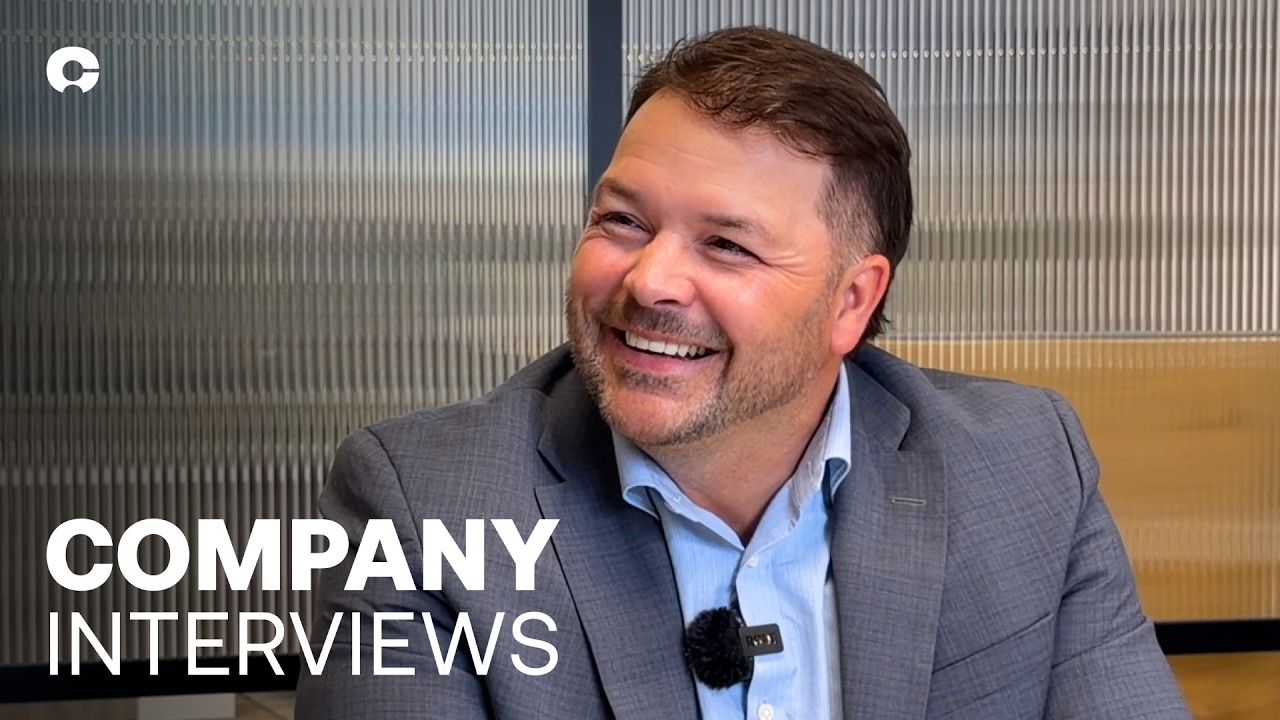
William Sheriff, Executive Chairman of enCore Energy, addresses why execution consistency carries greater weight than commodity price movements at this stage of the cycle:
"There aren't too many producers, there's a real shortage of them. There are a lot of wannabes and some of those certainly will be in the near future.The last year or two we've seen a lot of hurdles to that production. It's a lot easier to talk about than to actually do."
Operational Performance Metrics at enCore Energy
Within this skeptical market environment, operational delivery becomes the primary differentiator between companies commanding premium valuations and those trading at persistent discounts. enCore Energy's recent operational results provide specific data points for evaluating execution capability against sector-wide concerns.
Production Growth & Cost Structure
Q3 2025 results, released November 10, 2025, demonstrated continued production growth with uranium extraction increasing 11.4% from Q2 2025 to Q3 2025. Year-to-date, the company delivered 480,000 pounds of U3O8 into sales contracts during the first nine months of 2025. The company's weighted average cost of sold uranium declined materially on a year-over-year basis, reflecting operational efficiencies achieved through wellfield optimization and processing improvements.
The pace of wellfield development represents a critical operational metric. Reducing the time required to bring new production and injection wells online directly impacts production ramp-up velocity and cash flow acceleration. enCore's internal metrics show substantial improvement in this area, with average well installation time compressing significantly over the past operating period.
William Sheriff quantifies this operational improvement:
"The biggest significant metric that we look at internally is our average number of days to put a new well on... From roughly a little over seven days average of getting a production or injector well in, into just about 1.3 now, that metric is rather profound."
Balance Sheet Position & Financing Structure
As of September 30, 2025, enCore Energy reported closing cash and equivalents of $100.3 million with working capital of $119.7 million. This financial position provides capacity for self-funded ramp-up and development sequencing without requiring near-term equity issuance, mitigating dilution risk. The company's $115 million convertible note financing, carrying a 5.5% coupon with August 2030 maturity, achieved terms reflecting institutional confidence in operational trajectory.
William Sheriff addresses the balance sheet positioning:
"The cost of capital is something we've never seen before in terms of a five and a half percent coupon on a non-secured note... It gives us unparalleled flexibility, doesn't tie our hands as to what we can do in terms of pursuing other business relationships."
The financing structure expanded access to generalist institutional capital, broadening the potential investor base beyond specialist mining and commodity-focused funds.
Processing Infrastructure & Resource Configuration
Infrastructure availability represents a structural constraint across the uranium sector, with licensed processing capacity limiting the pace at which extracted uranium can reach the market. enCore Energy's infrastructure position provides context for evaluating production scalability and capital efficiency.
Licensed Processing Capacity
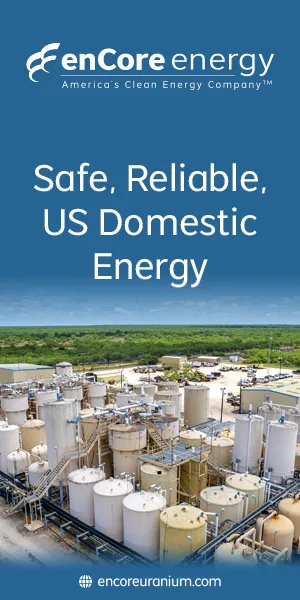
enCore operates two fully licensed Central Processing Plants: the Rosita CPP and the Alta Mesa CPP. The Alta Mesa facility commenced operations in Q2 2024 and is currently running at approximately 60% of its configured capacity of 1 million pounds per year. This positions enCore as the only United States uranium company with multiple Central Processing Plants in operation. Peers remain largely in permitting or construction phases for their processing facilities.
The hub-and-spoke in-situ recovery model employed by enCore lowers capital intensity relative to conventional mining approaches and enables incremental production additions through satellite wellfield development.
William Sheriff emphasizes the scarcity of operational processing infrastructure:
"We're the only company out there, in our arena and in our part of the world, that has two plants that are operational."
Resource Base & Expansion Potential
Measured and Indicated resources across enCore's project portfolio support long-life utilization of existing processing infrastructure. In October 2025, the company announced the discovery of uranium mineralized roll fronts at Alta Mesa East, demonstrating ongoing exploration success. Near-plant exploration targets and satellite wellfield development opportunities extend asset life without requiring major new capital expenditure for additional processing facilities.
Governance Structure & Technical Capability
Institutional investors increasingly apply governance depth as a screening criterion when evaluating uranium producers. The transition from development-stage management approaches to sustained production operations requires specific technical expertise and operational discipline.
Board & Technical Leadership
enCore's board composition reflects organizational focus on production optimization. Effective December 1, 2025, Wayne Heili was appointed to the Board of Directors, adding experienced ISR operational expertise. Dr. Dennis Stover announced his retirement from the Board effective December 31, 2025, with retention of technical expertise through advisory roles preserving institutional knowledge.
William Sheriff describes the organizational capability:
"Our biggest assets are people, our bench strength. We're probably the only team that can go and open up another duplicate operation and staff it with talented people that have had experience in the industry."
Operational Knowledge & Problem-Solving Capacity
The depth of technical expertise creates operational resilience, enabling rapid response to production challenges and continuous efficiency improvement.
William Sheriff elaborates on the organizational advantages:
"Having that strong technical strength and deep bench strength not only serves you well when you have a gap to fill, an urgent gap at that, but it gives you continuing strength in terms of collaborative ability to not only solve problems but to increase efficiency."
Regulatory Framework & Permitting Status
Permitting timelines represent a primary source of execution risk for uranium development projects. Federal and state regulatory processes can extend project schedules by years, creating uncertainty for both operators and investors seeking to model production trajectories.
FAST-41 Designation & Timeline Implications
enCore Energy's Dewey Burdock project in South Dakota received FAST-41 designation from the Federal Permitting Improvement Steering Council in August 2025, establishing a coordinated permitting framework with defined timelines and transparency requirements. The project's NRC license is approved and currently under timely renewal, meaning it remains active while the renewal application is processed.
William Sheriff addresses the permitting framework:
"It gives you a more certain and more acceptable timeline to get through all of your filing... It puts a burden on the company to meet their timelines because it's completely transparent... It's good pressure, it's incentivized pressure, and you cut your timelines dramatically."
Jurisdictional Considerations
U.S.-based in-situ recovery operations align with domestic supply-security initiatives that have gained policy traction. Reduced geopolitical exposure relative to offshore supply chains provides operational continuity advantages, particularly as uranium supply security receives increased attention from policymakers and utilities.
Macro Context for Uranium Investment Allocation
The broader uranium market context shapes how operational delivery translates into equity valuation. Understanding the relationship between sector-wide dynamics and company-specific execution provides framework for evaluating investment timing and risk.
Nuclear Demand Projections & Equity Performance
Global nuclear materials market growth projections continue to support long-term uranium demand, yet equity valuations across the sector have not reflected this fundamental outlook. This divergence between demand visibility and equity pricing creates potential value opportunities for operators demonstrating operational progress.
William Sheriff contextualizes the operational focus:
"In order to up your production you've got to get more wells in the ground. More wells, more fluid flow, more uranium going through the plant, higher recovery, higher daily production rate."
Conditions for Valuation Adjustment
Institutional investors typically require specific conditions before reallocating capital to previously discounted sectors, including demonstrated cost discipline, visible and growing production, and permitting certainty for development projects. Operators meeting these criteria position themselves to capture capital rotation earlier than peers still addressing execution risks. The company's contracting strategy, maintaining less than 50% of planned extraction under contract, preserves exposure to potential spot price appreciation.
The Investment Thesis for Encore Energy
The uranium sector presents specific characteristics relevant for portfolio allocation decisions in 2026:
- Operators demonstrating declining all-in sustaining cost equivalents and rising delivered pounds reduce downside risk relative to development-stage exposure.
- Licensed processing capacity creates enterprise value per pound premiums as supply constraints intensify across the sector.
- FAST-41 designation and agreement-state permitting frameworks are designed to compress development timelines and improve project economics visibility.
- Strong liquidity positions, including enCore's $100.3 million cash balance, support disciplined growth without forced dilution.
- Current valuations in certain cases reflect sector-wide skepticism rather than company-specific operating metrics.
- U.S.-based operations provide jurisdictional alignment with domestic supply-security policy priorities.
- Technical team depth enables operational scaling and efficiency improvements that support margin expansion.
- Hub-and-spoke in-situ recovery models reduce capital intensity relative to conventional mining approaches.
Operational Delivery & Valuation Implications
Operational delivery is increasingly separating credible uranium producers from speculative exposure as investors reassess risk in 2026. Cost reductions, production ramp-ups, governance depth, and permitting momentum collectively challenge the market's blanket skepticism toward the sector. For enCore Energy specifically, the combination of dual operating processing plants at Rosita and Alta Mesa, demonstrated wellfield efficiency improvements, FAST-41 permitting visibility for Dewey Burdock, and balance-sheet strength with over $100 million in cash presents a profile distinct from development-stage peers. As capital rotates back toward execution-backed models, companies demonstrating tangible progress position themselves to narrow the valuation gap between operational reality and equity pricing, reframing uranium exposure from a thematic trade to a fundamentals-driven investment case.
TL;DR
enCore Energy demonstrates operational execution that defies broader uranium equity skepticism entering 2026. Q3 2025 results reveal 11.4% sequential production growth, substantial cost reductions, and $100.3 million in cash. The company operates two Central Processing Plants—the only U.S. uranium producer with multiple facilities running—while dramatically improving wellfield efficiency from 7+ days to 1.3 days per well installation. FAST-41 designation for the Dewey Burdock project compresses permitting timelines. With a $115 million convertible note at 5.5% and less than 50% of planned extraction under contract, enCore maintains financial flexibility and upside exposure as institutional capital seeks execution-backed uranium plays over speculative development stories.
FAQs (AI-Generated)
Investors face timing mismatches between announced nuclear capacity additions and actual fuel purchases. The multi-year gap between policy commitments and operational reactors creates near-term cash flow uncertainty, causing equity valuations to lag physical uranium prices and long-term contracting activity.
enCore is the only U.S. uranium company operating two licensed Central Processing Plants simultaneously. The company has demonstrated declining production costs, 11.4% quarterly production growth, and over $100 million in cash—metrics that contrast with development-stage peers still navigating permitting or construction.
FAST-41 is a federal coordinated permitting framework that establishes defined timelines and transparency requirements for project approvals. For enCore's Dewey Burdock project, this designation compresses development schedules and reduces execution risk that typically concerns institutional investors.
In-situ recovery (ISR) uses a hub-and-spoke model that extracts uranium through wellfields connected to central processing plants. This approach requires lower capital intensity than conventional mining and enables incremental production additions through satellite wellfield development.
Institutional investors typically seek demonstrated cost discipline, visible production growth, and permitting certainty before reallocating to discounted sectors. Operators meeting these criteria—particularly those with strong balance sheets avoiding dilutive financing—position themselves to capture capital rotation ahead of peers.
Analyst's Notes





Subscribe to Our Channel










Stay Informed