Energy Fuels: The Only Western Company That Mines Uranium, Separates Rare Earths, & Makes the Alloys


.jpeg)
Energy Fuels is America's only mine-to-metal critical materials company: uranium, rare earths, and alloys from one balance sheet with $927M in working capital.
- America's largest uranium producer, targeting 1.5 to 2.5 million lbs of U3O8 in 2026, up from over 1 million lbs in 2025.
- The only U.S. facility processing monazite for separated rare earth oxides, with NdPr oxide already validated for commercial-scale EV motor magnets.
- $927.4 million in working capital as of December 31, 2025, including $797.1 million in marketable securities.
- Pending acquisition of Australian Strategic Materials closes the mine-to-metal loop with an operating Korean metals plant and a planned U.S. alloy facility.
- Uranium spot at US$86.95/lb end-February 2026; long-term price at a 14-year high of US$90/lb, and utilities are still under-contracted.
The Supply Crisis No One in Washington Can Ignore
The United States relies heavily on China for the inputs that power electric vehicles, defense systems, wind turbines, and nuclear reactors. The WNA's 2025 Nuclear Fuel Report projects global reactor requirements at approximately 68,920 tonnes of uranium in 2025, rising to over 150,000 tonnes by 2040. Primary production covered roughly 90% of reactor requirements in 2024, and mine development timelines have been revised to 10 to 20 years, making existing licensed infrastructure more valuable than the market appreciates.
Energy Fuels sits precisely at that intersection. It is the leading U.S. uranium producer, the only domestic company processing monazite into separated rare earth oxides, and a leading domestic vanadium producer, all through a single fully permitted facility in Blanding, Utah that took decades to build.
White Mesa Mill: The One Asset No Competitor Can Copy
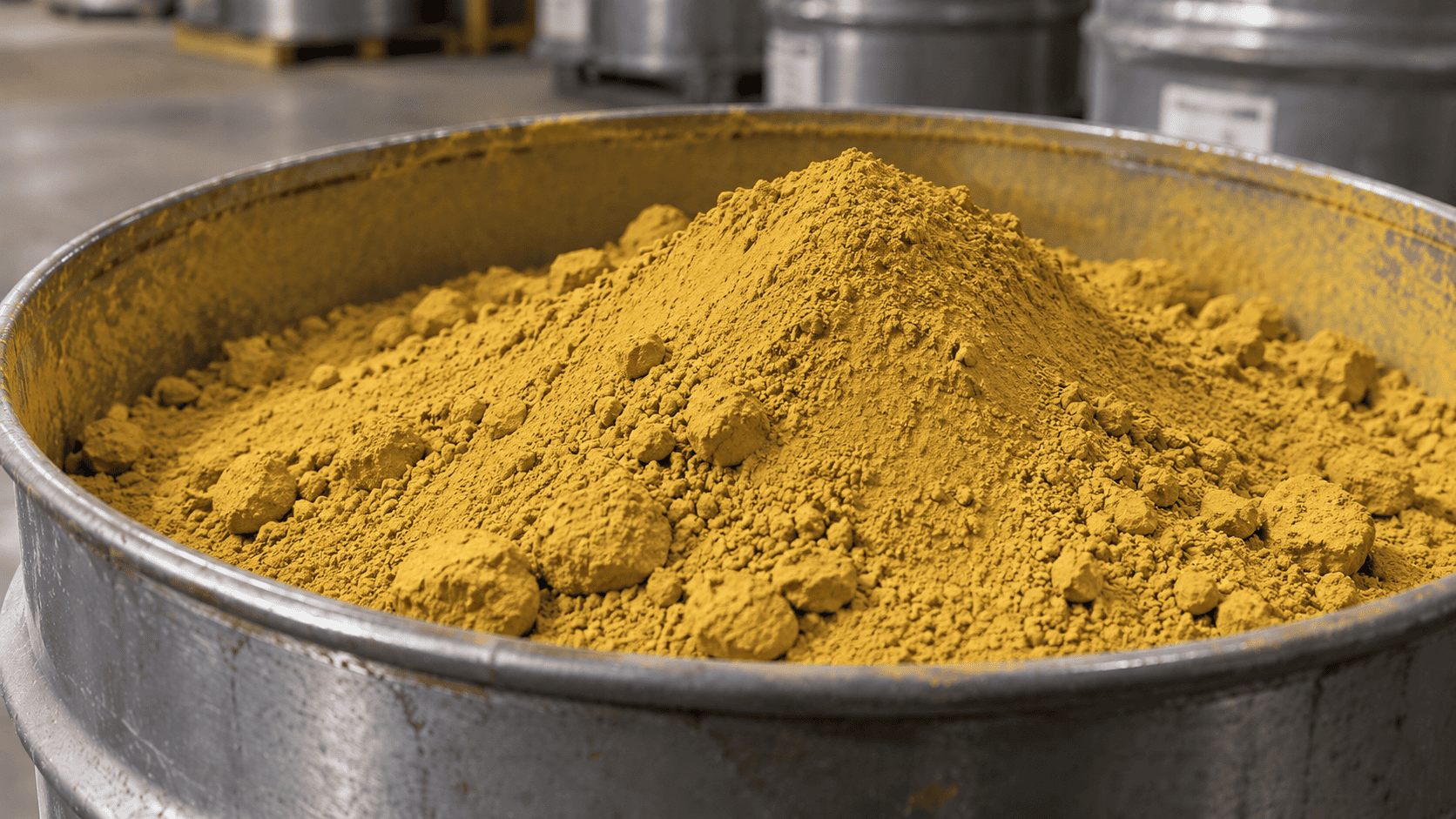
The White Mesa Mill is the only operating conventional uranium mill in the United States, running for over 45 years with a licensed capacity of more than 8 million pounds of U3O8 per year, the largest primary vanadium production facility in the country, and the only U.S. site capable of processing monazite for high-purity rare earth oxides.
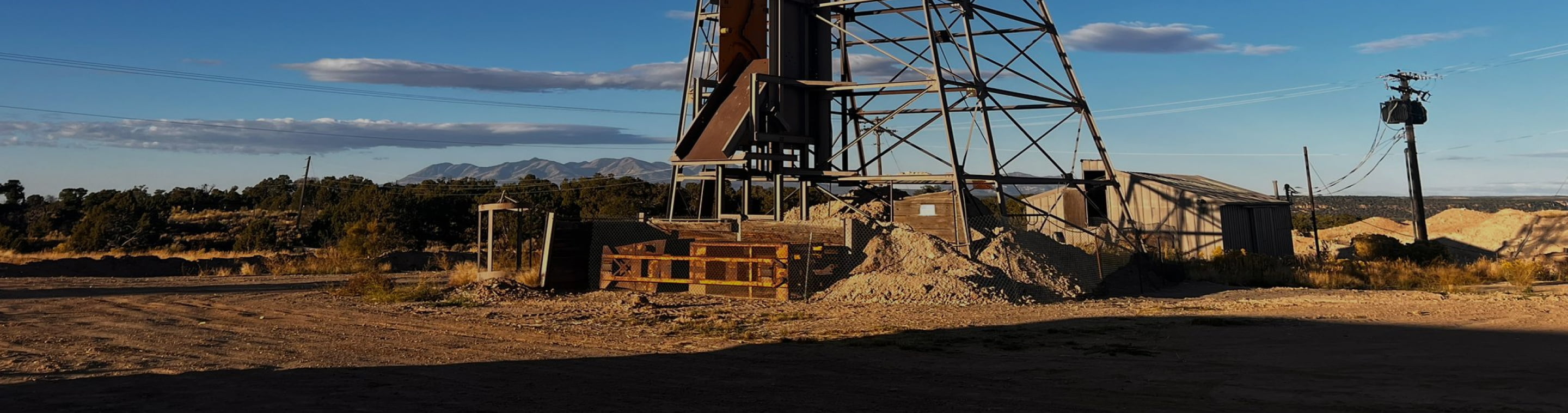
The Pinyon Plain Mine in Arizona mined 1.62% eU3O8 ore grade in 2025, potentially the highest-grade uranium mine in U.S. history, at costs of $23 to $30 per pound, targeting over 2.0 million pounds in 2026. In 2025, Energy Fuels sold 650,000 pounds at a weighted average of $74.20 per pound, exceeding every production guidance metric. Six long-term contracts with U.S. nuclear utilities run from 2026 through 2032. The spot price averaged US$73.54/lb across 2025 before settling at US$86.95/lb by end-February 2026. The long-term price reached US$90/lb at end-February 2026, the highest since 2008.
Why the Uranium Contracting Cycle Is a Ticking Clock for Investors
Uranium purchasing happens through multi-year bilateral contracts, not daily spot trades. Sprott Asset Management noted in January 2026 that 2025 marked the 13th consecutive year utility contracting fell short of the approximately 150 million pound replacement rate. In 2025, utilities contracted roughly 116 million pounds (Cameco), below the 120 million pounds contracted in 2024. Inventory coverage per Bell Potter stands at 2.6 years in Europe and 2.3 years in North America. Deferred purchasing accumulates into demand overhang that utilities must eventually address at whatever price producers are asking.
Energy Fuels holds six contracted delivery commitments through 2032 and signed two new long-term contracts with U.S. utilities in 2025. Licensed, permitted, and producing supply commands structurally better contract terms than undeveloped projects.
The Rare Earth Revenue Line That Could Transform This Business
Uranium is the well-understood part of the Energy Fuels story. Rare earths are where transformational upside resides. White Mesa's Phase 1 processes up to 10,000 metric tonnes per annum of monazite and produces up to 1,000 metric tonnes of NdPr oxide annually, validated for commercial-scale permanent magnet production by a manufacturer and an automotive OEM. NdPr oxide trades at approximately $135,000 per tonne (BMI North America CIF, February 19, 2026). Dysprosium trades at approximately $1,125,000 per tonne, a 443% premium to China pricing, and terbium at approximately $4,500,000 per tonne, a 401% premium. Energy Fuels produced approximately 29 kg of dysprosium oxide at 99.9% purity through 2025, with 1 kg of terbium oxide expected in March 2026.
Phase 2 targets 5,513 additional NdPr tonnes, 165 tonnes of dysprosium, and 48 tonnes of terbium per year. At current BMI prices and those volumes, the company projects annual revenue approaching $1.2 billion.
The ASM Deal: Closing the Loop from Mine to Magnet Alloy
In January 2026, Energy Fuels announced the acquisition of Australian Strategic Materials, expected to close by mid-2026. The deal adds a Korean Metals Plant currently producing approximately 1.3 thousand tonnes per annum of NdFeB alloy, a planned American Metal Plant at approximately 2.0 thousand tonnes per annum, and the Dubbo Project in New South Wales, a construction-ready 42-year mine life project producing approximately 1,000 tpa NdPr, 11 tpa terbium, and 49 tpa dysprosium.
The $700 million convertible notes offering was oversubscribed more than seven times at a 0.75% coupon and 2.1% all-in pre-tax yield. The monazite pipeline spans three continents: Donald in Australia (13,000 tpa, FID expected Q1 2026, A$520 million total funding); Vara Mada in Madagascar (NPV $1.8 billion, 24.9% IRR, $500 million expected EBITDA post-ramp, $7.30 per share); and Bahia in Brazil (3,000 to 5,000 tpa, resource estimate expected 2026).
$927 Million in the Bank & a Clear Path to Cash Flow
Energy Fuels ended 2025 with $927.4 million in working capital: $797.1 million in marketable securities, $73.5 million in inventory, $64.7 million in cash, and $18.0 million in receivables, against total assets of $1.41 billion. The 2025 net loss of $86.1 million ($0.38 per share) reflects investment ahead of the revenue curve. The uranium sales line generated $48.2 million on 650,000 pounds sold.
The convertible notes carry a 0.75% coupon and an effective conversion price of $30.70 per share after capped call protections. As production scales and REE revenues contribute, the path to positive operating cash flow becomes visible.
Six Moves Investors Should Consider Right Now
- Enter or add to UUUU before utilities, under-contracted for the 13th consecutive year, are forced back into the long-term market.
- Treat the White Mesa Mill as a scarcity asset: the only U.S. uranium mill and monazite separation facility, both requiring decades to build.
- Watch the Donald Project FID and Vara Mada government approval as near-term binary catalysts given the $1.8 billion NPV in Madagascar.
- Monitor the ASM acquisition close, expected mid-2026, as a potential institutional re-rating event.
- Track Q2 and Q3 2026 uranium sales against the 1.5 to 2.0 million pound guidance range as the earliest execution signal.
- Reassess sizing if uranium spot prices sustain above US$100/lb, a level likely to accelerate utility contracting across Energy Fuels' 2026 to 2032 book.
The Bottom Line: Why This Convergence Is Rare and Time-Sensitive
Energy Fuels holds a position that very few Western-listed companies can claim: the leading U.S. uranium producer where utilities are under-contracted for the 13th consecutive year, the only domestic rare earth separation facility processing monazite commercially, and the most advanced Western candidate for a fully integrated mine-to-metal critical materials supply chain.
The risks are real. Uranium spot prices remain volatile, Vara Mada requires further government approvals, the ASM deal must close and integrate, and Phase 2 REE carries execution risk. The structural case is reinforced by verified data: long-term uranium prices at 14-year highs, utility contracting below replacement rates, mine timelines of 10 to 20 years, and global reactor demand projected to more than double by 2040. Energy Fuels is one of the most concentrated intersections of uranium, rare earth, and critical materials exposure on any Western exchange.
TL;DR
Energy Fuels is the only U.S. company that can mine uranium, separate rare earth oxides, and produce metals and alloys for EV motors and defense systems. Production is ramping, the balance sheet is strong, and Washington needs what this company makes.
FAQs (AI-Generated)
Analyst's Notes





Subscribe to Our Channel












Stay Informed