Ex-Great Bear Team Plans 25-30,000m Drill Campaign Across Four Deposits for White Gold


.webp)
White Gold secures $23M for 30,000m drilling to grow 3M oz Yukon resource; Great Bear veteran targets high-grade extensions; maiden PEA H1 2027; Coffee infrastructure catalyst.
- New VP of Exploration Dylan Langille brings seven years from Great Bear experience, including logging the discovery hole leading to 5M to 7M ounces before the Kinross's $1.8B acquisition
- Resource upgrade to 3M ounces completed through geological remodeling, up from 2.3M ounces, with significant upside potential given only 90,000 meters drilled across four deposits
- $23M financing secured to fund 25-30,000 meters of drilling in 2026, focused entirely on resource growth
- High-grade core at Golden Saddle contains 1.1M ounces at 3 g/t and 700,000 ounces at 5 g/t within the 2.1M ounce deposit, driving maiden PEA expected H1 2026
- District infrastructure catalyst as Fuerte Metals plans production decision by 2027 at Coffee deposit, including road construction through White Gold's property portfolio
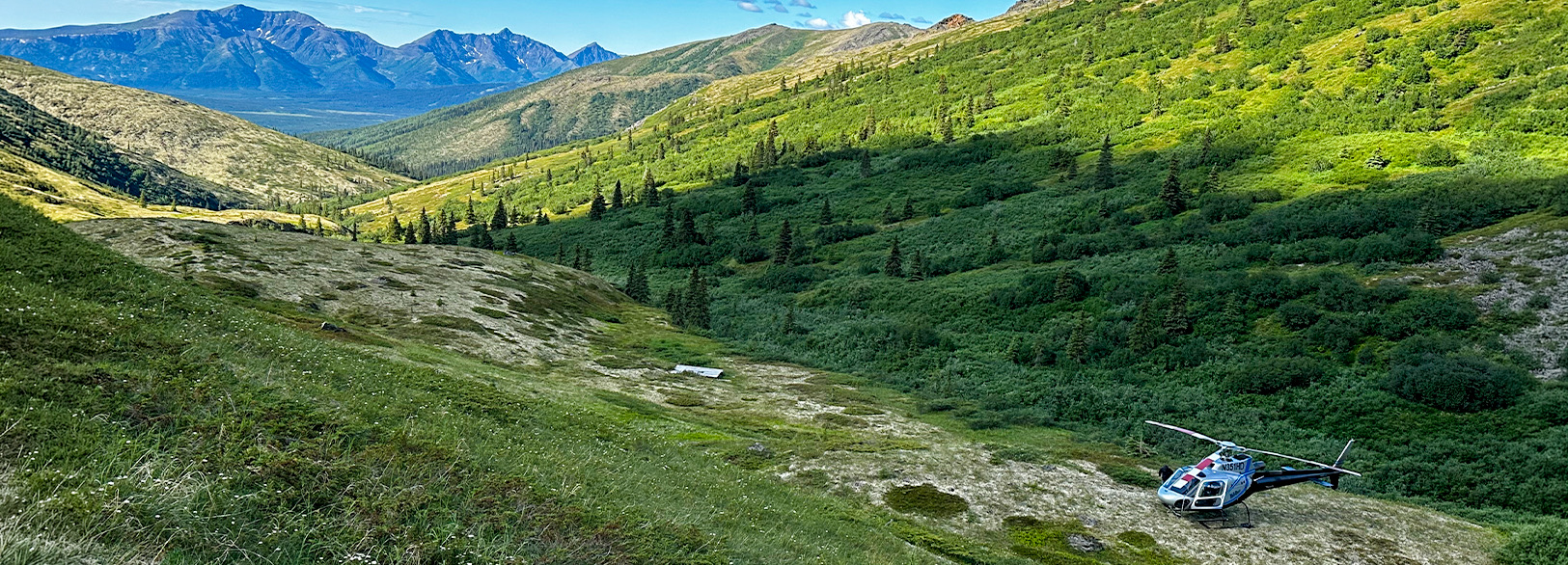
White Gold Corp is entering a transformative phase under new exploration leadership, with a fully-funded drilling campaign designed to expand its 3-million-ounce resource base across a 300,000-hectare land package in west-central Yukon. The junior gold explorer has recruited Dylan Langille, a key member of the discovery team on Kinross’s Great Bear project, to drive an aggressive growth strategy focused on demonstrating the scale potential of its four-deposit flagship White Gold property.
The company's strategic positioning in the Klondike district, just south of Dawson City, places it within a historically significant gold belt that has produced over 25 million ounces of placer gold but remains underexplored for hard rock deposits. With neighbouring Fuerte Metals advancing the Coffee deposit toward production, including plans for district infrastructure, White Gold appears positioned to benefit from both geological upside and improving regional economics.
The Great Bear Connection: Experience-Driven Leadership
Langille's recruitment represents a significant technical upgrade for White Gold. His involvement at Great Bear began in January 2019 on what was intended as a one-month contract.
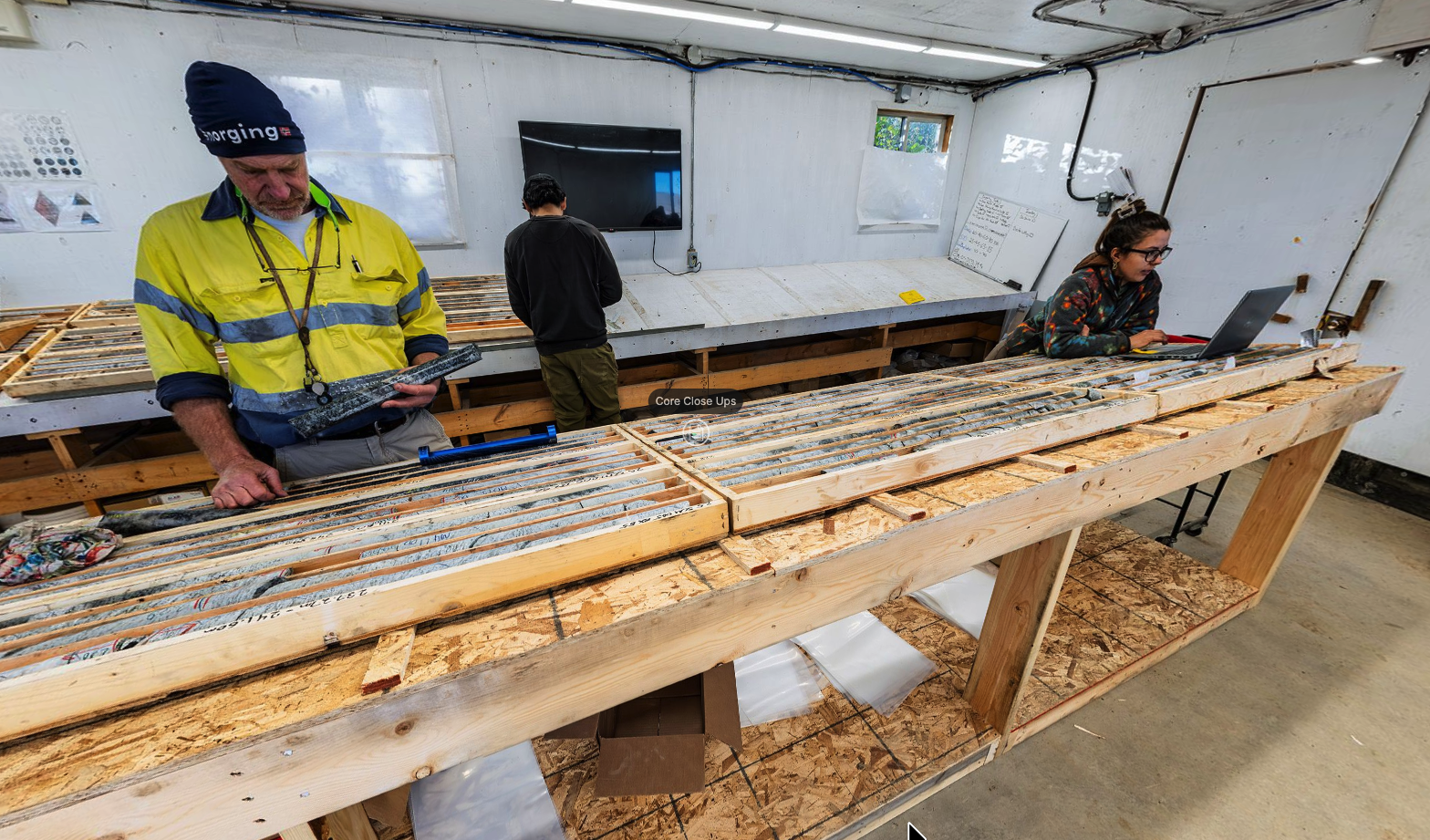
"I was fortunate enough to be the geologist in the core shack that logged the discovery hole and changed the whole story of gold hosted in felsic volcanics as opposed to just the classic Red Lake style gold deposit of gold and quartz veins in mafic rocks."
Following Kinross's $1.8 billion acquisition of Great Bear in February 2022, Langille assumed increasing responsibility, ultimately overseeing exploration programs that drilled approximately 350,000 meters and grew the resource from 5 million to 7 million ounces. This operational experience in scaling a discovery through to advanced development provides directly applicable expertise to White Gold's current stage.
Langille's decision to return to the junior discovery space was deliberate. "The most exciting days I think as a geologist are those days in the core shack when it's new drilling on a new target and you pick up those first pieces of core and find gold in them," he noted, contrasting the exploration phase with the production-focused trajectory at Great Bear.
Portfolio Scale and Discovery Potential
The primary attraction for Langille was White Gold's portfolio breadth. The company controls 21 properties spanning 300,000 hectares across west-central Yukon, with the flagship White Gold property hosting four deposits: Golden Saddle, Arc, Ryan's Surprise, and VG.
"The portfolio properties presented a long runway for discovery potential for many discoveries over the next 5, 10, 15 years."
The 3-million-ounce resource base, upgraded from 2.3 million ounces through geological remodeling in 2025, provides what Langille characterised as "a really solid foundation to make it a low-risk opportunity to jump back to that junior world." The remodeling exercise involved reinterpreting mineralisation wireframes and lowering the cutoff grade to 0.3 grams per ton, which Langille considers conservative for open-pit surface deposits.
Critically, the existing resource is defined by relatively limited drilling. Golden Saddle, which contains 2.1 million of the 3 million total ounces, has only 60,000 meters of drilling - a fraction of what comparable projects typically require. Ryan's Surprise and VG each have approximately 7,000 meters of drilling, while Arc has been tested to only 120 meters vertical depth across a 1.5-kilometer strike length.
2026 Strategy: Growth Over Infill
White Gold's $23 million financing, completed in late 2025, positions the company for its largest drilling program to date. The planned 25,000 to 30,000 meters represents approximately 30% of all historical drilling across the four deposits, signaling a material step-change in exploration intensity.
"2026 is going to be focused strictly on growth. We're really at a growth-focused stage where we want to define how many ounces there are on this system."
This approach prioritises resource expansion over category conversion, reflecting management's assessment that demonstrating scale potential takes precedence over increasing resource confidence at this stage.
The Golden Saddle deposit presents a particularly compelling near-term target. The deposit dips at 55 degrees to the north with an overall mineralisation envelope containing internal high-grade zones. Langille and his team have identified a high-grade plunge that has never been drill-tested, potentially controlled by the interaction between east-west strike-slip faults and north-south thrust faults.
"We could start our first hole next year as a 300-meter step out from that high-grade system if we want. If you hit, then all of a sudden you have that 300 meters to fill in. But right out of the gates, you're demonstrating to the market that our first hole is a 300-meter step-out and the mineralisation is there."
Interview with Dylan Langille, VP Exploration of White Gold
Geological Understanding and Targeting Approach
The four deposits exhibit both similarities and distinctions in their geological settings. Golden Saddle and VG are hosted in metavolcanics and metaplutonic rocks (orthogneiss and amphibolite), while Arc and Ryan's Surprise occur in metasedimentary rocks. All deposits feature gold hosted in quartz-carbonate-sulfide veins, fracture zones, and breccias, suggesting structural controls that crosscut lithological boundaries.
Langille's targeting methodology emphasises multi-dataset integration.
"You have to stack and layer all those data sets to get the best picture and the best estimate of where you want to put those drill holes."
The benefit of working with established deposits is the ability to vector in on trends and structures using extensive existing geochemical and drilling data.
The 2025 program, though limited to 2,500 meters, provided proof-of-concept for the growth strategy. The first drill hole successfully intersected the targeted footwall breccia zone at Golden Saddle, returning 6.8 grams per ton over 3 meters. More significantly, the hole intersected nearly double the anticipated grade in the main zone, suggesting the presence of high-grade tabular orebodies or pinch-swell zones within the broader mineralisation envelope.
High-Grade Economics Driving PEA Development
White Gold has initiated a maiden preliminary economic assessment, expected in the first half of 2027, ahead of completing the major drill program. This unconventional sequencing reflects management's confidence in the economic robustness of the existing resource, particularly the high-grade core at Golden Saddle.
Within the 2.1-million-ounce Golden Saddle deposit grading 1.4 grams per ton, the high-grade core contains 1.1 million ounces at 3 grams per ton and 700,000 ounces at 5 grams per ton.
"That's going to drive a really impressive economic model and it's really the driving force behind why we wanted to do a PEA ahead of even a big drill program next year."
The PEA will provide investors with preliminary capital and operating cost estimates, production profiles, and economic sensitivities, establishing a baseline economic framework that subsequent resource growth can be measured against.
Critical Minerals Diversification
Beyond gold, White Gold is advancing critical minerals targets within its portfolio. The company recently highlighted the Bridget target on the Pedlar property, located 35 kilometers north of Western Copper and Gold's Casino copper-gold-molybdenum deposit. Geophysical surveys have identified chargeability and resistivity anomalies beneath strong copper-molybdenum-tungsten soil geochemistry signatures.
"We're really excited about that target and that'll be ready for drilling next year as well."
Two additional properties with similar programs will be disclosed in coming weeks, suggesting a parallel exploration stream targeting base and critical metals alongside gold.
Infrastructure Catalyst and District Development
The advancement of Fuerte Metals's Coffee deposit represents a significant external catalyst for White Gold. Fuerte Metals has announced plans for a production decision by 2027, including construction of a road from the Coffee deposit through White Gold's property portfolio to Dawson City.
"That opens up the chance that if you make a 500,000-ounce discovery close to that road, well then you can truck the ore to whatever processing facility is built in the district."
This infrastructure development fundamentally changes the economic equation for White Gold's satellite properties, potentially rendering smaller discoveries economically viable through toll-milling arrangements.
The Investment Thesis for White Gold
- Proven leadership with discovery pedigree: VP of Exploration Dylan Langille delivered 2M ounce resource growth at Great Bear post-acquisition, bringing systematic discovery methodology to White Gold's 300,000-hectare Yukon portfolio
- Underdrilled resource with clear expansion vectors: 3M ounce resource defined with only 90,000m total drilling; Golden Saddle's 2.1M oz from just 60,000m; untested high-grade plunge and strike extensions at all four deposits
- High-grade economics driving near-term PEA: Golden Saddle core contains 1.1M oz @ 3 g/t and 700K oz @ 5 g/t, supporting robust preliminary economics in H1 2027 PEA ahead of major resource expansion
- Fully funded aggressive growth campaign: $23M financing enables 25-30,000m drilling in 2027 (30% of historical total), focused exclusively on resource growth rather than infill/conversion
- District infrastructure catalyst de-risking satellite properties: Fuerte Metals's Coffee production decision and planned road construction through White Gold portfolio creates toll-milling optionality for future discoveries
- Portfolio optionality across gold and critical minerals: 21 properties provide multiple discovery opportunities; copper-molybdenum-tungsten targets at Pedlar and other properties add base/critical metals exposure
- Emerging district play in underexplored jurisdiction: Klondike district produced 25M oz placer gold but lacks hard rock development; White Gold positioned as district consolidator in early-stage camp
- Systematic exploration approach minimising discovery risk: Multi-dataset targeting methodology stacking geochemistry, geophysics, and structural analysis; step-out drilling guided by geological vectoring rather than speculation
The Klondike district represents one of mining's great paradoxes: a region with over 25 million ounces of historic placer gold production that remains significantly underexplored for primary hard rock deposits. White Gold's systematic approach to district-scale consolidation and modern exploration techniques addresses this exploration gap at a time when jurisdictional stability and infrastructure development are converging to de-risk Yukon projects.
Fuerte Metals's advancement of the Coffee deposit toward production, including planned road infrastructure, validates the district's economic viability while potentially creating processing capacity that could support multiple operations. As Langille notes, the portfolio strategy resembles "owning parts of Timmins or Val-d'Or 30, 40 years ago" - capturing a large land position in an emerging camp before district economics are fully established.
With only 90,000 meters of drilling defining 3 million ounces across White Gold's four deposits, the company is applying modern geological understanding to a historically productive but technically underexplored region.
TL;DR: Executive Summary
White Gold Corp has secured $23M to fund 25-30,000 meters of growth-focused drilling in 2027 across its 3M-ounce Yukon resource, representing 30% of all historical drilling. New VP of Exploration Dylan Langille, who grew Great Bear from 5M to 7M ounces post-Kinross acquisition, is targeting untested high-grade plunge extensions at Golden Saddle and strike extensions across all four deposits with minimal drilling to date. A maiden PEA in H1 2027 will demonstrate economics driven by Golden Saddle's high-grade core (1.1M oz @ 3 g/t), while Fuerte Metals's planned infrastructure development through the property portfolio creates toll-milling optionality for future satellite discoveries.
FAQs (AI Generated)
The high-grade core at Golden Saddle (1.1M oz @ 3 g/t and 700K oz @ 5 g/t) provides sufficient confidence for robust preliminary economics. The PEA establishes a baseline economic framework that resource growth can be measured against.
Langille oversaw 350,000m of drilling that grew Great Bear from 5M to 7M ounces post-acquisition, providing direct experience in systematic resource expansion, geological modeling, and scaling exploration programs - directly applicable to White Gold's current growth phase.
The planned 25-30,000m represents 30% of all historical drilling (90,000m total) across four deposits. Golden Saddle's 2.1M oz came from just 60,000m, suggesting significant leverage to new drilling on underexplored targets.
At this stage, demonstrating total resource scale takes precedence over resource category conversion. With deposits defined by minimal drilling and open extensions, step-out drilling offers higher risk-adjusted returns than infill programs.
The deposits feature gold in quartz-carbonate-sulfide veins, fractures, and breccias with structural controls crossing lithological boundaries. High-grade zones appear controlled by fault intersections, creating predictable vectoring targets for expansion drilling.
Analyst's Notes





Subscribe to Our Channel






Stay Informed