




Fast-41 Permits, $47M Raised, and Idaho's Highest-Grade Antimony Veins: Resolution Minerals' Pitch


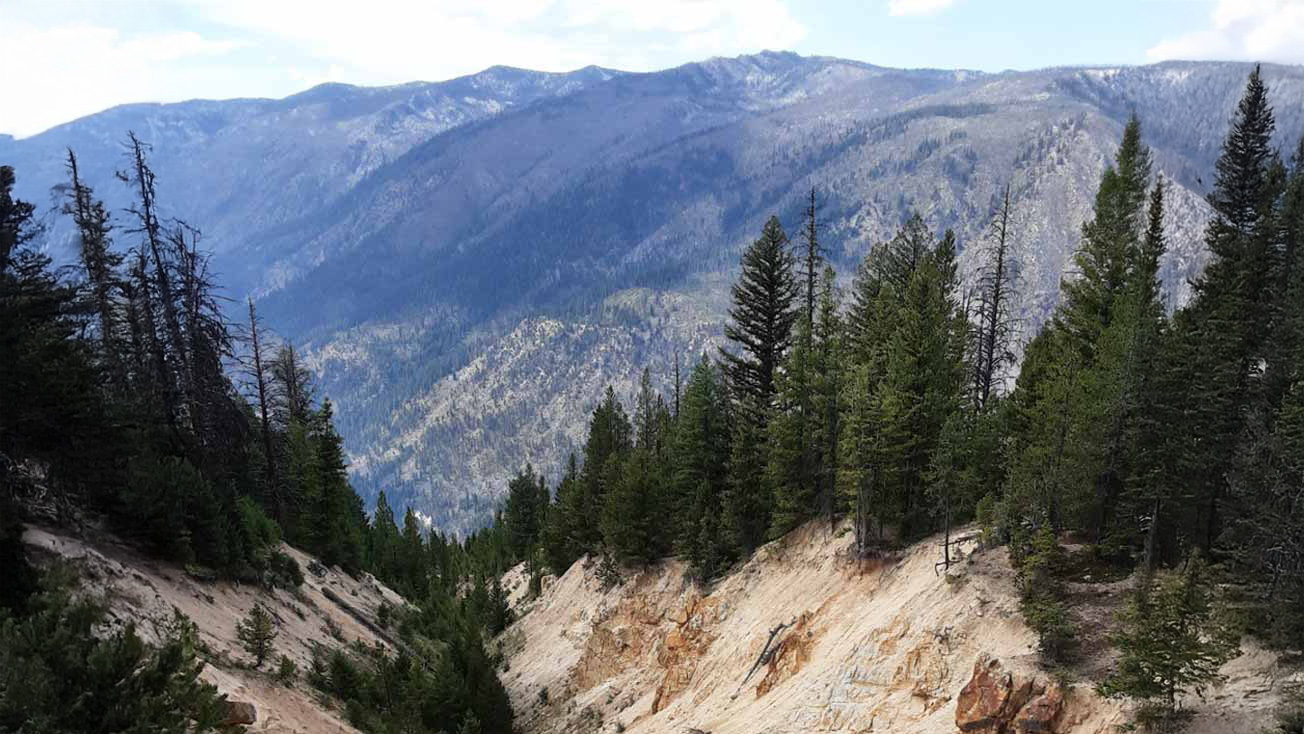
Resolution Minerals advances high-grade Idaho antimony & tungsten project with Fast-41 permitting status, $47M raised, and pending NASDAQ listing.
- Resolution Minerals' Horse Heaven project in Idaho hosts high-grade antimony veins that average approximately 40% compared with sub-1% grades at the neighbouring projects in Idaho.
- The company has raised a total of $47 million over the past six months and is pursuing a NASDAQ listing to gain access to deeper US capital markets.
- Resolution has secured Fast-41 federal permitting status, which imposes defined timelines on the US Forest Service's review process and is expected to reduce a key bottleneck in project development.
- The company is pursuing a phased path to early cash flow through tungsten stockpile sales to third parties and a bulk sample extraction permit application for a minimum of 500 tons of high-grade antimony material.
- Beyond its critical minerals assets, Resolution holds approximately 3 kilometres of strike length at its Golden Gate gold target, with historic and recent drilling indicating near-surface mineralisation and additional exploration upside.
The United States' dependence on China for antimony and tungsten, two metals central to defense, electronics, and industrial applications, has become a pressing policy concern in Washington. China processes roughly 80% of the world's antimony supply and mines around 60% of it, giving Beijing significant leverage over a market the US has historically relied upon. Resolution Minerals Limited (ASX), through its Horse Heaven project in Idaho, is positioning itself as a domestic alternative, combining past-producing tungsten and antimony mines with a developing gold resource on a single land package.
Proven Proximity and Grade Advantage
Horse Heaven sits directly adjacent to Perpetua Resources' Stibnite gold project, a permitted mine in Idaho that has attracted considerable attention from the US government and military due in part to its antimony content. Resolution's pitch rests on geological similarity combined with a meaningful grade differential. Craig Lindsay, CEO of US Operations for Resolution Minerals, who joined after the company acquired the Horse Heaven project from a group he was previously part of, described high-grade antimony veins on the project ranging from a few inches to a couple of feet thick to average about 40% compared with Perpetua's sub-1% antimony grade. Because Stibnite's antimony will be recovered as a byproduct of gold production, Lindsay argues that Resolution's standalone, near-surface antimony veins offer a more direct route to production.
Capital Raised and NASDAQ Listing
Resolution has raised a total of $47 million over the past six months primarily from Australian investors, and is in the process of listing on NASDAQ to access US capital markets, which Lindsay characterises as deeper than those in Australia. The company is also engaging directly with US policymakers and the Department of War (the renamed Department of Defense), which maintains a capital allocation program for critical minerals supply chains. Resolution is a member of the Defense Industrial Base Consortium, a channel for accessing this funding, and has submitted grant applications, though outcomes were not disclosed in the interview.
Lindsay was direct about the limits of relying on government capital:
"I don't believe you can build a project that relies on a business model where it only makes sense if you've got government money. With the high grades that we've got in the near surface nature of our mineralization, we're in a very good position from from that respect that this could be a standalone project."
He framed Resolution's priority instead as standalone economic viability, supported by high grades and near-surface mineralization, with government support sought primarily in the form of permitting assistance rather than as a funding dependency.
Interview with Craig Lindsay, CEO, US Operations of Resolution Minerals
Fast-41 Permitting, Infrastructure, Processing Strategy
Resolution secured Fast-41 coverage for the project, a federal designation that places permitting agencies in this case the US Forest Service under defined timelines administered through the Permitting Council in Washington, DC, rather than an open-ended review process. Lindsay considers this more consequential than government capital itself, given that permitting delays are commonly cited as a primary bottleneck across the mining sector.
The company holds the project on US Forest Service land and has acquired a 25-acre private parcel containing the historic Johnson Creek Tungsten Mill, which allows for more flexible permitting on the processing side relative to public lands. Resolution's near-term capital is directed primarily at its current drill program: a 45,000-foot, approximately 45-hole campaign that began in early May, with 60 holes and just under 4,000 meters completed as of the interview. Plans of operation are in place for permitting at both the Antimony Ridge and Golden Gate areas.
Resolution is evaluating sites in Idaho for a centralized processing facility intended to handle both its own ore and third-party material under a hub-and-spoke model. Lindsay stated,
"We've got both high-grade tungsten and high-grade antimony. The idea is to not just develop a large critical metals resource at Horse Heaven, but we've also very focused on developing both an upstream and a downstream component to our project in that we want to develop a local antimony and tungsten process facility hub."
On near-term cash flow, Lindsay outlined a phased approach: existing tungsten stockpiles on site would be shipped to third-party processing facilities in the near term, with letters of intent in discussion, while a modular processing unit would follow on the company's private land.
Gold Endowment and Catalysts Ahead
Beyond the critical minerals story, Resolution holds approximately 3 kilometers of strike length at Golden Gate, with historic drilling including campaigns in the late 1980s and early 1990s, and Lindsay's own work from the prior year indicating near-surface gold mineralization. One hole reportedly returned open-ended mineralization to 250 meters depth, averaging 1.5 grams per tonne gold. The company aims to test whether Golden Gate North and Golden Gate South are connected along the Johnson Creek shear zone in a future drill phase. Lindsay was careful to characterize this as a large-tonnage, lower-grade system more comparable to broader Nevada and Idaho gold deposits than to high-grade historic gold mines, several of which he noted are largely depleted in the western US.
Lindsay pointed to several near-term milestones: drill results from the current 45,000-foot program beginning in late July and continuing through year-end; a maiden resource estimate targeted for Q1 2027; continued engagement with US federal agencies and policymakers, with potential updates over the following six months; and ongoing team expansion, including the addition of a geologist with twelve years of prior experience at Perpetua Resources.
The Investment Thesis for Resolution Minerals
- High-grade, near-surface antimony: Veins averaging approximately 40% antimony compared with sub-1% grades at the adjacent Stibnite project, position Resolution for a potentially faster and lower-cost path to extraction.
- Strategic relevance to US critical minerals policy: China's dominance in antimony processing (~80%) and mining (~60%) has elevated antimony and tungsten supply security as a US policy priority, with direct relevance to defense applications.
- Fast-41 federal permitting status: This designation imposes defined timelines on the US Forest Service's permitting process, potentially reducing a key bottleneck common to mining development.
- Capital access and balance sheet: Approximately $47 million raised over six months and a pending NASDAQ listing may broaden the investor base and improve capital markets access relative to ASX alone.
- Downstream optionality: Ownership of a private 25-acre site including the historic Johnson Creek Tungsten Mill, combined with in-house metallurgical development under Dr. Adam Roer, supports a potential hub-and-spoke processing model rather than reliance solely on third-party offtake.
- Phased path to early cash flow: Existing tungsten stockpiles and a bulk sample extraction permit application for high-grade antimony material offer potential near-term revenue ahead of full-scale production.
- Underlying gold optionality: Approximately 3 kilometers of strike length at Golden Gate, with historic and recent drill intercepts, provides additional exploration upside beyond the critical minerals narrative.
- Active news flow: Drill results expected from late July through year-end, a maiden resource estimate targeted for Q1 2027, and ongoing Washington engagement represent multiple potential catalysts.
Macro Thematic Analysis
The United States' critical minerals vulnerability has moved from a policy footnote to an urgent national priority, driven by China's dominant control over antimony and tungsten, metals essential to defense systems, munitions, and advanced manufacturing. China currently processes approximately 80% of global antimony supply and mines around 60% of it, a concentration that has translated into real geopolitical leverage; China has previously curtailed exports to North America, exposing the fragility of US supply chains for materials with no ready domestic substitute.
This vulnerability has catalyzed a coordinated US policy response, encompassing expedited permitting frameworks like Fast-41, direct engagement from the Department of War on supply chain investment, and the formation of consortium structures such as the Defense Industrial Base Consortium to channel capital toward domestic projects. Resolution Minerals' Horse Heaven project in Idaho sits squarely within this thematic, distinguished from comparable projects by significantly higher in-situ antimony grades that may allow for a more direct, lower-capital path to production rather than dependence on byproduct recovery from gold processing.
Resolution's stated ambition to develop in-house hydrometallurgical processing and a hub-and-spoke facility model reflects this shift in industry focus from finding the rock to controlling the supply chain end-to-end. As US policymakers continue prioritising onshoring of critical minerals processing companies positioned with both high-grade resources and credible downstream processing pathways may attract disproportionate policy and capital attention relative to peers offering extraction alone.
TL;DR
Resolution Minerals presents a critical minerals and gold optionality story anchored by genuinely high-grade, near-surface antimony and historically productive tungsten assets in Idaho, USA that has become a focal point of US efforts to reduce reliance on Chinese-controlled supply chains. The company's Fast-41 permitting status and active engagement with federal agencies and the Department of War add a policy tailwind, while its phased approach to processing, including stockpile sales and a modular facility strategy, is designed to generate earlier cash flow than a conventional large-capital mine build. At the same time, the project remains pre-resource and pre-permit for full-scale operations, with funding outcomes from federal programs, NASDAQ listing timing, and drill results from the current program still pending. Investors should weigh the genuine grade and policy-relevance advantages against the execution risk inherent in an early-stage developer working to convert exploration potential and political momentum into production.
Frequently Asked Questions (FAQs) AI-Generated
Analyst's Notes





Subscribe to Our Channel




.jpg)
Stay Informed






















