




The Decarbonisation Divide & Why Junior Gold Producers Are Outperforming Mining Majors on Carbon Intensity


Explore how low-carbon underground gold producers are gaining an investment edge as carbon intensity reshapes valuations, costs, and capital allocation in gold.
- Gold producers with lower carbon intensity are gaining an advantage as institutional investors increasingly screen equities against a peer-average of 0.91 tonnes of carbon dioxide equivalent per ounce.
- Serabi Gold reports 0.57 tonnes of carbon dioxide-equivalent per ounce, 37% below the group average, supported by its narrow-vein underground operations.
- Large open-pit producers such as Gold Fields, Barrick Gold, and Fresnillo report higher emission intensities of 1.19, 1.33, and 1.51 tonnes, respectively.
- Grid electrification, renewable-heavy power, and sensor-based ore sorting can reduce diesel use, processing requirements, operating costs, and carbon intensity.
- Decarbonisation is becoming a core valuation factor, with low-emission producers potentially benefiting from lower energy costs, broader access to capital, and lower costs of capital.
Why Low-Emission Underground Mines Are Gaining an Edge
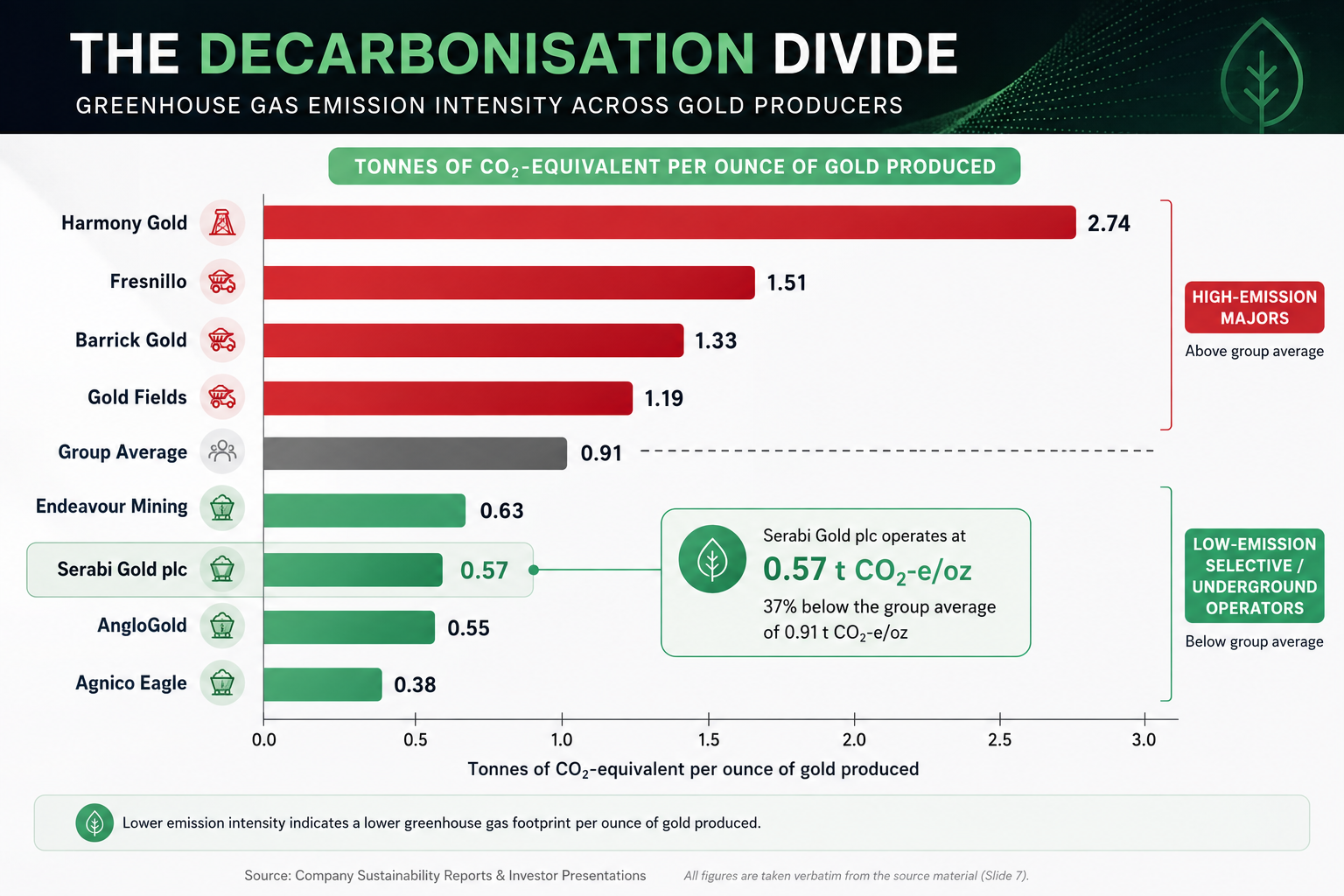
As ESG thresholds tighten, institutional capital is increasingly screening gold equities against a peer-average of 0.91 tonnes of carbon dioxide equivalent per ounce. High-emission operators such as Gold Fields (1.19 tonnes), Barrick Gold (1.33 tonnes), and Fresnillo (1.51 tonnes) face greater exposure to carbon taxation and rising financing pressure. By contrast, Serabi Gold plc operates at 0.57 tonnes, or 37% below the group baseline.
The intensity gap reflects fundamental differences in mining methods. Large open pits require substantial waste movement, diesel haulage, and energy-intensive processing, while selective, high-grade underground mines process less material per ounce of gold. Fresnillo's 1.51 tonnes of intensity compares with Agnico Eagle's 0.38 tonnes, illustrating how underground operations can achieve materially lower emissions. Serabi Gold plc also leads its peer group with a targeted 2026 free cash flow yield of 26%, compared with a peer average of 14%.
The advantage extends beyond emissions. Under carbon taxation frameworks, underground miners transitioning from diesel generation to renewable-heavy grid power can reduce exposure to fossil-fuel price volatility and operating costs. Fully funded grid connections therefore have implications for both margins and asset net present value, and may widen the cost-of-capital gap between high-emission majors and lower-intensity junior producers.
Industry Context & The Emission Intensity Landscape
The average emission intensity of the gold producer group stands at 0.91 tonnes of carbon dioxide-equivalent per ounce, establishing an institutional compliance benchmark. This peer group benchmark reveals that selective gold producers operate far below the industry average, whereas high-tonnage open-pit operators structurally exceed the baseline because their massive ore-handling circuits require continuous diesel material haulage and high-intensity electrical milling. As a result, high-emission operators face an increasing risk of institutional investment divestment, while low-emission operators enjoy preferential access to capital and lower borrowing costs.
Senior gold majors operating large-scale, lower-grade open pits report emission intensities significantly above the peer average of 0.91 tonnes. Specifically, Gold Fields reports an intensity of 1.19 tonnes of carbon dioxide-equivalent per ounce, Barrick Gold reports 1.33 tonnes, and Fresnillo reports 1.51 tonnes, driven by high stripping ratios and energy-intensive processing plants. At the extreme end, Harmony Gold reports 2.74 tonnes of carbon dioxide-equivalent per ounce, exposing its operations to severe carbon-taxation penalties and limited debt-refinancing options from environmental, social, and governance-aligned lenders.
In contrast, low-intensity gold producers operate well below the average, led by Agnico Eagle at 0.38 tonnes of carbon dioxide-equivalent per ounce, AngloGold at 0.55 tonnes, and Endeavour Mining at 0.63 tonnes. These figures demonstrate that low emission intensity is determined by geological and engineering choices rather than corporate scale, proving that underground profiles can outperform multi-billion-dollar gold majors on environmental, social and governance screening metrics. Consequently, fund managers can optimise their carbon profiles by reallocating capital away from high-emission majors to low-emission underground producers.
Emerging Practices & The Structural Drivers of Low Carbon Intensity
Geological characteristics determine mining methods and operating cost profiles. Large-scale, low-grade open pits require hauling millions of tonnes of waste rock per ounce of gold, thereby increasing diesel burn rates and milling requirements. Conversely, high-grade underground mines focus energy exclusively on concentrated mineralised zones, reducing waste handling and lowering cash costs per ounce.
To achieve deep decarbonisation, off-grid operators connect remote sites to national electrical grids via high-voltage transmission lines, lowering baseline tariffs. When these grids are powered by renewable sources such as hydropower, wind, or solar, the operation's carbon footprint decreases, shielding the company from carbon-tax penalties.
Sensor-based ore sorting structurally reduces carbon intensity by removing waste rock prior to milling. Colour and density sensors reject barren rock, reducing trucking and processing tonnages, cutting fuel costs, and liberating mill capacity. This pre-concentration reduces grinding energy and flotation water, lowering all-in sustaining costs and carbon emission intensity.
Remaining Challenges in Remote Jurisdictions
The primary barrier to grid electrification in remote provinces is the upfront capital expenditure for high-voltage transmission lines. This infrastructure competes with mine development capital, such as the US$15 million of underground development Serabi is executing in 2026 or the US$5 million required to expand Palito milling capacity to 900 tonnes per day. Funding these upgrades without equity dilution or high-interest debt remains a major hurdle for junior operators.
Regulatory timelines pose a major operational risk, as securing corridor approvals from state and federal agencies can take multiple years. In sensitive biomes like the Amazon, environmental impact assessments require exhaustive biodiversity surveys and multi-year monitoring to demonstrate that utility corridors will not cause primary forest loss, thereby adding regulatory delays.
Securing a social license is an absolute prerequisite, as community friction can cause costly project delays. Since transmission corridors often cross indigenous lands, developers must execute social studies and secure legal consent.
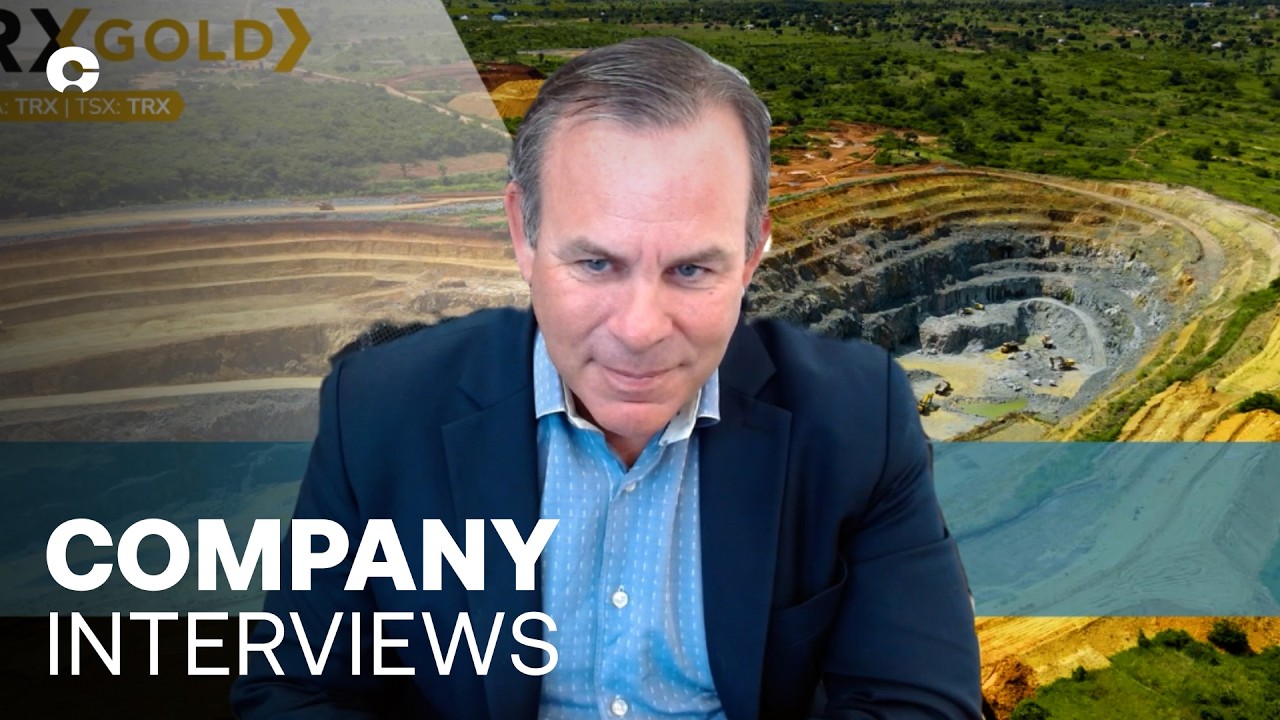
Chief Executive Officer of Serabi Gold plc, Mike Hodgson, explained the company's capital discipline :
"But we are spending a lot of money on exploration as much as we possibly can probably about $15 million we've also got capital as we're pre-production capital as we're expanding Coringa as we're going as we're going forward"
Company Case Study: Organic Decarbonisation in the Tapajós
The operational performance of Serabi Gold plc (AIM: SRB; TSX: SBI) in Brazil serves as a case study of how geology and engineering drive organic decarbonisation. The company reports a greenhouse gas emission intensity of 0.57 tonnes of carbon dioxide-equivalent per ounce of gold produced, which is 37% below the global peer group average of 0.91 tonnes. This low-emission profile places Serabi alongside ESG leaders such as Agnico Eagle and AngloGold, protecting its balance sheet from carbon liabilities and attracting capital from climate-conscious European institutions.
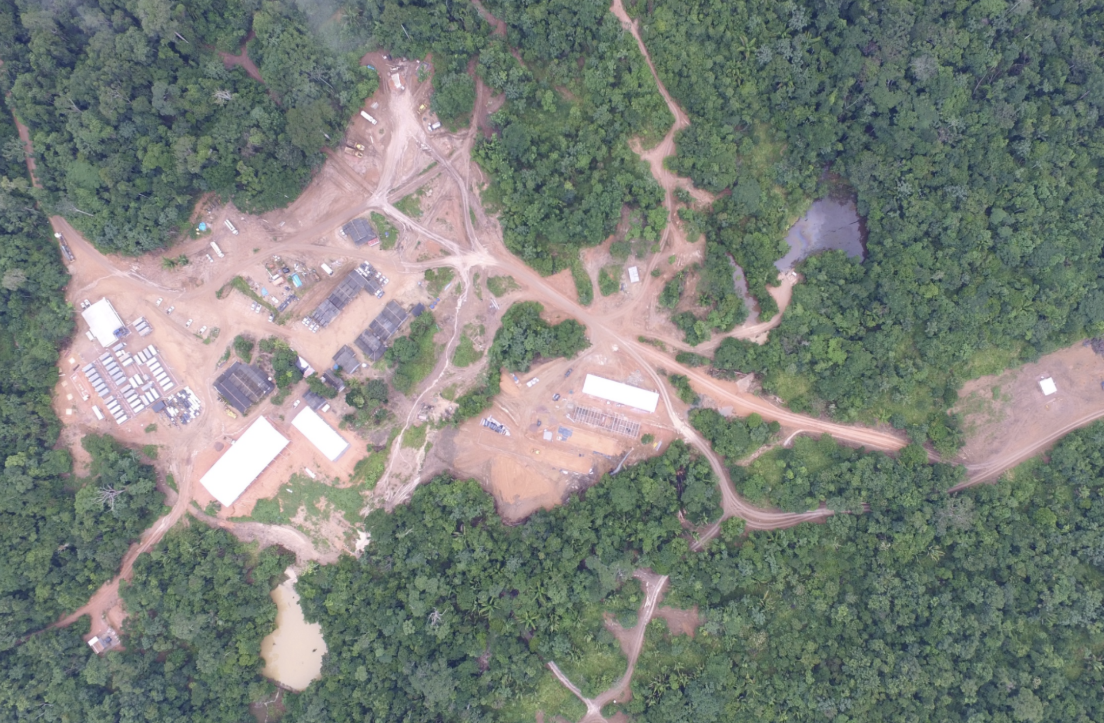
This footprint is driven by narrow-vein underground designs at the Palito Complex and Coringa Mine, eliminating primary forest clearing. To eliminate environmental risks, the company uses advanced filtration and dry-stacking, supported by a US$1 million investment in regional infrastructure, health, education, and environmental remediation. This model includes cultivating 1,201 native trees in an on-site nursery to reclaim historical workings, which strengthens local social license.
To further reduce emissions, Serabi is targeting the replacement of diesel generators with a dedicated grid connection. This project, progressing alongside mechanised sublevel stoping at Coringa, connects operations directly to Brazil's renewable-heavy grid to reduce power costs by 2027.
Hodgson highlighted community trust in securing federal permits:
"Well, we have a consultancy there. We use our Brazilian management. Our legal counsel gets involved too. I've got involved, and I've met both chiefs of both the tribes myself. They obviously got to know me quite well now, so we all get involved. We're just trying to really improve that relationship and just want to show these guys they can really do business with us, and that's it. The great thing for us is we've obviously had police for many years, and we're not a here-today, gone-tomorrow company. We've committed to the region for 20 years, so I mean they know we're a trustworthy lot, so hopefully that's going to say, that comes hopefully at the end of this year, maybe next"
Industry Outlook
The structural decarbonisation divide is set to become a primary determinant of asset valuations and capital allocation over the coming decade. As global carbon taxation, border adjustment taxes, and strict environmental screening thresholds are enacted, high-intensity gold producers face escalating compliance penalties and rising costs. Operations that fail to execute power-grid transitions will see their cost of capital increase and equity access restricted, compressing market multiples.
Conversely, gold producers that establish low-intensity operations and secure fully funded grid connection pathways represent defensive, premium-value assets. These low-emission operators will benefit from lower energy costs due to the superior economics of grid hydropower over diesel fuel, while attracting a broader shareholder base. The execution of grid-electrification strategies is no longer a discretionary public-relations initiative but a core operational requirement that directly determines cash-flow margins and access to capital.
To preserve equity value, mining companies must prioritise low-carbon footprints from the initial stages of exploration, development, and asset acquisition. Exploration teams are targeting high-grade underground resources to reduce volumetric ore throughput, while boards evaluate acquisitions under strict carbon-intensity screens to prevent portfolio-level valuation discounts. This divide structurally reshapes sector economics, rewarding low-emission producers with valuation premiums and lower costs of capital.
FAQs (AI-Generated)
Analyst's Notes





Subscribe to Our Channel



.png)

Stay Informed






















