




Cobra Resources at Manna Hill: Signals of De-Risking Before the August Assays


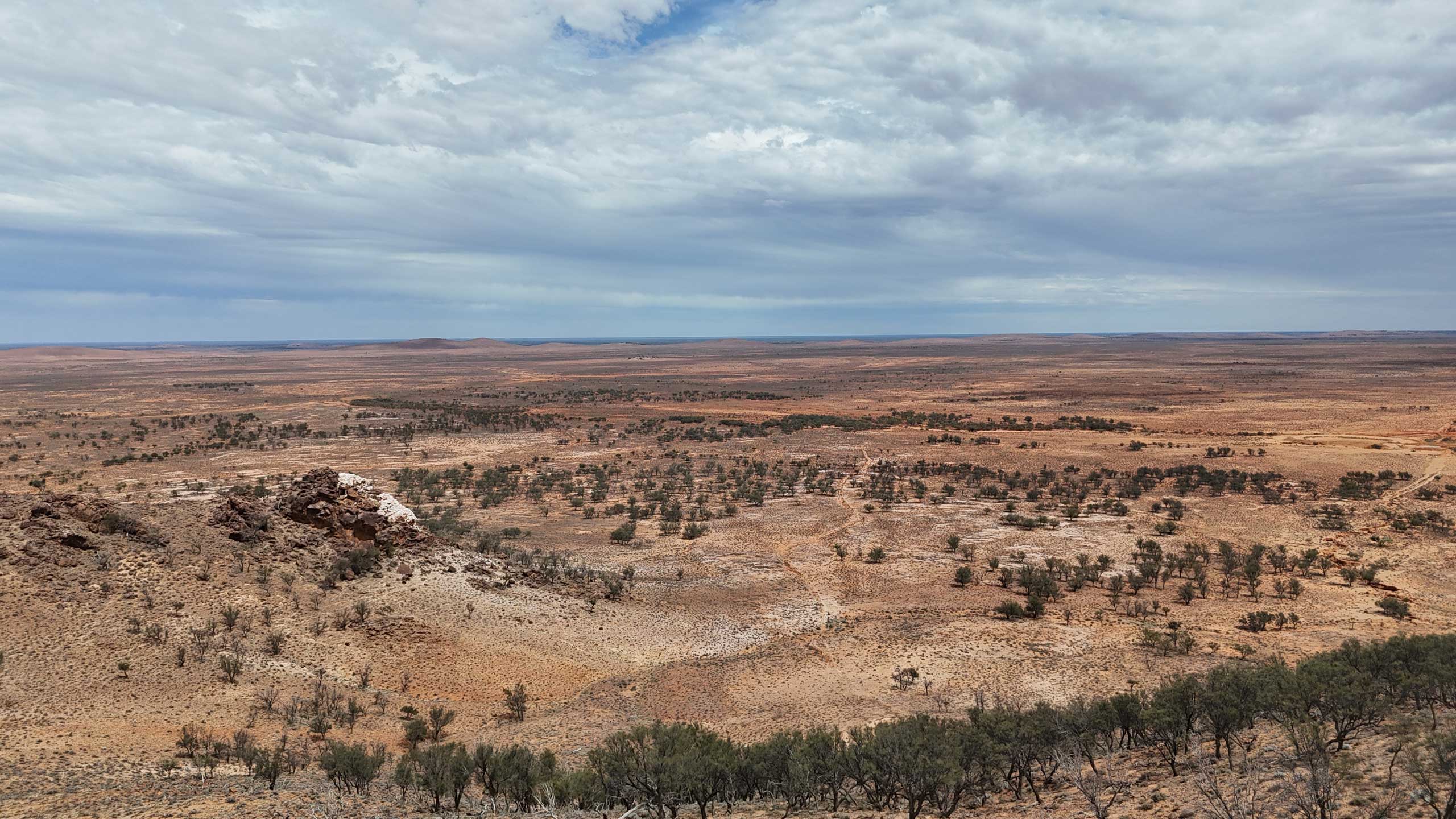
Cobra Resources extended Manna Hill copper sulphides to 300 metres and hit a bornite porphyry halo; grade now hinges on the August assays.
Project Overview
Cobra Resources (LSE: COBR) has completed a four-hole, 1,465-metre diamond drilling programme at its Manna Hill copper-gold-molybdenum project in South Australia and exercised its option to own the ground outright. The programme was designed to test extensions of the shallow high-grade copper at the Blue Rose prospect and to probe for a deeper porphyry copper system beneath it, the large intrusion-centred style of deposit that hosts many of the world's biggest copper mines. In the visual logging, it found signs of both copper sulphides carried far below the near-surface skarn and bornite, a copper-rich sulphide, sitting within the altered halo of a buried intrusion. None of that is graded yet. All observations to date are visual estimates, with laboratory assays anticipated in August 2026. What the drilling has done is de-risk the system's scale. What it has not done is confirm the grade.
1. Depth Continuity Extends the System to 300 Metres
The drilling turned a shallow oxide target into a system with demonstrated depth.
The key diamond hole was drilled beneath two earlier reverse circulation (RC) holes that had returned 74 metres at 1.02% copper and 0.25 grams per tonne (g/t) gold from 72 metres (m) depth, and 86 m at 0.60% copper and 0.14 g/t gold from 18 m depth. The new hole carried observed copper sulphides down to 300 m depth, adding vertical continuity beneath those intercepts. Shallow drilling had already defined copper over 1.6 kilometres (km) of strike, including 47 m at 2.2% copper and 0.78 g/t gold from 11 m depth, so depth was the missing dimension rather than extent.
Managing Director of Cobra Resources, Rupert Verco, is precise on the scale of the drilling, which has added:
“This drilling has extended observed sulphide mineralisation to a depth of 300m within a high-grade portion of the existing footprint.”
Depth continuity of that order is what separates an isolated skarn hit from the shoulder of a larger porphyry system.
2. Bornite in the Potassic Halo & the Porphyry Core
The copper minerals changed with depth in a way that points toward a hotter, higher-grade centre.
Deeper in the same hole, the copper mineralogy shifted. Chalcopyrite, the common copper-iron sulphide that runs about 32% to 33% copper, gave way to bornite at more than 60% copper, within a potassic alteration zone of biotite schist next to diorite and monzonite intrusions. That change in copper species, logged from 220 to 257 m depth, is a recognised marker of proximity to the potassic core of a porphyry system, where the higher temperatures and higher copper ratios sit closest to the heat source.
Verco frames the bornite result plainly:
“Intersecting a bornite-rich zone associated with a porphyry intrusive sequence is a positive indicator of a potentially higher-grade porphyry system.”
A move from a 33% copper mineral to a 60% copper mineral carries a direct grade consequence if the assays confirm the widths.
3. An Anhydrite Breccia as a Vector to the Parent Porphyry
A near-barren breccia is one of the clearest structural indicators of a large source system.
One hole cut a large fault-bound anhydrite breccia from 190 to 220 metres depth. Anhydrite is a sulphate mineral that carries the mineralising fluids coming off a porphyry heat source, so the breccia holds little copper itself but maps the plumbing that fed the overlying skarn. Breccias of this scale are common at major porphyry systems worldwide and uncommon in Australia, which is why intersecting one is read as a vector toward a sizeable parent intrusion rather than as ore in its own right.
4. A Southern Step-Out Beyond the Modelled Skarn
A hole meant only to test the model instead widened the footprint.
A step-out drill from the south to check the geological model unexpectedly hit shallow copper oxide from 14 to 67.5 m depth, outside the currently modelled skarn, with mineralisation continuing well down the hole. The oxide, logged as jarosite, malachite, and chrysocolla, indicates the mineralised footprint had been limited by where previous drilling stopped rather than by the geology. The true width and orientation of these southern zones are not yet defined, which is one of the questions the next programme is built to answer.
5. Geophysics & Senior Technical Additions Refine Targeting
The company now has both a repeatable geophysical handle and the people to sharpen it.
The higher-grade zones at the Manna Hill porphyry-skarn project line up with deep magnetic lows created by the reversed magnetisation of the diorite porphyry intrusions, and the bornite coincides with an inversion-modelled magnetic anomaly. That correlation gives a direct geophysics-to-mineralisation link the team can use to rank step-out targets rather than drill blind.
To work that relationship, Cobra has added senior technical weight. Former global head of exploration at Rio Tinto, Stephen McIntosh, now active in copper exploration in South America, and geochemist Professor Ross Large have joined the effort, with petrology and petrophysics work aimed at translating the magnetic model into grade before the next programme.
6. Chairman Subscription & Board Alignment
The board put its own money in ahead of the results.
Non-Executive Chairman of Cobra Resources, Andrew Michelmore, subscribed for £140,000 of shares alongside the programme. Insider buying of that size, from a chairman with a long record in the industry, aligns the board with outside shareholders at exactly the point where the assays, not the visuals, will determine value.
7. Grade Remains Unconfirmed Ahead of Assays
Everything above is a visual estimate, and the grade is still an open question.
None of the intersections described so far is a measured grade. All of it is visual logging of mineral abundance, which the company itself cautions is no substitute for laboratory analysis. That distinction carries the near-term risk: bornite that looks rich in the core can still assay below the visual read, and mineralisation seen down a hole is not the same as grade across it.
Verco is careful about what remains unproven:
“Whilst we wait for laboratory results, geological observations to date provide encouraging indicators of an extensive and fertile porphyry system.”
Assays are anticipated in August 2026, and management has framed the test as a test of whether the holes reproduce earlier grades over broader widths, with narrower high-grade intervals within them.
8. The Near-Term Catalyst Sequence
A defined run of catalysts follows the assays.
Beyond the laboratory results, a follow-up RC programme is planned for September 2026 to step out and drill deeper, testing the true scale that the current holes could only imply. The August assays and the September step-out together set the path for a copper re-rating through the rest of 2026.
In parallel, Cobra is advancing its Boland rare earth project, with a maiden mineral resource estimate targeted for the third quarter of 2026, followed by a scoping study, a small-scale in situ recovery production trial, and a bankable feasibility study. Running a scaling copper discovery and a rare earth project side by side gives the company two independent sources of news flow into 2027.
Key Takeaway for Investors
- Diamond drilling has extended the observed copper sulphides to a depth of 300 metres, turning a shallow skarn into evidence of a system with real vertical scale.
- A shift from chalcopyrite to the far richer copper mineral bornite within the potassic halo points to a hotter, potentially higher-grade porphyry core.
- Together, a large anhydrite breccia and a magnetic-low correlation provide the company with a structural vector and a repeatable geophysical method for the next targets.
- A southern oxide step-out and two senior technical appointments have widened both the drilled footprint and the interpretive firepower behind the programme.
- Grade remains unconfirmed until the August laboratory assays, with a September step-out and a maiden Boland rare-earth resource as the catalysts that follow.
The July programme moved Manna Hill from a shallow high-grade curiosity to a credible porphyry target with size behind it. The one variable it did not settle is the one that sets the value, and that answer sits with the laboratory rather than the core shed.
Bottom Line
Cobra Resources has spent its drill metres to answer the scale question at Manna Hill, and on the visual evidence, it has: copper sulphides to 300 metres, bornite in the porphyry halo, a fluid-pathway breccia, and a widening southern footprint, all tied to a magnetic signature the team can chase. The grade question has been deliberately left to August. If the assays reproduce the copper and gold grades seen in the earlier holes across these broader widths, the de-risking sequence holds, and the September step-out becomes the next leg. If they undershoot the visuals, the scale still stands, but the economics reset. Either way, the read on this company over the coming weeks is an assay read, not a core-photo read.
Analyst's Notes





Subscribe to Our Channel





Stay Informed






















