




Fitzroy Minerals’ Caballos Porphyry Discovery: 8 Things You Need to Know


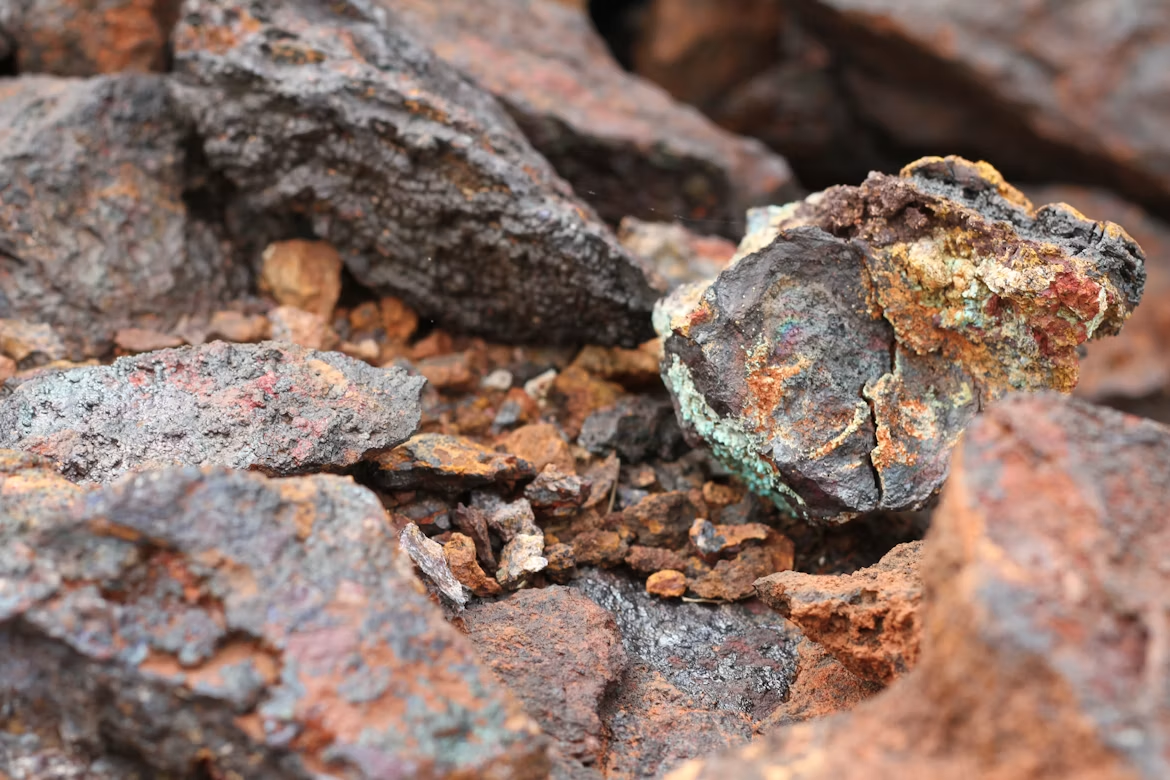
Fitzroy Minerals' Caballos porphyry sits between Los Pelambres and Los Bronces with a 5km conductive anomaly and a 200m copper intercept from the first hole.
Project Overview
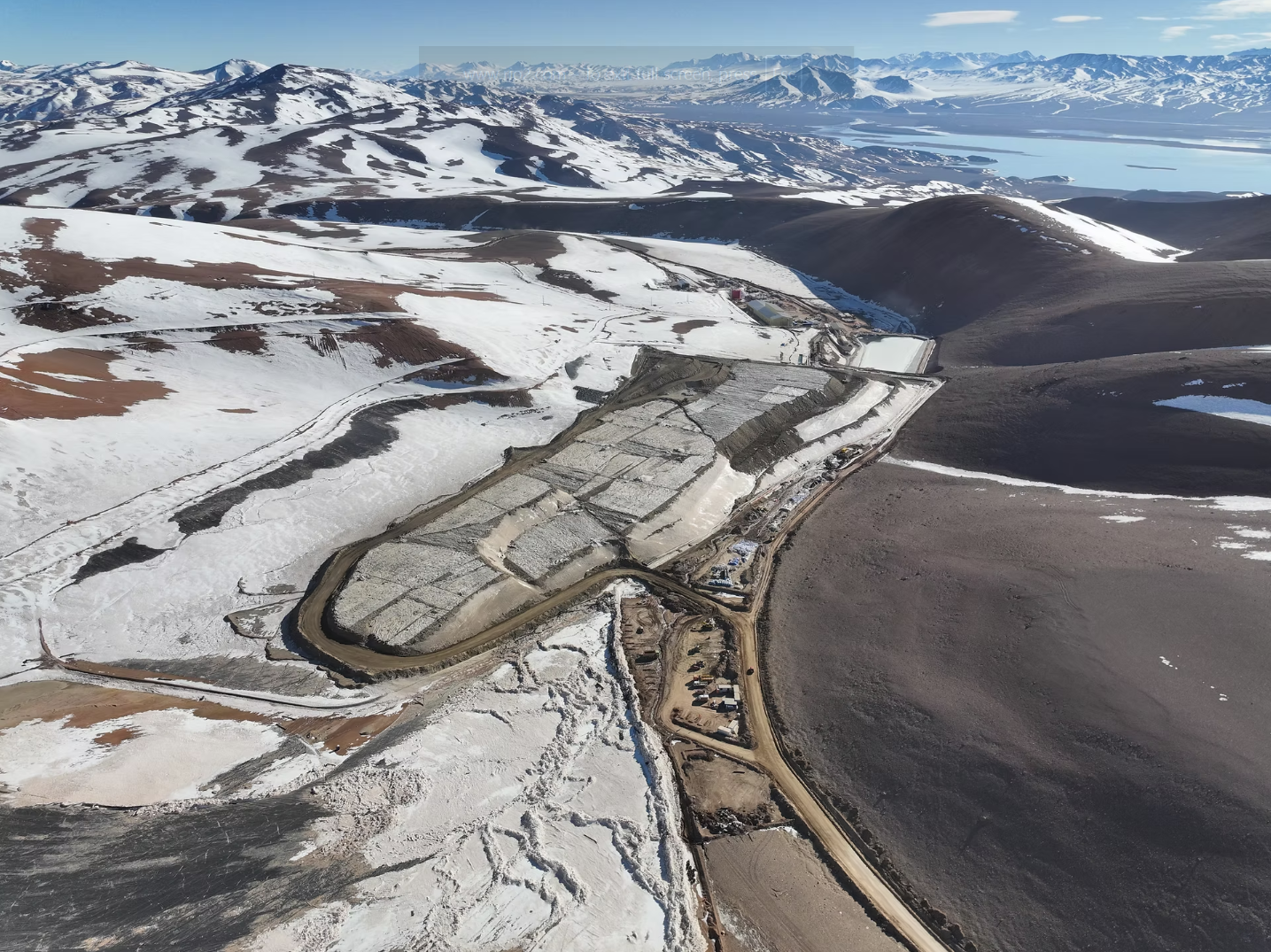
Fitzroy Minerals (TSX-V: FTZ) holds Caballos, a grassroots copper-molybdenum-gold-rhenium porphyry discovery in the Valparaiso region of Chile, situated at an elevation of approximately 2,000 metres within an 18,000-hectare strategic licence. Sulphide mineralisation is present at the surface. The project operates as Fitzroy's discovery-led, longer-term growth asset, running in parallel to the company's near-term production focus at Buen Retiro rather than competing with it for capital or management priority.
1. Between Two Giants & Caballos in the Metallogenic Belt
Caballos sits in the Late Miocene to Pliocene Metallogenic Belt, 70 kilometres south of Los Pelambres and 100 kilometres north of Los Bronces, placing it inside one of South America's most productive copper corridors.
Los Pelambres contains an estimated 13 million tonnes of copper; Los Bronces carries an estimated 80 million tonnes. Caballos occupies the gap between them on the same metallogenic belt and has super-giant porphyry potential relative to that neighbourhood.
The geographic positioning sets the scale analogy that anchors the Caballos investment thesis. Porphyry assets are evaluated in part by the company they keep structurally and geographically, and on this belt, the neighbours define the upper end of what that analogy implies.
2. The Geological Architecture
Caballos's porphyry classification rests on structural and mineralogical features that indicate a large, concealed system rather than a shallow or surface-bound deposit.
Mineralisation is spatially associated with the Pocuro Fault Zone, which carries a strike length exceeding 14 kilometres. Mineralised breccias contain porphyry clasts, and sulphide is present from the surface, indicators the company highlights as pointing toward a large, concealed porphyry system.
The Pocuro Fault Zone's scale is the structural frame. A 14-kilometre strike corridor sets the upper bound on what the system's lateral expression could be; the porphyry clasts in outcrop establish that the source of mineralisation at depth is of the correct geological type.
3. First-Hole Results & What the Intercept Established
The maiden hole at the Chincolco target returned 200 metres at 0.46% copper, 591 parts per million molybdenum, 0.07 grammes per tonne gold, and 0.81% copper equivalent from a depth of 66 metres, establishing grade across multiple commodities within the initial vertical section.
Within that envelope, a 98-metre higher-grade sub-interval from 151 metres to 249 metres returned 0.78% copper, 1,071 parts per million molybdenum, 0.12 grammes per tonne gold, and 1.47% copper-equivalent. The best sub-interval ran from 187 to 229 metres at 1.20% copper, 1,764 parts per million molybdenum, 0.23 grammes per tonne gold, and 2.26% copper-equivalent. True widths across all intervals are estimated at approximately 75% of the reported down-hole lengths.
The internal grade distribution establishes two things simultaneously: the 200-metre outer envelope confirms the spatial continuity of the copper mineralisation, and the 42-metre best sub-interval at 2.26% copper-equivalent confirms that high-grade internal zones are present and can be intersected at the Chincolco target.
4. The Geophysical Footprint
A 5-kilometre-wide conductive feature and a 14-kilometre structural corridor indicate that the Chincolco drilled target is one expression of a larger system.
A MobileMT 175Hz survey identified a 5-kilometre-wide conductive anomaly across the property, imaged to a depth of approximately 500 metres. Cross-section data from the survey shows that conductive anomalies are connected and dip beneath Miocene volcanoclastics along the Pocuro Fault Zone, a structural corridor with a strike length exceeding 14 kilometres.
The next geophysical step is a deep induced polarisation survey targeting the Chincolco Creek Conductor and a potential southern extension, designed to test for chargeability. The combination of a wide conductive footprint and a multi-kilometre structural corridor makes this induced polarisation data a key precursor to Phase 2 target selection for drilling.
5. Subsequent Holes, Grade Variance & the Operational Response
Holes drilled after the maiden intercept did not replicate its grades, and management redirected to geophysics before committing further drill capital.
The Phase 1 programme extended to holes 2A, 3, and 5, with hole 4 aborted before assays could be recovered. The programme also returned an intercept of 176 metres at 0.47% copper-equivalent.
President and Chief Executive Officer of Fitzroy Minerals, Merlin Marr-Johnson, addressed the variance directly:
"I'm very aware that the results that we put out, which were for holes 2A, five, three, and we didn't get any assays from hole four because it was aborted. I'm very aware that the grades were not as good as the first hole, which was a real zinger. We need to do geophysics over this whole area."
The decision to sequence geophysics ahead of Phase 2 drilling frames the grade variance as a targeting problem. Rather than committing additional drill metres immediately, management has indicated that geophysical imaging is required to better understand the system's subsurface architecture and refine the target area.
6. The Programme Ahead
Fitzroy's programme at Caballos targets a sequence of milestones to be achieved through the remainder of 2026.
A deep induced polarisation survey is targeted for the second quarter of 2026, Phase 2 drilling for the third quarter of 2026, and a high-impact drill programme for the fourth quarter of 2026 following chargeability interpretation.
Marr-Johnson described the scope of planned geophysical coverage:
"As soon as we've got some results, we will publish them, and we will probably fly all of this using MobileMT to have a good look at the architecture of the subsurface."
Each step in the programme adds interpretive resolution: the induced polarisation (IP) survey narrows the target set, and Phase 2 drilling tests the narrowed targets, ensuring drill capital is informed by the full data stack.
7. Two Assets, Two Theses
Caballos and Buen Retiro are structurally distinct assets operating on different investment timelines, and Fitzroy's dual-asset structure reflects a deliberate separation of thesis rather than a temporary concentration of activity.
Buen Retiro is an iron oxide-copper-gold asset benchmarked against the deposits Candelaria and Mantoverde, prioritised for near-term heap-leach cash flow. Caballos is a porphyry asset benchmarked against Los Pelambres and Los Bronces, positioned as the longer-term discovery-led growth vehicle. The funding connection between them is explicit: Buen Retiro's near-term cash flow is expected to fund Caballos exploration, reducing the requirement for equity capital at the porphyry asset level.
Marr-Johnson characterised Caballos's position within the portfolio:
"In addition to that operational side of Buen Retiro, there's certainly lots of exploration upside both at Buen Retiro and at Caballos, which is now kind of the second asset."
Each asset generates a different set of evaluative questions. Buen Retiro is assessed based on metallurgy, permitting timelines, and heap-leach unit economics. Caballos is assessed on system scale, structural continuity, and grade distribution at depth. Investors tracking Fitzroy across both narratives are engaged with two separate risk-return propositions running on different timelines.
8. What the Market Prices & What It Doesn't
Fitzroy's market capitalisation of approximately C$154 million reflects Buen Retiro's near-term production pathway; Caballos carries no explicit market-level valuation as a standalone discovery asset.
The absence of a dedicated market attribution for Caballos means its porphyry-scale discovery optionality is currently embedded in a market cap priced on the Buen Retiro thesis. Management has noted strong shareholder retention, indicating that the investor base has successfully absorbed the company's concurrent developer-explorer model and dual-asset framework. Buen Retiro's expected cash flow, reducing the need for exploration-stage equity issuance at Caballos, reduces the dilution risk typically associated with discovery-stage porphyry assets, leaving existing shareholders' exposure to Caballos largely unencumbered.
Any re-rating of Caballos as a porphyry discovery would represent incremental value above what the current market capitalisation already reflects. That re-rating is contingent on Phase 2 results delivering the grade and continuity data needed to advance the discovery argument, but the structural precondition is already in place: an unattributed discovery asset sitting inside a market cap priced on a different thesis.
Key Takeaway for Investors
- Caballos sits in the Late Miocene to Pliocene Metallogenic Belt, 70 kilometres south of Los Pelambres and 100 kilometres north of Los Bronces, placing it within one of South America's most productive copper corridors.
- The first hole at the Chincolco target returned 200 metres at 0.46% copper and 0.81% copper-equivalent from 66 metres depth, with a 42-metre best sub-interval at 2.26% copper-equivalent and true widths estimated at approximately 75% of the reported down-hole lengths.
- A 5-kilometre-wide conductive anomaly and a 14-kilometre structural corridor along the Pocuro Fault Zone indicate system architecture extending beyond the drilled Chincolco target, both to depth and along strike.
- Subsequent holes did not replicate the first hole's grades, and management has sequenced a deep induced polarisation survey ahead of Phase 2 drilling to improve targeting before committing additional drill capital.
- A deep induced polarisation survey is targeted for the second quarter of 2026, with Phase 2 drilling planned for the third quarter of 2026. A high-impact drill programme follows in the fourth quarter of 2026, timed to incorporate chargeability interpretation of the Chincolco Creek Conductor.
- Caballos is structurally distinct from Buen Retiro in terms of asset type and investment time horizon, carrying porphyry-scale discovery optionality that is not currently reflected in Fitzroy's market capitalisation.
Bottom Line
Caballos's first-hole intercept, 5-kilometre conductive footprint, and 14-kilometre structural corridor establish it as a porphyry discovery asset with testable, scale-potential. The Phase 2 programme, sequenced after a deep induced polarisation survey, is designed to address the targeting variance identified in Phase 1 and to return the grade-continuity data required by the thesis. Fitzroy's market capitalisation does not separately account for Caballos, leaving the porphyry discovery argument available at no dedicated cost to investors already positioned in the company.
Analyst's Notes





Subscribe to Our Channel






Stay Informed


