Florida Canyon's Production Reset: What Rising AISC Mean for Gold Equity Margins in a Strengthening Bullion Market


Gold demand supports prices into 2026, but rising AISC pressures margins. Florida Canyon cash flow and DeLamar execution drive Integra’s valuation outlook.
- Florida Canyon’s 2026 guidance signals a deliberate production reset, balancing stable output with higher stripping intensity and elevated AISC as Integra prioritizes long-term mine productivity and cash flow reliability.
- All-in sustaining costs of $2,750 to $2,950 per ounce place the operation in the upper cost quartile among North American producers, increasing margin sensitivity while reinforcing the importance of operational execution.
- Strong operating cash flow from Florida Canyon provides internal funding capacity for DeLamar early works and Nevada North advancement, reducing dilution risk during an accelerated development timeline.
- Nevada’s Tier-1 jurisdictional advantages lower permitting and political risk premiums, though competition for skilled labor and contractors continues to influence sustaining capital requirements.
- With financing markets supportive following a heavily oversubscribed $60 million raise and FAST-41 permitting acceleration at DeLamar, investor focus has shifted toward execution delivery, commissioning performance, and milestone-driven valuation rerating.
Florida Canyon’s Production Reset: Sustaining Cash Flow Through Higher-Cost Mining
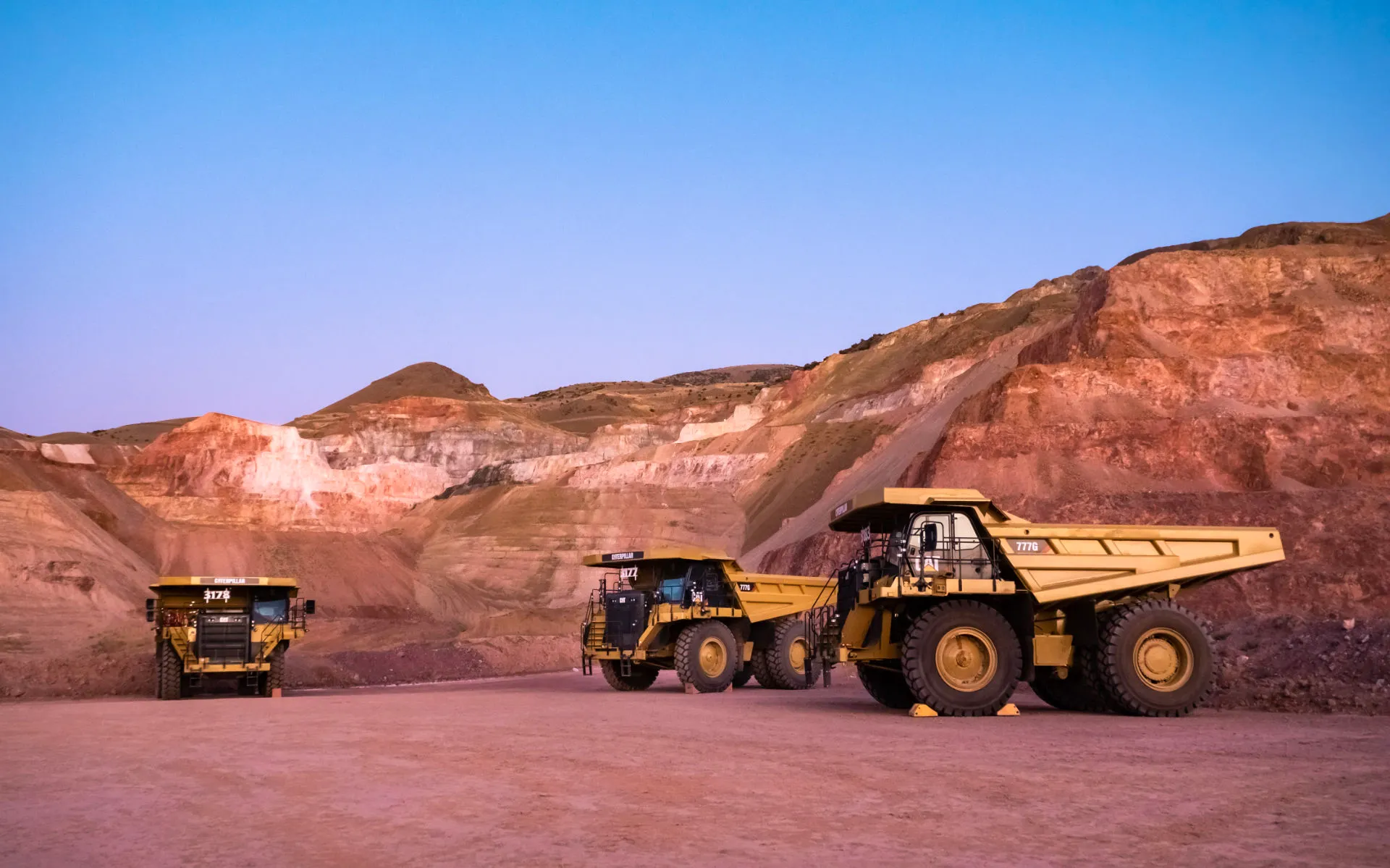
Florida Canyon, Integra Resources’ producing heap leach gold operation in Nevada, is entering a capital-intensive phase designed to stabilize long-term output rather than maximize short-term margins. The company is guiding toward production of approximately 70,000 to 75,000 ounces in 2026, with a targeted increase toward an 80,000 to 90,000-ounce annual range in subsequent years. This trajectory reflects ore body geometry and a more aggressive mining sequence requiring roughly 13.9 million tonnes of ore movement alongside 19.3 million tonnes of waste removal, implying a strip ratio near 1.4 to 1.
Higher Stripping Intensity Raises Costs but Supports Long-Term Output
Higher stripping activity supports future ore access but materially increases sustaining capital requirements, placing Florida Canyon’s expected all-in sustaining costs at approximately $2,750 to $2,950 per ounce. That positioning places the operation within the upper cost quartile among North American producers, creating a more price-sensitive margin profile typical of mature oxide heap leach mines undergoing reinvestment cycles. While margins remain solid at gold prices above $3,000 per ounce, downside commodity price scenarios would compress the operating buffer, making cost control and execution consistency central to valuation outcomes.
Chief Executive Officer George Salamis addressed the operational performance profile directly, emphasizing the strength of the mine’s ongoing cash generation despite elevated sustaining investment:
“Florida Canyon continues to deliver strong margins. We’re still making $25,000 of margin per gold ounce produced. It’s doing really well, certainly better than we expected from a cash flow generation perspective.”
The reset therefore does not reflect operational underperformance. Instead, it highlights a transition toward sustaining long-term mine production through disciplined reinvestment. Heap leach operations depend heavily on stripping efficiency, pad expansion, and solution management to maintain recovery performance as grades mature. Elevated AISC reflects proactive capital deployment aimed at preserving production continuity and supporting Integra’s broader development pipeline, particularly DeLamar early works and Nevada North technical advancement, rather than signaling deterioration in asset quality.
Nevada's Advantage: Jurisdictional Premiums in a Fragmenting Mining World
Not all mining jurisdictions are valued equally by institutional capital allocators. Permitting predictability, regulatory consistency, skilled labor availability, and infrastructure access define what the industry characterizes as a Tier-1 jurisdiction. Nevada is the preeminent example in North America and among the most stable mining jurisdictions globally.
Why Tier-1 Jurisdictions Command Capital
Nevada produces more than 70% of US gold and hosts major complexes operated by Barrick Gold and Newmont Corporation, supporting extensive infrastructure, industry expertise, and well-established regulatory precedent. This reduces jurisdictional risk premiums, directly influencing discount rates and project NPVs.
From an ESG perspective, Nevada benefits from rigorous yet predictable permitting frameworks, offering transparency often absent in emerging markets. The result is lower political risk embedded in valuations and stronger comparative positioning for development assets versus higher-risk jurisdictions.
Scale Versus Competition in the Great Basin
Operating in a Tier-1 jurisdiction does not remove competitive pressures. Smaller operators in Nevada’s Great Basin compete with majors for labor, equipment, and contractor capacity, elevating costs. Florida Canyon’s sustaining capital partly reflects this premium labor market structure.
Salamis offered perspective on the operational culture and competitive context that underpins Florida Canyon's positioning:
"We chose to move faster, not slower… Why wouldn't we choose to derisk the project right now when we have the means to do so?"
Capital Allocation Is the New Differentiator for Mid-Tier Growth Stories
The structural advantage that producing assets provide to development-stage companies extends well beyond operational cash flow. For mid-tier developers with multiple projects at different stages of advancement, the capacity to internally fund permitting and early works programs reduces dilution risk, strengthens the negotiating position in project financing discussions, and signals operational credibility to institutional capital allocators.
Cash Flow as Development Currency
Historically, junior and mid-tier gold developers have relied heavily on equity issuance to fund exploration and construction, leading to recurring dilution even as asset values increase. Cash-flow-generating producers can break this cycle by funding development internally, reducing reliance on equity markets. Developer valuations, often measured using EV/oz against measured and indicated resources, remain sensitive to development, financing, and permitting risk discounts.
Integra Resources completed a $60 million financing that was three times oversubscribed, attracting 12 new institutional investors, including three generalist funds, a signal of genuine external demand. The company emphasized the raise is fully allocated to DeLamar early works and does not reflect operational weakness at Florida Canyon.
Salamis was explicit about the logic connecting the financing to project financing leverage and long-term capital cost reduction:"It enhances the leverage in project financing discussions that we'll have very soon. This is $60 million essentially coming off of the project capital. It's invested capital into the project. That sets us up for a better discussion when it comes to project financing eventually."
Funding Multiple Pipelines Without Overstretching
Integra Resources is advancing two development projects alongside Florida Canyon: DeLamar in Idaho, targeting a 2027 record of decision under the FAST-41 permitting framework, and Nevada North, which is moving toward a prefeasibility study. FAST-41 has shortened the BLM permitting timeline to roughly 15 months, accelerating development expectations.
DeLamar early works, including site preparation, infrastructure upgrades, equipment procurement, power upgrades, and land acquisitions, are expected to require about $35-40 million in near-term capital, with total pre-production spending estimated at $38-42 million. Florida Canyon’s operating cash flow serves as the primary funding source, supported by the recent equity raise without adding balance sheet strain.
Execution Risk Replaces Financing Risk in the Current Gold Cycle
When gold prices are elevated and capital markets are receptive, financing risk recedes as the primary concern for development-stage companies. The current environment exemplifies this: Integra Resources completed a heavily oversubscribed $60 million raise within weeks of receiving the accelerated BLM permitting timeline. What replaces financing as the key risk variable in this context is execution delivery.
Why Markets Now Reward Operational Delivery Over Exploration Upside
In past bear markets, exploration upside drove valuations as investors rewarded large resource bases. Today, with stronger gold prices and open capital markets, emphasis has shifted to operational delivery. Construction sequencing, procurement, long-lead management, and commissioning execution are now central to the equity story.
Salamis summarized the company's strategic posture in terms that reflect an execution-first orientation:
"This is not a money situation. This is an execution story. We still have a lot of capital to reinvest in the mining operation, but plenty of cash flow to deliver on that."
Commissioning & Ramp-Up Risks Investors Often Underestimate
Heap leach commissioning risks differ from mill operations, with solution application, drainage performance, and liner integrity critical to early results. Underperformance can delay cash flow through gold-in-circuit buildups. Florida Canyon’s sustaining reinvestment targets these risks, and investors should track gold placed on pad versus gold recovered as a measure of process efficiency.
Resource Optionality Versus Market Valuation: The Enterprise Value Per Ounce Debate
Integra Resources’ ~7.0Moz measured and indicated plus 3.1Moz inferred resources place it among larger North American mid-tier developers. EV/oz remains the key peer comparison metric, though measured and indicated ounces command higher valuations, while inferred resources are typically discounted 50-80% due to lower confidence and exclusion from feasibility studies.
Key rerating catalysts include permitting progress, a DeLamar record of decision, and a Nevada North prefeasibility study. DeLamar’s feasibility submission and FAST-41 timeline are the main near-term drivers, with permitting risk, not financing, the primary valuation overhang.
The Investment Thesis for Integra Resources
- Structural gold demand from ETF inflows, central bank diversification, and geopolitical risk supports a durable pricing environment, reducing commodity risk for producers and developers with defined cost structures.
- Operating cash flow gives producers a funding advantage, limiting equity dilution and supporting lower-cost financing later in development cycles.
- Elevated AISC compresses margins and increases sensitivity to gold price volatility, making cost discipline as important as production growth.
- Tier-1 jurisdictions such as Nevada lower political risk premiums through established regulatory frameworks, benefiting project valuations versus emerging markets.
- Execution milestones, particularly permitting and commissioning performance, are now the primary drivers of valuation rerating rather than financing access.
- Strong treasury liquidity and reduced reliance on equity markets signal operational credibility and financing flexibility.
Florida Canyon’s 2026 guidance reflects a broader mid-tier producer trend: higher gold prices support margins, but rising labor and stripping costs in heap leach operations are narrowing the benefit. AISC of $2,750-$2,950 per ounce highlights cost pressure while still supporting meaningful cash flow for Integra Resources’ development pipeline.
The key investor question is not current profitability but whether Florida Canyon cash flow, combined with milestone-linked equity financing, can advance DeLamar and Nevada North without straining the balance sheet. FAST-41 permitting acceleration at DeLamar has tightened timelines, prompting earlier capital deployment aligned with institutional expectations. Execution over the next three to five years will depend on sustained operating performance, disciplined capital allocation, and supportive gold prices as the record of decision approaches.
TL;DR
Integra Resources’ Florida Canyon guidance reflects a deliberate production reset typical of mature heap leach operations, prioritizing long-term output stability and cash flow generation through higher stripping intensity and sustaining reinvestment. Production is expected to remain stable while all-in sustaining costs of $2,750 to $2,950 per ounce position the operation in the upper cost quartile, increasing sensitivity to gold price volatility despite continued strong margins. Operating in Nevada provides jurisdictional advantages that lower permitting and political risk premiums, though labor competition and contractor availability remain cost drivers. Florida Canyon’s cash flow, supported by a heavily oversubscribed $60 million financing, is expected to fund DeLamar early works and Nevada North advancement while limiting dilution risk. With FAST-41 permitting acceleration reducing timeline uncertainty, investor focus has shifted from financing access toward execution delivery, commissioning performance, and milestone-driven valuation rerating over the next three to five years.
FAQs (AI generated)
Gold prices are being supported by structural demand rather than short-term speculation. Central banks, particularly in emerging markets, continue diversifying reserves away from the US dollar, while institutional investors are reallocating capital toward real assets amid geopolitical uncertainty and trade fragmentation. At the same time, gold-backed ETF inflows have resumed as expectations for real interest rates moderate. Together, these factors create a price-insensitive demand floor that reinforces bullion strength, reducing commodity price risk for producers compared with previous gold cycles.
Mining margins depend heavily on cost structures, not just commodity prices. Inflationary pressures affecting diesel, labor, cyanide, lime, contractor availability, and equipment have significantly increased operating expenses across the sector. For open-pit heap leach mines, additional waste stripping programs and sustaining capital requirements further constrain free cash flow. As a result, rising All-In Sustaining Costs (AISC) can offset gains from stronger gold prices, meaning producers with weaker cost discipline remain vulnerable even in favorable bullion markets.
Integra Resources’ Florida Canyon mine illustrates the economics of a mature oxide heap leach operation operating in a higher-cost environment. Production guidance of roughly 70,000-75,000 ounces in 2026 reflects stable output supported by active mining intensity, but AISC guidance of approximately $2,750-$2,950 per ounce places the operation in the upper cost quartile among North American producers. While margins remain positive at gold prices above $3,000 per ounce, the operation is more sensitive to downside price volatility, making cost control and sustaining capital efficiency key considerations for investors evaluating margin durability.
Nevada is widely regarded as a Tier-1 mining jurisdiction due to its regulatory predictability, established permitting framework, skilled workforce, and extensive mining infrastructure. These factors reduce political and permitting risk premiums embedded in project valuations and lower discount rates used by institutional investors. However, operating in Nevada also brings competitive pressures, as smaller operators compete with major mining companies for labor, equipment, and contractors, contributing to elevated operating costs despite the jurisdictional stability.
With financing risk currently reduced following a heavily oversubscribed $60 million equity raise and accelerated FAST-41 permitting timelines, execution has become the primary valuation driver. Key catalysts include permitting progress toward a DeLamar record of decision targeted for 2027 and advancement of the Nevada North prefeasibility study. Investors will also closely watch operational performance at Florida Canyon, particularly whether sustained cash flow can fund development activities without balance sheet strain. Successful capital allocation, commissioning execution, and permitting delivery over the next three to five years are likely to determine potential valuation rerating.
Analyst's Notes





Subscribe to Our Channel






.jpg)


Stay Informed