




From Debt Cleanup to Growth Mode: Gunnison Copper Targets 2028 Mega-Project Build Decision


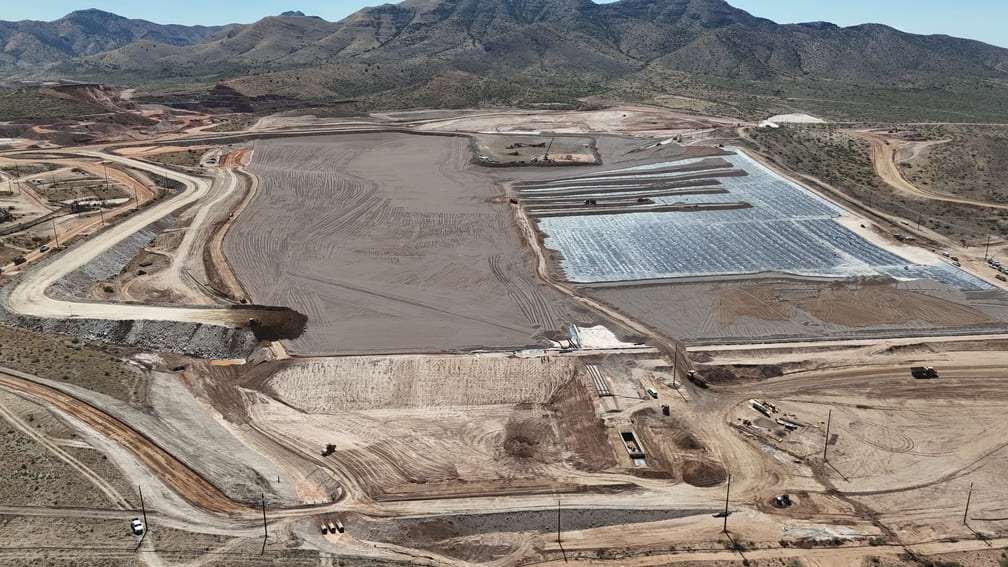
Gunnison Copper CEO details balance sheet cleanup, Johnson Camp's ramp-up, and the path to developing its flagship Arizona copper project.
- New CEO Craig Hallworth, stepping up from CFO after Stephen Twyerould's retirement, accelerating the flagship Gunnison project toward a mid-2028 construction decision
- $2 billion after-tax NPV, 22.5% IRR project trading at roughly a quarter of Arizona peer valuation multiples
- Balance sheet clean-up complete: secured debt retired in January, convertible debentures settled in cash at a 54% discount
- $15-20 million district-wide drill programme underway, targeting 1.2 billion lb of additional copper resource
- DoE 48C certification submitted (US$13.9 million), with further non-dilutive federal and Arizona state funding in progress
Gunnison Copper is emerging as one of the newest copper producers in the United States. The company operates the Johnson Camp mine in southern Arizona's Cochise County, built in partnership with Rio Tinto's Nuton sulfide leach division and brought into production in 18 months from final investment decision. In a recent interview, newly appointed CEO Craig Hallworth, who stepped up from chief financial officer following the retirement of predecessor Stephen, discussed the company's balance sheet repair, the Johnson Camp ramp-up, and the path toward developing its flagship Gunnison Copper project - a large oxide deposit that management says could eventually supply roughly 10% of current US refined copper production.
Balance Sheet Clean-Up
One of the clearest signals of Hallworth's financial focus is the work done to clean up Gunnison's balance sheet. The company inherited $15 million in secured debt from predecessor Excelsior Mining, a legacy of the earlier in-situ leaching operation that had to be shut down in 2022. That debt made institutional investors nervous throughout early 2025. As Johnson Camp was built and began producing, and as retail investor momentum grew, the company was able to fully retire that secured debt in January 2026.
Separately, convertible debentures held by strategic partners including private equity firm Greenstone were settled in cash recently, at a 54.4% discount to the valuation implied by the company's most recent equity raise - a result Hallworth estimates added close to $5 million in value for shareholders. The company has also filed a $200 million shelf prospectus, which it frames not as a signal of imminent dilution but as evidence of growing corporate maturity: market capitalisation has grown from $30 million to over $200 million in two years, average daily trading volume has risen from roughly 50,000 to 3 million shares, and institutional ownership has grown from zero to around 60% of the shareholder base, spread across 40 to 50 different institutions rather than concentrated in one holder. A $34.5 million Canadian-dollar bought deal - upsized from an order book that reached $51 million against a $30 million target - is now funding the current drilling programme, with management saying it deliberately raised less than investor demand would have allowed in order to protect existing shareholders from unnecessary dilution.
Johnson Camp: America's Newest Copper Producer
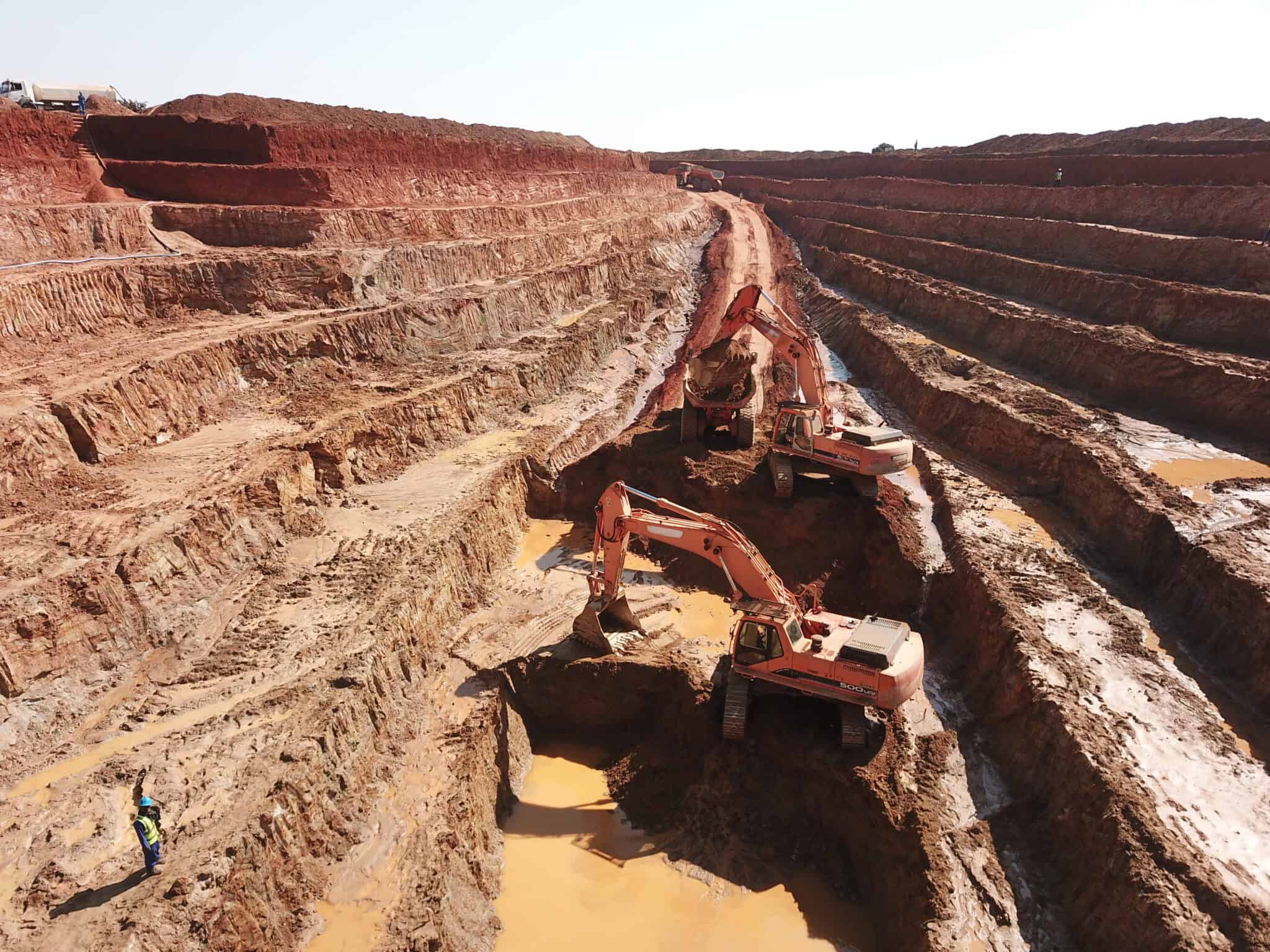
Johnson Camp Mine was built in 18 months from final investment decision to first production, funded in full by Nuton LLC, a Rio Tinto venture. Production from run-of-mine oxide material began in August 2025, with first sales in September, and Nuton's sulfide leaching technology - a newer process that avoids shipping concentrate overseas for processing - came online in December 2025. The mine has capacity for up to 25 million pounds of finished copper cathode a year, and the copper it produces is now being sold to Amazon Web Services for use in US data centres.
The mine also carries federal significance. Gunnison and Nuton were the only copper project to receive a 2025 allocation under the US Department of Energy's Section 48C Advanced Energy Project Tax Credit programme, worth $13.9 million. On 9 July 2026, the company confirmed it had submitted its certification documentation to the DOE - a milestone that validates the project met its commitments, including placing assets into service and beginning production in 2025. This is a step toward monetising the credit, not final approval; the DOE still needs to approve the certification before the credits are distributed, and the exact amount received will depend on an allocation agreement with Nuton. Separately, the company has a pending application with the Arizona Commerce Authority for state-level, non-dilutive funding tied to the roughly 80 jobs Johnson Camp has created, though the exact dollar figure is still under audit ahead of a formal announcement.
Gunnison Project Economics and Peer Comparison
The flagship Gunnison Project is far larger in scale than Johnson Camp. Its March 2026 economic study shows an after-tax project value of $1.96 billion and a 22.5% expected annual return at a $4.60 per pound copper price, with the project paying back its initial investment in 3.9 years and producing for 21 years. Total copper recovery over the mine's life is estimated at 3.2 billion pounds - enough capacity, the company says, to supply up to 10% of current US refined copper production. Initial construction costs, including an on-site acid plant, are estimated at $1.56 billion. Measured against the amount of copper produced per dollar spent, Hallworth argues Gunnison compares favourably with peer projects both in Arizona and globally.
Much of that improvement stems from the nearby Strong & Harris satellite deposit, which added 263 million pounds of copper to the resource base, alongside further additions from pit design changes - taking total recoverable copper from 2.7 billion pounds to 3.2 billion pounds since the prior study. Despite these economics, Gunnison trades at a steep discount to comparable Arizona developers: roughly 0.19 times its net asset value, against a peer average near 0.88 times and recent acquisition prices above 1.15 times. The company's own comparison point is Arizona Sonoran, whose Cactus project also carried a large private-equity ownership block that was distributed to institutional investors before the company was ultimately sold to Hudbay for around $2 billion - a tenfold return over two years. Gunnison's leadership has pointed to the similarity in how its own shareholder base has been widened as a deliberate step toward a comparable outcome.
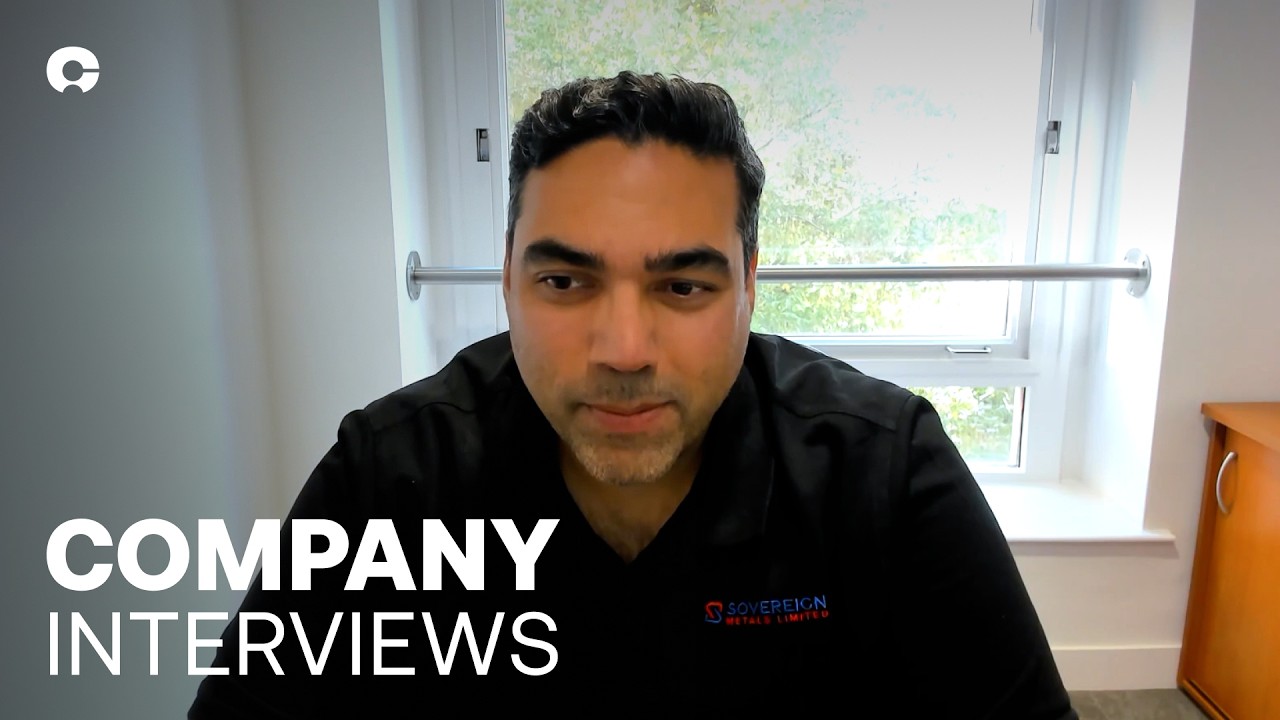
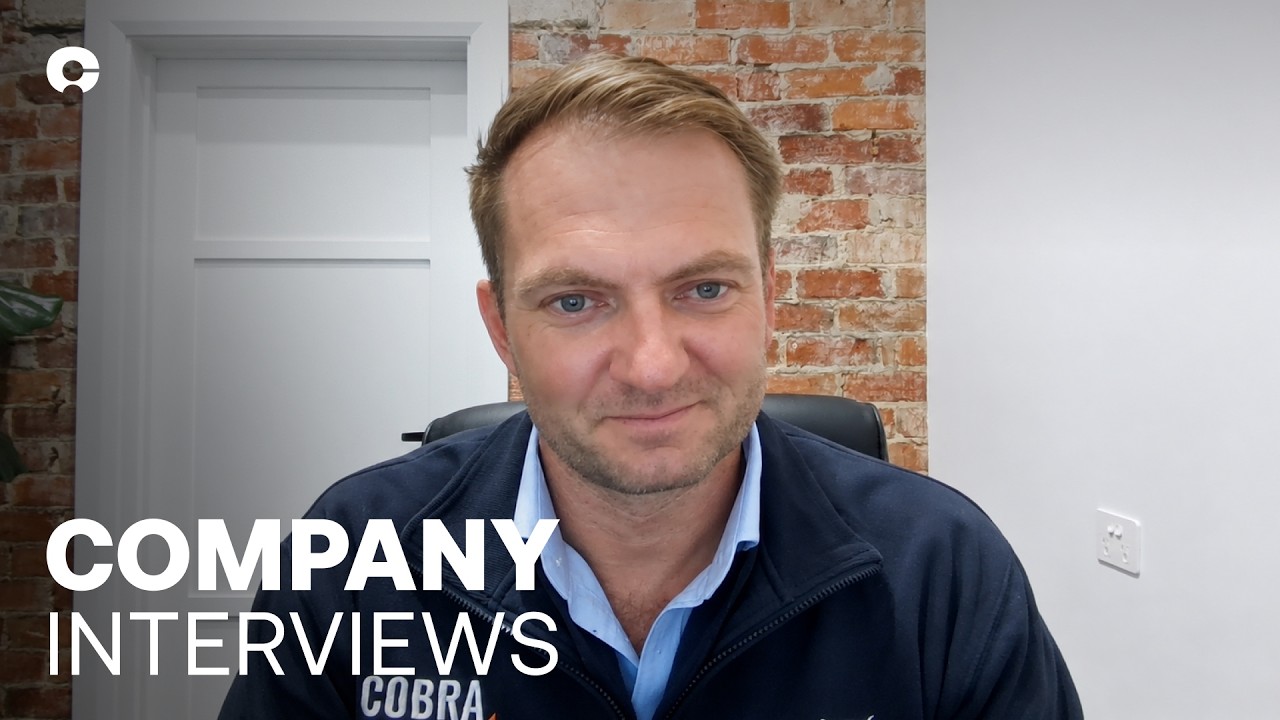
Interview with Craig Hallworth, President & CEO of Gunnison Copper
Acid Plant Strategy and Supply Chain Security
A notable feature of the Gunnison development plan is a dedicated on-site acid plant, budgeted at $300 million within the total $1.56 billion construction cost. The rationale is domestic supply security. Sulfuric acid is a critical input for the leaching process used to extract copper, and much of the global acid supply chain has come under strain.
"Look what China did. They banned all exports of acid and it's thrown the global market into disarray."
Rather than relying on imported acid, Gunnison plans to purchase sulfur - a by-product of US and Canadian oil and gas production, available in places such as West Texas - and convert it into acid on-site. The company says it can produce three tonnes of acid for every tonne of sulfur purchased, generating meaningful freight savings given how bulky both commodities are to transport. The plan also creates some excess acid supply beyond the project's own needs, which management says could be sold to third parties. Beyond the economic case, Hallworth notes that federal officials have shown particular interest in this part of the project, given that acid shortages affect not only copper producers but also lithium production and defence-sector applications more broadly.
Permitting Track Record and Timeline
Permitting risk is frequently the largest source of delay and uncertainty for new US mining projects, and Gunnison's position here is unusual. Both Johnson Camp and the Gunnison site were previously operating mines, meaning major permits - the Aquifer Protection Permit, Air Quality Permit, and Mined Land Reclamation Plan - already exist. The path forward is amending those existing permits rather than filing entirely new applications, which management says carries substantially lower risk and a shorter timeline than peers pursuing greenfield permits.
"In the case of the Johnson camp, that was something that we did permit amendments and we were able to amend that in less than 12 months. So, I'll just say that again, less than 12 months and no lawsuits."
The site's location in Cochise County is also cited as an advantage: a small, business-friendly county government, no nearby major population centres, and a long operating history dating to the 1970s, all of which the company argues reduces the likelihood of the kind of third-party litigation that has delayed other US projects regardless of how efficiently federal or state agencies themselves move. Management is targeting an amended Mine Land Reclamation Plan - the core mining permit - by the end of the 2026 calendar year, which it views as a meaningful de-risking event for prospective partners, alongside a separate Interstate 10 relocation approval process covering a 2.8-mile stretch of highway needed for the mine plan.
Drilling, Metallurgical Testing and the Path to a Strategic Partner
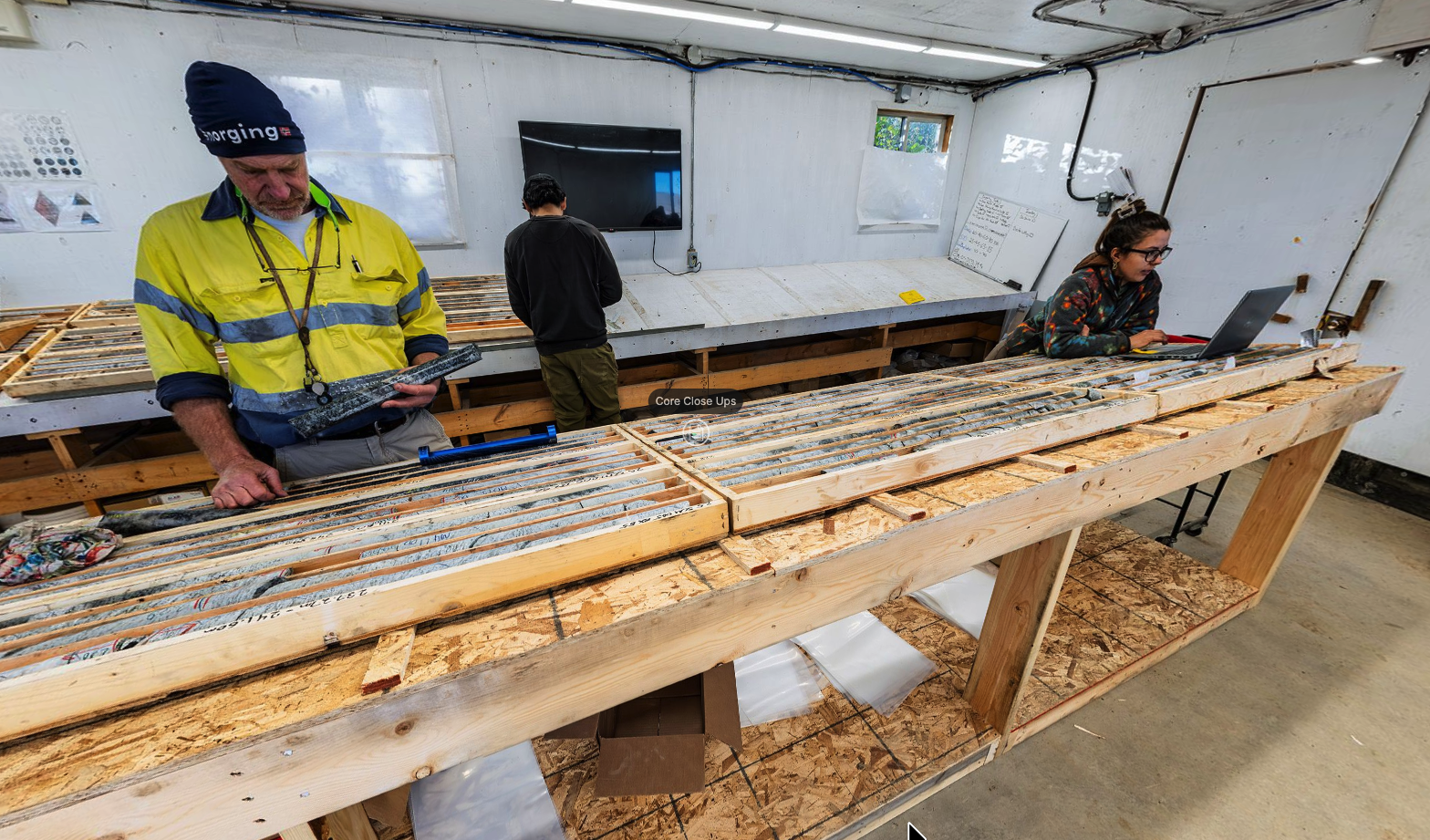
A 120-hole, 138,000-foot district-wide drilling programme is now underway, funded by the recent bought deal and split between metallurgical sampling and resource expansion. On the metallurgical side, up to 270 column leach tests are planned over the next 12 months, a more than tenfold increase from the roughly 25 tests underlying the current economic study, aimed at giving prospective partners statistical confidence in recovery and acid consumption assumptions. On the resource side, up to 84 holes are targeting extensions of known mineralisation, upgrades of lower-confidence resources to higher-confidence categories, and testing of the deposit at depth, with a stated target of adding 1.2 billion pounds of copper to the resource base, building on the 500 million pounds added during 2025's more modest $5 million programme.
Ultimately, management sees a strategic partner - not an outright sale - as the most likely near-term catalyst for the stock.
"If Hudbay or Capstone or South 32 came to me today and said, I want to buy the company today, I would say absolutely not. We would not be friendly on that... we're at about a quarter, maybe even less of what the peer group's trading at."
The stated preference is a partnership involving a roughly 10% investment from a well-capitalised, Arizona-focused mid-tier producer, or from a Japanese or Korean investor - both countries have made large recent commitments to US investment. None of these discussions have resulted in a signed agreement. Beyond a private partner, management also points to potential non-dilutive government funding, including more than $250 billion in Department of Energy loan authority and over $100 billion available through the Department of War's Office of Strategic Capital, both of which remain prospective rather than secured.
The Investment Thesis for Gunnison Copper
- Scale with simpler processing: An 850-million-ton-plus resource that is predominantly oxide copper, allowing conventional heap leach/SX-EW processing and finished cathode production domestically, without concentrate shipping or overseas smelting.
- Near-term cash flow and credibility: Johnson Camp is already producing and selling cathode to Amazon Web Services, giving the company an operating track record and partial revenue base ahead of the larger Gunnison project decision.
- Favorable capital intensity: Preliminary economics show roughly US$14,000–17,000 per tonne of capacity, which management positions in the second quartile of comparable global projects, with further optimization expected in the upcoming study.
- Multiple non-dilutive funding avenues: US$13.9 million in federal 48C tax credits already received, a pending Arizona QFTC incentive announcement, and potential access to US government low-cost debt facilities targeting critical minerals projects.
- Reduced permitting risk versus greenfield peers: An already-permitted, previously producing site requiring amendments rather than new approvals, with no litigation history on recent permit amendments.
- De-risked, widely held shareholder register: A legacy private-equity block was broken up and distributed to an estimated 40–50 institutions (roughly 60% of the register), removing overhang and positioning the stock for potential strategic partner interest.
- Integrated acid supply strategy: An on-site sulfuric acid plant addresses a structural domestic supply gap, cutting freight costs and reducing exposure to import disruptions.
- Active, dated catalysts: Drill results targeting 1.2 billion pounds of resource growth, an expanded 270-test metallurgical program, a possible permit amendment by year-end, and a prospective strategic partner toehold investment within 12–24 months.
Macro Thematic Analysis
US copper development is unfolding against a policy backdrop that increasingly treats critical minerals as a national security priority. Instruments such as Section 48C tax credits, state-level incentives, and proposed low-cost federal debt facilities are aimed explicitly at reshoring metal production. Compounding this, China's restrictions on sulfuric acid exports have exposed a domestic supply gap affecting both copper leaching and lithium processing, raising the strategic value of projects with integrated acid production. Meanwhile, Japan and South Korea have signaled hundreds of billions of dollars in prospective US investment, some of which may target critical minerals infrastructure. As Hallworth put it:
"This is an unprecedented time globally for critical minerals investment... the amounts of money that they're talking about is unreal."
TL;DR
Gunnison Copper has spent the past two years repairing its balance sheet - retiring secured debt, settling convertible debentures at a discount, and securing US$13.9 million in federal 48C tax credits - while bringing its first US cathode-producing mine, Johnson Camp, into operation in a record 18 months with partner Rio Tinto. Its flagship Gunnison Copper project, an 850-million-ton, primarily oxide resource, carries a preliminary US$1.6 billion capex estimate and could supply up to roughly 10% of current US refined copper production. Management's near-term priorities are expanding the resource through an active drill program, delivering an enlarged metallurgical dataset, advancing permit amendments, and attracting a strategic partner toehold investment ahead of a targeted mid-2028 construction decision. CEO Craig Hallworth argues that scale, an already-permitted site, and a widely held shareholder register position the company for a potential re-rating as it advances toward feasibility.
FAQs (AI-Generated)
Analyst's Notes





Subscribe to Our Channel


Stay Informed


