Navigating Brazil’s Mining Boom: Inside the Shift to a 'Brazil Premium'



Brazil is emerging as an increasingly attractive mining jurisdiction, according to executives from Serabi Gold, Cabral Gold, and ValOre Metals, who discussed the country’s regulatory environment, infrastructure, and investment climate.
- Three companies at different stages: Serabi Gold, a producer with two mines, Cabral Gold, a developer with first mine due Q3 2026, and ValOre Metals an explorer focusing on palladium-platinum, discussed Brazil's regulatory framework, financing conditions, and operational realities.
- Executives argued the historical Brazil discount has reversed into a "Brazil premium" pointing to G Mining Ventures' C$13 billion valuation, major-miner presence of Vale, Rio Tinto, BHP, Anglo American, Kinross, and strong project-financings demand.
- Growth catalysts include Serabi target of 50,000-60,000 oz across two mines from 25,000-30,000 oz historically; Cabral is drilling six rigs simultaneously ahead of an updated resource estimate; and ValOre year-end PEA targeted by this year and a gold-focused M&A.
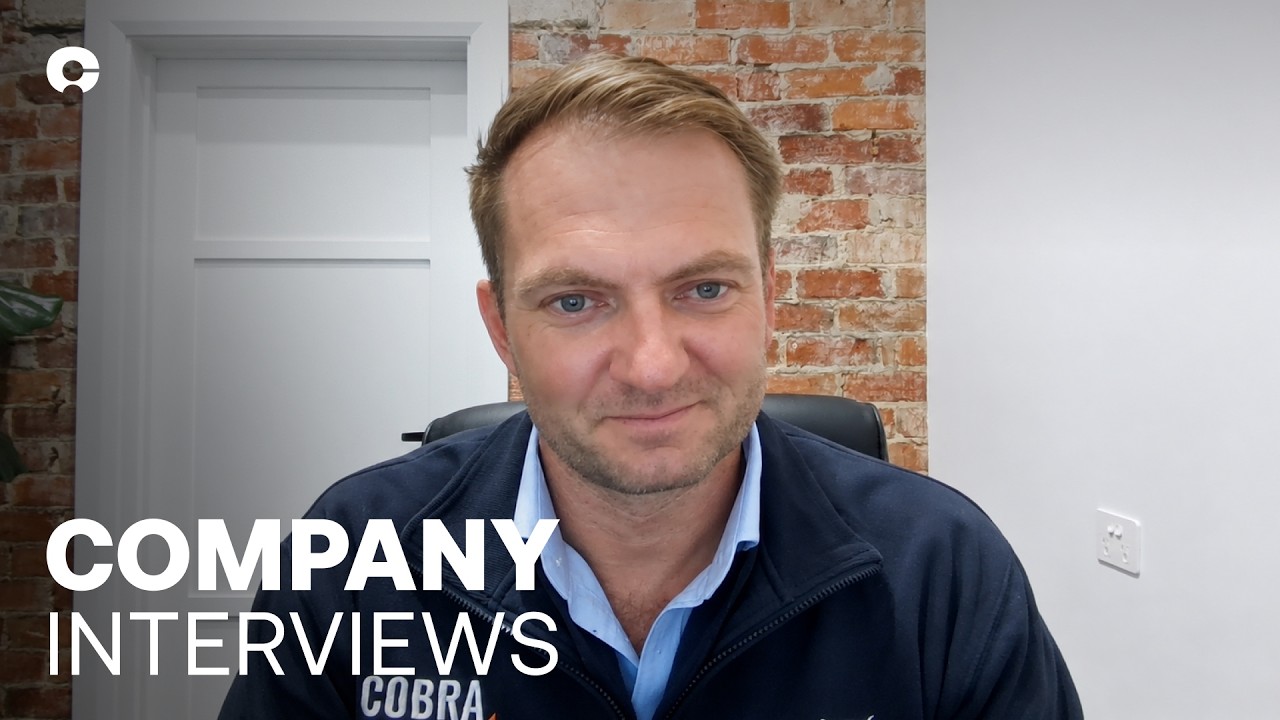
A panel discussion brought together executives from three mining companies operating in Brazil to assess the country's standing as an investment jurisdiction. The conversation is timely: gold prices have risen sharply over the past two years, global capital has been searching for jurisdictions that combine strong geology with workable permitting timelines, and Brazil has drawn increasing attention from mid-tier and major producers. The panel featured Mike Hodgson, CEO of Serabi Gold, an established underground gold producer; Alan Carter, CEO of Cabral Gold, a developer nearing first production; and Thiago Diniz, VP of Exploration at ValOre Metals, which is advancing a palladium-platinum project. The discussion covered permitting, capital markets sentiment, workforce and supply chains, infrastructure, and each company's near-term catalysts.
Regulatory Framework: Stable Federally, Strained at the State Level
All three executives characterised Brazil's federal mining regulatory framework as consistent and predictable, noting it has changed little over the years despite periodic political volatility. The practical challenge, they said, lies not in the rules themselves but in administrative capacity, particularly in less mature mining states such as Pará, where agencies including FUNAI (federal indigenous affairs agency), ITERPA (state land registry), ANM (national mining agency), and SEMAS (state environmental secretariat) are described as under-resourced relative to demand. As Hodgson put it,
"There's a very good regulatory framework for mining in Brazil, it's very simple, it's well understood, and it hasn't really changed in years."
He noted this capacity gap has pushed companies toward extended use of temporary licenses, known locally as "guia" licenses, while full permits work through the system. In Serabi's case, this allowed two mines Palito and Coringa to be brought into operation on a compressed timeline even as final permitting continued in parallel.
By contrast, Hodgson noted, more established mining states such as Minas Gerais, São Paulo, Mato Grosso, and Goiás have better-resourced regulatory bodies that process applications more efficiently, since mining administration there has had decades longer to build capacity. Brazil's mining sector overall comprises more than 7,000 companies, a scale that has strained agencies in newer, fast-growing districts like the Tapajós.
Additionally, Diniz added that discussions are being had to maximize the opportunity that is emerging now in Brazil,
"The regulatory framework is pretty straightforward and predictable I would say. We're working to improve that and there's a lot of discussions going on at the moment as any other jurisdiction in the world, it's very predictable what Mike said. It's really important is there's an opportunity to improve efficiency and that's something we need to work."
The Primacy of State-Level Relationships
One of the more counterintuitive lessons for foreign investors entering Brazil is that federal-level relationships carry limited weight in resolving on-the-ground permitting issues. Outcomes are determined largely at the state level. In the state capital Pará's case, Belém rather than in Brasília, and companies that attempt to escalate problems through federal channels or foreign embassies tend to find limited traction. This has practical implications for how projects should be sequenced: early, sustained engagement with state regulators and local communities, well before formal applications are filed, is consistently cited as the difference between a smooth permitting path and a stalled one. It is also a transferable advantage as newer entrants to the Tapajós, including G Mining Ventures' nearby Tocantinzinho mine, have benefited from consultants and regulatory relationships that longer-tenured operators like Serabi and Cabral had already established.
Infrastructure and Local Stakeholder Dynamics
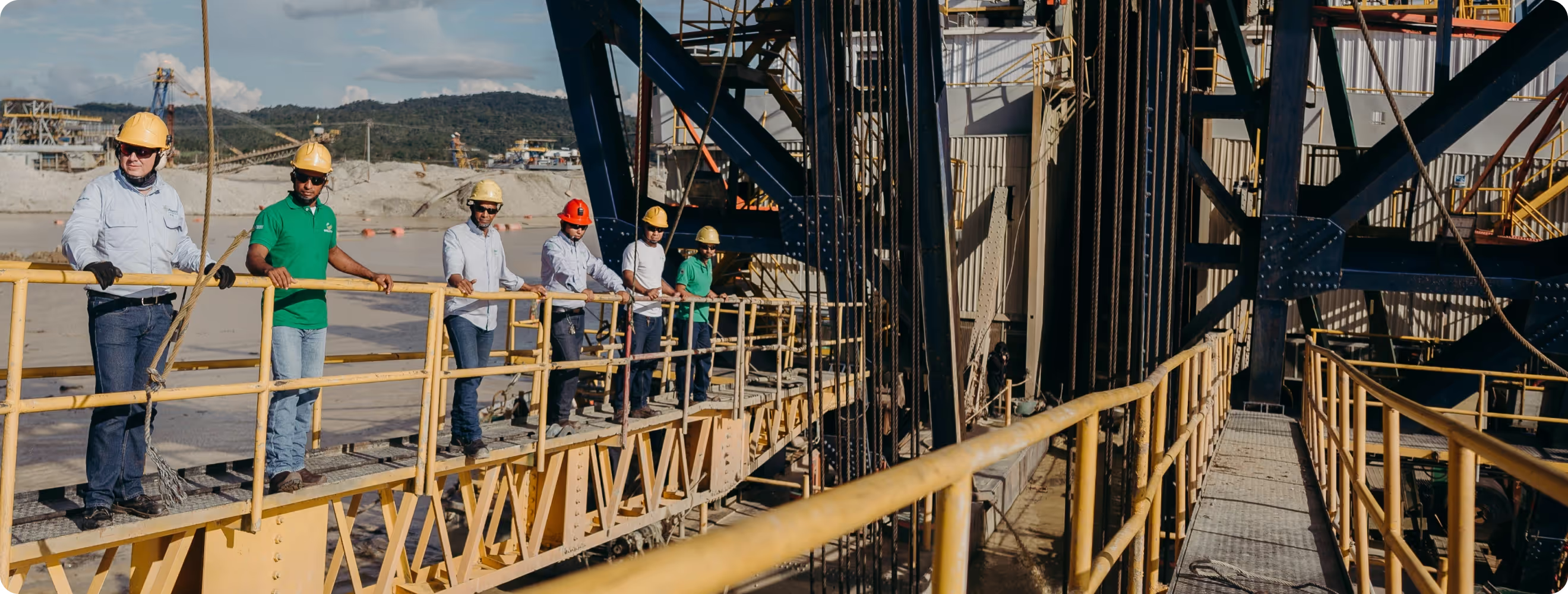
Hodgson gave a detailed account of how infrastructure reshaped Serabi's operations. A paved federal highway extending from the soybean-producing state of Mato Grosso north to a tributary of the Amazon Tapajós River brought power, services, and roughly 5,000 trucks a day of traffic through the region. Critically, the road physically connected the previously separate Palito and Coringa mine sites, allowing them to share a single processing plant rather than requiring separate infrastructure, a change that also simplified Coringa's permitting, since it avoided the need for its own tailings facility. The nearby town of Nova Progresso, with a population estimated between 30,000 and 40,000, grew substantially as a result.
Local political dynamics shifted over time: the town's mayor initially opposed Serabi's decision not to build a second processing plant at Coringa, fearing fewer construction jobs, but became supportive once the broader economic multiplier became visible. The company's relationship with a nearby indigenous community was also described as difficult initially but much improved over time. Hodgson contrasted this with an earlier project he worked on in Greece that remained stalled for years, arguing that losing local support early in a project's life is very difficult to recover from.
From Brazil Discount to "Brazil Premium"
Discussion turned to how capital markets view Brazil-focused mining equities. Carter, reflecting on Cabral's recent project financing which drew multiple competing offers before the company selected one, argued that investor perception has shifted materially:
"I don't think there is a Brazil discount anymore. I think there's probably a Brazil premium. I think a lot of jurisdictions that previously were regarded as more favourable are now regarded as less favourable than Brazil. I think the proof of the pudding is you're seeing a lot of major companies coming into Brazil."
He pointed to the entry of large diversified miners including Vale, Rio Tinto, BHP, Anglo American, and Kinross Gold, which operates Brazil's largest gold mine alongside growing interest from institutional investors based in London, Melbourne, and New York, and a broadening retail base spread across North America, Europe, and Asia. He also cited sector-level data: Brazilian mining directly and indirectly employs an estimated 2.2 to 2.3 million people, generated roughly $60 billion in revenue in 2025, and mineral products account for about 55% of Brazilian exports.
A critical minerals bill recently passed by Brazil's Chamber of Deputies was cited as a further supportive signal. Panelists were careful to note that other jurisdictions, including several in Africa, may still command more favourable financing terms in specific cases, and that Peru where permits to drill can reportedly take 2-3 years was cited as a contrasting example where Brazil's typical weeks-to-months drill-permit timeline compares favourably.
Workforce and Supply Chains
Each company described a mature, if regionally uneven, labour and supplier base. Cabral has expanded its workforce from roughly 75 people focused on exploration to more than 400 supporting construction, with the large majority of staff, contractors, and equipment sourced domestically. Carter noted close to 100% of the on-site construction workforce is Brazilian, mostly from Pará.
Serabi, by contrast, noted underground mining requires more specialized labour that is harder to source locally. The company trained workers from scratch and brought in, then nationalised, around 100 Peruvian personnel, building toward a combined workforce of roughly 1,000 across both mines. Equipment procurement was flagged as a persistent constraint for Serabi specifically. Lead times on imported machinery as much of it manufactured in China can run as long as seven months, requiring longer-horizon planning. Cabral, running six drill rigs concurrently, said sourcing has not been a major constraint given the scale of its contracts, though securing a single rig on short notice could be harder.
ValOre, operating in a different, drier state with an inherited local exploration workforce from a prior operator which had run the project for roughly two decades, reported few such constraints at its current early stage.
Exploration Upside and Geological Context
Diniz emphasised Brazil's relatively low level of systematic geological mapping as an indicator of remaining exploration potential: only about 30% of Brazilian territory is mapped to a high-resolution standard despite the country's continental scale, compared with more mature jurisdictions like Canada or Australia. He also pointed to Pará's broader mineral base as the state hosts the world's largest iron ore mine along with major copper and bauxite operations, and is Brazil's second-largest mining state by revenue after Minas Gerais and to emerging districts beyond precious metals, including a "Lithium Valley" in Minas Gerais and a developing rare earths district, as evidence of sector diversification.
Meanwhile, Carter, whose company operates in the Tapajós, described the district as the site of the largest alluvial gold rush historically recorded anywhere, with an estimated 20 to 30 million ounces of placer gold recovered from regional streams during the 1980s which the majority has hard-rock sources that remain undiscovered. ValOre's own project inherited roughly 30,000 meters of historical drilling from a prior operator, on top of which the company has added about 20,000 meters, doubling the resource since acquisition.
Company-Specific Catalysts
Looking ahead,
- Serabi is targeting production growth from a historical base of roughly 25,000-30,000 ounces toward approximately 50,000-60,000 ounces alongside continued resource growth across both mines, plant expansion, and greenfield exploration targets referred to as Pit 3 and Pit 4.
- Cabral expects commercial production at its first mine in the Tapajós during the third quarter of 2026, alongside continued drilling - six rigs are currently active, with a recent highlight intercept of 9.5 meters at 87.4 g/t gold - and an updated district-wide resource estimate later this year; Carter also referenced project economics with a notably high rate of return at current gold prices
- ValOre is targeting a preliminary economic assessment on its palladium-platinum project by year-end while pursuing gold-focused acquisitions aimed at building an integrated precious metals platform, alongside continued exploration across its 51,000-hectare district.
Key Takeaways
The panel's central message was one of qualified confidence: Brazil's federal regulatory framework is viewed as stable and comparatively predictable, but investors should understand that outcomes depend heavily on state-level administrative capacity, early stakeholder engagement, and realistic equipment and workforce planning. The shift in market perception from a perceived "Brazil discount" to what panelists termed a "Brazil premium" reflects both rising gold prices and demonstrated project execution by companies in the Tapajós and surrounding regions, reinforced by concrete infrastructure improvements. For investors, the practical implications are that jurisdictional risk in Brazil is increasingly viewed as manageable relative to other frontier and emerging mining regions, though due diligence should still account for state-specific permitting timelines, local labour market depth, equipment import lead times, and verification of specific project economics cited verbally rather than in formal disclosures.
TL;DR
Executives from Serabi Gold, Cabral Gold, and ValOre Metals described Brazil's mining jurisdiction as increasingly favourable, with a stable federal regulatory framework offset by state-level administrative bottlenecks that companies manage through early stakeholder engagement and temporary licensing. Capital markets sentiment has shifted from a historical "Brazil discount" to what can be called a "Brazil premium," supported by major miner entry, strong financing conditions, and tangible infrastructure gains. Key near-term value drivers include Serabi's production ramp toward 50,000–60,000 ounces, Cabral's Q3 2026 first gold pour backed by active six-rig drilling, and ValOre's year-end PEA and gold M&A strategy. Underlying all three theses is Brazil's comparatively low level of systematic geological mapping (~30%), suggesting significant unexplored upside remains.
FAQ (AI-Generated)
Analyst's Notes





Subscribe to Our Channel




Stay Informed