




Selkirk Copper Runs Phase 2 Drilling & Feasibility Fieldwork in Parallel: 6 Things You Need to Know


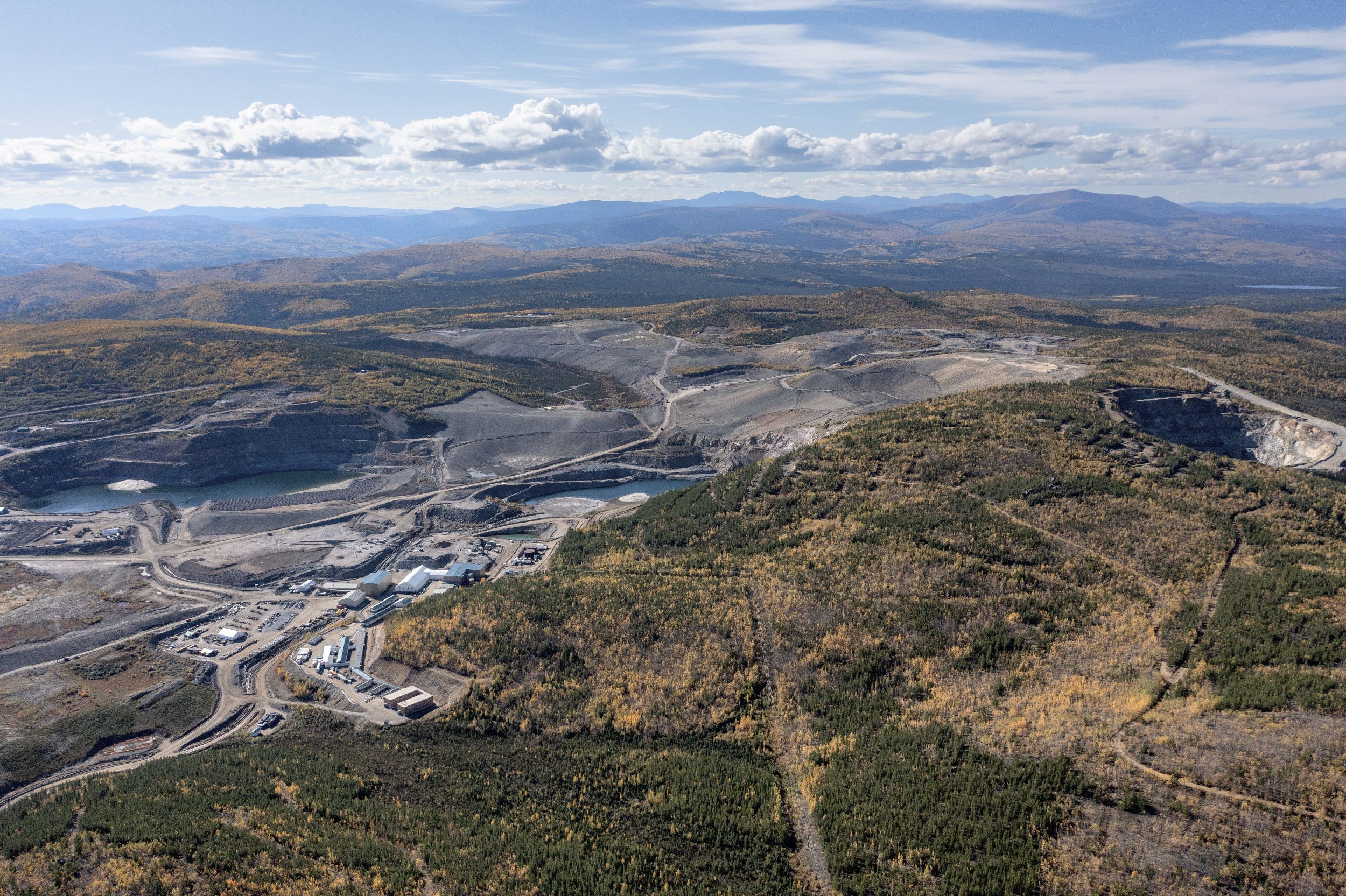
Selkirk Copper is conducting Phase 2 drilling and feasibility fieldwork in parallel at Minto, compressing the path to a mid-2027 restart decision.
Project Overview
Selkirk Copper Mines (TSX-V: SCMI | OTCQB: SKRKF | FRA: IO20) is advancing the restart of the former Minto copper-gold-silver mine in central Yukon, roughly 250 kilometres north of Whitehorse, on and adjacent to the lands of the Selkirk First Nation, which is the largest shareholder in the company. The site already has the infrastructure most restart candidates lack: a 4,100-tonne-per-day processing plant, a 400-person camp, water treatment facilities, open-pit and underground workings, road access, and grid power. The existing Minto resource stands at 12.6 million tonnes indicated at 1.20% copper, 0.46 grammes per tonne (g/t) of gold, and 4.3 g/t silver, plus 23.7 million tonnes inferred at 1.05% copper, for roughly 881 million pounds of contained copper across both categories.
What changed in July 2026 is the shape of the workstream. Selkirk is now conducting resource drilling and feasibility-study fieldwork simultaneously at the same site during the same summer season. The updated resource estimate and economic assessment that anchor the whole exercise are targeted for release later this month.
1. Two workstreams that are usually sequential are now running at once
Selkirk has initiated a technical field data collection programme to inform a planned Feasibility Study (FS) while its 50,000-metre Phase 2 resource drill programme is still only halfway through. In a conventional restart timeline, a company completes resource drilling, updates its resource, and only then mobilises the geotechnical, geometallurgical, and environmental work required for an FS. Running the two concurrently means the engineering inputs and the resource inputs mature together rather than end-to-end, which is the mechanism that pulls a construction decision forward rather than merely making the current season busier.
President and Chief Executive Officer of Selkirk Copper, M. Colin Joudrie, frames the parallel programme as a coordinated push toward the study:
"I continue to be impressed with the Selkirk Copper team's ability to progress a wide range of technical- and commercially-focused work programs in support of the planned feasibility study, which is expected to commence in the third quarter of 2026. The data being collected in the Phase 2 50,000-meter drill program, including geotechnical data collection, geometallurgical testwork, and infill drilling, will support feasibility-level detailed mine plans."
2. Phase 2 drilling is 54% complete, 2 months in, ahead of schedule
Phase 2 began in May 2026 and had reached 27,300 metres across 104 holes by June 2026, or 54% of the planned 50,000 metres. Daily productivity is averaging approximately 120 metres per day, with single-drill rates reaching up to 220 metres per day. The pace is what makes the parallel timeline credible rather than aspirational: the faster the metres accumulate, the sooner the drill-derived inputs to the mine plan are locked in, and the company is targeting completion of the programme by late August. High productivity here is attributed to a team that has built site-specific knowledge over the prior 9 months, the same continuity that lowers execution risk on the feasibility work now starting alongside it.
3. The initial results firm up ounces sitting next to existing infrastructure
The first reported assays cover only the first 9 holes, but they fall within the range where a restart economics case is most sensitive: close to development. Infill drilling at the 117 Lens returned 1.02% copper, 0.35 g/t gold, and 4.2 g/t silver over 22.7 metres from a depth of 316.9 metres, confirming grade continuity and thickness in a zone near existing underground mining infrastructure. A newly identified lens adjacent to the underground portal returned 0.48% copper, 0.21 g/t gold, and 2.3 g/t silver over 29.1 metres; the company describes this intercept as marginally economic but confirms broad mineralisation immediately beside development already in place. Tonnes that sit next to a portal or existing workings carry a lower incremental development cost than greenfield ounces, which is why continuity here feeds directly into a restart mine plan rather than a distant expansion case.
4. Step-out holes show the high-grade zones are still open
Alongside the infill work, exploration step-outs extended known high-grade zones rather than merely confirming them. At Minto North, a 30 metre step-out intersected 2.22% copper, 0.41 g/t gold and 5.3 g/t silver over 4.5 metres from 116.6 metres depth, within a broader interval of 1.16% copper, 0.31 g/t gold and 3.2 g/t silver over 11.9 metres, with mineralisation reported open to the west. At Minto East, a 50 metre step-out intersected 2.33% copper, 1.98 g/t gold and 22.3 g/t silver over 5.9 metres from 142 metres depth, extending narrow high-grade zones beyond the limits of previous mining. Open high-grade edges are the raw material for mine-life additions, and the stated objective of both drill phases is to add mine life cost-effectively.
Joudrie ties the drilling directly to mine life:
"A key objective of the Phase 1 and Phase 2 Drill Programs is to make meaningful additions to mine life in a cost-effective manner; thus far, we are meeting this objective."
5. The updated resource estimate & economic assessment land this month
The near-term catalyst is dated: Selkirk states the 2026 Mineral Resource Estimate and Preliminary Economic Assessment are on target for completion in the second half of July. This is the first economic checkpoint the market has been given on the reconfigured asset, and it is the technical basis on which the feasibility work is built, rather than a standalone data release. An updated resource sets the tonnes and grade the mine plan draws from; the economic assessment translates those into a first public read on restart economics at current metal prices.
6. The feasibility field work is being collected now, compressing the runway to a decision
The technical programme initiated this summer covers the full scope of feasibility: geotechnical drilling and test pitting around planned open pits, underground development, portals, and waste and tailings facilities; geometallurgical testwork to characterise mineralisation styles; structural geological modelling; borehole surveys; and environmental baseline monitoring. Collecting this data during the same summer season as the resource drilling is what removes a sequential year from the schedule. The company's stated timeline has the FS completing in mid-2027, first production targeted for mid-2028, and a 12 to 15-year mine life at a scale approaching the mine's historic output of up to 30,000 tonnes of copper, 35,000 ounces of gold, and 350,000 ounces of silver per year. Each workstream de-risks the next milestone rather than blocking it, which is the practical meaning of parallel execution for a restart.
Joudrie frames what the July documents are meant to show:
"The updated Mineral Resource Estimate and Preliminary Economic Assessment are on target for completion in the second half of July, which, respectively, will demonstrate the prospectivity of the geological system as well as the fundamentals of the investment opportunity we see in the Minto Project."
Key Takeaway for Investors
- Selkirk is running its Phase 2 resource drill programme and feasibility-study field data collection in the same summer season, eliminating a sequential step that would otherwise extend the restart timeline.
- Phase 2 reached 54% of its planned 50,000 metres within 2 months and is ahead of schedule, which helps keep the compressed timeline credible.
- The first assays confirmed continuity and thickness in zones adjacent to existing underground infrastructure, where incremental development costs are lowest.
- The updated Mineral Resource Estimate and Preliminary Economic Assessment are due in the second half of July, giving the market its first economic read on the reconfigured asset.
- The company targets feasibility completion in mid-2027 and first production in mid-2028 at a scale approaching the mine's historic output.
Bottom Line
Selkirk Copper has moved the story from how fast it can drill to how much of the feasibility runway it can collapse. By collecting engineering data at the same time as resource metres, on a site that already holds a mill, camp, and underground workings, the company is compressing the path to a mid-2027 study and a targeted mid-2028 restart. The imminent resource estimate and economic assessment are the first points at which the compressed timeline meets published numbers, and they will set the terms of the investment case on which everything that follows depends.
Analyst's Notes





Subscribe to Our Channel





Stay Informed


