




Fully Funded and Fast-Tracked: Coda Minerals Targets 2026 PFS Delivery for South Australian Copper Project


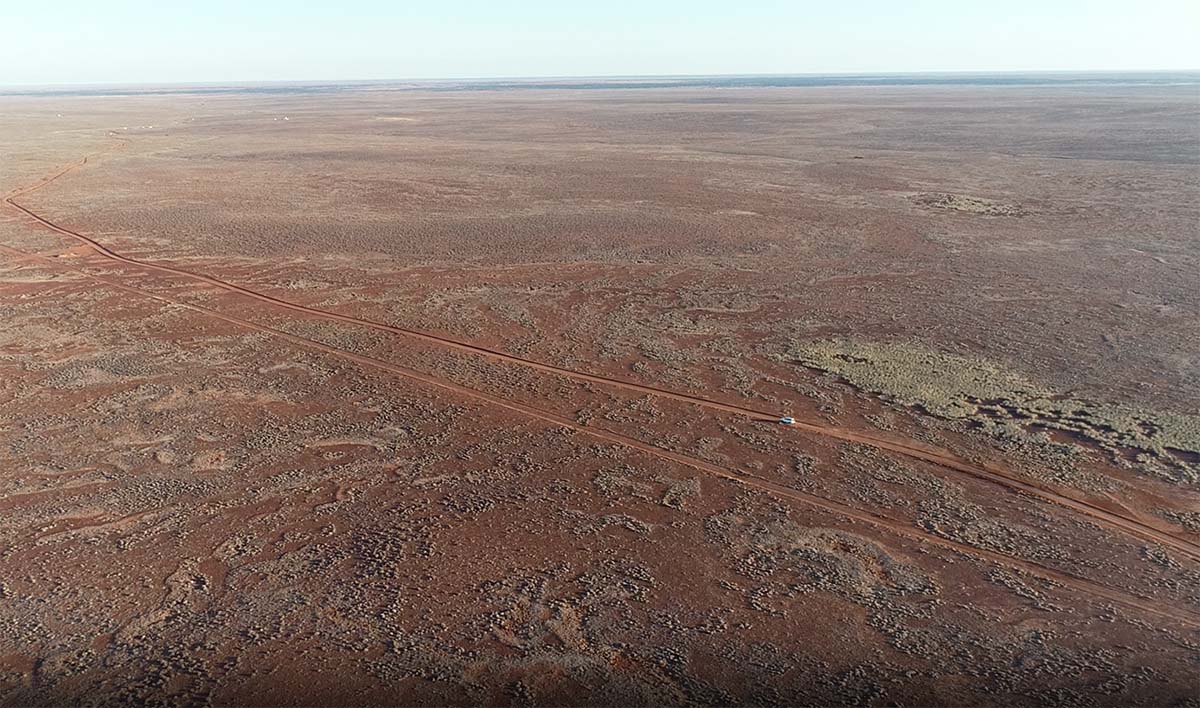
Coda advances copper-silver project to PFS with $1.9B NPV at spot. Fully funded, simplified flowsheet, experienced team. $40M market cap vs developed peers.
- Coda Minerals owns 100% of the Elizabeth Creek Copper-Silver Project in South Australia, valued at AUD$1.9 billion post-tax NPV at current spot prices (AUD$855 million at base case assumptions)
- Company is advancing a fully funded prefeasibility study (PFS) expected by end of 2026, with plans to move directly into definitive feasibility study (DFS) thereafter
- Project economics significantly improved after simplifying flowsheet to focus purely on copper-silver production using proven leaching technology (20% of world's copper uses this method)
- Three drill rigs currently on site conducting geotechnical work, metallurgical sampling, and resource updates across the large, flat-lying orebody spanning approximately 4.5 square kilometers
- Recent $12.3 million capital raise was heavily oversubscribed, with proceeds funding critical path work including hydrogeology drilling, mine plan optimization, and environmental studies
As global copper demand intensifies amid electrification trends and aging mine supply, Australian junior Coda Minerals is positioning itself to capitalise on what CEO Chris Stevens describes as a structural supply deficit. The company's Elizabeth Creek Copper-Silver Project in South Australia sits in what Stevens calls a "phenomenal location", adjacent to BHP's Carrapateena project and approximately an hour from Olympic Dam. With a fully funded prefeasibility study underway and a significantly enhanced economic profile following recent technical innovations, Coda is navigating the critical transition from explorer to potential producer in a jurisdiction with established mining infrastructure and a supportive regulatory environment.
Project Economics and Current Valuation
The Elizabeth Creek project's economics have undergone substantial revision since initial scoping studies. Stevens emphasises that the published figures show an AUD$855 million post-tax NPV, deliberately focusing on post-tax rather than pre-tax metrics. "Everyone uses them to make them look better," Stevens notes regarding pre-tax NPVs, underlining his commitment to transparent reporting.
Critically, these base case economics were calculated at $9,260 per tonne copper (approximately $4.20 per pound) and $30 per ounce silver - figures chosen for comparability with peer companies. However, with copper trading at $11,600 per tonne and silver reaching new records at $59 per ounce at the time of the interview, the project's economics have improved dramatically. At current spot prices, the post-tax NPV stands at AUD$1.9 billion, with an internal rate of return of 60% compared to 35% under original assumptions.
This valuation disconnect presents an interesting dynamic for investors. With Coda's current market capitalization around $40 million, Stevens acknowledges that comparable copper development stories command significantly higher valuations, though he attributes this partly to maturity differences.
Technical Transformation: From Complex to Proven
Perhaps the most significant strategic shift for Coda has been the fundamental redesign of the project's processing flowsheet. The original concept involved copper-cobalt-silver production using flotation technology - a configuration that Stevens admits "always kind of held us back a little bit" due to cobalt's challenging marketing and technical characteristics.
The new approach focuses exclusively on copper and silver production using proven leaching technology. Stevens emphasises the strategic wisdom of this decision:
"If you can base the project fundamentally off two commodities with deep liquid markets, you're in a much better shape."
He notes that approximately 20% of global copper production employs leaching methods, positioning Elizabeth Creek within established technological parameters rather than requiring metallurgical innovation.
This technical pivot was only communicated to the market in late August, followed immediately by the capital raise. Stevens defends this timing, noting that companies waiting too long after releasing new information tend to experience share price deterioration. The transition period has been complicated following the raise, though he expects this washout period to conclude as news flow accelerates in the new year.
Current Operations with Development Timeline
Coda currently has three drill rigs operating on site, conducting what Stevens describes as "triple use core" drilling. This integrated approach simultaneously addresses metallurgical sampling requirements, geotechnical data collection, and resource definition - an efficient strategy for a junior company managing capital constraints.
The drilling program targets a large, flat-lying orebody spanning approximately 4.5 square kilometers at roughly 400 meters depth.
Importantly, the existing resource is already 93% indicated, with mine plans based on essentially 100% indicated material. The current drilling program aims to tighten geotechnical assumptions and enable mine plan reoptimization based on the new flowsheet work that Stevens expects will deliver "an enormous uplift in the economics" by improving head grades and eliminating sub-economic tonnes from current mine plans.
The development timeline targets PFS delivery by end of 2026, followed by a transition directly into definitive feasibility study work lasting approximately one year. Stevens is emphatic about the company's execution capability:
"I will work my absolute tail off to get this done. I don't care what it takes. We'll hire the right people. We're going to work long hours."
Interview with Chris Stevens, CEO, Coda Minerals
Team Building and Technical Governance
Stevens demonstrates acute awareness that the prefeasibility study represents a critical inflection point. "There is no more important study than a prefeasibility study," he states, noting that poor PFS work severely limits the ability to influence project outcomes during construction.
To ensure technical excellence, Coda has assembled a technical steering committee with substantial development experience. Colin Moorhead chairs this committee, bringing experience from leading PT Merdeka through the development of the Tujuh Bukit gold mine in Indonesia and a billion-dollar project completion, plus 20 years at Newcrest. Recently, Coda hired the project manager and study manager who served as chief technical officer at Xanadu - a company that recently completed its PFS and was subsequently acquired.
The third steering committee member, Robin Marshall, has collaborated with board members to bring 17 projects into production over their careers. Supporting this governance structure, Coda has engaged established firms including Strategic Metallurgy for flowsheet development and is in tender discussions with major engineering firms with extensive copper experience.
Funding Strategy through Capital Allocation
The recent capital raise expansion from $8.3 million to $12.3 million proved pivotal, enabling Coda to fund critical path hydrogeology drilling that Stevens describes as "not cheap." This drilling addresses one of the key questions for PFS completion, alongside geotechnical characterization, metallurgical variability work, and mine optimization studies.
Stevens estimates the total PFS drilling program at approximately $4 million, a significant portion of available capital but justified by the technical requirements of characterising a large, laterally extensive orebody. He pushes back against any suggestion of corner-cutting:
"There are juniors who will try and fudge it and use non-representative composites. That's not who we are."
The company has also engaged with South Australia's scoping process for environmental approvals - not a scoping study but rather a systematic evaluation of environmental permitting requirements. This approximately 400-page document provides Stevens with clear visibility into approval pathways, timelines, and costs. Early environmental studies covering dust monitoring and water management are already underway.
Importantly, Stevens notes that the raise was "massively oversubscribed," with his lawyer remarking that many similar raises fail to achieve even 50% subscription. This shareholder support provides validation of management's strategic direction and execution capability.
Market Context within Strategic Positioning
Stevens articulates a compelling supply-demand thesis for copper that informs Coda's strategic timing. He notes that 80% of copper production comes from just 20 companies, with major mines like Escondida producing over a million tonnes annually in a 23-million-tonne global market. These large mines are depleting with declining grades, while few large discoveries are emerging to replace them.
On the demand side, Stevens highlights China's stabilising real estate sector, massive forecast increases in data center requirements driven by AI, vehicle electrification, and aging electrical grid infrastructure requiring replacement.
"You need 30 Codas to replace an Escondida. Where are they coming from? Because there are not 30 Coda's in Australia. There's five or six development projects, of which only two or three are credible."
Interestingly, copper does not appear on Australia's critical minerals list, unlike nickel, which limits government support mechanisms available to the project. This contrasts sharply with Canadian, American, and European policy frameworks actively supporting domestic copper development. Stevens observes that Australian retail investors may also be "a little bit spooked by some of the copper stories out there" following challenges at other projects, making copper stories harder to sell than gold to retail audiences.
Risk Factors and Execution Challenges
While Stevens projects confidence, he acknowledges several key questions requiring resolution during the PFS phase. These include confirming water availability through hydrogeology drilling, finalising mining methods (likely a hybrid approach combining long-hole open stoping with room-and-pillar mechanical cutting), and characterising metallurgical variability across the orebody.
The tight timeline to PFS delivery by end-2026 requires flawless execution with minimal room for technical surprises or permitting delays. Stevens' confidence stems partly from the project's relatively straightforward technical profile - no metallurgical innovation required, established mining methods, and proximity to existing infrastructure and mining operations.
The Investment Thesis for Coda Minerals
- Significant valuation disconnect: AUD$40M market cap against AUD$1.9B post-tax NPV at spot prices (AUD$855M at conservative base case), with 60% IRR at current copper/silver prices versus 35% at base assumptions
- Fully funded development pathway: $12.3M raise (heavily oversubscribed) provides capital through PFS delivery end-2026, eliminating near-term dilution risk while funding critical path work
- Proven, simplified technical approach: Shift to copper-silver only production using leaching technology (20% of global copper uses this method) eliminates cobalt marketing/technical challenges and bases economics on two deep, liquid commodity markets
- Strategic location and infrastructure: Situated adjacent to BHP's Carrapateena and near Olympic Dam in established South Australian mining jurisdiction with supportive regulatory framework and existing infrastructure
- Near-term catalysts: Three drill rigs currently operating to deliver resource update, tightened geotechnical parameters, and mine plan reoptimization - all expected to enhance project economics through 2025-2026
- High-quality asset fundamentals: Large (4.5 km²), flat-lying orebody at 400m depth with 93% indicated resources and 100% indicated mine plan - favourable geometry for underground mining economics
- Structural copper supply deficit: Limited pipeline of credible development projects globally (only 2-3 in Australia) against accelerating demand from electrification, AI data centers, and aging grid infrastructure replacement
- Clear path to value inflection: Direct transition from PFS (end-2026) to DFS (12-month duration) positions company for potential M&A interest or project financing discussions from 2027 onwards
The global copper market faces a structural supply-demand imbalance that creates compelling conditions for new project development. While demand accelerates through electrification, data center expansion, and infrastructure renewal, the supply side confronts systematic constraints. Legacy mines are depleting with declining grades, and the discovery pipeline has failed to replace them. This dynamic creates asymmetric opportunities for credibly-financed development projects with proven metallurgy in established jurisdictions precisely the profile Coda Minerals is building toward.
TL;DR
Coda Minerals is advancing Australia's Elizabeth Creek copper-silver project through a fully funded PFS targeting end-2026 delivery, with current drilling and technical work expected to enhance already robust economics ($1.9B post-tax NPV at spot prices). The strategic pivot to simplified, proven leaching technology processing only copper and silver eliminates technical risk while an experienced development team executes systematic de-risking work. At $40M market cap against peers valued significantly higher at comparable development stages, successful PFS delivery could catalyse substantial rerating.
FAQs (AI Generated)
Cobalt presented persistent marketing and technical challenges. The new flowsheet uses proven leaching technology (20% of global copper production) and bases economics on two deep, liquid commodity markets rather than three, with one problematic. This simplification reduces technical risk substantially.
PFS delivery targeted end-2026, followed by 12-month DFS. This positions the company for financing/partnership discussions from 2027-2028 onward, with construction decision (FID) likely 2028-2029, suggesting potential production early 2030s depending on financing pathway and construction timeline.
Primary unknowns include water availability (hydrogeology drilling underway), geotechnical parameters across the large orebody, metallurgical variability testing with new flowsheet, and mining method finalization (likely hybrid long-hole stoping/room-and-pillar approach). Management expresses confidence all are answerable with funded work programs.
The large (4.5km²), flat-lying geometry at 400m depth with 93% indicated resources provides mining advantages: predictable geometry, established underground mining methods, minimal geotechnical complexity. Proximity to BHP operations and Olympic Dam provides infrastructure access and demonstrates commercial viability of regional geology.
The raise was heavily oversubscribed - expanding from $8.3M to $12.3M - with Stevens noting his lawyer observed many comparable raises fail to achieve 50% subscription. This suggests strong shareholder confidence in management's strategy and the project's development potential despite recent market weakness.
Analyst's Notes





Subscribe to Our Channel





.jpg)


Stay Informed


