F3 Uranium Combines Resource Growth with Strategic M&A Optionality


F3 Uranium holds $22M cash, a maiden resource, and is actively drilling its large Tetra conductor while pursuing consolidation to scale in the Athabasca Basin.
- F3 Uranium has established a maiden inferred resource of approximately 11 million pounds of uranium at 12% U₃O₈ at its JR Zone in the Athabasca Basin, placing it among a small group of junior uranium companies to have achieved a formal, reportable resource estimate in one of the world's premier uranium districts.
- The company holds $22 million in cash with $12 million allocated for drilling in 2026, providing a fully funded runway through year-end and potentially into 2027 without requiring additional equity financing in a challenging market for small-cap uranium names.
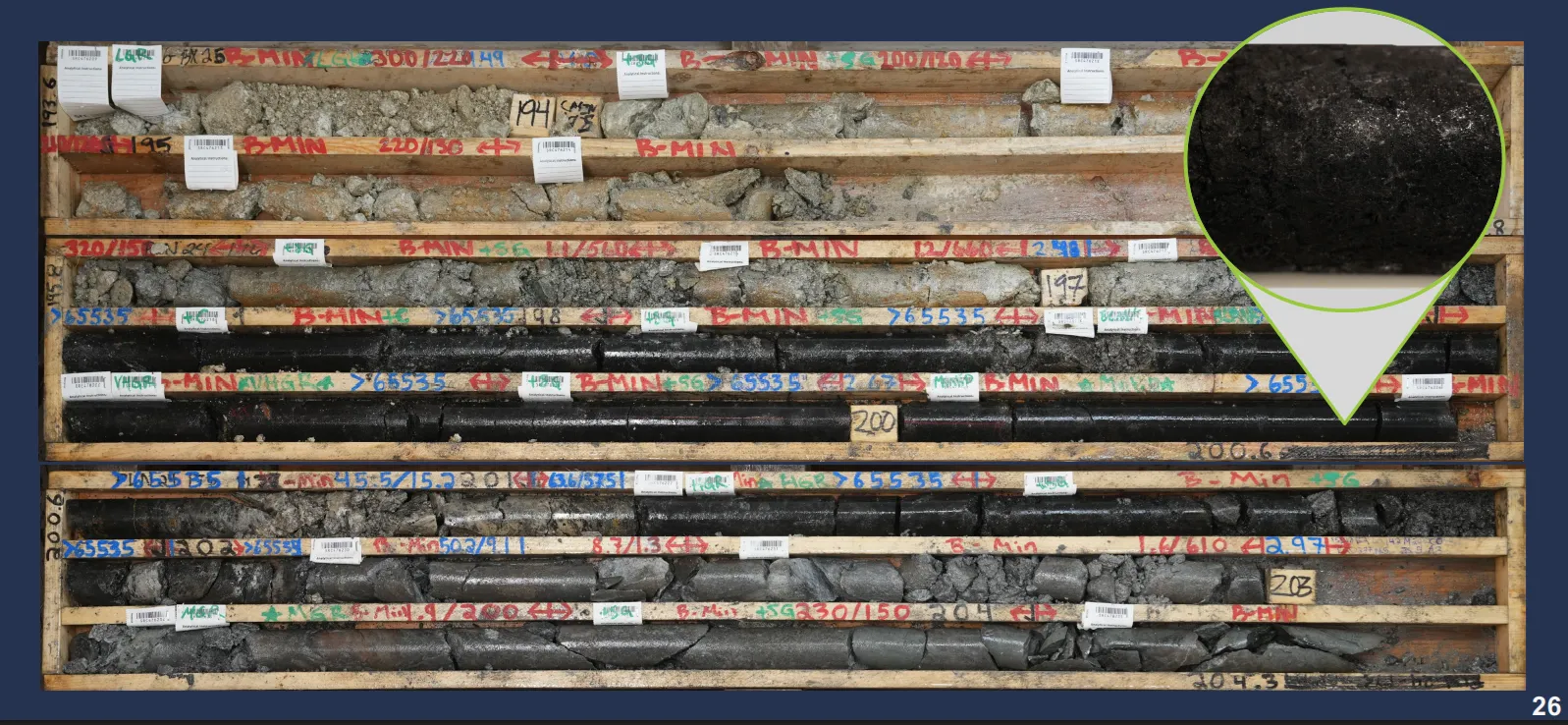
- F3's Tetra target has returned two high-grade uranium intersections 15 metres apart along a conductor system extending at least 1.4 kilometres and remaining open along strike, with approximately 90% of the 2026 drilling budget directed toward expanding and delineating this early-stage system.
- CEO Dev Randhawa confirmed substantive M&A discussions with three separate groups at PDAC 2026, with the company simultaneously exploring outright acquisition, acquiring a counterparty, joint ventures, and dual-listing in additional jurisdictions to access investor audiences that may ascribe higher valuations to Athabasca Basin assets.
- Structural demand for uranium is being reinforced by big technology companies investing directly in nuclear energy to power AI data centres, with Randhawa identifies energy cost and reliability will determine winners in the global AI race and ultimately redirect institutional capital back toward uranium exploration and development.
F3 Uranium Corp. (TSXV:FUU) is a uranium exploration company operating exclusively in the Athabasca Basin of Saskatchewan, Canada which is home to the world's highest-grade uranium districts. At PDAC 2026 in Toronto, Chairman and CEO Dev Randhawa provided a candid update on the company's operational progress, financial position, and strategic thinking at a moment when uranium equities are navigating a period of subdued investor attention relative to gold and silver markets. The interview covered the company's maiden resource, its newly commenced drilling program at the Tetra target, and its active exploration of consolidation opportunities within the junior uranium space.
Maiden Resource and Financial Position
F3 Uranium entered 2026 having achieved a significant milestone: the completion of a maiden inferred resource at its JR Zone. The resource totals approximately 11 million pounds of uranium at an average grade of 12% U₃O₈, a grade that ranks among the highest for any early-stage resource in the Athabasca Basin. This places F3 in a select group of junior uranium companies that have advanced beyond the exploration stage to establish a formal, reportable resource estimate.
The company is well-funded to advance its programs. F3 currently holds $22 million in cash, with $12 million allocated for in-ground drilling in 2026. Randhawa confirmed that the company has sufficient capital to operate through year-end and potentially into 2027 without requiring additional financing. This financial runway provides operational flexibility at a time when equity markets for smaller uranium companies remain challenged.
The Tetra Target: A Large Conductor System
The primary exploration focus for F3 in 2026 is the Tetra target, a recently identified conductor system on the same property as the JR Zone. Unlike the JR Zone, which was discovered through conventional exploration methods, Tetra was identified after F3's technical team recognized an anomaly that prior operators had overlooked. A mudstone flare had obscured the geophysical signature of a large conductor, leading a previous operator to walk away from the area. F3 investigated the anomaly and confirmed a substantial conductor extending at least 1.4 kilometres and remaining open along strike.
Drilling at Tetra began in early 2026 and has so far returned two high-grade uranium intersections approximately 15 metres apart. Randhawa described these intersections using an analogy common in the Athabasca exploration community:
"We found two pearls so far of high-grade uranium 15 metres apart. But now we have to find more of them and more importantly, larger chunks of uranium."
The $12 million drilling budget is heavily weighted toward Tetra, with Randhawa indicating approximately 90% will be directed there. The remaining capital will be applied toward the JR Zone, which, despite its smaller current footprint, is situated only 25 kilometres from established milling infrastructure and has attracted interest from at least one major operators for selective extraction method.
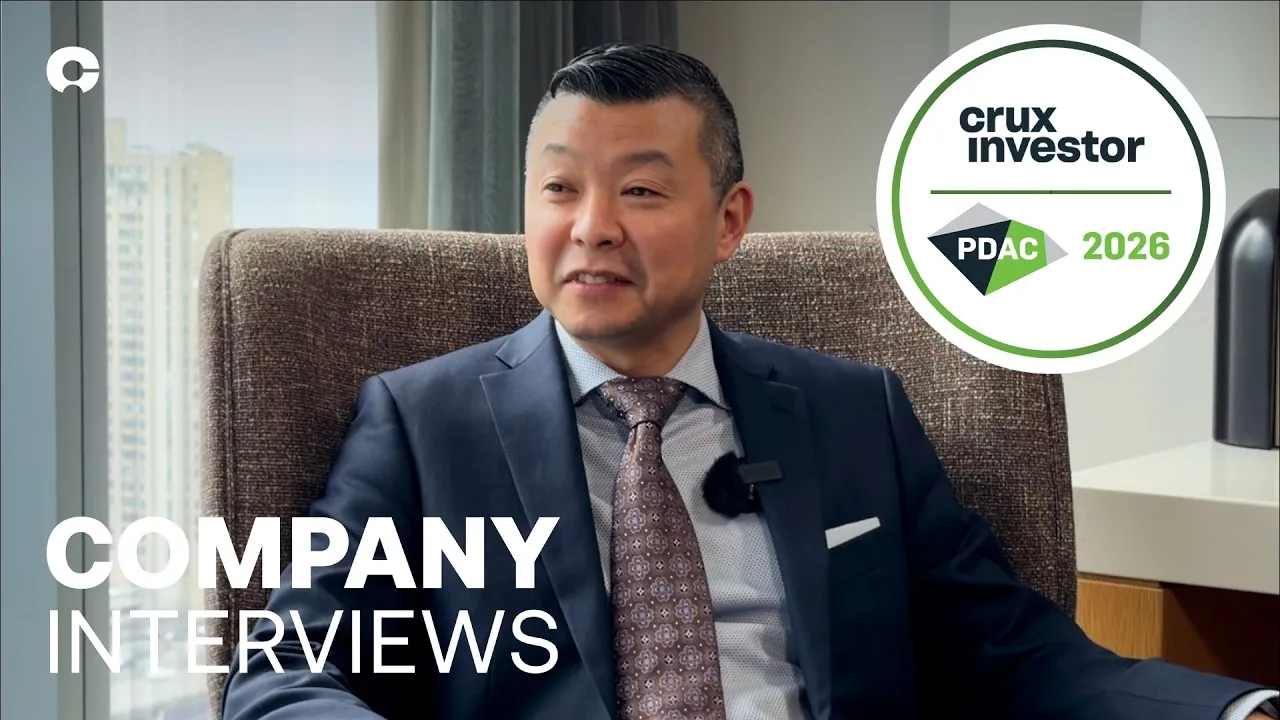
Interview with Dev Randhawa, Chairman & CEO of F3 Uranium Corp.
Drilling Methodology of High-Grade Systems
Randhawa was direct about the technical challenges inherent in advancing a high-grade Athabasca-style system. Uranium mineralisation in the basin tends to occur in discrete, high-grade pods rather than broad, disseminated zones. Step-out distances that would be routine in other deposit styles can result in missing mineralisation entirely if the geometry of the system changes direction.
F3's technical team, which Randhawa noted has been involved in three prior uranium discoveries in the Athabasca, applies a systematic geochemical and structural approach to guide each drill hole. Pathfinder elements such as boron are used to track the proximity and orientation of mineralised zones even when uranium grades are not directly intersected. Each hole, regardless of result, is treated as a data point that informs the next step. With drilling only recently commenced at Tetra, the company is still in an early learning phase on this system, and Randhawa acknowledged that tough overburden conditions which is a common challenge across the basin may require alternative drilling approaches as the program progresses.
Consolidation Strategy and M&A Discussions
Beyond the drill program, Randhawa spent considerable time at PDAC engaged in strategic conversations with potential counterparties. He confirmed that F3 has held substantive M&A discussions with three separate groups during the conference, spanning a range of deal structures including outright acquisition of F3, F3 acquiring another company, and joint venture arrangements.
Randhawa noted that several uranium-focused ETFs have implemented minimum market capitalisation thresholds of approximately $125 million. This structural change contributed to significant share selling pressure in the sector toward the end of 2026.
"You are just not going to get any love staying small," Randhawa said. "We're looking at people who might want to take us out. We're thinking about taking somebody else out and making something bigger and better."
F3 is also exploring dual-listing in additional jurisdictions, potentially to access investor audiences that may ascribe higher valuations to Athabasca Basin uranium assets. Randhawa cited Australian-listed uranium companies as examples of comparable assets trading at structurally higher valuations due to the composition and mandate of their domestic fund management community. He acknowledged that any consolidation transaction would be evaluated on the quality of counterparty assets, their ability to raise capital, and the overall benefit to F3 shareholders to navigate multiple discovery-to-monetisation cycles in the basin.
The Investment Thesis for F3 Uranium
- F3 Uranium holds a maiden resource of 11 million pounds at 12% U₃O₈ at its JR Zone and it's one of the highest-grade early-stage resources in the Athabasca Basin providing a tangible asset floor for the company's valuation.
- The Tetra conductor system is a large, open, early-stage target with confirmed high-grade uranium intersections. With 1.4 km of conductor identified and only one drill hole completed, the system has substantial discovery upside
- The company is fully funded with $22 million in cash and $12 million allocated for drilling and sufficient capital runway through year-end without requiring dilutive financing in what remains a difficult equity market for small-cap uranium names.
- F3's JR Zone is situated 25 km from established milling infrastructure, providing an optionality pathway to monetisation through mill access agreements or toll-milling arrangements that would not require the company to construct processing facilities.
- The management team has been involved in multiple uranium discoveries in the Athabasca Basin. Technical execution in this district is highly specialised; proven discovery teams carry meaningful qualitative value that is not always reflected in market capitalization at early stages.
- Active M&A discussions with multiple counterparties at PDAC 2026 suggest near-term potential for a corporate event. Investors should assess whether any announced transaction delivers genuine asset and capital scale versus financial engineering, given the CEO's stated criteria for deal evaluation.
- ETF exclusion thresholds for sub-$125M market cap companies create a structural headwind that consolidation could resolve. A successful roll-up or merger that lifts F3 above that threshold could catalyse institutional inflows that are currently inaccessible.
Uranium and the AI Energy Equation
The long-term investment case for uranium has been well-rehearsed across the resource investment community: existing reactor capacity requires sustained fuel supply, new builds are underway in multiple jurisdictions, and primary mine supply from existing operations is insufficient to meet projected demand growth without new discoveries and development capital. What has evolved meaningfully over the past 18 months is the identity of the marginal demand driver and not it is utilities.
Big technology companies, facing an exponential increase in power demand from AI data centre build-outs, have moved ahead of traditional utilities in recognising that nuclear power is the only baseload generation technology capable of delivering reliable, carbon-free electricity at the scale and continuity required for large-scale AI infrastructure. The reopening of Three Mile Island under a power purchase agreement with Microsoft is the most visible expression of this dynamic, but it is part of a broader pattern that includes corporate reactor deals, direct investment in advanced nuclear technology, and regulatory engagement by technology companies who have not historically been participants in energy procurement policy.
Randhawa framed the competitive dimension of this dynamic clearly:
"Whoever has the cheapest base load power is going to win the AI race [...] We need to put more money into discoveries. We need more F3s finding uranium."
With the United States explicitly facilitating direct power purchase agreements between technology companies and nuclear operators, the implication for uranium demand is straightforward: incremental reactor restarts and new builds driven by technology sector demand represent upside to already-constructive long-term supply-demand models.
TL;DR
F3 Uranium enters 2026 with a high-grade maiden resource of 11 million pounds at 12% U₃O₈, $22 million in cash, and a fully funded $12 million drill program targeting the large, open Tetra conductor system in the Athabasca Basin. The company has confirmed two high-grade uranium intersections at Tetra and is systematically drilling to expand the system. CEO Dev Randhawa is simultaneously pursuing M&A consolidation with multiple counterparties to scale the company above the $125 million market cap threshold required for ETF inclusion and institutional investor access. The macro backdrop on big tech's direct investment in nuclear power for AI data centres — supports the structural demand case for uranium, even as near-term equity market attention has shifted toward gold and silver. For investors, the near-term catalysts are drill results from Tetra and any announced corporate transaction.
Frequently Asked Questions (FAQs) AI-Generated
F3 holds a maiden inferred resource of approximately 11 million pounds of uranium at 12% U₃O₈ at its JR Zone in the Athabasca Basin. A grade of 12% U₃O₈ ranks among the highest for any early-stage resource in the basin, which itself is globally recognised as the world's premier uranium district. Very few junior companies operating in the Athabasca have reached the stage of a formal, reportable resource estimate, which makes this a notable operational milestone.
Tetra is a large conductor system on the same property as the JR Zone, identified by F3 after prior operators missed it due to a mudstone flare obscuring its geophysical signature. F3 confirmed the conductor extends at least 1.4 kilometres and remains open along strike. Early drilling has returned two high-grade uranium intersections 15 metres apart. If the system proves to host a deposit of meaningful scale, it would represent a material addition to F3's asset base beyond the existing JR Zone resource.
F3 currently holds $22 million in cash, with $12 million earmarked for in-ground drilling in 2025. Randhawa confirmed the company is funded through year-end and potentially into 2026. This eliminates near-term financing risk and the associated dilution that affects many junior exploration companies in the current market environment. The caveat is that a significant corporate transaction, acquisition or merger, would likely involve some form of share consideration.
Junior uranium companies below approximately $125 million in market capitalisation are excluded from several uranium-focused ETFs, limiting their access to institutional and passive investment capital. Randhawa has been explicit that staying small is not a viable long-term strategy. F3 is exploring multiple deal structures — being acquired, acquiring another company, or entering joint ventures — with the stated goal of building a company with a market cap above $500 million. Any transaction would be evaluated on asset quality, counterparty ability to raise capital, and overall shareholder value.
Big technology companies have begun directly securing nuclear power for their data centre infrastructure, bypassing utilities and engaging with reactor operators and regulators as principal counterparties. The Microsoft-Three Mile Island power purchase agreement is the most prominent example. This represents incremental demand for nuclear power generation and, by extension, uranium fuel. For junior explorers, the impact is indirect — it supports long-term uranium price expectations and the strategic rationale for investing in new supply — but it does not provide near-term cash flow or a direct valuation uplift without a corresponding improvement in equity market sentiment toward the sector.
Analyst's Notes





Subscribe to Our Channel


.jpg)








Stay Informed