




Asymmetry in Plain Sight: Why Gold Developers Offer Re-Rating Leverage in an Overcapitalised Sector


.webp)
Gold producers generating massive free cash flow creates M&A opportunity as developers lag 5x producer gains.
- Major gold producers are generating record free cash flow, yet the long-anticipated wave of sector consolidation has failed to materialise, creating a widening disconnect between balance sheet strength and capital deployment.
- Early-March conference activity delivered few meaningful corporate catalysts, shifting investor focus to whether PDAC will finally trigger the competitive bidding and strategic acquisitions many believe are overdue.
- With dividends and buybacks reaching practical limits, producers face a narrowing set of capital allocation options, making M&A increasingly a question of timing rather than intent.
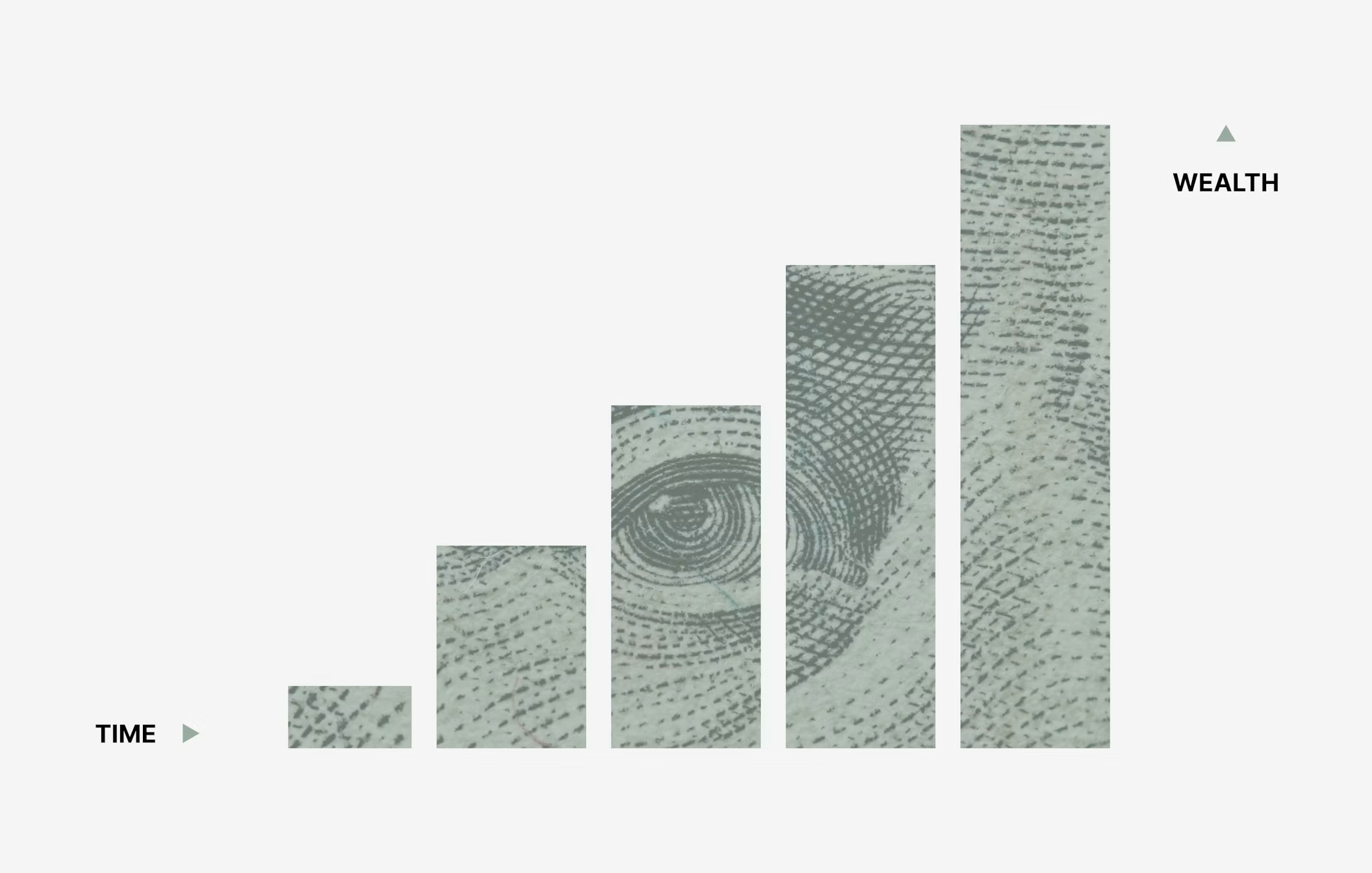
- Developer valuations continue to lag sharply behind producers despite a fivefold re-rating in senior gold equities since the Great Bear transaction, creating what some view as a structurally mispriced segment of the market.
- If consolidation begins, transaction sizes could be materially larger than prior cycles, with even modest production additions representing a small percentage of major producers’ market capitalisations but potentially transformative upside for developers.
The gold mining sector stands at a critical juncture as major producers generate unprecedented levels of free cash flow while merger and acquisition activity remains conspicuously subdued. Samuel Pelaez, President & CEO, and Derek Macpherson, Executive Chair, at Olive Resource Capital discussed the disconnect between producer cash generation and capital deployment, the emerging opportunity in developer valuations, and their expectations for the upcoming PDAC conference in Toronto.
Disappointing Early March Conference Activity Sets Stage for PDAC
The discussion opened with observations about the BMO Capital Markets conference in Hollywood, Florida, which concluded its third day without the major corporate announcements typically expected at such industry gatherings. Pelaez noted that announcements at the BMO conference traditionally feature "mega mergers, big acquisitions or otherwise like major expansions or big corporate development announcements about strategic resets." This year brought only B2 Gold's leadership transition announcement, falling well short of market expectations.
The absence of significant M&A activity, major project announcements, or meaningful exploration updates surprised both speakers, particularly given the strong operational and financial position of the industry. With PDAC conferences beginning the following day and running through early March, attention has shifted to whether this premier industry event will catalyse the long-awaited consolidation activity.
Overcapitalisation Thesis
The discussion introduced what Pelaez described as the industry becoming "over capitalised in a way," with substantial cash accumulating in major producer balance sheets. While this capital has not yet "filtered down to the developers and producers at the rate that we anticipated," the situation was characterised as "fantastic" because it should translate into larger shareholder returns.
Drawing parallels to the technology sector's performance in recent years, the experts noted that tech companies' significant free cash flow directed toward share repurchases helped propel stock prices. The gold mining industry appears positioned to follow a similar trajectory, with 2026 quarterly reporting expected to focus heavily on capital discipline and shareholder returns.
Pelaez colourfully referenced former President Trump's State of the Union address, suggesting that if the CEOs of the five largest gold mining companies were "locked up in a room," their only conversation topic would be about what to do with their substantial cash positions, given they're "winning so much."
Capital Allocation: Buybacks Versus M&A
While share repurchases and increased dividends represent obvious capital deployment strategies, the duo emphasised that M&A activity must eventually materialise. Macpherson noted, "at some point there's M&A to be had here and M&A needs to occur," citing comments from Agnico Eagle's conference call and other company statements.
The strong balance sheets enable major producers to pursue multiple growth projects simultaneously while still maintaining shareholder return programs. Even mid-tier producers like SSR Mining, despite recent acquisition-related financing needs, remain positioned to make additional acquisitions given the favorable gold price environment. Macpherson outlined a capital allocation progression:
"you can only increase the dividends so much, buy back so much stock, pay off so much debt, then you know the next step is to go and buy things."
The Elusive Timing Question
Both experts acknowledged being wrong about the timing of M&A activity, with Pelaez noting
"I didn't think it was going to take this long for the money to start trickling down and the developers to start catching up towards the producers."
The prediction that developer valuations remain "long overdue" to catch up was tempered with the observation that when the turn happens, "it'll snap."
The key signal they're watching for is competitive bidding situations: "the takeover bids with multiple bidders outbidding each other for a single asset." The duo noted that once deals begin closing, a "herd mentality" will drive rapid activity. When a preferred asset gets taken out, competing acquirers must "move quickly for the second one, otherwise you'll end up looking at the seventh or eighth" choice.
PDAC Conference Priorities
Looking ahead to PDAC and subsequent industry events, the duo outlined plans to identify new opportunities, particularly in copper. The relative scarcity of "high-quality copper development assets" was noted, with Arizona Sonoran positioned as an example of this thesis.
They also highlighted Argentina as an emerging opportunity area, noting that new projects from the region are "worth looking at" as the country has opened up to mining investment. Macpherson has planned to "spend some time on the floor" at PDAC specifically looking at new Argentine opportunities and reassessing previously overlooked projects that may have "changed" or are now in better hands.
The "serendipity value" of conferences was emphasised, with these events often providing initial exposure to situations that later receive deeper research attention. With seven consecutive conference days beginning the following day, both experts committed to reporting findings the following week.
Key Takeaways and Market Implications
The gold mining sector appears positioned at an inflection point where record cash generation by major producers should catalyse significant M&A activity, though timing remains uncertain. The 5x appreciation in producer stocks since the Great Bear acquisition suggests that transaction sizes could reach $10 billion, dramatically larger than historical precedents. Developer valuations remain disconnected from producer multiples despite strong project fundamentals, creating asymmetric opportunities for investors positioned in quality assets with strong management teams.
The removal of deal obstacles and the mathematical attractiveness of acquisitions relative to producer market capitalisations suggest that consolidation activity could materialise quickly once initiated. However, the industry's failure to correctly predict timing thus far warrants caution, with the compensating factor being that developer holdings have appreciated substantially while awaiting M&A catalysts. The upcoming PDAC conference represents a key test of whether the industry is ready to deploy its substantial cash reserves toward strategic acquisitions, or whether share buybacks and dividends will continue to dominate capital allocation decisions.
TL;DR
Major gold producers are generating unprecedented free cash flow, creating an overcapitalised sector that must eventually pursue M&A beyond share buybacks. Developer valuations lag producers by significant margins despite producer stocks rising 5x since the Great Bear acquisition, suggesting $10 billion takeouts are now mathematically feasible and could deliver asymmetric returns when acquiring 10% production increases for under 2% of market cap.
FAQs (AI Generated)
Timing has proven difficult to predict, and producers can still deploy capital through dividends and buybacks. The competitive bidding dynamic that signals late-cycle MnA hasn't yet emerged broadly in this cycle.
Producer stocks have risen 5x since the $2 billion Great Bear takeout. Applying this multiple suggests $10 billion transactions are possible, while the math shows acquiring 10% production for under 2% market cap delivers strong returns.
High-quality copper development assets are scarce, and current commodity prices ($6.50 copper) combined with supply chain concerns make U.S.-based production particularly valuable. The portfolio is positioned to capitalise on this thesis.
Timing uncertainty means capital could remain underdeployed for extended periods. However, quality developers with strong projects have appreciated substantially while awaiting MnA, partially offsetting the timing risk through operational value creation.
Management quality ensures leadership won't accept inadequate bids or execute poor transactions. All major holdings feature teams with "tremendous respect and admiration" from the investors, controlling outcomes during potential M&A processes.
Analyst's Notes





Subscribe to Our Channel








.jpg)

.png)
Stay Informed


