Metallium's E-Waste Technology Targetting Commercial Operations with 8,000-Ton Houston Facility



Metallium scales e-waste metal recovery tech: 8k tons capacity, 200g/t gold equivalent grades, 25-35% margins. Glencore supply secured. NASDAQ listing Q3/Q4 2026.
- Metallium is commissioning a demonstration plant in Houston with 25+ staff, targeting commercial operations on printed circuit boards at 8,000 tons initial capacity, doubling to 16,000 tons within 12 months
- Binding feed stock agreement with Glencore for one-third of initial capacity, with two additional suppliers (Dynamic Lifecycle Innovations and Plastic Recycling Inc.) to be finalised, ensuring full 8,000-ton supply
- Targeting 200 grams per ton gold equivalent feed grade from PCBs - orders of magnitude higher than traditional mining - with projected margins of 25-35% at commercial scale
- Four-site strategy targeting 80,000 tons total capacity (Texas, Massachusetts, Virginia, Florida) equating to approximately 320,000 gold equivalent ounces annually, positioning as potential top-10 ASX gold producer
- Technology addresses critical US priorities including metal security (gallium, germanium, rare earths), reshoring (50%+ of US PCB waste currently sent to China), and AI infrastructure recycling, with government grant applications pending and NASDAQ listing targeted for Q3/Q4 2026
Metallium Ltd is transitioning from technology development to commercial operations with a proprietary flash thermal heating process for recovering high-value metals from electronic waste and other industrial feedstocks. The company's timing aligns with increasing US focus on critical mineral security, domestic manufacturing, and circular economy solutions, particularly as rapid AI infrastructure buildout creates unprecedented volumes of electronic waste requiring processing.
Houston Facility: Transitioning to Commercial Operations
The company's demonstration facility in Houston represents the crucial inflection point between laboratory-scale validation and commercial production. CEO Michael Walshe reports over 25 personnel currently on site, with parallel work streams addressing site rehabilitation, commissioning of the flash thermal heating system, and construction of pre-processing and post-processing infrastructure. The facility, formerly a hazardous waste incinerator, is being transformed into a chemical processing plant specifically designed for metal recovery operations.
Walshe emphasises this approach:
"The ultimate aim is to demonstrate the technology on printed circuit board feed stock at commercial scale and then once that demonstration is complete then transition that into a cash producing commercial business for printed circuit boards."
This direct pathway from demonstration to commercial production distinguishes Metallium from development-stage projects requiring extended capital cycles before revenue generation.
Securing the Supply Chain
Metallium has secured binding agreements addressing the critical challenge of consistent feed stock supply. The Glencore agreement covers one-third of the planned 8,000-ton initial capacity, with similar agreements pending with Dynamic Lifecycle Innovations and Plastic Recycling Inc, Inc. This deliberately diversified supplier strategy mitigates single-source dependency while maintaining competitive feed stock pricing.
The feed stock consists of pre-processed printed circuit boards - green boards stripped from consumer electronics containing gold, silver, palladium, tin, and copper. These materials currently flow predominantly to Asian smelters, with Walshe noting that 50% or more of US-origin material is sent to China. Metallium's domestic processing capacity addresses both supply chain resilience and the economics of paying market rates for materials that otherwise require international shipping.
The company targets feed stock grades of approximately 200 grams per ton gold equivalent - dramatically higher than conventional mining operations. This grade advantage fundamentally alters project economics, enabling meaningful production from relatively modest tonnage throughput. Walshe contextualises: "So it's orders of magnitude more than a typical mining project ore body. So it's a very attractive feed for us."
Building Production Capacity
The Texas facility capacity targets establish Metallium's production profile. Initial capacity of 8,000 tons per annum, doubling to 16,000 tons within twelve months, then expanding to 20,000 tons represents the Houston site's ultimate capacity. At assumed recoveries and targeted grades, this equates to approximately 80,000 ounces gold equivalent annually from a single location.
The expansion strategy encompasses three additional sites at similar scale. Massachusetts offers proximity to Glencore's existing shredding operations and established feed stock aggregation. Virginia targets the concentration of global data center infrastructure, where server refresh cycles have compressed dramatically - from three years to six months - due to AI chip advancement. Florida represents a third geographic node with existing waste infrastructure suitable for adaptation to Metallium's processing requirements.
Combined capacity across four sites totals 80,000 tons annually, translating to approximately 320,000 gold equivalent ounces. This production profile would position Metallium among the top ten gold producers on the Australian Securities Exchange - an unconventional achievement for a recycling technology company, but mathematically supported by the grade differential between electronic waste and mined ore bodies.
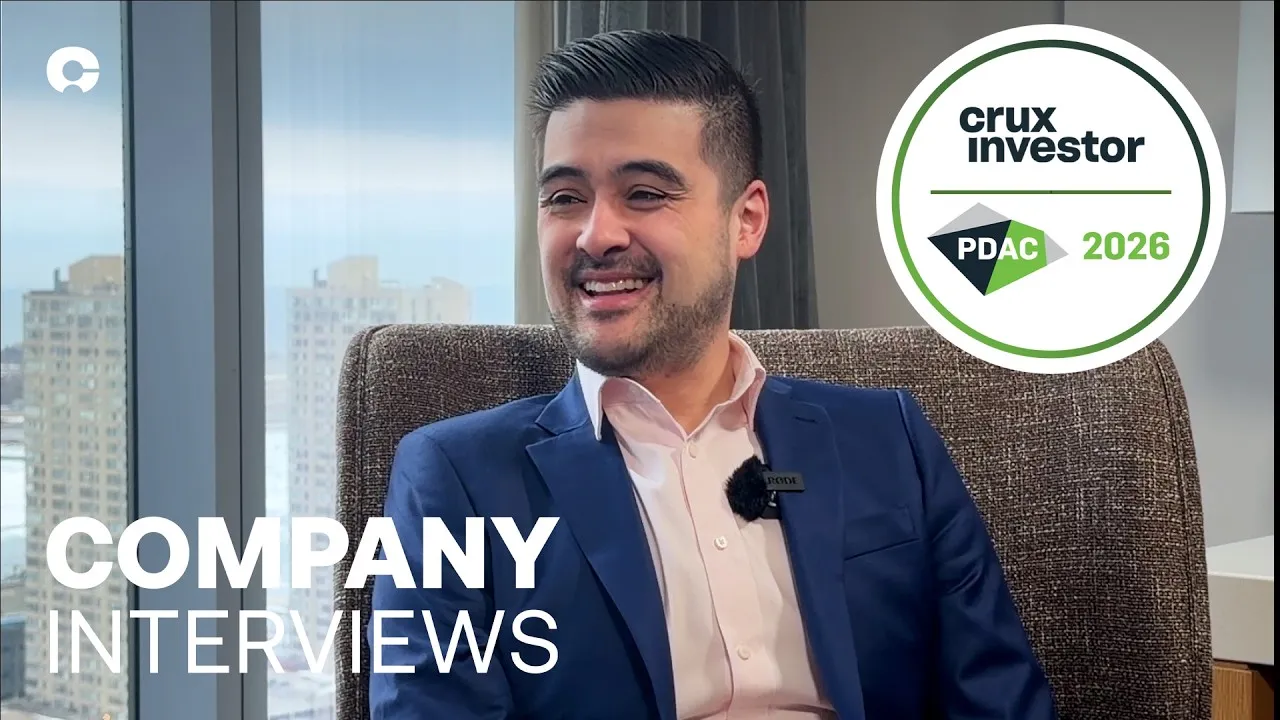
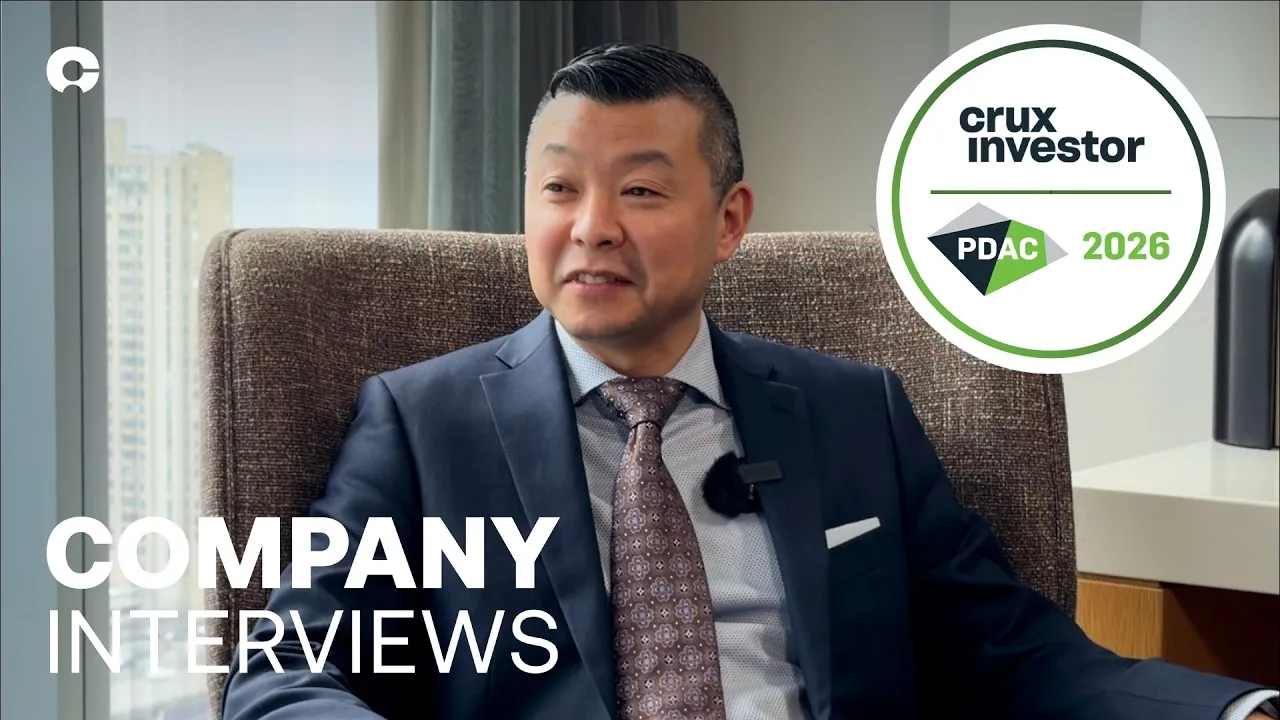
Interview with Michael Walshe, CEO, Metallium Ltd
Operating Margin Structure
Metallium projects operating margins between 25-35% on printed circuit board processing at commercial scale. These margins emerge from the interplay between feed stock acquisition costs, processing expenses, and recovered metal values. The company purchases pre-shredded material but plans to install its own shredding systems to capture additional value margin by paying less for unprocessed feed stock.
Operating cost structure identifies chlorine as the single largest expense component at 50% of total operating costs - exceeding electricity consumption. This cost concentration creates optimisation opportunities. The company evaluates installing a chloroalkali plant on-site to produce chlorine internally, potentially reducing chlorine costs by 50% and materially improving overall margin structure.
The flash thermal heating process enables temperature-controlled separation of target metals - gold, silver, palladium, tin, and copper - producing individual metal products. Current operations yield metal chloride brines as saleable products, with payability around 70% of realised metal value. Future capital investment in downstream processing steps could increase payability toward 100%, capturing additional value without requiring increased feed stock throughput.
Strategic Alignment with US Policy Priorities
Metallium's business model intersects multiple US policy initiatives. The reshoring imperative addresses the current practice of exporting PCB waste to Asian processors, returning both economic value and strategic material flows to domestic control. Critical minerals recovery - particularly gallium and germanium - directly supports Department of Defense supply chain objectives, as evidenced by the company's existing minor DoD grant and shortlist positions for substantial grants from both DoD and Department of Energy.
The AI infrastructure angle represents an emerging opportunity. Server obsolescence driven by rapid GPU advancement creates continuous waste streams concentrated in specific geographic regions. Walshe notes discussions with data center operators regarding on-site processing partnerships. This approach would minimise transportation costs while providing data center operators with integrated waste management solutions.
Revenue Diversification: Beyond PCB Processing
While printed circuit board processing provides the core commercial foundation, Metallium develops multiple parallel revenue streams. The pending gallium and germanium offtake agreement with Indium Corporation, coupled with anticipated supply agreements, will dedicate a portion of Texas facility capacity to these critical minerals. Both metals face supply constraints and US strategic stockpile priorities.
Rare earth applications represent longer-term opportunities with different commercial structures. The company demonstrates capability across diverse rare earth feedstocks: ionic clay concentrates (meteoric resources in Brazil), high-grade heavy rare earth mineralisation (Harts Range in Australia), and tailings recovery. The licensing model for mining applications generates fee-per-ton processing revenue plus metal value sharing, avoiding the capital intensity of build-own-operate facilities.
The ElementUSA partnership demonstrates near-term rare earth commercialisation. ElementUSA received $30 million DoD funding to recover gallium and rare earths from red mud deposits in Louisiana, selecting Metallium's technology as a processing step. This validates the technology's applicability beyond electronic waste while generating licensing revenue.
Capital Markets Positioning
Metallium's share price trajectory - significant early appreciation followed by retracement - reflects typical development-stage company volatility. Walshe attributes recent weakness to profit-taking and broader market uncertainty, while noting consistent delivery against stated milestones. US-based investors reportedly see valuation disconnects versus US-listed comparable companies.
The planned NASDAQ listing targets September-October 2026 completion, uplisting existing OTC-traded ADRs to a senior exchange. This strategic move addresses several objectives: accessing institutional capital pools restricted to senior exchanges, improving liquidity, and positioning within the US critical minerals investment theme. Walshe notes limited NASDAQ-listed companies offering exposure to gallium, germanium, and rare earths recovery, suggesting potential valuation multiple expansion upon successful listing.
Technology De-Risking Through Scale-Up
The technology originated at Rice University with Department of Defense DARPA sponsorship, providing both technical validation and strategic narrative credibility. Metallium acquired the license two years prior and reports 10,000x scale-up from original laboratory work. The company characterises remaining scale-up risk as minimal, based on parallel operation of multiple units rather than geometric equipment enlargement.
This scale-up approach - horizontal replication rather than vertical enlargement - reduces engineering risk in transitioning from demonstration to commercial scale. The modular architecture also facilitates incremental capacity expansion and geographic distribution across multiple sites.
The Investment Thesis for Metallium Ltd
- Near-term cash generation: Direct pathway from demonstration (currently underway) to commercial operations without extended development timeline, targeting revenue within 12 months from 8,000-ton initial capacity
- Secured supply chain: Binding agreements with Glencore and pending agreements with two additional suppliers de-risk feed stock availability for initial operations and expansion phases
- Superior grade economics: 200 g/t gold equivalent feed grade versus typical mining grades creates fundamentally different margin structure, supporting 25-35% operating margins at scale
- Multiple expansion pathways: Four-site capacity expansion to 80,000 tons annually (320,000 oz gold equivalent) provides clear growth trajectory beyond initial operations
- Revenue diversification: Parallel development of gallium/germanium recovery (Indium Corporation partnership), rare earth applications (ElementUSA, meteoric resources), and licensing revenue from mining sector applications
- Strategic alignment: Direct intersection with US policy priorities (critical minerals, reshoring, AI infrastructure waste) positions company for government grant support and strategic partnerships
- Capital markets catalyst: Planned NASDAQ uplisting (Q3/Q4 2026) provides liquidity event and access to institutional capital with exposure mandates to critical minerals sector
- Technology de-risking: 10,000x scale-up already achieved from laboratory origins; remaining scale-up via parallel unit operation rather than equipment enlargement reduces engineering risk
Macro Thematic Analysis
The rapid proliferation of AI infrastructure creates an unprecedented electronic waste challenge intersecting with critical mineral security imperatives. Server refresh cycles compressing from three years to six months - driven by GPU advancement - generate continuous high-grade waste streams concentrated in specific geographies. Simultaneously, supply chain vulnerabilities exposed during recent geopolitical tensions elevate domestic processing capacity for critical minerals (gallium, germanium, rare earths) to strategic priority status.
Metallium's technology addresses both challenges: processing domestic e-waste streams to recover high-value metals while reducing reliance on foreign smelting capacity. The approximately 50% of US PCB waste currently exported to China represents both market opportunity and strategic vulnerability. As AI buildout accelerates and data center operators confront waste management obligations, integrated domestic recycling solutions transition from environmental compliance to strategic necessity. Government support mechanisms - DoD grants, critical mineral stockpiling, reshoring incentives - provide tailwinds beyond pure commercial economics.
TL;DR: Executive Summary
Metallium is commissioning a Houston demonstration facility for commercial-scale metal recovery from electronic waste, targeting 8,000 tons initial capacity with secured Glencore supply agreements and 200 g/t gold equivalent feed grades - orders of magnitude higher than traditional mining. The company projects 25-35% operating margins with clear expansion pathway to 80,000 tons across four US sites (approximately 320,000 oz gold equivalent annually), positioning as potential top-ten ASX gold producer through recycling operations. Strategic alignment with US critical minerals priorities, pending government grants, and planned NASDAQ listing create multiple near-term catalysts.
FAQs (AI Generated)
The facility is currently in commissioning phase with 25+ personnel on site. Management targets demonstration completion followed by direct transition to commercial operations, with initial 8,000-ton capacity operational within the next 12 months, doubling to 16,000 tons shortly thereafter.
The company signed binding agreements with Glencore (one-third of capacity) and is finalising similar agreements with Dynamic Lifecycle Innovations and Plastic Recycling Inc. Diversified suppliers prevent single-source dependency while maintaining competitive market-rate pricing for pre-processed PCB material.
Feed stock grades of 200 grams per ton gold equivalent versus typical mining grades creates fundamentally superior economics. The company processes pre-concentrated material from electronic waste rather than extracting low-grade ore from the ground, enabling meaningful production from modest throughput volumes.
PCB recycling provides faster commercial pathway with established supply chains and willing sellers. Mining companies operate on longer timescales that conflict with Metallium's commercialisation timeline. PCB processing generates near-term cash flow while mining applications develop as longer-term licensing opportunities.
Management targets September-October 2026 for NASDAQ uplisting of existing OTC-traded ADRs. This provides access to institutional capital pools, improves liquidity, and positions within US critical minerals investment theme where few direct comparables exist on senior exchanges.
Analyst's Notes





Subscribe to Our Channel








.jpg)


Stay Informed