




Future Metals Has Potential For 2029 PGM Restart Through Savannah Plant Deal


.jpg)
Future Metals eyes a lower-capital restart of its Panton PGM project via a Savannah plant deal with Zeta Resources, targeting output by 2029.
- Rising platinum and palladium prices, combined with a proposed Savannah plant deal, are reshaping the development economics of Future Metals' Panton PGM project.
- Panton's platinum-heavy metal mix differentiates it from most other Australian PGM projects and aligns its demand profile more closely with higher-value South African deposits.
- A non-binding framework with major shareholder Zeta Resources could reduce development capital from an estimated A$270 million to under A$200 million by reusing the idle Savannah plant.
- Native title negotiations, environmental baseline studies and early offtake discussions, including with Trafigura and a prospective Middle East refinery, are already progressing.
- A scoping study due in the fourth quarter of 2026 will present both the Savannah-integrated option and a standalone greenfield alternative to manage transaction risk.
Future Metals is reworking its plans for the Panton platinum group metals (PGM) project in Western Australia's Kimberley region, aiming to cut development capital sharply by processing ore through a nearby idle plant rather than building new infrastructure from scratch. The strategy comes as platinum and palladium prices have risen well above the levels used in the company's December 2023 scoping study, reviving interest in a project that has sat largely dormant since the study was completed.
Managing director Keith Bowes, who joined Future Metals after a stint leading Lotus Resources' Kayelekera restart, said the parallel with his previous role was part of the appeal. Panton, like Kayelekera, is a known deposit that can potentially be brought back into development using existing regional infrastructure rather than a fully greenfield build.
Panton PGM Project Overview
Panton hosts a historical resource of roughly 93 million tonnes at 1.4 grams per tonne palladium-equivalent, built on a chromite reef geologically similar to the UG2 and Merensky reefs mined by Anglo American, Sibanye-Stillwater and Impala Platinum in South Africa. Future Metals has now replaced the original cutoff-grade approach (0.9 g/t for shallow material, 1.4 g/t for deeper material) with a net smelter return model that captures value across the full metal suite, including platinum, palladium, gold, nickel and a chromite by-product. Copper and minor PGMs such as rhodium, ruthenium, osmium and iridium are known to be present but not yet quantified within the resource.
Bowes said the project's distinguishing feature is its platinum-heavy mix relative to other Australian PGM deposits, giving it a demand profile closer to platinum's broader industrial and jewellery uses than to palladium's narrower reliance on auto-catalyst demand.
Commodity Outlook and Market Positioning
Platinum has traded near $1,600/oz and palladium between $1,200-1,300/oz in mid-2026, up substantially from roughly $1,100/oz and $900/oz respectively when the 2023 scoping study was completed. Bowes attributes part of the earlier price weakness to an overestimate of how quickly internal combustion engines would be displaced by electric vehicles; with hybrids now the more common consumer choice, auto-catalyst demand for both metals has held up better than the market anticipated in 2023.
At the same time, supply from the three dominant producing countries, Russia, South Africa and Zimbabwe, carries geopolitical risk, and Bowes pointed to under-investment in sustaining capital across South African operations as a factor behind forecast production declines even as demand holds. As he put it:
"From the forecast, we can see the actual production coming out of South Africa is dropping off, yet the demand is increasing. And therefore, I believe there's opportunities for PGM mines in first world jurisdictions such as Australia to be able to come in and fill that gap."
Development Strategy and Capital Efficiency
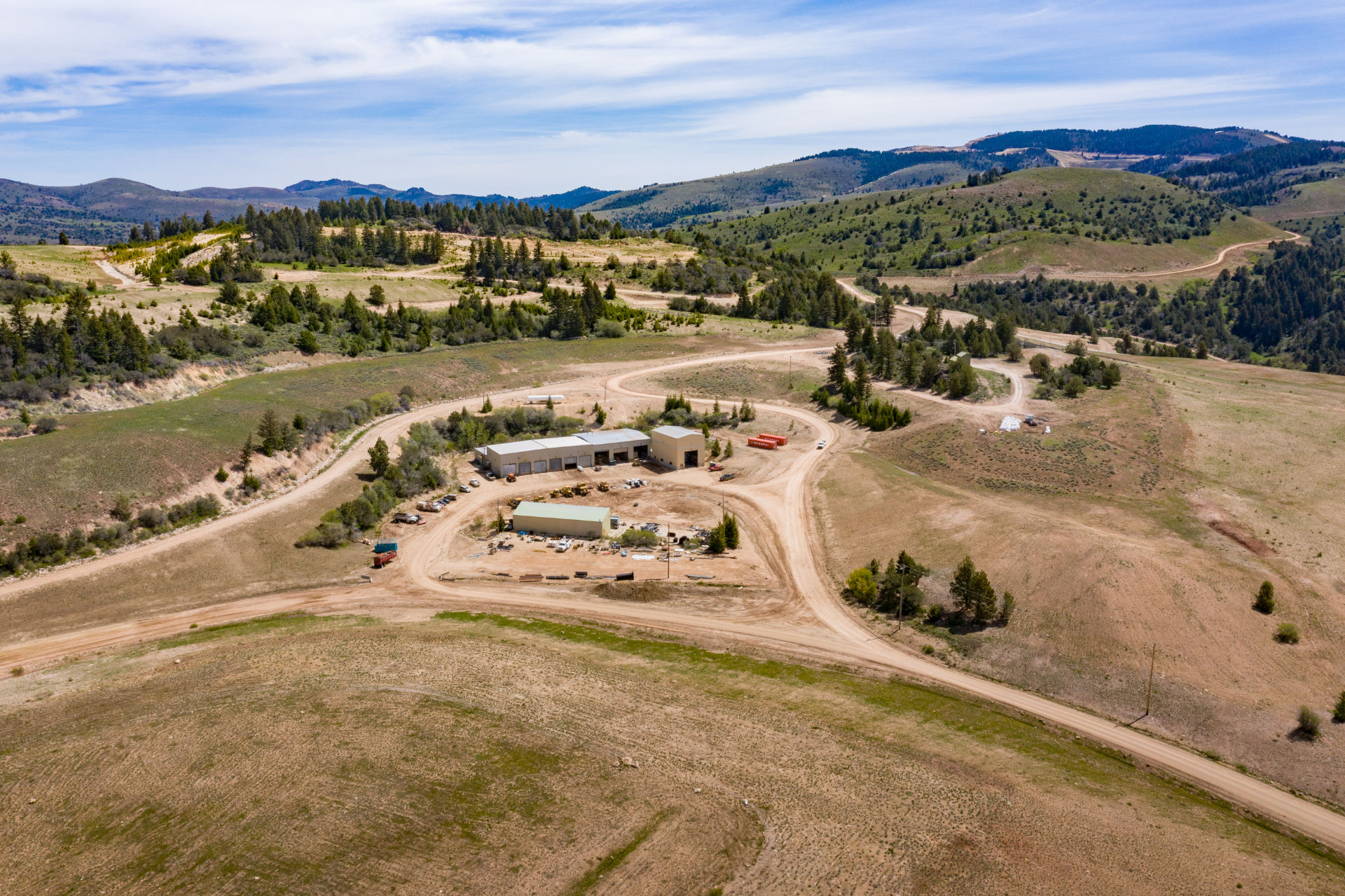
The original 2023 scoping study envisaged a dual-train processing plant with 1.25 million tonnes per annum capacity and roughly A$270 million in upfront capital. Future Metals is now examining a lower-capital alternative: acquiring Panoramic Resources' Savannah nickel plant, located 70 km from Panton and on care and maintenance for around two and a half years, and refurbishing it to treat Panton's higher-grade reef material via a single processing train.
An independent engineering assessment put the Savannah refurbishment cost at roughly A$22 million, with total capital including PGM plant modifications and open-pit development estimated at approximately A$195 million for a scenario retaining the second processing train. The company believes further optimisation, including staging out the lower-grade dunite circuit and potentially introducing ore sorting at Panton, could bring the Savannah-route capital requirement below $200 million, against an initial life-of-mine production target in the order of 90,000 to 100,000 ounces of PGMs per year, with scope to expand toward 180,000 to 200,000 ounces in a later stage.
Bowes framed the timeline in direct terms:
"Could we be up and running in 2 1/2 years is sort of the question that I'm putting to the team. What's stopping us from being able to do that? And at the moment, they can't tell me what would stop us having this plant operating by mid to late 2029."
Interview with Keith Bowes, Managing Director & CEO of Future Metals
Zeta Resources Partnership
Zeta Resources, led by Duncan Saville, is both Future Metals' largest shareholder (approximately 12.5%) and the owner of Panoramic Resources, which holds the Savannah plant. A memorandum of understanding signed in mid-2025 outlines a potential equity transaction under which Future Metals would acquire Panoramic, bringing the Savannah plant, associated nickel infrastructure and exploration licences under its ownership. The companies are working toward a binding framework agreement, to be followed by mutual due diligence, a binding term sheet, and shareholder approval, a process Bowes estimated could take around six months to complete or come close to completion.
To manage the risk that the Zeta transaction does not proceed on acceptable terms, Future Metals plans to present both the standalone greenfield project and the Savannah-integrated alternative side by side in its forthcoming scoping study, alongside a two-fold environmental baseline programme (flora, fauna, groundwater and surface water) covering both scenarios.
Catalysts
The scoping study, incorporating current PGM pricing and the Savannah option, is targeted for release between October and November 2026. Native title negotiations with the traditional owner group, who also hold the existing native title agreement covering the Savannah site, are underway, alongside environmental baseline studies beginning next month. Future Metals has already engaged with four Australian government funding bodies, including the Northern Australia Infrastructure Facility (NAIF), Export Finance Australia, the National Reconstruction Fund and the Critical Minerals Facility, though formal engagement will not begin until after the scoping study is released. Offtake discussions are also progressing, including a prior draft term sheet from trading house Trafigura, which also holds debt secured against the Savannah plant, and separate interest from a Middle East-based group reportedly developing a PGM refinery.
The Investment Thesis for Future Metals
- Panton's platinum-heavy PGM mix differentiates it from most Australian peers and aligns its demand profile more closely with higher-value South African-style UG2/Merensky deposits.
- The proposed Savannah plant acquisition could reduce development capital from around A$270 million to below A$200 million, materially lowering the funding hurdle for a small-cap developer.
- A staged development plan, open pit first with underground development deferred, is designed to bring the project into production on a smaller upfront capital raise.
- Native title engagement is progressing with a traditional owner group reportedly receptive to the Savannah option, given its use of existing approved infrastructure.
- Offtake interest already exists from at least two counterparties, including a prior Trafigura term sheet, ahead of any formal marketing process.
- The Zeta Resources framework remains non-binding; the scoping study will present a standalone greenfield fallback to manage this risk.
- Roughly half the resource remains inferred, and expansion targets above initial production levels are not yet supported by completed technical studies.
Macro Thematic Analysis
The platinum group metals market has shifted meaningfully since Future Metals last published project economics in December 2023. At that point, the prevailing narrative was that rapid electric vehicle adoption would erode long-term demand for auto-catalysts, the largest end-use for both platinum and palladium. That transition has been slower than expected, with hybrid vehicles, which still require catalytic converters, emerging as the more common consumer choice. Platinum has also drawn renewed interest in China as a store of value alongside gold and silver, adding a demand channel largely absent from 2023-era forecasts.
On the supply side, the PGM market remains concentrated in a small number of jurisdictions carrying elevated geopolitical and operational risk. Russia dominates palladium supply, while South Africa and Zimbabwe account for most of the world's platinum. Years of constrained sustaining capital investment in South African operations are contributing to forecast production declines even as global demand holds steady or grows, a gap that developers in stable jurisdictions may be positioned to address.
For investors, the distinction between platinum and palladium demand drivers matters more than a single blended PGM price signal. Platinum's broader industrial, jewellery and investment demand base gives it a different risk profile to palladium's narrower, auto-catalyst-dependent one, a distinction directly relevant to a platinum-weighted deposit such as Panton.
TL;DR
Future Metals is pursuing a capital-light restart of its Panton PGM project in Western Australia by processing ore through Panoramic Resources' idle Savannah plant, 70 km away, rather than building new infrastructure. A non-binding framework with major shareholder Zeta Resources, which owns Savannah, could cut development capital from around A$270 million to under A$200 million and target production by mid-to-late 2029. Panton's platinum-heavy PGM mix and rising platinum and palladium prices since the 2023 scoping study underpin the renewed interest. A scoping study comparing this option against a standalone greenfield build is due in Q4 2026, with native title talks, environmental baseline work and early offtake discussions with Trafigura and other parties already underway.
FAQ (AI-Generated)
Analyst's Notes





Subscribe to Our Channel

.jpg)
.png)



.png)

Stay Informed


