




Gold Holds Above $4,000 as Weak Payrolls Data Sets Up June NFP Test of $3,860


Gold holds above $4,000 as June NFP, 66% Fed hike odds, and the WGC's $3,860 downside threshold shape the next move for gold prices and miners.
- Spot gold rose 0.9% to $4,067.67 per ounce after US private payrolls increased by 98,000 in June, 20,000 below the 118,000 consensus forecast, strengthening expectations of a softer labor market.
- The World Gold Council values gold at about $4,100 per ounce within a 5% range and identifies $3,860 per ounce as the key downside threshold.
- India raised its gold import duty from 6% to 15%, reducing annual jewellery, bar, and coin demand by 50 to 60 tonnes and lowering gold prices by about 2% under the World Gold Council's model.
- Markets price a 66% probability of a September 2026 Fed rate hike, while a 25 basis point decline in the US 10-year Treasury yield would increase gold prices by 1.75%.
- The yen fell to a 40-year low of 162.84 per dollar, and a stronger-than-expected June NFP report could push the exchange rate toward 165 to 166 yen by strengthening the US dollar and Fed rate hike expectations.
US Payrolls Lift Gold Back Above $4,000 Ahead of June NFP
Spot gold rose 0.9% to $4,067.67 per ounce on July 2 after US private sector employment increased by 98,000 in June, 20,000 below the 118,000 consensus forecast, raising expectations that June nonfarm payrolls could also disappoint. The rebound followed gold's intraday low of $3,959.33 per ounce on June 24, its closest move below $4,000 since early 2025. ABC Refinery's global head of institutional markets, Nicholas Frappell, said buyers have repeatedly emerged near current price levels, limiting further declines.
WGC Identifies $3,860 as Gold's Key Downside Threshold
The World Gold Council's Gold Valuation Framework assumes moderate economic growth, elevated inflation, and limited additional central bank tightening. Under its base-case outlook, the World Gold Council values gold at about $4,100 per ounce for H2 2026, with a 5% range of $3,895 to $4,305. The World Gold Council attributes H1 2026 gold price movements primarily to momentum at 24%, followed by risk and uncertainty at 17%, FX opportunity cost at 14%, economic growth at 12%, and interest rates at 3%.
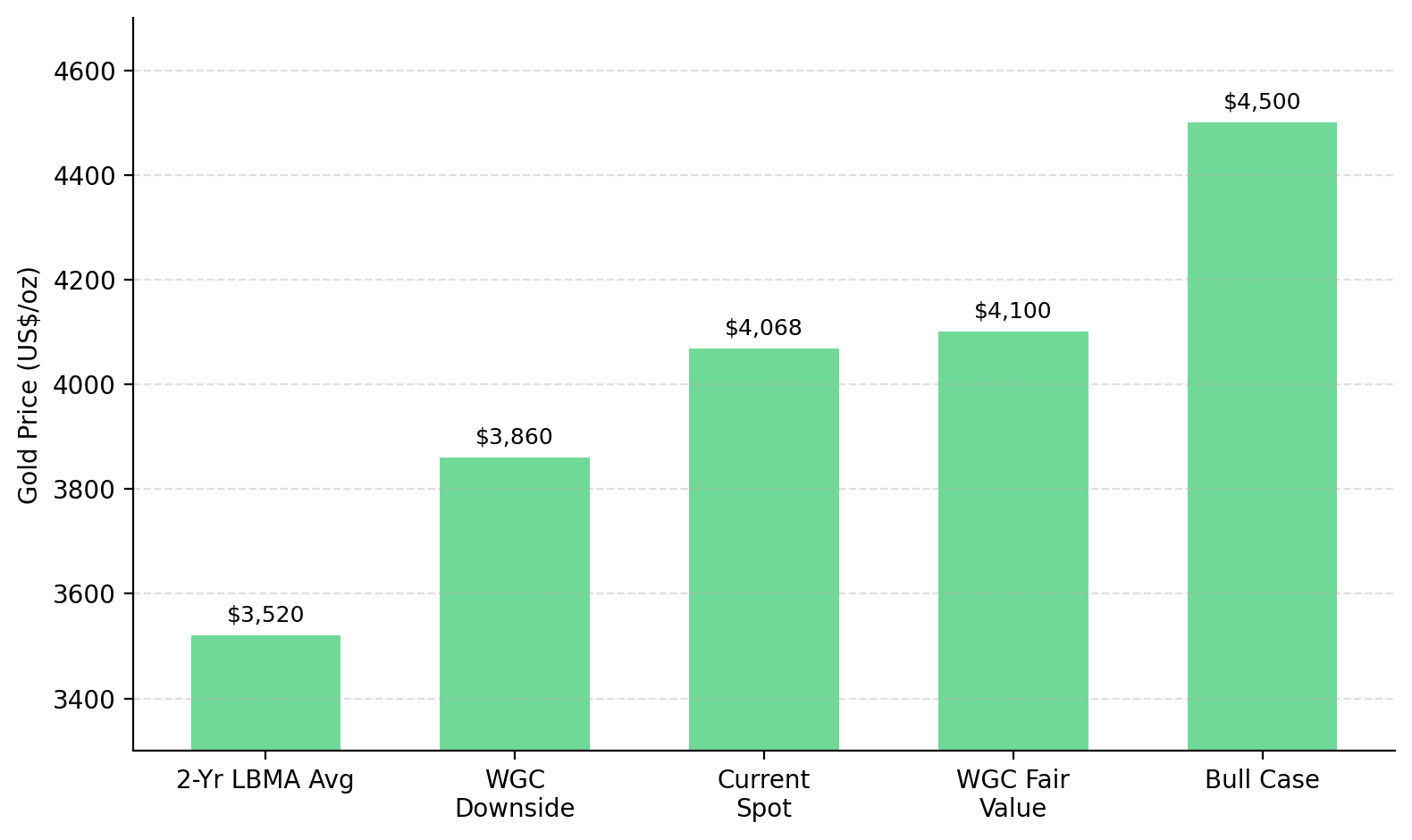
The World Gold Council identifies about $3,860 per ounce as the level where selling pressure could accelerate. The two-year LBMA gold price average of about $3,520 per ounce becomes the next downside reference if gold falls below $3,860. Since 1971, gold declines of more than 20% from a record high have averaged a 36% drawdown, with a median of 29%. Gold is about 25% below its January 29, 2026 LBMA record of $5,405 per ounce, leaving limited downside before reaching the historical average drawdown.
India's Import Duty & Fed Hike Expectations Increase Downside Pressure on Gold
India raised its gold import duty from 6% to 15%, a move expected to reduce Indian jewellery, bar, and coin demand by 50 to 60 tonnes a year, or about 10%, and lower gold prices by about 2% under the World Gold Council's model. Markets are pricing a 66% probability of a September 2026 Fed rate hike, while Fed Chair Kevin Warsh said inflation expectations and inflation risks have eased. A stronger-than-expected June NFP report would reinforce rate hike expectations, lift Treasury yields, and add downside pressure to gold prices.
Stronger US Dollar Adds FX Pressure to Gold Prices & Gold Equities
India raised its gold import duty from 6% to 15%, a move expected to reduce Indian jewellery, bar, and coin demand by 50 to 60 tonnes a year, or about 10%, and lower gold prices by about 2% under the World Gold Council's model. Markets are pricing a 66% probability of a September 2026 Fed rate hike, while Fed Chair Kevin Warsh said inflation expectations and inflation risks have eased. A stronger-than-expected June NFP report would reinforce rate hike expectations, lift Treasury yields, and add downside pressure to gold prices.
June NFP Will Decide Whether Gold Tests $3,860 or Returns to $4,500
The World Gold Council estimates gold can remain near $4,000 to $4,100 per ounce if inflation expectations stay elevated, Fed rate expectations remain limited, or geopolitical risk stays high. If June NFP confirms a strong labor market, higher Fed rate expectations would leave geopolitical risk, which accounted for 17% of H1 2026 gold price movements, as gold's primary source of support.
A June NFP reading of 110,000 or higher with unemployment at 4.3% or lower would strengthen expectations of a September Fed rate hike and could push the dollar toward 163 yen. In that scenario, $3,860 per ounce becomes the key downside reference for gold mining equities, while a return to $4,500 would require weaker economic conditions, higher geopolitical risk, lower Fed rate expectations, or stronger central bank buying. An additional 20 to 30 tonnes of central bank purchases would raise gold prices by about 1%, but would likely not offset pressure from India's import duty and higher Fed rate expectations.
Analyst's Notes





Subscribe to Our Channel
.jpg)




Stay Informed






















