




Why Hycroft Drills One Hole at a Time as Its Rigs Go to 5


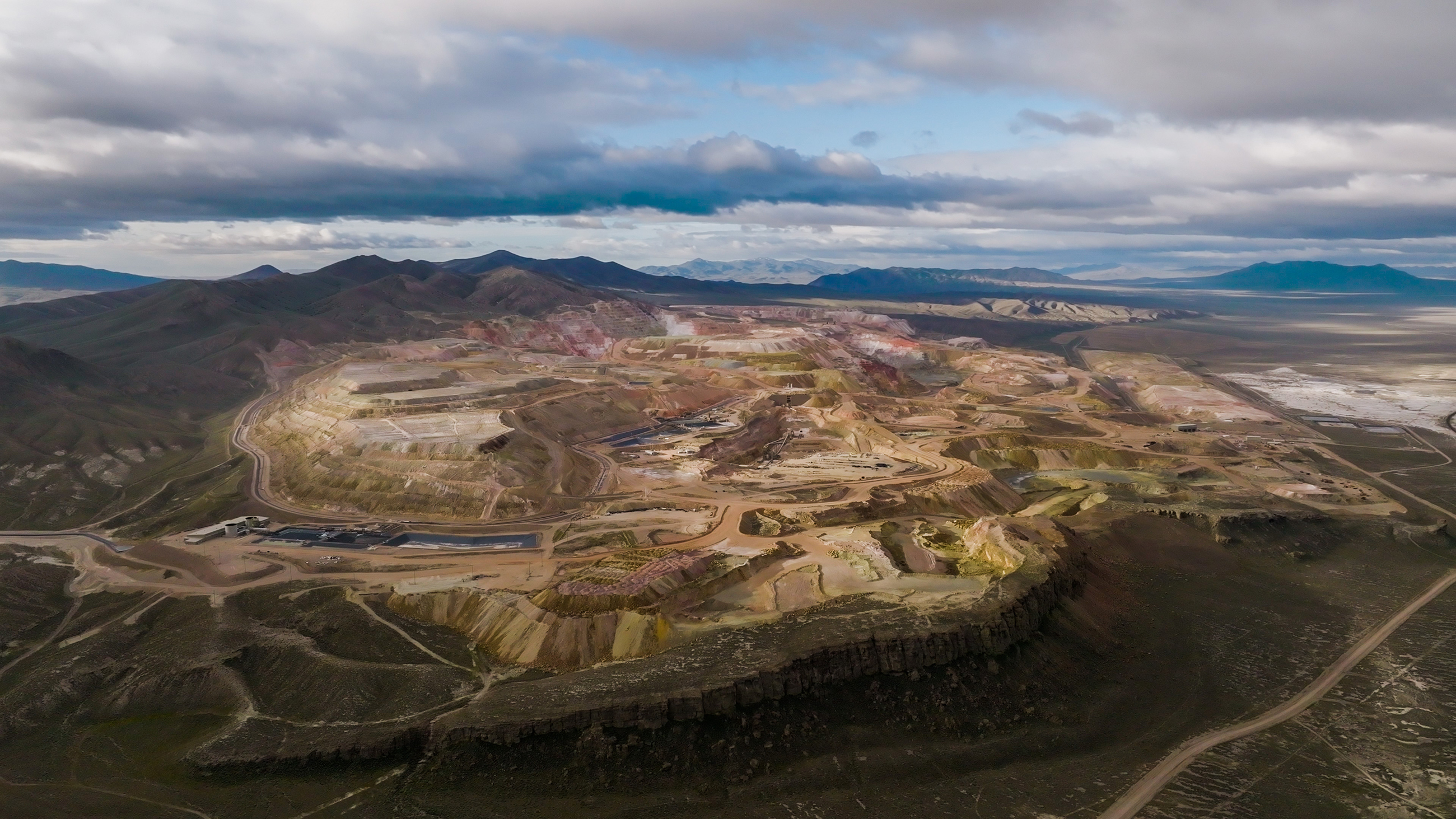
Rig capacity and hole-by-hole validation pace Hycroft's high-grade silver drilling. It's 3 rigs, going to 5, in the second half of 2026.
- Hycroft has completed approximately 15,585 meters (m) of core drilling of an approximately 26,000-meter program begun in August 2025.
- Three drill rigs are working the 2 high-grade silver systems, with 2 more core rigs planned for the second half of 2026.
- Management says the exploration team drills the next hole nearby only after it can interpret the results of the previous one.
- Approximately 7,200 m of core is assigned to Brimstone and approximately 3,000 m to Vortex for the remainder of the program.
- Drilling beneath the known Brimstone mineralization remains high in the system and continues toward the target.
Hycroft's 2 high-grade silver systems are being drilled out at a rate set on the ground: by how many rigs are working, and by how long it takes to fit the last hole into the geological model before the next one is sited. Both constraints were visible when the exploration team walked through the core shed in July 2026.
Where the Core Drilling Program Stands
Hycroft Mining Holding Corporation (Nasdaq: HYMC) has completed approximately 15,585 meters (m) of core drilling of an approximately 26,000-meter program at the Hycroft Mine in northern Nevada, work that began in August 2025. Approximately 7,200 m of core is assigned to Brimstone for the remainder of the program, and approximately 3,000 m to Vortex, where drilling is being spread across the northern, southern, and eastern extensions in addition to the western zone.
The mine was historically developed as a heap leach operation, in which crushed rock is stacked and irrigated with solution to recover metal, and drilled with reverse-circulation (RC) rigs that return rock chips rather than solid core. That left dense shallow coverage. Hycroft says the current holes are aimed below the earlier work's definition, targeting the alteration, vein density, and silicification (silica hardening) that mark the high-grade system.
Drilling Capacity & the Planned Rig Additions
Three rigs were working the 2 systems at the end of July 2026: 2 core rigs and 1 RC rig. Management says 2 of the drills were working on Vortex during the visit. Two more core rigs are planned for the second half of 2026, which takes the total to 5.
Exploration Manager of Hycroft Mining Holding Corporation, Justin Davenport, counts the rigs and the people reading the core they bring up:
"We have two core rigs and RC rig right now. I'm looking to add on a couple more core rigs by the end of the year. And the team is myself and we have a senior geologist and then a couple junior geologists to help us log core."
That group logs everything the rigs produce, and the logging decides where each next hole is sited.
Drilling runs 24 hours a day, all year round. The rigs are run by contractors, and management says the individuals on site have worked the 2024, 2025, and 2026 campaigns and are getting very good at drilling the mine's rock. The company held approximately US$221 million in unrestricted cash and had no debt as of June 30, 2026.
How Each Hole Is Followed Up
The program does not advance by drilling a fan of holes and reading the assays together. Management describes a single loop: move to an area and drill a hole. Where the result can be interpreted while drilling continues, offset it, meaning drill the next one a short step away. Where it cannot, the rig moves to a different part of the vein system and returns once the hole has been fitted into the geological model.
Davenport traces the pace back to what has to be confirmed before the next hole can be sited:
"And so, that's why we work our way down instead of just doing two or three at once."
Two conditions slow the loop further. An east-west structural control is being drilled across to determine how it moves the mineralizing fluid, and the model had to be rebuilt: management says the controls the team needed were absent from the model it inherited, so time was spent identifying the faults and mineral trends. Clay alteration in the upper part of each hole also makes the first stretch difficult, and rock competence improves once the bit is approximately 200 to 300 m down, where most of the mineralized material is hosted in harder silicified rock.
What the Remaining Core Is Assigned To
The August 2026 results show why the remaining core is weighted toward Brimstone. One hole through the widest section of the system returned 82.7 m at 87.52 grams per metric ton (g/t) silver and 0.77 g/t gold from 122.2 m depth, including 19.4 m at 108.19 g/t silver and 2.10 g/t gold. Brimstone measures approximately 300 m wide from north to south and approximately 500 m long from east to west along its dip, and remains open in all directions and at depth.
At Vortex, an offset to an earlier hole extended high-grade silver approximately 150 m to the west, returning 12.5 m at 375.41 g/t silver from 387.2 m depth, including 4.2 m at 748.02 g/t silver. That system now has a strike length of over a kilometer and is more than 500 m wide at its widest point, with recent drilling returning higher grades to the west, southwest, and north.
Vice President, Exploration of Hycroft Mining Holding Corporation, Alex Davidson, describes what the remaining Brimstone core has to establish:
"We're going to try and extend that and establish the continuity from the high grade that we've already got well defined."
The remaining core is buying that continuity, one hole at a time. Deeper drilling below the known Brimstone system stepped out approximately 90 m down its dip from holes tested in late 2025 and returned alteration and geochemistry consistent with the Brimstone fluid pathway, along with an 18-meter zone of stockwork veining, a dense network of small crosscutting veins, that included 1.5 m at 120.00 g/t silver. The company's own reading is bounded: the signatures are consistent with a potential feeder system at depth, but drilling remains high in the system and will continue to advance toward that target.
Where the Drilling Meets the Study Schedule
Hycroft has already closed out the analytical steps in its 2026 work plan. A new resource update and final metallurgical recovery figures were completed in the first quarter of 2026, and an economic study carrying that updated resource was completed in the second quarter of 2026. Both predate the August 2026 drill results, so the August 2026 intercepts are not inside either of them.
Two engineering steps fall in the second half of 2026: work on a decline, the ramp that would provide underground access to the high-grade material, and an assessment of restarting the heap leach operation. The drill program is ongoing.
Hycroft lists 3 mining options for the deposit: a conventional open-pit, an underground operation targeting high-grade material, or a combination in which underground high-grade material complements the pit. Management says that as more is learned about the high grade, the whole scenario could change, and that further economic studies will follow. The August 2026 drilling supports expanding both systems to define the best path for development, including the potential for a high-grade underground silver mine.
The Second Half of 2026
The decline engineering and the heap leach restart assessment both fall due in the second half of 2026, during the same months as the 4th and 5th core rigs arrive. The July visit measured the pace at which those rigs will join: one hole, then the model, then the offset. The remaining core at Brimstone and Vortex has to give a system that is open in all directions with defined edges, and that work is counted in holes, not months.
FAQs (AI-Generated)
Analyst's Notes





Subscribe to Our Channel



.png)

.png)


Stay Informed






















