




Abitibi Metals Tests 3 of 7 B26 Regional Targets, 4 Wait for Winter


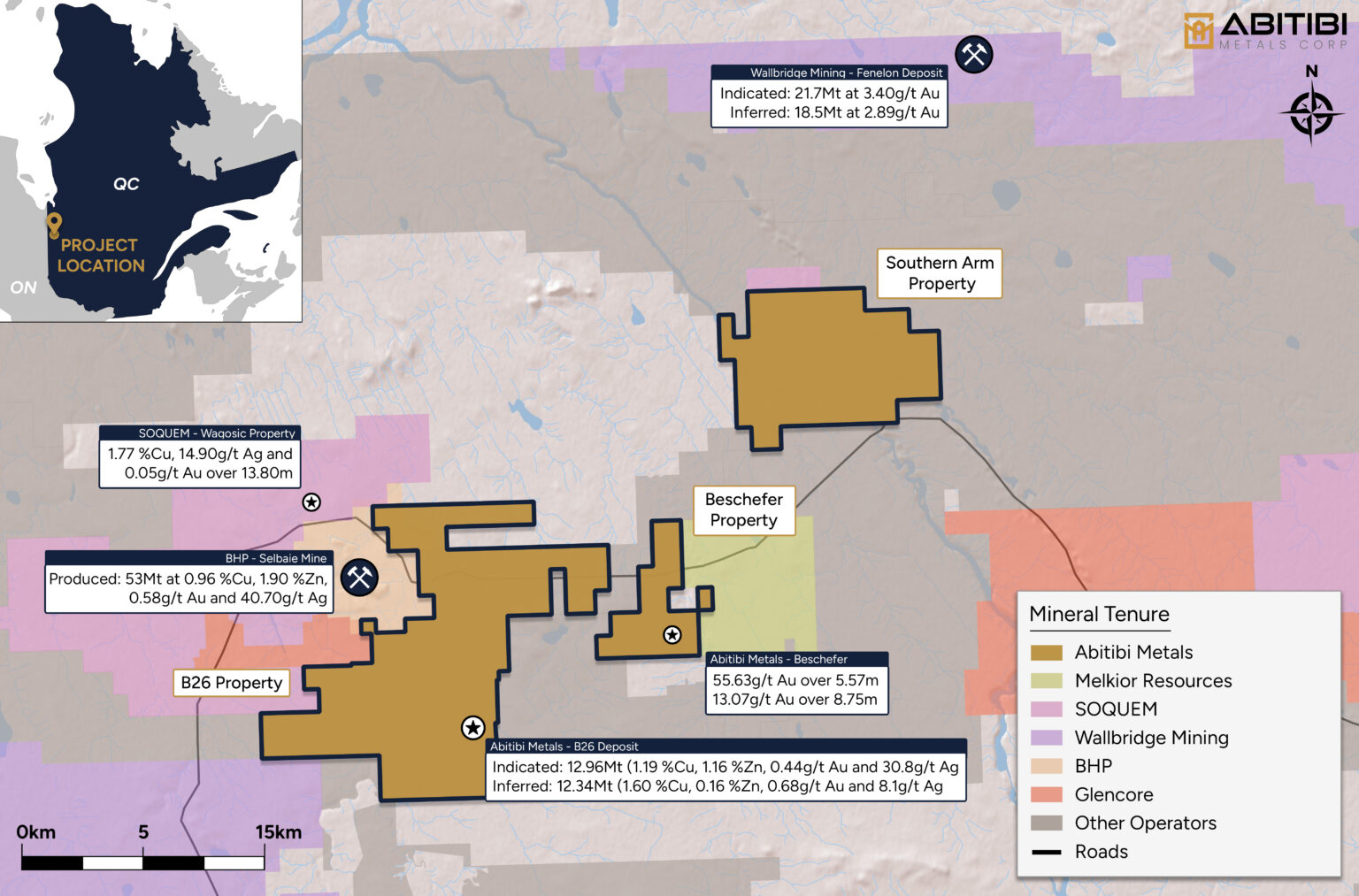
Abitibi Metals tested 3 of 7 regional targets at B26 at 400 meters vertical depth, cutting new zinc-silver mineralization. The other 4 wait for winter 2027.
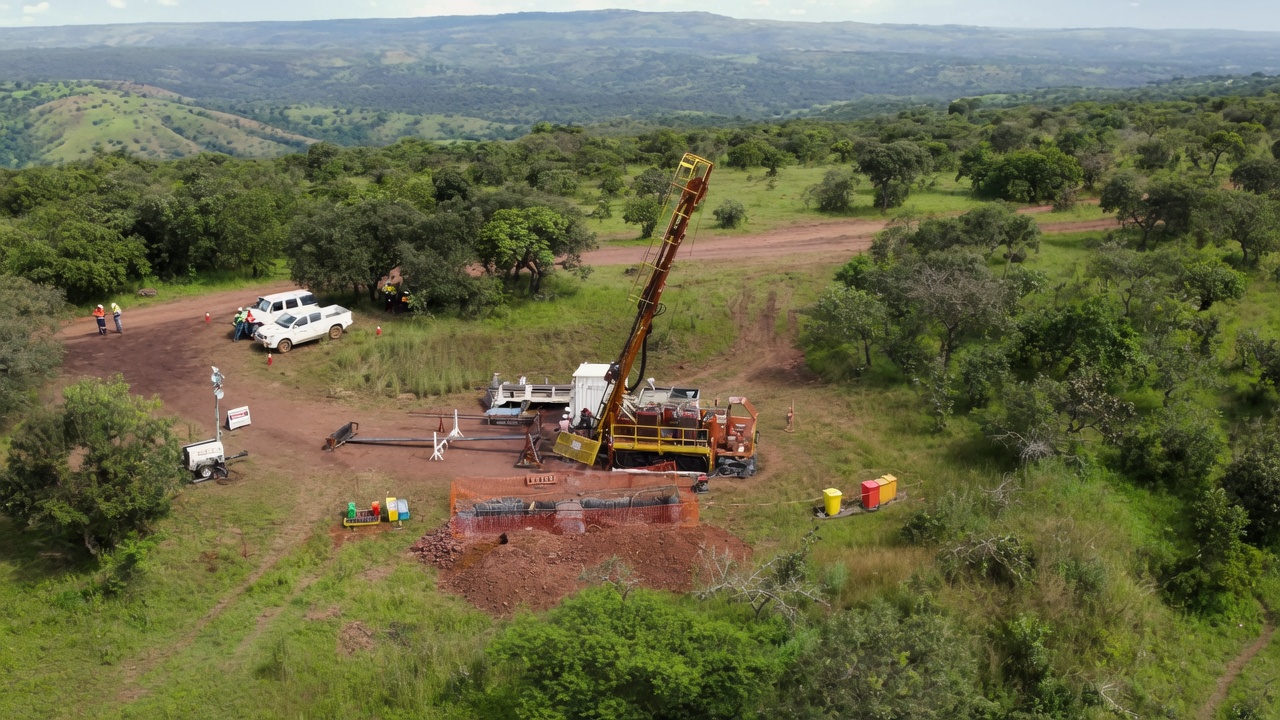
- Four holes totaling 3,285 meters (m) tested 3 of the 7 priority regional targets on the B26 Polymetallic Property, the first drilling to reach 400 m vertical depth outside the deposit itself.
- The best intercept returned 14.25 m of 1.13% zinc and 51.51 grams per metric ton (g/t) silver at 400 m below surface, approximately 1.5 kilometers (km) west of B26.
- A narrow copper interval 70 m farther downhole reproduces the metal zonation seen at B26, where a zinc-silver horizon lies beside the copper-gold horizon.
- All 4 regional holes are to be surveyed using downhole electromagnetic probes to detect conductive bodies that the drill bit did not intersect.
- Four priority targets remain undrilled, including a separate volcanogenic massive sulfide (VMS) corridor extending toward the former Selbaie Mine.
Regional Target Definition on the B26 Property
The 7 regional targets taken into 2026 were built from data already on file, not from a drill record. Abitibi Metals (CSE: AMQ | OTCQB: AMQFF | FSE: FW0) owns 100% of the B26 Polymetallic Property in Quebec after exercising its option to acquire the remaining interest from SOQUEM Inc., a subsidiary of Investissement Québec. The 7 high-priority areas were identified through a reinterpretation of historical drilling, legacy induced polarization (IP) surveys, and the company's 2025 airborne survey. Each began as a geophysical response or a reprocessing product, with no drill test at depth to back it up.
The deposit that those targets surround is defined much more clearly. B26 carries copper, gold, zinc, and silver, and the current resource stands at 25.3 million metric tons across both classifications: 12.96 million metric tons indicated at 1.19% copper, 1.16% zinc, 0.44 grams per metric ton (g/t) gold and 30.8 g/t silver, and 12.34 million metric tons inferred at 1.60% copper, 0.16% zinc, 0.68 g/t gold and 8.1 g/t silver. The regional ground around it splits into 2 trends of 8.3 kilometers (km) each, with limited past exploration, and the company budgeted 4 to 5 km of drilling across them in 2026.
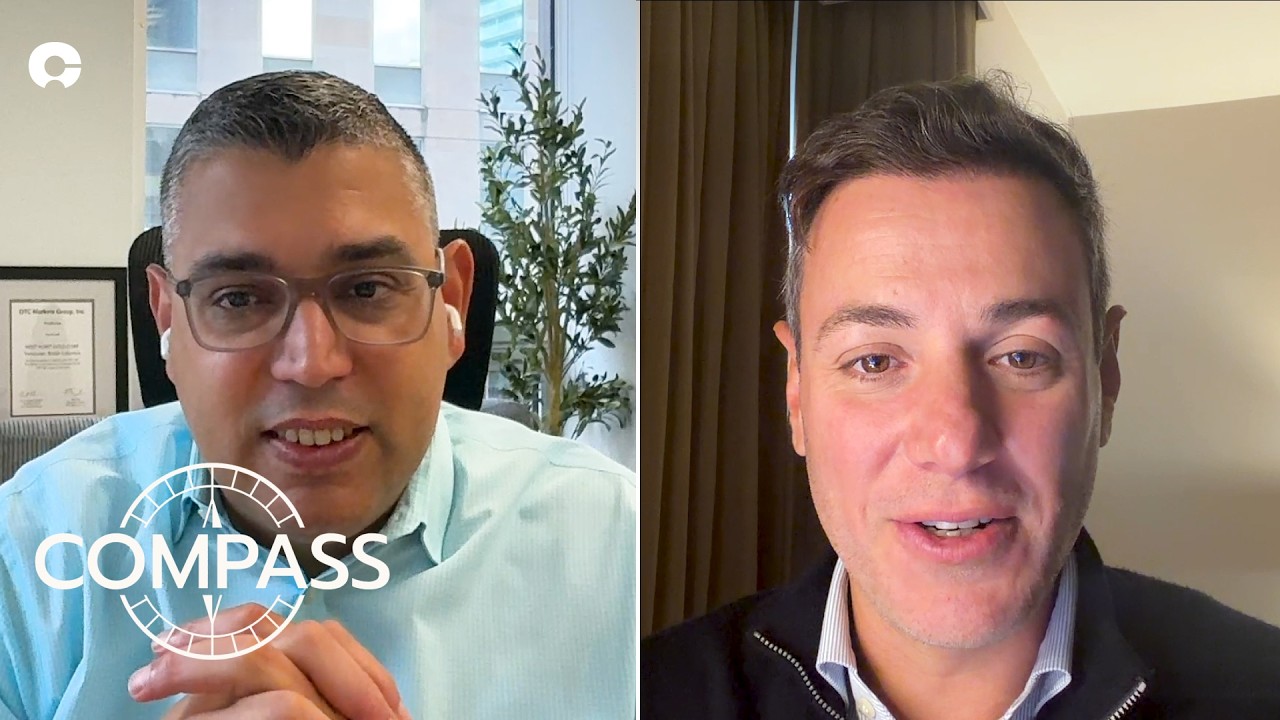
Chief Executive Officer of Abitibi Metals, Jonathon Deluce, traces the property's thin exploration record to the ownership that preceded the company:
"B26 up until our involvement had never been in a public company. So really, part of the reason why it's still quite an unknown asset to the market."
Private ownership left a drill record concentrated on the deposit and thin on the ground beyond it.
Historical Drilling & the 200-Meter Limit
Where earlier holes stopped is the constraint the 2026 program was designed against. Historical drilling on the regional ground is largely limited to the upper 200 meters (m), and no prior hole has tested the system at 400 m vertical depth outside the B26 deposit itself. Some of it goes deeper: one historical hole on the western corridor returned 0.33% zinc and 98.1 g/t silver over 4.7 m from 284.3 m, within a B26-style alteration system that was never followed up. Above 200 m, the regional ground is underexplored; below it, unexplored. The deficiency in the record is depth, not coverage.
The shallow intercepts on file are consistent enough to justify a deeper test. On the corridor about 4.5 km northwest of the deposit, historical drilling returned 0.77% zinc and 33.8 g/t silver over 19.2 m from 170.3 m, and 3 holes into an IP anomaly there cut a mineralized envelope over a 200 m strike length that is open laterally and at depth. Farther west, historical holes returned 0.33% zinc, 0.11% copper, and 1.25 g/t silver over 21.0 m from 147.22 m, and 0.20% zinc and 0.2 g/t silver over 16.3 m from 138.5 m. Those broad, low-grade widths suggest leakage from a larger mineralized system at depth.
The 2026 drilling went at that gap directly, testing the continuation of shallow historical zinc-silver anomalies at approximately 400 m vertical depth. On the northern corridor, no prior drilling had tested below 200 m vertical depth at all. By contrast, 297 holes totaling 123,787 m had been drilled on B26 itself before Abitibi Metals took over the project. Four holes across 3 targets amount to an initial test of the property's regional potential and nothing more. The program is nonetheless the first systematic test the regional ground has had.
Results From 3 Targets at 400 Meters
The 3,285-meter program produced 3 different readings, not a single one. Four holes tested 3 of 7 priority targets, and the strongest result came from the western corridor, which covers the extension of the B26 stratigraphic horizon over approximately 1.5 km west of the deposit and shows the same subdued magnetic signature as B26. Two holes tested it, about 500 m and 1,500 m west; the farther one cut 14.25 m of 1.13% zinc and 51.51 g/t silver at 400 m below surface, including 3.10 m of 2.82% zinc and 120.64 g/t silver and 3.50 m of 1.61% zinc and 82.49 g/t silver. The near hole returned 4.30 m at 0.29% zinc and 2.78 g/t silver, including a 0.50 m interval at 1.49% zinc. All of those are core lengths, local interpretation puts true width at 60% to 80% of core length, and the intervals are generally composited at a 0.1% zinc cut-off that allows up to 3 consecutive samples below that grade.
The host rock repeats the B26 package with one difference: the zinc-silver mineralization sits in pyritized, locally semi-massive felsic ash and lapilli tuffs, meaning fine-grained and coarser fragmental volcanic rocks, altered by medium- to strong-sericite, silica, and iron carbonate, the same host package and alteration style as the B26 deposit sequence, but more intensely altered and moderately foliated. About 70 m farther downhole, the same hole intersected a separate copper-rich interval grading 0.55% copper, with chalcopyrite stringers (veinlets of copper sulfide) and black chlorite alteration, the signature style of the copper stringer zone at B26. The other 2 targets returned confirmation instead of grade. About 5 km farther west, a hole into a 1.5-km-long conductor in the same felsic volcanic sequence confirmed the favorable geological setting at 400 m vertical depth, with assays limited to 3 intervals of 1.70 m or less, the best of them 0.50 m at 29.20 g/t silver and one 1.70 m interval at 0.24% copper. On the corridor 4.5 km northwest of B26, along strike from the historical Selbaie Mine, the hole intersected additional sulfide mineralization at 400 m and returned 8.85 m of 0.68% zinc and 21.21 g/t silver, including 4.70 m of 1.04% zinc and 26.03 g/t silver, plus a single meter of 332 g/t silver and 0.83 g/t gold from 501 m downhole, and that corridor's mineralization is open in all directions.
Deluce ties that northern corridor to the mine at the other end of it:
"We're next to the historical Selbaie mine, which is important. Again, it represents the scale of which we're targeting."
Grade of that order in a single meter argues for more drilling on the corridor, and one meter settles nothing about what the corridor holds.
Downhole Pulse Electromagnetics & the Follow-Up Design
The 4 holes are meant to do more than their assay intervals allow. Upon resumption of work in the week of July 29, 2026, following a temporary wildfire-related suspension, all regional holes were to be pulsed with downhole electromagnetic surveying, with a probe lowered into a completed hole to detect conductive bodies that the drill bit did not intersect. Pulsing every regional hole is intended to investigate larger off-hole targets or extensions, a different question from whether the assayed interval holds grade. Both the western conductor target and the northwest corridor were flagged for that survey. Each hole then reports on ground it has never touched, and a 4-hole program reaches beyond 4 intersections.
What the surveys have to settle is what the drilling only suggests. The zinc-silver interval along the western corridor could represent the peripheral expression of a new B26-like lens, which could, in turn, lead to a new massive sulfide body and an associated copper stringer zone. The metal zonation gives that reading its support, because at B26 the zinc-silver-rich horizon lies adjacent to the main copper-gold-rich horizon, and the western corridor now shows the same order. That architecture strengthens the interpretation that the target hosts a fertile volcanogenic massive sulfide (VMS) system analogous to, but distinct from, B26.
Follow-up drilling on the horizon is planned to define the controls on mineralization and to work toward the copper-gold-enriched center of the lens. Each of the 2 confirmation targets provides a platform for those follow-up surveys, and whether either earns a second hole depends on the survey data, not on further assays. As of July 29, 2026, no dimension attaches to the western corridor: the mineralization is open in all directions, and neither the pulse surveys nor the follow-up drilling has been completed.
Untested Targets & the Access Window
Four of the 7 priority targets have not been drilled. They include a separate VMS corridor, formed by Targets 5 to 7, newly defined and extending toward the former Selbaie Mine, as well as additional precious-metal targets north of B26. The single meter of 332 g/t silver from this program will be evaluated alongside historical high-grade intercepts elsewhere on the property, including 8.2 g/t gold, 212.5 g/t silver, and 2.9% zinc over 1.0 m from 129.5 m at one of the untested targets. B26 lies 7 km southeast of the past-producing Selbaie Mine, whose historical resource is 56.9 million metric tons at 0.87% copper, 1.85% zinc, 0.55 g/t gold, and 39 g/t silver. Management says the mine operated for 20 years and produced 53 million metric tons.
Neither money nor equipment holds the remaining 4 back. Financing covers up to 80,000 meters of drilling across 2026 and 2027, and the phase 4 drill program was underway as of July 2026. Management describes the regional work as one of 3 drilling budgets the company runs, alongside resource improvement and expansion drilling.
Deluce accounts for the rigs and the funded meters standing behind the targets still to be tested:
"Fully funded for 80,000 meters. We have 3 drills on site as of today, and we are looking to increase the amount of drills as they become available."
Ground conditions are the binding constraint. A follow-up program is being designed for execution in winter 2027, when frozen ground allows access to the drill sites. Seasonal access, not assay results, decides when the remaining 4 targets get drilled.
The Investment Thesis for Abitibi Metals
- A depth-tested target inventory now exists where none did, because 3 of the property's 7 priority regional targets have been drilled to approximately 400 meters vertical depth for the first time.
- One new mineralized lens was cut approximately 1.5 kilometers west of B26, returning 14.25 meters at 1.13% zinc and 51.51 grams per metric ton of silver at 400 meters below surface, within the same host package as the deposit.
- Metal zonation consistent with the deposit appears on that corridor, where a narrow interval of 0.55% copper with copper sulfide veinlets lies 70 meters downhole from the zinc-silver interval.
- Four of 7 targets remain undrilled, including a separate volcanogenic massive sulfide corridor extending toward the former Selbaie Mine and precious-metal targets north of B26.
- Downhole electromagnetic surveying of all 4 completed holes is the next regional data the property is scheduled to generate, ahead of the follow-up drilling program.
- Seasonal ground access governs the schedule, with the follow-up program designed for winter 2027, when frozen conditions allow access to the drill sites.
The 2026 regional program changed the status of the target inventory without changing its size. Three targets moved from geophysical inference to drill-tested ground, and one of them produced a new mineralized interval; 4 did not move at all. The interval on the western corridor is open in all directions and has no dimension attached, and the copper occurrence that supports the zonation argument is narrow. What the program bought is a defensible reason to keep drilling 7 targets rather than one on a property where the historical record thins out below 200 meters. What it did not buy is a timetable, because the next regional holes cannot be collared until the ground freezes.
TL;DR
Abitibi Metals has drill-tested 3 of 7 priority regional targets at B26 to approximately 400 m vertical depth, ground where historical drilling was largely confined to the upper 200 m. The best result, 14.25 m at 1.13% zinc and 51.51 g/t silver, about 1.5 km west of the deposit, occurs in the same host package as B26 and is accompanied, 70 m downhole, by a narrow 0.55% copper interval that reproduces the deposit's metal zonation. Downhole electromagnetic surveys of all 4 holes are due next. Four targets remain undrilled, and the follow-up program is designed for winter 2027 when frozen ground allows access.
FAQs (AI-Generated)
Analyst's Notes





Subscribe to Our Channel








.jpg)
Stay Informed






















