




Integra Rebuilt Florida Canyon's Orebody Model Over 18 Months


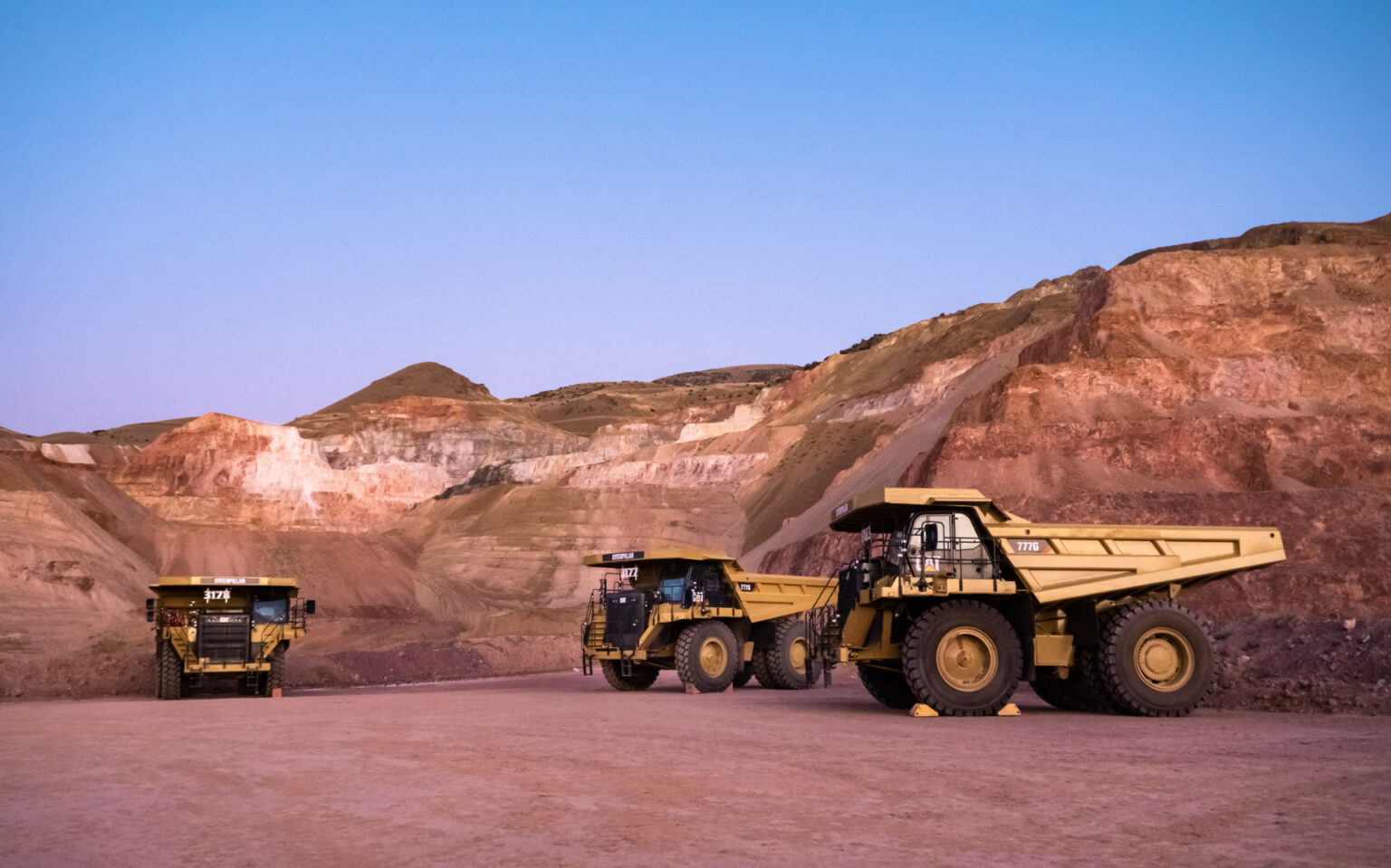
Eighteen months of study replaced Florida Canyon's grade-shell interpretation. Quarterly mined grade is the running test of the eight-year plan.
- Integra rebuilt Florida Canyon's orebody model over 18 months after seeing variability in what the pits were delivering, and the new model replaces an interpretation drawn from grade shells alone.
- Proven and probable reserves are 118,471 thousand metric tons (kt) at 0.31 grams per metric ton (g/t) of gold, on oxide material only, effective May 31, 2026.
- Mined grade was 0.23 g/t in the second quarter of 2026 against 0.21 g/t a year earlier, while processed grade was 0.19 g/t in the first quarter of 2026.
- The pit design behind the reserve is constrained at US$2,400 per ounce for gold on oxide material, against an average realized price of US$4,426 per ounce for gold on ounces sold in the second quarter.
- Production guidance is 70,000 to 75,000 ounces for 2026 and 80,000 to 85,000 ounces for 2027 and 2028, the first full years in which the rebuilt model's grade and sequencing assumptions are tested.
The Geological Model Underlying the 8-Year Plan
Florida Canyon's 8-year mine plan is built on a reinterpretation of how gold is distributed through the deposit, not on an extension of the interpretation that guided mining there for the previous 25 years. Integra Resources (TSXV: ITR | NYSE American: ITRG) became operator of the heap leach mine in 2024, some 45 miles southwest of Winnemucca, Nevada, beside Interstate Highway 80. The mine operated continuously from 1986 to 2011 and then intermittently until 2015, so the orebody had a long production history and a resource model shaped by it. Management says the deposit had been mined on grade shells over that period, a technique that describes where the gold is without explaining what put it there.
The technical report that replaced that interpretation has an effective date of May 31, 2026, and its reserve is stated on oxide material alone: 118,471 thousand metric tons (kt) at 0.31 grams per metric ton (g/t) of gold, containing 1,191 thousand ounces, reported at the point of delivery to the process plant. Reserves increased 74% from 685 thousand ounces, mine life moved from 2030 to 2033, plus 2 years of residual leaching, and average annual gold production rose 17%, from 70,000 to 82,000 ounces. Highlights were released on June 25, 2026, and the report itself was dated July 28, 2026, and filed 2 days later.
President, Chief Executive Officer, and Director of Integra Resources, George Salamis, describes what the company now has in place of the grade-shell interpretation:
"We have a much more robust, much more refined model, and I believe a much more dependable model to now march ahead into the next 8 years."
An 8-year sequence commits the company to a mining order, a strip profile, and a grade path years before any of them can be checked.
The Variability That Prompted the Study
The rebuild answered what the pits were delivering, not a schedule. Salamis identifies the specific problem the previous interpretation left behind:
"We were seeing a lot of variability in what we were mining over the last 18 months. So that pushed us into a position where let's do a lot of exploration, let's understand the ore body a lot better."
That origin puts quarterly mined grade at the center of the investment question, because grade is the one model output the company reports every 3 months. Average grade was 0.23 g/t in the second quarter of 2026, against 0.21 g/t in the same quarter of 2025, and 0.22 g/t across the first halves of both years. Processed grade in the first quarter of 2026 was 0.19 g/t. Against a reserve cut-off grade of 0.14 g/t to 0.15 g/t, the mined grades clear the economic threshold, and against a reserve average of 0.31 g/t, they run below the life-of-mine average grade in the estimate. Part of that spread comes from the reserve's own composition, which includes heap leach inventory of 6,648 kt at 0.29 g/t containing 56.5 thousand ounces and a stockpile of 1,094 kt at 0.21 g/t containing 6.78 thousand ounces, so material already stacked or set aside contributes ounces at grades unlike freshly mined ore.
Volume has moved far more than grade. Ore mined reached 4,417 kt in the second quarter of 2026, against 3,074 kt a year earlier, and ore mined per day averaged 48,538 metric tons against 33,785. First-half ore mined was 7,425 kt against 6,096 kt. The blending strategy developed in the first quarter of 2026 for N2 ore continues to leach as expected. Grade and sequencing together determine the recovered ounces, so accurate grade prediction on its own does not prevent production losses.
Geotechnical Assumptions & Waste Movement
Geotechnical work was a further part of the rebuild, and it converts directly into how much barren rock the operation must move. Salamis frames the question the study had to answer:
"Another big piece was looking at the geotechnical aspects of the ore body. In other words, can we afford to get a little bit more aggressive on things like pit slopes on the pit shells that we plan to mine?"
Steeper walls reduce lifetime waste tonnage, so a few degrees of slope angle changes the economics more than its size suggests. The reserve is constrained within an open-pit design using inter-ramp slope angles of 36 to 42 degrees for rock and 36 degrees for alluvium and fill, at a reference mining cost of US$3.24 per metric ton mined in situ and US$2.93 per metric ton mined from fill. The conceptual shell constraining the resource uses shallower overall angles of 30 to 36 degrees and lower reference mining costs of US$2.79 and US$2.47 per metric ton. Two geometries serve 2 purposes, and only the steeper one supports the 8-year plan.
Current waste movement follows that design. Waste mined was 3,579 kt in the second quarter of 2026 against 2,966 kt a year earlier, at a strip ratio of 0.81 against 0.96, while the first-half strip ratio was 1.01 against 0.78. First-half waste mined was 7,480 kt against 4,765 kt, and total material mined was14,905 kt against 10,861 kt. Total material moved reached 87,867 metric tons per day, a record rate for the mine, achieved through new mining equipment integrated into the fleet over the previous 2 quarters and shorter haul distances. Waste tonnage generates no revenue, so the slope assumptions the study adopted decide how much of that fleet capacity produces ounces over the remaining years.
Price & Recovery Assumptions in the Ore Envelope
The reserve boundary is set well below current revenue. The pit design constraining the proven and probable reserve uses a gold price of US$2,400 per ounce for gold, on oxide material only, with general and administrative costs of US$1.14 per metric ton processed, treatment and refining costs of US$38.73 per recoverable ounce, and royalty costs of US$132.00 per recoverable ounce. In the second quarter of 2026, the mine sold 15,794 ounces of gold at an average realized price of US$4,426 per ounce, compared with 18,194 ounces at US$3,332 per ounce a year earlier. The reserve envelope and the realized price are set at different levels by design, and the ore boundary does not widen as revenue rises within a given estimate.
Recovery in the model is a range, not a figure. Gold recoveries vary by deposit and ore type from 43% to 67% within the reserve pit design, and the conceptual resource shell uses the same 43% to 67% band for oxide material, plus 80% for sulfide material, at a gold price of US$2,650 per ounce. Cut-off grades follow the same logic, at 0.14 g/t to 0.15 g/t for the reserve and 0.13 g/t to 0.14 g/t for oxide resources, with sulfide resources cut off at 0.46 g/t. A controls-based model is meant to attach recovery assumptions to the deposit and ore type rather than to the deposit as a whole, and that attachment also makes the mining sequence a recovery variable.
Measured and indicated oxide resources total 171,842 kt at 0.31 g/t containing 1,706 thousand ounces, inferred oxide resources 53,312 kt at 0.25 g/t containing 433 thousand ounces, and inferred sulfide resources 104,004 kt at 0.86 g/t containing 2,876 thousand ounces. The sulfide material has the highest grade in the estimate, and none of it is included in an oxide-only reserve, so the highest-grade rock on the property has no place in the 8-year plan.
The 2027 Test of the Rebuilt Model
The next 2 guided years put a date on that test. Production guidance for 2026 is 70,000 to 75,000 ounces and was maintained at the half-year mark, with 80,000 to 85,000 ounces guided for 2027 and 2028, against a life-of-mine average of 82,000 ounces and total gold sold of 685,000 ounces. Cost guidance for 2026 was revised on June 25, 2026, to total cash costs of US$2,300 to US$2,500 per ounce sold and mine-site all-in sustaining costs (AISC) of US$3,300 to US$3,500 per ounce sold, calculated at an assumed average gold price of US$4,200 per ounce. Second-quarter cash costs were US$2,495 per ounce sold, and mine-site AISC was US$3,371 per ounce sold, both inside those revised ranges.
The plan's economics depend on those costs falling. Life-of-mine cash costs are modeled at US$1,940 per ounce and life-of-mine AISC at US$2,331 per ounce, and the company is targeting a decrease from 2027 as the capital-intensive stripping and fleet investment of 2026 is completed. On that basis, the after-tax net present value at a 5% discount rate (NPV5%) is US$601 million in the base case and US$723 million under the spot assumption, with after-tax free cash flow of US$0.8 billion over the life of mine. Base-case pricing is US$4,344 per ounce for gold in 2026 and US$4,414 per ounce in 2027, then steps down to US$3,600 per ounce from 2030, for a life-of-mine weighted average of US$3,873 per ounce. A 10% increase in the gold price raises NPV5% and life-of-mine free cash flow by about 25%.
Drilling extends the model beyond the ground it currently describes, with 8,501 meters (m) completed in the second quarter of 2026 and 17,055 m year-to-date within a 42,500-meter program at the mine. A model rebuilt on structural and lithological controls predicts grade, sequence, and recovery across 8 years, and the step to 80,000 to 85,000 ounces is the first stretch long enough to show whether those predictions hold at scale.
The Investment Thesis for Integra Resources
- A rebuilt geological foundation replaces the grade-shell interpretation that guided 25 years of mining at Florida Canyon and now supports an 8-year plan with reserves 74% higher and average annual gold production 17% higher.
- Quarterly mined grade is the public read on whether that interpretation holds, with an average grade of 0.23 grams per metric ton in the second quarter of 2026, clearing the reserve cut-off range of 0.14 to 0.15 grams per metric ton while staying below the reserve average of 0.31 grams per metric ton.
- Steeper pit walls reduce lifetime waste because the reserve pit design uses inter-ramp angles of 36 to 42 degrees for rock, compared to 30 to 36 degrees in the conceptual resource shell, and waste tonnage generates no revenue.
- A conservative ore envelope follows from constraining the reserve pit design at US$2,400 per ounce for gold on oxide material, while the mine realized US$4,426 per ounce for gold on second-quarter sales.
- High-grade sulfide material is outside the plan, with inferred sulfide resources of 104,004 thousand metric tons at 0.86 grams per metric ton, containing 2,876 thousand ounces, excluded from the oxide-only reserve.
- The cost path is the untested half of the case, since life-of-mine cash costs of US$1,940 per ounce and all-in sustaining costs of US$2,331 per ounce fall well below second-quarter actuals of US$2,495 and US$3,371 per ounce sold.
Florida Canyon's investment case now turns on model fidelity rather than resource size. The reserve, the mine life, and the production profile all follow from a single estimate effective May 31, 2026, and that estimate rests on a reinterpretation of structural and lithological controls, completed over 18 months of study. Grade, strip ratio, and unit costs are the 3 quarterly disclosures against which the reinterpretation can be judged, and the guided step to 80,000 to 85,000 ounces in 2027 and 2028 is the first period in which all 3 must move together. Investors weighing the US$601 million base-case valuation are underwriting a geological model as much as a gold price.
TL;DR
Integra's Florida Canyon plan is an 8-year sequence built on an orebody model rebuilt over 18 months in response to grade variability observed while mining, with reserves of 118,471 kt at 0.31 g/t on oxide material only and a pit design constrained at US$2,400 per ounce for gold. The quarterly mined grade of 0.23 g/t in the second quarter of 2026 sits above the 0.14 g/t to 0.15 g/t cut-off and below the 0.31 g/t reserve average, while the record material movement of 87,867 metric tons per day reflects the steeper slope angles adopted in the study. Life-of-mine cash costs of US$1,940 per ounce and AISC of US$2,331 per ounce require the cost reduction the company attributes to completing the capital-intensive investment of 2026. The guided step to 80,000 to 85,000 ounces in 2027 and 2028 is the first time grade, sequencing, and cost assumptions are tested together.
FAQs (AI-Generated)
Analyst's Notes





Subscribe to Our Channel






.jpg)
Stay Informed






















