




Grid Metals Ultra-Rare Cesium Deposit Targets Near-Term Production in $400M Per Annum Market


Grid Metals advances rare cesium project in Manitoba targeting 2027 production in supply-short market, with potential $30-100M revenue vs $30M market cap.
- Grid Metals Corp is developing one of only six cesium deposits ever discovered globally, located in shallow open-pit terrain in Manitoba, Canada, targeting a concentrated $400 million annual market dominated 85% by Chinese suppliers
- The company plans an exceptionally low-cost production model using crush-and-sort technology (no tailings, no complex processing), potentially generating $30-100 million from an initial small-scale operation with grades up to 20-30% cesium
- Critical timeline advantage: targeting resource calculation by Q3 2026, permitting by 2027, and production before major competitor Power Metals' billion-dollar lithium-cesium project reaches market in 5-7 years
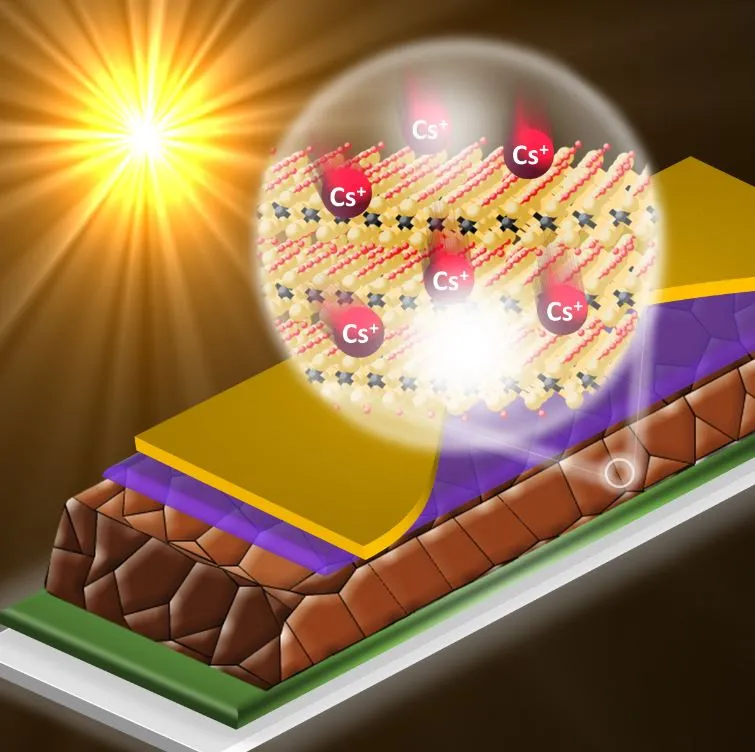
- Cesium applications span high-value markets including drilling fluids for oil and gas (cesium formate), atomic clocks for military guidance systems, medical imaging, and emerging perovskite solar panel technology that increases efficiency by 25%
- The company maintains additional optionality through a 7-million-ton lithium deposit with potential toll-milling arrangements, and a base metals joint venture with Teck Resources containing over $2 billion of in-ground metal value
Grid Metals Corp is advancing what CEO Robin Dunbar describes as one of the rarest mineral deposits in the global critical minerals landscape. The company's cesium project in Manitoba, Canada, represents a convergence of geological scarcity, straightforward extraction economics, and accelerated development timelines that distinguish it from typical junior mining ventures. In an industry where decade-long development cycles and capital-intensive infrastructure often delay value realisation, Grid Metals is pursuing a production pathway that could generate meaningful cash flow within 18-24 months while maintaining exposure to lithium and base metals opportunities across its broader asset portfolio.
The Cesium Market: Small, Concentrated, and Supply-Constrained
The global cesium market operates at approximately $400 million annually, characterised by extreme concentration on both supply and demand sides. Chinese entities control roughly 85% of current supply, with only two major processing buyers dominating procurement: Sinomine (Chinese state-affiliated) and Albemarle.
Dunbar emphasised the market's structural constraints: "There's not a lot of suppliers, not a lot of buyers." This concentration, combined with geological rarity, creates both opportunity and risk. The limited number of participants means established relationships and proven concentrate quality become critical competitive advantages, while the small market size enables relatively modest production volumes to capture meaningful market share.
Current applications span industrial and strategic sectors. High-pressure gas well drilling represents the largest market segment, where cesium formate serves as a premium drilling fluid additive. The compound's extreme density and environmental benignity make it superior to alternatives, though adoption has been constrained by limited supply availability. Military and aerospace applications include atomic clocks used in GPS and precision guidance systems, where cesium's atomic properties provide unmatched timing accuracy. Medical imaging and various defense applications round out the established use cases.
Emerging Demand Drivers: Perovskite Solar Technology
Beyond traditional applications, cesium is gaining prominence in next-generation solar technology. Perovskite solar cells, currently transitioning from laboratory research to commercial production, incorporate cesium as a stabilising agent. This emerging technology promises to increase photovoltaic efficiency by approximately 25% compared to conventional silicon panels, representing a substantial performance leap.
Dunbar noted the supply-demand dynamic inherent in this emerging market: "If there was more cesium formate around there would be more product, more people would use it." This chicken-and-egg problem extends to perovskite applications, where potential manufacturers have historically been unable to design cesium into products due to feedstock uncertainty. Additional supply entering the market could catalyse adoption across multiple applications currently constrained by availability rather than technical feasibility.
Geological Rarity and Discovery Context
The rarity of cesium deposits cannot be overstated. According to Dunbar,
"There's been six deposits ever found. There's been production from three. In all the lithium exploration that's been done over the last five years, there are three new discoveries of cesium. And one of them is us."
This statistical reality underscores why cesium trades at premium pricing despite a relatively modest total market size.
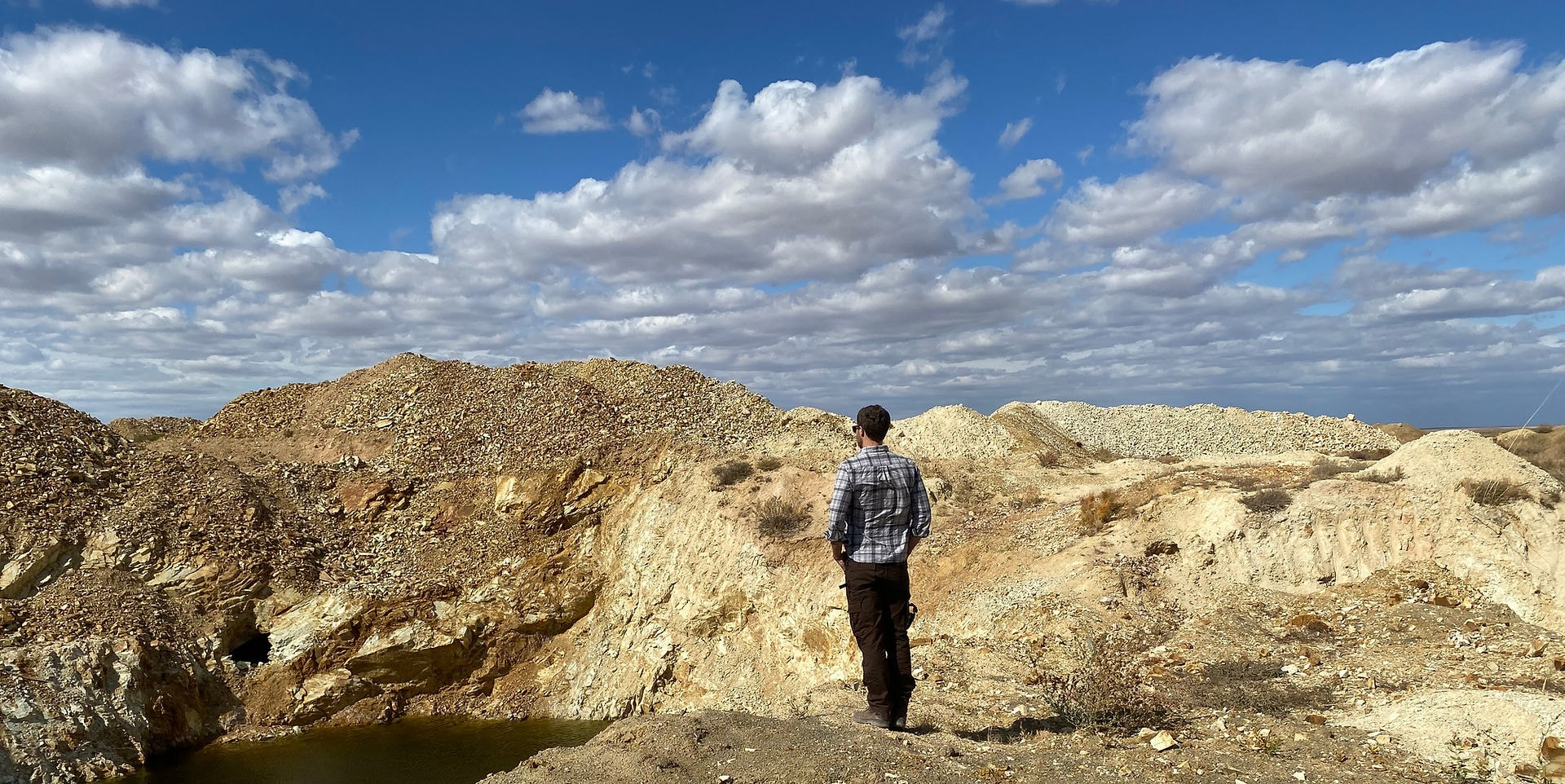
Cesium forms in lithium-cesium-tantalum (LCT) pegmatites, where it represents the final mineral to crystallise during pegmatite formation. This geological process makes cesium inherently rarer than associated lithium and tantalum minerals. Grid Metals' deposit occurs in a discrete 10-meter-wide pegmatite zone, with cesium mineralisation concentrated in the upper portions at depths of 20-40 meters below surface. The company has completed approximately 100 drill holes, encountering grades ranging up to 20-30% cesium oxide content in successful intercepts.
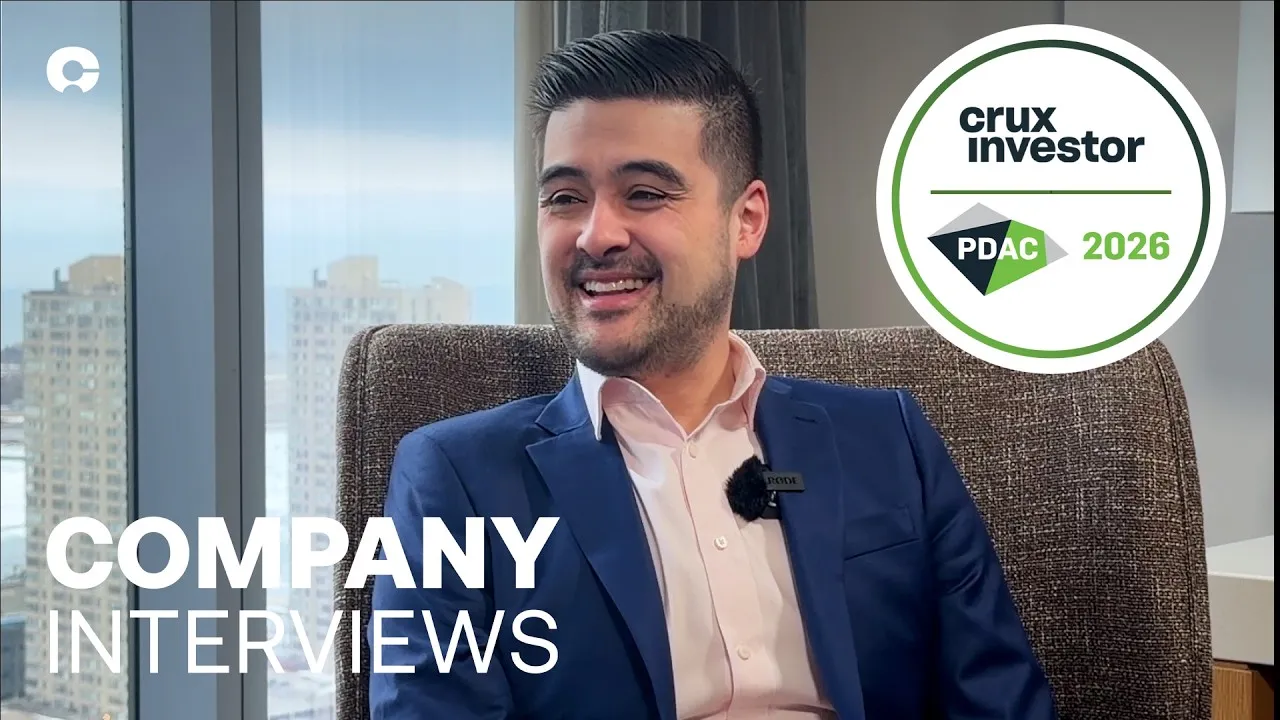
Interview with Robin Dunbar, CEO, Grid Metals
Production Economics: Simple Extraction, High Margins
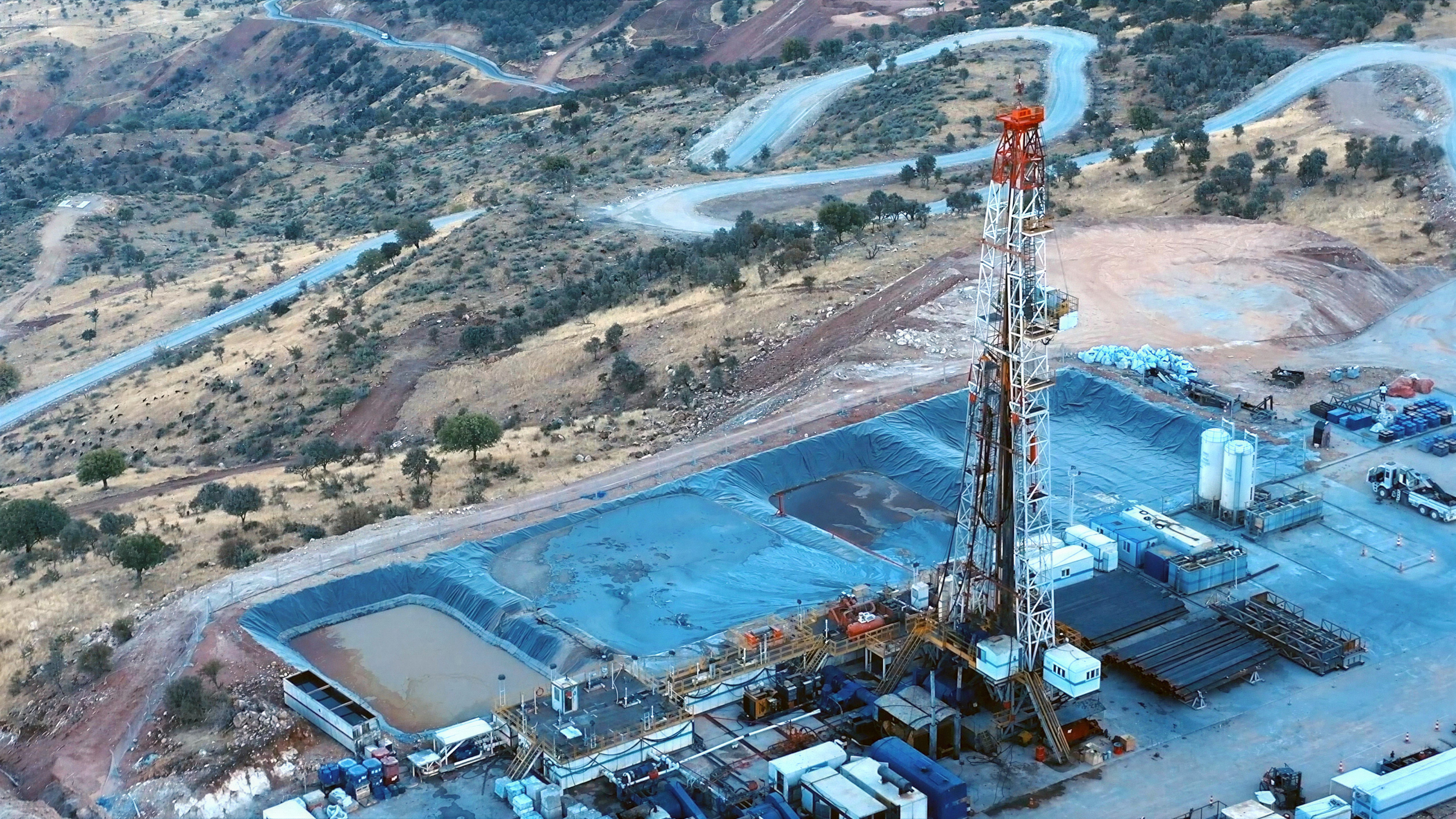
Grid Metals' production concept diverges fundamentally from conventional mining economics. The proposed operation would extract 50,000-100,000 tons of material through shallow open-pit methods, then process it through crushing and XRT (X-ray transmission) optical sorting technology developed in Canada. This approach eliminates the need for conventional milling, flotation circuits, tailings storage facilities, and associated environmental infrastructure that typically dominate capital and operating costs in mining projects.
The absence of tailings facilities carries significant permitting advantages in Manitoba's regulatory environment, potentially compressing the typical multi-year approval process. Grid Metals targets permit approval by 2027, following resource calculation completion targeted for Q3 2026 and remaining drilling through March-April 2026.
Pricing visibility comes from Grid Metals' prior discussions with Tanco regarding a different cesium occurrence, where the buyer offered $300 USD per 1% cesium content. At grades of 20-30% cesium, this translates to $6,000-$9,000 per ton of concentrate, which Dunbar compared to "over an ounce of gold" in value terms. The company estimates the initial pit could generate $30-100 million in revenue at current market pricing, a substantial figure relative to its approximately $30 million market capitalisation.
Contracted crushing and sorting services would further minimise capital requirements and execution risk. Tanco's proximity and existing relationship with Grid Metals positions the Sinomine subsidiary as a logical service provider for processing and potentially as an offtake partner for concentrate sales.
Competitive Positioning and Market Window
Grid Metals benefits from a defined market window before major new supply emerges. Power Metals Corp is developing a cesium resource in northern Quebec as a byproduct of a lithium project, but this billion-dollar development has announced a 2027 timeline for final investment decision, followed by construction. Dunbar estimates a 5-7 year window before this supply reaches market, providing Grid Metals with a period to establish production, prove operations, and potentially expand resource definition to support multi-year production.
Only three publicly traded companies currently hold cesium resources, with only two (including Power Metals) having completed resource estimates. Grid Metals aims to become the third with its Q3 2026 resource calculation. The company has identified additional exploration potential along strike of the known pegmatite zone, with minimal historical exploration in the broader district providing upside for resource expansion beyond the initial pit concept.
Portfolio Diversification: Lithium and Base Metals Optionality
While cesium represents the near-term focus, Grid Metals maintains significant exposure to lithium and base metals through other Manitoba assets. The company holds a 7-million-ton lithium deposit at its Donner Lake property, with potential for toll-milling arrangements at Tanco's existing lithium processing circuit. Rising lithium prices have renewed interest in this low-capital-intensity production pathway, which could provide additional near-term cash flow without requiring stand-alone processing infrastructure.
The company's Makwa base metals project, joint-ventured with Teck Resources, contains over $2 billion of in-ground metal value. Teck has exercised its option for a second year of exploration, conducting geophysical surveys to identify additional targets. Dunbar suggested the regional base metals assets may ultimately consolidate into a unified district-scale project, though this represents a longer-term development horizon relative to cesium production.
Strategic Rationale: Cash Flow to Fund Broader Portfolio
Dunbar framed cesium as a catalyst for the company's broader strategy:
"It's a huge step forward to generate some cash flow... this looks like we spent a lot of time looking at the market. Is this market real? Is what we're doing relevant? Are we going to be able to sell the product? Is there demand for the product?... Cesium it's rarer than most, [more] in demand than most and there's far fewer hurdles to getting into production."
The ability to self-fund through cesium cash flow would reduce dilution risk while enabling continued exploration on lithium and base metals assets. In an environment where financing for junior miners remains constrained and banks are reluctant to fund non-tier-one assets, internal cash generation provides strategic flexibility that few exploration-stage companies can access.
The Investment Thesis for Grid Metals
- First-mover advantage in rare element production: One of only three companies globally with a defined cesium resource, positioning for production during a 5-7 year market window before major competitors reach commercial production
- Exceptional near-term cash flow potential relative to market cap: $30-100 million revenue target from initial pit operations against ~$30 million current valuation, with production timeline of 18-24 months vs. typical 5-10 year mining development cycles
- Minimal capital intensity and technical risk: Open-pit mining at 20-40 meter depths, crush-and-sort processing (no complex metallurgy), no tailings facilities, contracted crushing services, and proven XRT sorting technology reduce both capital requirements and execution risk
- Strategic market positioning in supply-constrained critical mineral: $400 million annual market dominated by Chinese supply (85%), with only two major buyers reporting concentrate shortages and emerging demand from perovskite solar technology offering 25% efficiency gains
- Operational and permitting advantages: Proximity to Tanco/Sinomine processing facility in Manitoba, established relationships with potential offtake partners, and simplified permitting pathway due to no tailings generation in environmentally sensitive jurisdiction
- Portfolio optionality beyond cesium: 7-million-ton lithium resource with toll-milling pathway, $2+ billion base metals joint venture with Teck Resources, providing multiple pathways to value realisation and downside protection if cesium development encounters delays
- Proven resource expansion potential: Minimal historical exploration along 10-meter pegmatite strike, discrete geological target with clear vectors, and emerging geochemical methods offering resource growth beyond initial pit to support multi-year production profile
Macro Thematic Analysis:
The cesium market exemplifies broader structural challenges in critical minerals supply chains where Western economies face acute dependency on Chinese-controlled production. With 85% market dominance concentrated in Sinomine's hands, cesium joins rare earths, tungsten, and graphite as strategic materials where supply disruptions could impact defense, aerospace, and emerging clean energy technologies. The US govt's critical minerals list and similar designations by allied governments reflect growing recognition that mineral supply security constitutes a national security imperative, not merely an industrial concern.
Grid Metals' Manitoba location positions the company within secure, allied jurisdictions as governments and defense contractors actively seek to diversify supply chains away from geopolitical risk. Emerging applications in perovskite solar technology, military guidance systems, and advanced drilling operations ensure cesium demand growth aligns with electrification and energy security themes, while the geological rarity of cesium deposits creates structural barriers to rapid supply response even as demand accelerates.
TL;DR: Executive Summary
Grid Metals is advancing one of only six cesium deposits ever discovered globally, targeting production by 2027 through shallow open-pit mining and simple crush-and-sort processing that eliminates tailings and complex infrastructure. The company's Manitoba project addresses a supply-constrained $400 million annual market dominated 85% by Chinese producers, with potential to generate $30-100 million from an initial operation representing 3-4x current market capitalisation. A 5-7 year window before major competing supply reaches market, combined with minimal capital requirements and 18-24 month development timeline, positions Grid Metals to capture premium pricing in high-value applications spanning drilling fluids, atomic clocks, defense systems, and emerging perovskite solar technology.
FAQ's (AI Generated)
Cesium's extreme geological rarity creates an absolute constraint - only six deposits have ever been found globally, with just three reaching production. Even intensive lithium exploration over the past five years yielded only three new cesium discoveries, demonstrating that increased exploration effort doesn't necessarily translate to new supply.
The absence of tailings facilities, complex processing circuits, and deep mining infrastructure compresses both capital requirements and permitting timelines. Grid Metals targets permit approval by 2027 and production shortly after, versus 7-10 year timelines typical for conventional mining projects requiring mills and tailings management.
Key risks include insufficient resource continuity or grade from remaining drilling, permitting delays despite simplified environmental profile, failure to achieve expected ore sorting recoveries, and inability to secure offtake agreements at anticipated pricing with the limited buyer base before production readiness.
Beyond solar applications, cesium formate enables more efficient drilling for geothermal energy and extends well productivity in oil/gas operations. Atomic clocks using cesium are essential for smart grid timing and synchronisation, while advanced battery research is exploring cesium-enhanced electrolytes for improved performance.
The company intends to self-fund continued cesium exploration for resource expansion, advance toll-milling discussions for the 7-million-ton lithium deposit, and support ongoing base metals exploration with Teck, reducing dilution while maintaining multiple development pathways across the commodity spectrum.
Analyst's Notes





Subscribe to Our Channel




Stay Informed


