




Halo Minerals Targets 2026 FID and 2028 Production on EIA Approved Chilean Copper Project


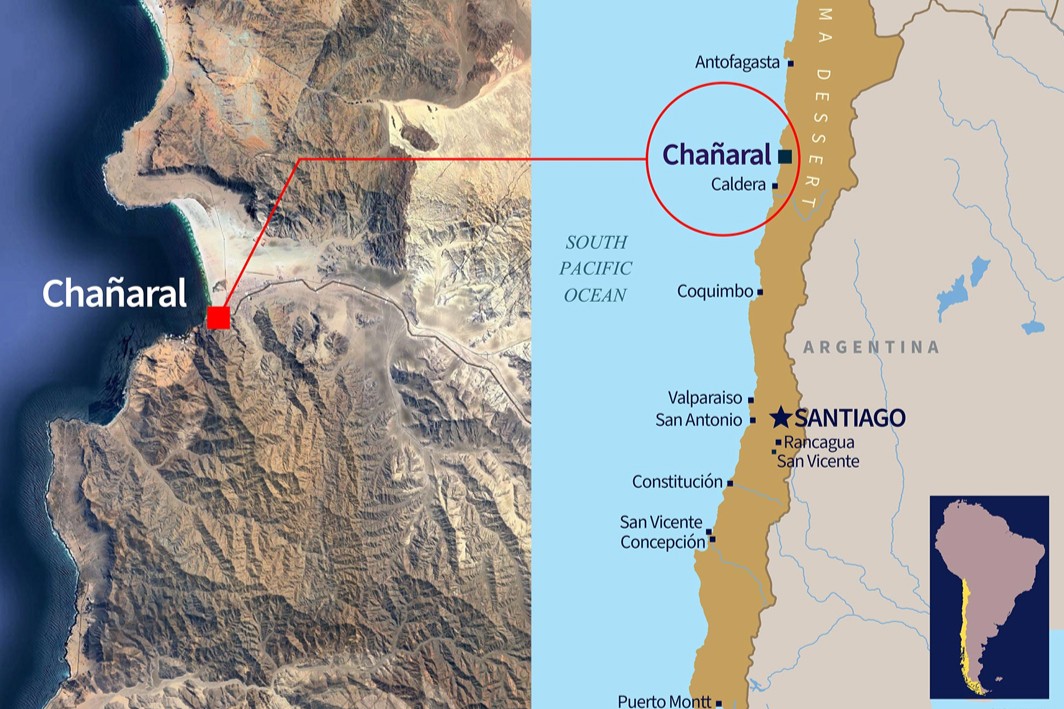
- Halo Minerals is advancing the fully owned Playa Verde Project in Chile, a copper and gold tailings reprocessing operation that has already received Environmental Impact Assessment (EIA) approval which significantly reduces one of the largest development risks faced by mining projects.
- The project reports ore reserves of 32.2 million tonnes containing approximately 80,000 tonnes of copper, with a post-tax NPV10 of US$154.1 million and an estimated internal rate of return (IRR) of approximately 51%.
- Halo plans to use established dredging, flotation, and SX-EW processing technologies to recover copper and gold from historical tailings deposits, reducing technical risk compared with projects reliant on unproven technologies.
- Management is pursuing a financing strategy focused on offtake agreements, vendor financing, royalties, streaming, and project debt before equity issuance, with the objective of minimising shareholder dilution.
- Key near-term catalysts include completion of an updated bankable feasibility study, selection of operating and financing partners, a potential final investment decision (FID) in late 2026, and a pathway toward first production as early as the second half of 2028.
The global copper market faces a widely documented supply gap, driven by electrification, data centre expansion, and electric vehicle adoption, even as new greenfield mine development continues to face long permitting timelines and rising capital costs. Against this backdrop, companies pursuing alternative routes to production, including the reprocessing of historical mine waste, have attracted growing investor attention. Halo Minerals PLC, listed on London's AIM market at the end of March 2026, is positioning itself within this niche, focusing on the recovery of copper and gold from legacy tailings in Chile rather than conventional mining.
CEO Andrew Dennan outlined the company's strategy, project economics, and pathway toward a final investment decision. Dennan brings a background spanning hedge fund management, a four-year tenure as CFO of Coro Energy, and five years as CEO of Ascent Resources, before taking the helm at Halo Minerals following the EIA approval for its flagship project.
The Playa Verde Project
Halo's flagship asset, the Playa Verde project, was acquired at the start of 2025 for $7.5 million, payable to the previous shareholders of the Copper Bay Group on a deferred milestone basis of two deferred payments of $3.75 million each, contingent on production milestones. The project centres on tailings originally deposited by two large historical mines in Chile's Atacama region between the 1930s and 1970s. Over subsequent decades, these tailings were carried roughly 120 kilometres downstream to form a beach, an area that UNESCO reportedly identified in the 1980s as one of the Pacific's largest sites of industrial pollution.
Approximately one month after Halo completed the acquisition, Chile's ministerial committee unanimously approved the project's EIA, with written resolution received in October 2025. According to Dennan, this approval represents one of the most significant de-risking milestones for the project, clearing the way for ancillary permitting and a path toward production. Beyond copper and gold recovery, the company has framed the project with an environmental remediation component: processing is expected to reduce arsenic and other heavy metal concentrations in the reconstituted sands, with the stated aim of eventually returning the beach to the local municipality for recreational use.
Resource Base and Project Economics
The project's recent Competent Person's Report (CPR), published in conjunction with Halo's AIM admission in the first quarter of 2026, outlines ore reserves of 32.2 million tonnes (Mt) at 0.25% copper, equivalent to approximately 80,000 tonnes of contained metal. Based on assumed prices of $5.30/lb of copper and $4,300/oz of gold, the CPR calculates a post-tax NPV10 of $154.1 million and an IRR of approximately 51%. Dennan noted that current copper and gold prices sit above these assumptions, which, if sustained, would imply further upside to the stated valuation, though such movements also introduce volatility risk.
Beyond the reserve figure, the company reports a broader JORC-compliant resource of 53.4 Mt onshore, including an additional 21 Mt in the Western Berm area that could be processed for modest incremental capital outlay. Resource definition has drawn on more than 300 drill holes and 2,500 samples, with technical work conducted by Wardell Armstrong, Cube Consulting, and EMI Consultores.
Processing Plan and Technology Risk
Operationally, Halo plans to deploy a floating suction dredge to recover tailings from the beach, feeding a combined solvent extraction–electrowinning (SX-EW) and flotation plant situated behind the beach. The plan targets processing of 5 Mt of ore annually, yielding approximately 7,500 tonnes of copper cathode and 8,000–8,500 tonnes of concentrate at 20% copper, with a gold credit of 5.5 grams per tonne, and an expected metal recovery rate of at least 72%.
Dennan was direct in framing the technology choices as deliberately conventional rather than experimental, stating:
"We're not reinventing the wheel in any parts of our operation here. Dredging technology is well-established and is used a lot in mineral sands and alluvial mining, We're using it for this ore body, but it lends itself exceptionally well to a free-flowing homogeneous ore body that's situated on a beach. In terms of the mineral processing technology, we're using flotation and an SXEW."
Dennan linked these technical choices to both execution risk and the project's ability to secure environmental approval, since permitting authorities are generally less receptive to unproven processing methods being trialled on a sensitive coastal site.
Capital Costs and Financing Approach
The CapEx estimate totals approximately $86.5 million which includes roughly $10 million for dredging equipment, $33 million for plant equipment, just under $30 million for construction, around $10 million for indirect costs such as transmission line upgrades, and a contingency of $6–7 million. Management indicated that ongoing work could reduce this figure further with the example given of dredging equipment; rather than purchasing a new dredge, the company is evaluating used equipment available at scrap-metal pricing, or contracting a third party to lease and operate a dredge, which would shift a portion of capital expenditure into operating costs.
On the operating side, the company estimates an all-in opex of approximately $2.19/lb of copper, inclusive of roughly 10 cents of contingency, which Dennan characterised as placing the project toward the lower end of the second cost quartile globally, with potential to move into the lowest quartile. Rather than building an in-house operating team, Halo intends to contract experienced operators for both the dredging and plant operations. Dennan explained the rationale plainly - the approach is intended to reduce balance sheet requirements, recruitment risk, and ramp-up time, while drawing on Chile's established base of contract mining service providers.
On financing, management described a layered funding stack intended to minimise reliance on new equity. This includes pre-pay and offtake arrangements with metals traders where several of whom approached the company within 48 hours of the EIA's written resolution, vendor financing covering an estimated 50–60% of plant and equipment costs, royalty and streaming arrangements tied to future production, and project development debt. Equity is positioned as the final, and smallest, component of the stack, to be used only if needed or strategically advantageous.
Interview with Andrew Dennan, CEO of Halo Minerals
Growth Pipeline and Regulatory Backdrop
Beyond the onshore reserve, Halo's licence extends approximately 1.5 kilometres into the adjacent bay, an area management believes could hold up to a further 100 Mt of similar tailings on the seabed. The company has begun the process of applying for maritime territorial access through Chile's Ministry of Defense, a process expected to take considerable time but which would not require new processing infrastructure if successful, since the existing onshore plant could absorb the additional material. Separately, regional officials in Copiapó have invited Halo to explore further tailings reprocessing opportunities in the area, suggesting potential for additional projects within Chile's broader inventory of more than 760 known tailings deposits.
Management's stated target is to finalise selection of dredging and processing partners by the next quarter, take FID as early as the fourth quarter of 2026, and complete an 18-month construction phase, with first production targeted as early as the second half of 2028.
The Investment Thesis for Halo Minerals
- Permitting risk is largely behind the project. The EIA which is historically one of the largest barriers to Chilean mining and processing developments has been approved and is in written resolution, with management expressing confidence in remaining ancillary permits.
- Headline project economics are strong on paper. A post-tax NPV10 of approximately $155 million and IRR of approximately 51% compare favourably to the company's current market capitalisation, though investors should treat these as management/CPR estimates rather than independently verified figures.
- Commodity price exposure currently favours the project. Copper and gold prices above the CPR's underlying assumptions provide a potential tailwind, but this also means project value is sensitive to price reversals.
- The funding model is designed to limit dilution. A stack prioritising offtake, vendor finance, royalties/streaming, and debt ahead of equity may reduce shareholder dilution relative to a typical small-cap mine developer, if each component can be secured on reasonable terms.
- Catalysts to monitor over the next two to three quarters are the updated bankable feasibility study with revised CapEx/OpEx figures, finalisation of dredge ownership versus leasing arrangements, selection of financing and operating partners, and progress on the FID timeline.
- Key risks to weigh: reliance on a single asset for near-term value; execution risk in securing financing partners on favourable terms; counterparty risk in dredge leasing/operating arrangements; commodity price volatility; and the early-stage, unverified nature of the offshore (maritime) resource, which has not been drilled to the same standard as the onshore reserve.
Macro Thematic Analysis: Tailing Reprocessing
Halo Minerals' strategy sits at the intersection of two converging trends: a structural copper supply deficit and growing interest in tailings reprocessing as an alternative to greenfield mine development. Global copper demand continues to be reshaped by electrification, the build-out of AI-driven data centre capacity, and electric vehicle adoption. Dennan noted that vehicles such as those produced by BYD and Tesla require roughly 4-5 times the copper of a conventional internal combustion vehicle. These demand drivers have intensified scrutiny of supply-side constraints, a dynamic brought into sharper focus when Indonesia's Grasberg mine, one of the world's largest copper operations, suffered operational disruption in the second half of 2025.
Against this backdrop, tailings reprocessing offers a comparatively faster and lower-cost route to incremental copper supply than greenfield exploration and development, which can take a decade or more to reach production even under favourable conditions. Chile, with over a century of mining history and more than 760 documented tailings deposits, represents a significant opportunity set for this strategy, particularly as the country's new administration has signalled a more investment-friendly stance, including a proposed reduction in corporate tax from 27% to 23%.
Dennan summarised the broader opportunity directly:
"The macro picture for copper remains bullish and we expect that to continue at least for the rest of the decade and into the 2030s."
For investors, the relevance lies in distinguishing between speculative exploration exposure and projects with defined resources, approved permits, and near-term production timelines. Whether this macro tailwind translates into shareholder value depends on company-specific execution in securing financing, partners, and permits on acceptable terms rather than the commodity backdrop alone.
TL;DR
Halo Minerals presents a relatively unusual proposition within the AIM-listed mining sector: a permitted, technically de-risked project that aims to reach production within roughly two years of listing, built on conventional processing technology applied to an unconventional ore body. The combination of an approved EIA, a defined resource base, and a financing strategy designed to limit equity dilution differentiates the company from earlier-stage exploration peers. At the same time, the project remains pre-FID, dependent on the successful conclusion of multiple financing and partnership negotiations, and exposed to copper and gold price movements. The coming two to three quarters encompassing the updated feasibility study, partner selection, and progress toward FID are likely to be the clearest test of whether the company can convert its stated project economics into a financed, constructed operation.
Frequently Asked Questions (FAQs) AI-Generated
Analyst's Notes





Subscribe to Our Channel




.jpg)

Stay Informed


