Energy Fuels Begins Heavy Rare Earth Plant Construction in Utah: 7 Things You Need to Know


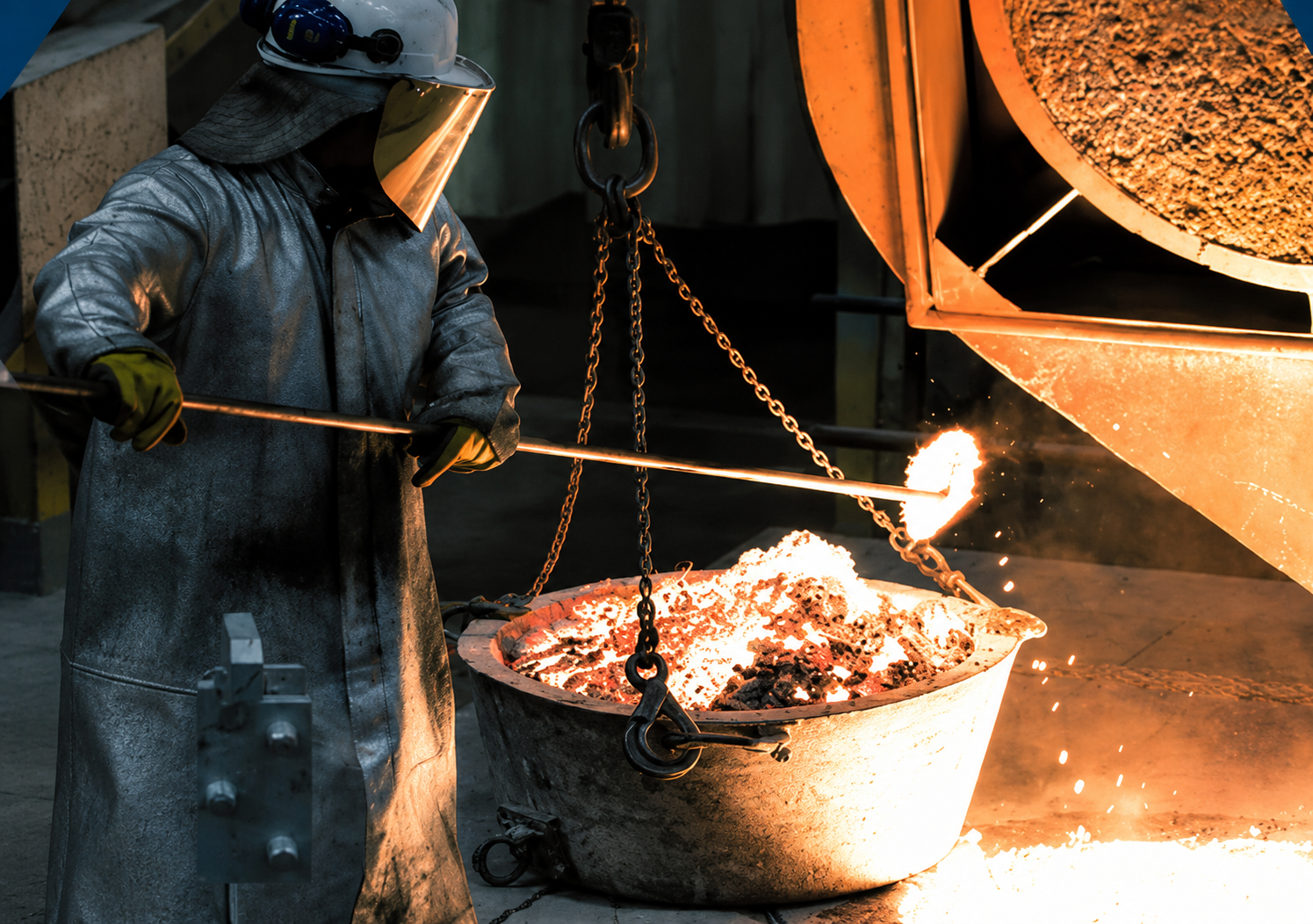
Energy Fuels begins construction of a $104 million heavy rare-earth expansion at the White Mesa Mill, targeting commercial production of terbium and dysprosium by 2027.
Project Overview
Energy Fuels Inc. (NYSE American: UUUU | TSX: EFR) has begun construction on a $104 million expansion at its White Mesa Mill in Utah, marking an important step in the company's strategy to establish an integrated Western rare earth supply chain. The project extends the mill beyond its existing commercial neodymium-praseodymium oxide separation capability by adding commercial-scale heavy rare-earth oxide production and a mixed rare-earth carbonate (MREC) processing circuit. The announcement also shifts the project from engineering and planning into physical execution, reducing a key development risk while advancing the company's broader mine-to-magnet ambitions through planned upstream, midstream, and downstream integration.
1. Construction Has Begun on a $104 Million Heavy Rare Earth Expansion
Energy Fuels has commenced construction of a $104 million expansion at the White Mesa Mill, adding commercial-scale separation circuits for terbium, dysprosium, samarium, europium, and gadolinium, along with a new MREC circuit. The expansion builds on White Mesa's existing commercial capability to process monazite concentrates and produce separated neodymium-praseodymium oxide.
Construction will be completed in two stages. The company is targeting commissioning of the terbium and dysprosium circuits by the fourth quarter of 2027, followed by completion of the samarium, europium, and gadolinium circuits during late 2028. Upon completion, White Mesa will remain the only commercial facility in the US with existing commercial monazite processing capacity while significantly expanding the range of rare earth products it can produce.
Moving into construction is significant because processing facilities are among the most capital-intensive and technically challenging parts of the rare earth supply chain. Beginning physical construction therefore reduces execution uncertainty compared with projects that remain at the engineering or permitting stage.
2. The Expansion Targets the Heavy Rare Earths That Remain Most Constrained Outside China
The expansion is designed to produce approximately 20 tonnes per year of terbium oxide and 120 tonnes per year of dysprosium oxide. Additional annual capacity includes approximately 140 tonnes of samarium oxide, 20 tonnes of europium oxide, and 140 tonnes of gadolinium oxide.
While neodymium and praseodymium are the principal ingredients used in neodymium-iron-boron permanent magnets, terbium and dysprosium perform a different role. They increase magnetic coercivity and thermal stability, allowing magnets to maintain performance under the high operating temperatures required for electric vehicle motors, robotics, defence applications, wind turbines, and data centres.
Because commercial production of heavy rare earth oxides remains concentrated in China, the expansion positions White Mesa to produce materials that are significantly more difficult for Western manufacturers to source. Rather than simply increasing production volumes, the project broadens Energy Fuels' product mix into materials that address one of the most constrained segments of the global rare earth market.
3. White Mesa Will Process Multiple Feedstocks While Continuing Uranium Production
A central component of the expansion is the addition of an MREC circuit. The new circuit will enable White Mesa to process mixed rare earth carbonates alongside monazite concentrates while continuing commercial production of natural uranium concentrate.
This flexibility allows the mill to accept a broader range of rare earth intermediates rather than relying on a single feedstock source. Higher utilisation can improve plant economics by spreading fixed operating costs over greater production volumes while reducing dependence on any single supplier.
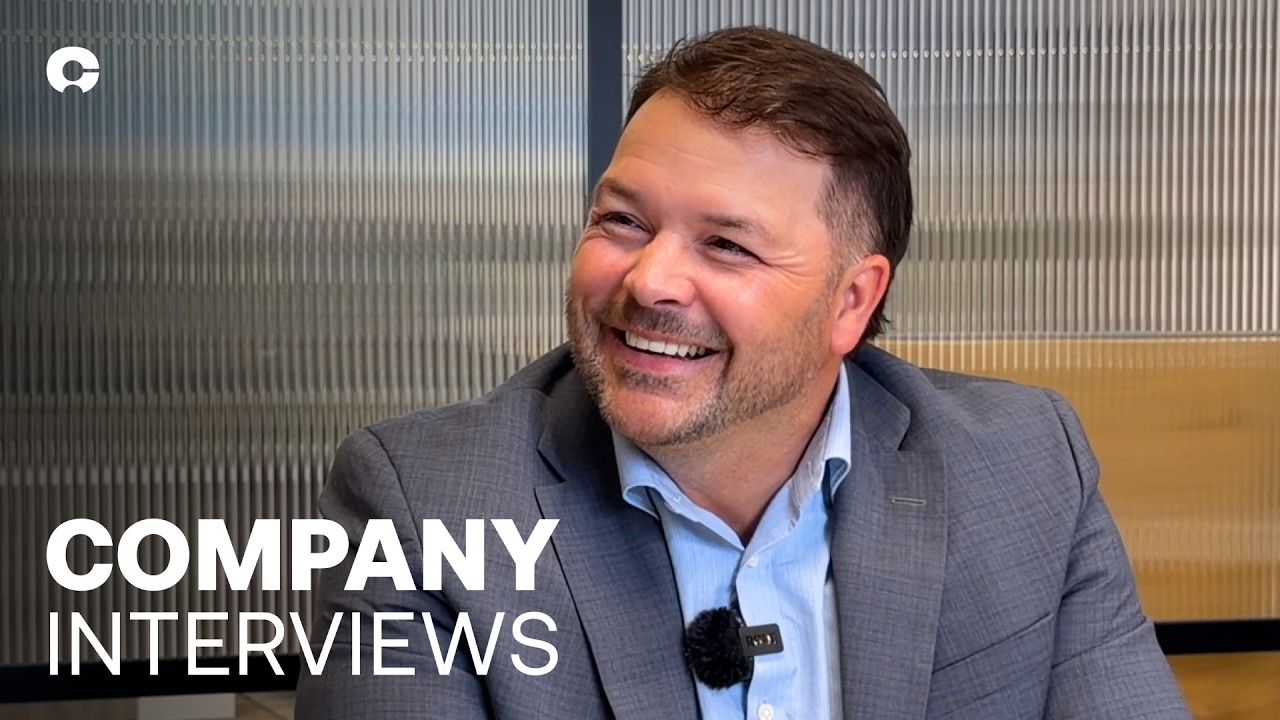
President and Chief Executive Officer of Energy Fuels Inc., Mark Chalmers, discussed the importance of integrating the full processing chain:
"To really compete with China, you have to have all those steps; you can't be missing a step in the middle of it."
The comment reflects one of the central themes of the company's rare earth strategy. Rather than operating as a standalone separation facility, White Mesa is intended to become part of an integrated processing network that extends from mining through permanent magnet manufacturing.
4. The Donald Project Provides an Identified Source of Future Feedstock
The White Mesa expansion has been sized to process monazite concentrate expected from the Donald Project joint venture (JV) in Victoria, Australia. Subject to a Final Investment Decision (FID) targeted for the third quarter of 2026, Donald is expected to produce approximately 8,500 to 9,500 tonnes of monazite concentrate annually beginning in 2028.
The company has also stated that White Mesa will continue sourcing material from third-party suppliers, allowing the facility to process multiple feedstocks rather than relying exclusively on a single mine. That diversified sourcing strategy supports higher utilisation while reducing dependence on any one project.
Chalmers identified Donald as the next major milestone in the company's rare earth development pipeline:
"Probably the next thing on the rare earth front is to make a final investment decision on the Donald project."
A positive FID would provide the first dedicated long-term feedstock source for the expanded heavy rare earth circuits while strengthening the operational link between upstream mining and downstream processing.
5. White Mesa Becomes the Processing Hub for Energy Fuels' Mine-to-Magnet Supply Chain
The White Mesa Mill is intended to serve as the processing hub for Energy Fuels' broader rare earth business. Rare earth oxides produced at the facility are planned to supply Australian Strategic Materials' (ASM) metallization and alloy production capabilities through Energy Fuels' pending acquisition of the company. Those alloys would then supply Vacuumschmelze (VAC), whose operations include a permanent magnet manufacturing facility in Sumter, South Carolina, as part of Energy Fuels' pending acquisition of VAC.
White Mesa's planned oxide production is expected to supply approximately 70% of the feedstock required for ASM's existing and planned metal and alloy capacity in South Korea. If the pending acquisitions are completed, the company would participate not only in rare earth oxide production but also in higher-value downstream processing through metals, alloys, and finished permanent magnets. Capturing additional stages of the value chain could diversify future revenue sources beyond the sale of separated oxides alone.
Chalmers discussed the importance of controlling multiple stages of production:
"We've got all the skill sets required from mining all the way through alloys with the close of ASM."
Rather than relying on third-party processors between each stage, the integrated model is designed to reduce supply chain dependence while allowing the company to retain more value as rare earth materials move from mined concentrate to finished magnetic products.

6. Multiple Funding Sources Reduce a Key Development Risk
The $104 million expansion is expected to be funded through a combination of a previously announced conditional loan commitment from the US Office of Strategic Capital, applications for additional US government grants, and the company's existing balance sheet. As of March 31, 2026, Energy Fuels reported approximately $0.96 billion in working capital, providing substantial financial flexibility as construction progresses.
Funding has historically been one of the largest obstacles for rare earth processing projects because large capital commitments are typically required years before facilities begin generating meaningful revenue. Energy Fuels differs from many emerging rare earth developers because it already operates an established uranium business, providing an existing source of operating cash flow alongside its critical minerals expansion.
The combination of internal liquidity, potential government support, and operating cash flow reduces reliance on repeated equity financing while improving the company's ability to advance construction through changing market conditions.
7. The Current Expansion Forms the Foundation for a Larger Processing Platform
Beyond the current construction program, Energy Fuels has outlined a Phase 2 expansion targeted for 2029. The next phase would increase annual separation capacity to approximately 6,294 tonnes of neodymium-praseodymium oxide, 80 tonnes of terbium oxide, and 288 tonnes of dysprosium oxide, supported by additional feedstock from Donald and future projects, including Vara Madagascar and Bahia, Brazil.
The presentation indicates that this expanded processing platform could ultimately support approximately 15,700 tonnes per year of permanent magnets through the company's integrated supply chain. While the Phase 2 roadmap remains subject to future project execution, market conditions, and additional feedstock development, it demonstrates that the current expansion has been designed as the initial stage of a significantly larger rare earth processing business rather than a one-time capacity increase.
The current construction program therefore represents more than a single capital project. It establishes the infrastructure on which the company's long-term rare-earth growth plans are intended to be built.
Key Takeaways for Investors
Construction of the White Mesa heavy rare earth expansion moves Energy Fuels from project planning to execution, reducing a key development risk while expanding the mill to produce commercially significant heavy rare earth oxides. The project also strengthens the company's integrated rare earth platform by combining an operating uranium business, identified feedstock from the Donald Project, and planned downstream processing through the pending acquisitions of ASM and VAC.
With construction underway, investors should monitor several execution milestones, including the Donald Project FID, commissioning of the terbium and dysprosium circuits targeted for the fourth quarter of 2027, completion of the remaining heavy rare earth circuits during late 2028, and progress toward closing the ASM and VAC acquisitions. Together, these milestones will indicate how effectively Energy Fuels executes its strategy to build a vertically integrated Western rare earth supply chain.
Analyst's Notes





Subscribe to Our Channel











Stay Informed