




A Repeatable Targeting Model Is Adding Mine Life at Minto


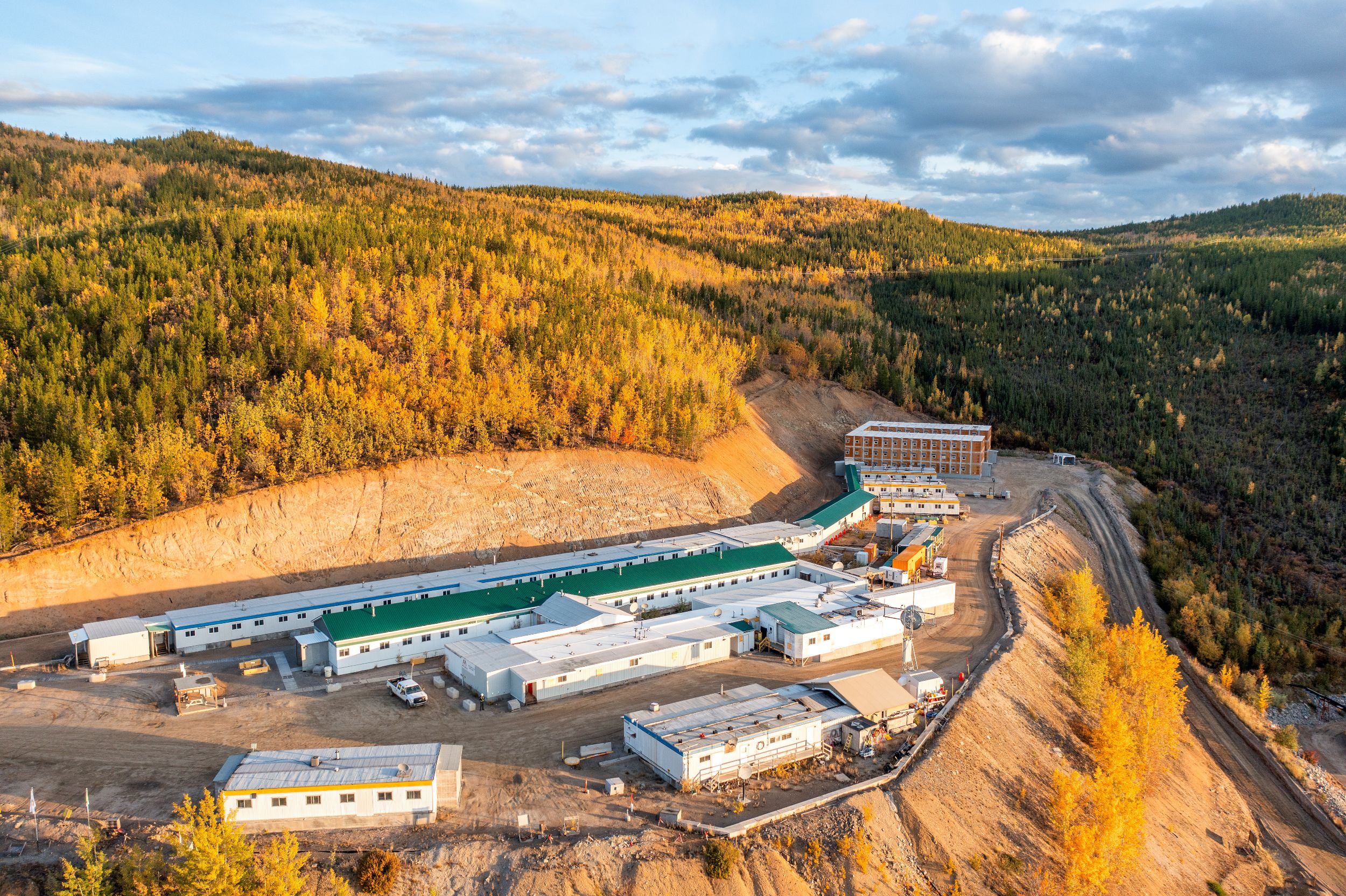
Selkirk Copper's targeting model hit economic grade in 87% of 175 Phase 1 holes at Minto, and infill drilling is now testing whether those zones hold.
- Selkirk Copper's Phase 1 drill programme intersected economic-grade mineralisation in 87% of 175 holes; the conversion rate management points to, as evidence, that its targeting methodology works.
- The targeting model ranks drill targets on three geological variables: sulphide zonation, foliation development, and lens geometry.
- Two newly discovered lenses, the 117 Lens and the 301 Lens, sit immediately beside underground workings and the mine portal already built at Minto.
- Only 3 kilometres (km) of the mineralised trend inside the licensed mine area has been explored, out of 7 km in total, on a claim block representing approximately 10% of the land package.
- The published resource carries an April 2025 effective date and reports only indicated and inferred categories, so the material added by both drill phases is not yet included in a published estimate.
The Minto Deposit & Its Exploration History
Mineralisation at Minto does not form a single continuous body. The deposit is a structurally controlled, migmatised schist bearing chalcopyrite, bornite, and magnetite, characterised as a strongly metamorphosed calc-alkaline porphyry or an iron oxide copper gold style system, with host rocks of pervasively foliated granodiorite and migmatite. Mineralisation is distributed through discrete lenses within that fabric, which means the return on a drill programme depends on which lenses are selected rather than on how many metres (m) are turned.
The property has absorbed large drill programmes without that selection framework. Soil sampling, trenching, and approximately 22,050 m of drilling ran from 1971 to 1974. MintoEx completed 4,189 m between 1993 and 1996, Sherwood Copper 29,890 m between 2005 and 2007, and Capstone Copper 177,857 m of exploration and resource definition drilling between 2008 and 2012. Pembridge Resources and Minto Metals added 82,620 m over four years to 2023.
Those programmes were separated by long gaps. Exploration activity was minimal from 1975 to 1992; no exploration drilling was carried out between 2013 and 2019; and none took place on the Minto mine property between 2013 and 2020. Limited exploration was conducted on the broader regional claim package. The result is a mine site with a dense drill database in some areas and untested lens positions in others, a condition that a targeting method can exploit.
The Targeting Model & Its Variables
Selkirk Copper Mines (TSXV: SCMI | OTCQB: SKRKF | FRA: IO20) ranks its drill targets against three stated geological variables. The first is sulphide zonation, running from bornite through chalcopyrite to pyrite. The second is the degree of foliation development in the host rock. The third is lens geometry, where the lenses dip to the northeast and the higher grades trend north-northwest. Each variable is a physical property that can be logged in the core, which allows a target to be ranked before it is drilled rather than assessed afterwards.
Underneath the ranking sits a structural model being rebuilt from historical work, new drilling, and oriented core measurements, which supplies the framework for both resource estimation and geotechnical design. Oriented core logging, field mapping, and drone photogrammetry surveys are being used to characterise faults, joints, and foliation fabrics. The company is also investigating whether multi-element geochemical data can resolve sub-lithologies within the granodiorite host, which would provide a lithological domain model, and is working with ALS Goldspot on that methodology.
The geophysical component is being rebuilt rather than assumed. Four scopes are in progress: a physical property study across all rock types in the deposit area; ground geophysics orientation surveys using Minto North as the case study; a borehole geophysics orientation survey; and a re-inversion of historical induced polarisation data, alongside a recompilation of historical geophysical datasets. The existing readings are useful but partial, because chargeability inversion correlates strongly with mineralised zones, yet not every mineralised zone is modelled as chargeable. Discrete high magnetic responses coincide with shallow high-grade mineralisation, but shallow oxide development destroys magnetite and removes the signal.
Phase 1 Conversion Rate & Zone Expansion
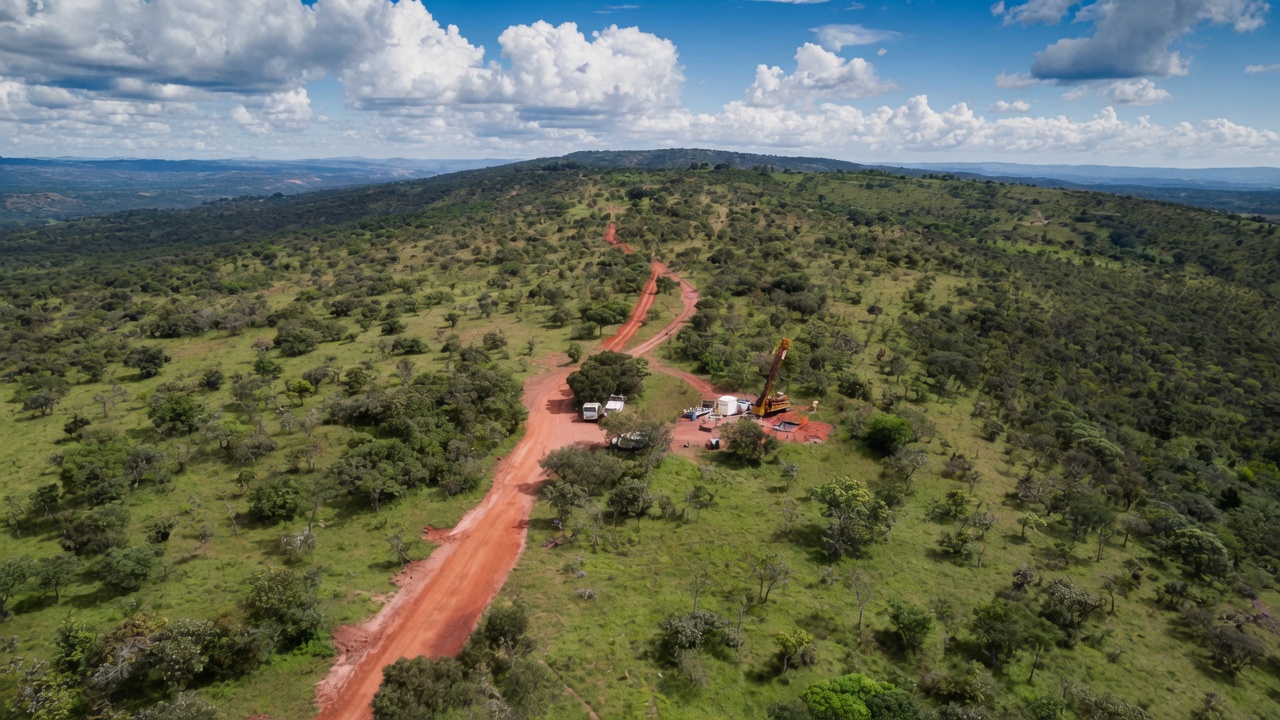
The 52,288-metre Phase 1 programme is the test of whether that framework selects targets accurately. Drilling began in August 2025 and continued to 175 holes, with economic-grade mineralisation intersected in 87% of them. Drills averaged 94 m per day each through the winter season.
President and Chief Executive Officer of Selkirk Copper Mines, M. Colin Joudrie, is precise on what the programme tested:
"It proved to me that our team's approach to targeting these lenses, these mineral lenses of which there are about 66 that we're working on within the system here, is a valid targeting methodology. We hit economic-grade mineralization in 87% of the 175 drill holes that we completed."
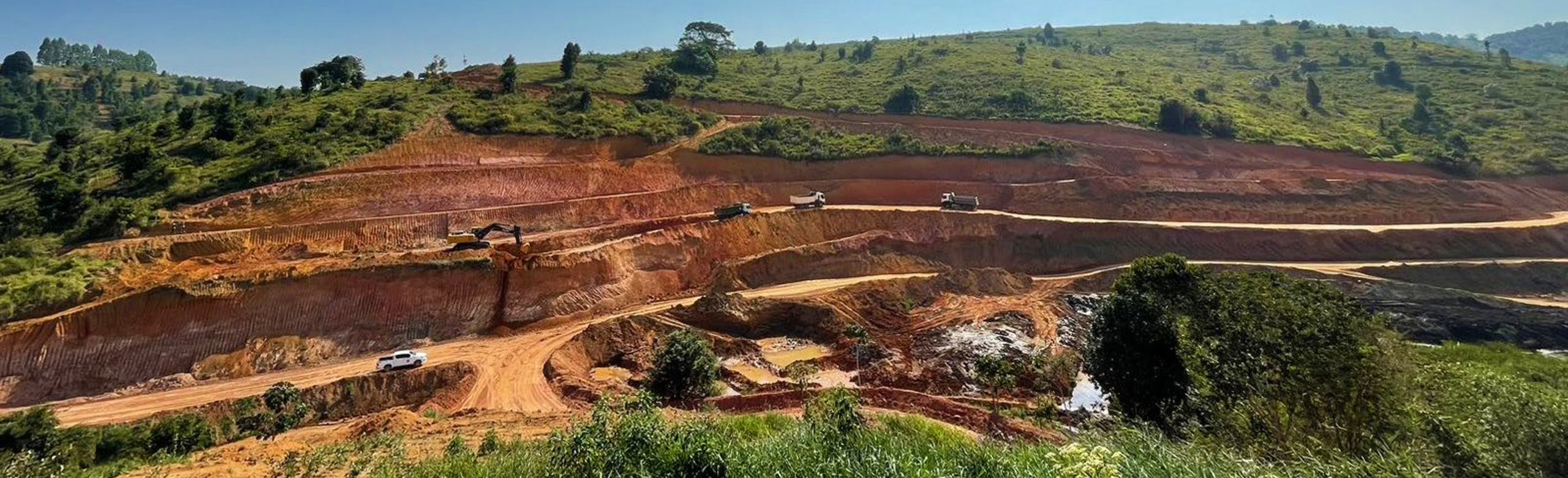
The programme was aimed at the current mine footprint, not at greenfield ground. Its objectives were to expand and extend the known zones at Minto North, Minto East, and the Copper Keel underground, together with the 118 and Ridgetop open pit zones, to upgrade the inferred and indicated resources set out in the existing resource estimate, and to test exploration targets within the mine-site footprint and immediately north of Minto North. The high-grade Minto North West Zone expanded by approximately 90%, and zones grew at Minto North, Minto East, Copper Keel, Area 118, and Ridgetop. The same conversion rate carries more weight within an existing mine footprint than it would on isolated ground, because the tonnes it adds are within reach of existing workings, road access, and grid power.
New Lenses Adjacent to Existing Development
The two discoveries Phase 1 produced are positioned where added tonnes cost the least to reach. The 117 Lens was found below Area 2 and sits close to existing underground mining infrastructure, immediately adjacent to the northern end of the Copper Keel underground, making it a low-cost addition to the restart mine plan. The 301 Lens sits in Area 118 at relatively shallow depth, immediately adjacent to the existing underground mine portal, and is accessible at approximately 100 m depth.
Position of that kind changes the development arithmetic rather than the geology. Both lenses sit at approximately 200 m below surface, close enough to development already driven that each presents an opportunity for low-cost addition to a restart mine plan. That is a statement about development distance, not about grade.
The distinction sets the limit on what counts. Drilling into a gap near historical underground workings confirmed that relatively broad mineralisation intervals occur very close to existing development, but the results at that location are marginally economic. Proximity lowers the cost of reaching a lens. It does not lower the grade the lens has to carry.
Phase 2 Infill Results & Resource Confidence
Phase 2 exists to test whether the model's outputs survive tighter drill spacing. The programme targets 50,000 m, began on May 1, 2026, and runs four drill rigs across expansion, exploration, and infill work. By June 30, 2026, it had completed 27,300 m in 104 holes, or 54% of the plan, with daily productivity averaging approximately 120 m and single-drill rates reaching up to 220 metres per day. The company puts the programme approximately 30% ahead of Phase 1's pace, and attributes the throughput to a team working with site-specific knowledge built over the preceding nine months.
The reported results cover only the first nine holes drilled in May, with assay turnaround currently running six to eight weeks. Infill drilling at the 117 Lens returned 1.35% copper equivalent over 22.7 m from a depth of 316.9 m and 0.97% copper equivalent over 9.8 m from a depth of 327.8 m, confirming grade continuity and thickness in that portion of the lens, which remains open to the north. At the 120 Lens in Minto North, a target Selkirk Copper had not previously been investigated; a 30-metre step-out returned 1.44% copper equivalent over 11.9 m, including 2.59% copper equivalent over 4.5 m, and the high-grade mineralisation remains open to the west. A separate hole into the northern part of that lens returned 0.51% copper equivalent over 37.5 m, broad but low enough in grade that immediate follow-up may not be warranted.
Joudrie frames what the infill drilling is showing inside the modelled zones:
"The internal integrity of these zones is quite high. When we're in the zone, we're getting really good replication of the resources; the zones are pretty coherent, contiguous, and then where we have had extensions, they're also holding together quite well."
Continuity inside a zone and open edges at its margins are different findings, and Phase 2 has produced both. At Minto East, three holes cut narrow high-grade intervals between approximately 70 m and 140 m depth, including 4.28% copper equivalent over 5.9 m, extending narrow high-grade zones beyond the limits of previous mining.
Exploration Runway Across the Mineralised Trend
The method has so far been applied to a fraction of the ground it could address. Only 3 km of the mineralised trend inside the licensed mine area has been explored, out of 7 km in total, and the contiguous claim block that the trend runs through covers 2,762 hectares, approximately 10% of the total land package. Selkirk Copper holds approximately 26,850 hectares of mineral tenure in the Minto-Carmacks copper belt.
Multiple targets sit along that trend, and there remains scope to grow the resource along strike to the north and at depth within the current mine footprint. Minto North is both the highest-grade zone on the property and the least-drilled, with no exploration beyond its northern boundary. A district-wide programme for 2026 is being advanced on the geoscientific understanding of recent drilling, combined with district-wide geophysics, geochemistry, and surface sampling, and supported by a LiDAR dataset acquired in the final quarter of 2025 covering approximately 2,000 square km of the belt.
Joudrie puts the runway in plain terms:
"I think if we get this first bit right and we hold the line on that, we truly can see beyond 15 years. My true thoughts here are that if we get through that, we can see closer to multi-generational mine life."
Mine life beyond 15 years depends on the method continuing to convert at something like the rate it has, across the ground it has not yet been applied to.
Open Questions on Resource Conversion
What the model has added has not yet been converted into the categories a financing decision needs. The published resource carries an effective date of April 7, 2025, and reports only indicated and inferred material, which means none of the Phase 1 or Phase 2 drilling falls within it. The update targeted for completion this year is the document intended to incorporate the 52,288 m of Phase 1 work. Mineral resources that are not mineral reserves do not have demonstrated economic viability; inferred resources carry substantial uncertainty as to their existence and their economic and legal feasibility, and no part of an inferred resource can be assumed to upgrade.
The stated objective is to establish four to five years of measured resources and to move inferred and indicated material toward the measured, indicated, and probable categories, as required by the feasibility study. That work runs alongside geotechnical drilling and geometallurgical data collection this summer, covering bedrock, soil, and groundwater around the planned open pits, underground development and stopes, the portal and decline, ventilation raises, waste rock and tailings facilities, and water diversions, plus the design work for the new horizontal access to Minto North. Geometallurgical sampling is used to characterise sulphide and partially oxidised mineralisation styles to optimise mine and mill performance.
Category conversion and economic selection are separate hurdles. A resource update can move material into higher-confidence categories, but whether a given lens enters the mine plan depends on the grade and width it carries at its position, and that is settled in mine planning and feasibility work rather than in the estimate. A discovered lens is not a scheduled lens.
Dated Milestones Ahead
The updated mineral resource estimate, originally targeted for completion in the second half of July 2026, hast not yet been released, and it is the first document in which the model's output either appears as tonnes and grade or does not. The same update and the accompanying economic assessment have also been targeted for mid-2026, incorporating the 52,288 m of Phase 1 drilling.
Phase 2 drilling is targeted to run until approximately late August, with completion also indicated for the first par of September, and assay results will be released through the summer and autumn of 2026. Those assays are expected in hand by approximately October or November and feed into the feasibility study, which is targeted to commence in the third quarter of 2026 and to be completed in mid-2027.
The Investment Thesis for Selkirk Copper Mines
- Selkirk Copper's Phase 1 drill programme intersected economic-grade mineralisation in 87% of 175 holes, using a targeting framework based on sulphide zonation, foliation development, and lens geometry.
- The two lenses that the programme discovered sit immediately beside underground workings and a portal already built on site, where the development needed to reach additional tonnes is shorter than for an isolated discovery.
- Phase 2 infill drilling has so far confirmed grade continuity and thickness inside the modelled zones while leaving high-grade edges open to the north and west.
- Only 3 kilometres of the mineralised trend inside the licensed mine area have been explored, out of 7 kilometres in total, on a claim block covering approximately 10% of a land package of roughly 26,850 hectares.
- The published resource carries an April 2025 effective date and reports indicated and inferred categories only, leaving the material that both drill phases have added outside any published estimate until the update lands.
- Two of the nine holes reported from Phase 2 returned mineralisation that is broad or well-positioned but marginally economic, setting the practical limit on what discovery converts into schedule.
The investable question at Minto is not whether the deposit contains more mineralisation, which two drill phases have now established, but whether a described and repeatable targeting method can keep converting that mineralisation into scheduled tonnes at a cost the restart can carry. The resource update due this month and the feasibility work that follows are the first points at which the method's output is measured in categories a lender recognises rather than in intercepts.
TL;DR
Selkirk Copper is extending mine life at Minto through a targeting model built on three logged geological variables, which delivered economic-grade mineralisation in 87% of 175 Phase 1 holes and produced two new lenses immediately beside existing underground development. Phase 2 has reached 27,300 m of a planned 50,000 m and is confirming continuity inside the modelled zones while leaving high-grade edges open. The method has been applied to 3 km of a 7 km mineralised trend on roughly 10% of the land package, which is the source of management's case for mine life beyond 15 years. The published resource still carries an April 2025 effective date, and the updated estimate is the first test of how much of the new drilling converts.
FAQs (AI-Generated)
Analyst's Notes





Subscribe to Our Channel









Stay Informed


