




Indonesia's Quotas Are Now Pushing Nickel's Floor to $18,000: What Junior Investors Should Monitor


Indonesia's shift from nickel oversupply to active quota management, plus grade decline and sulphur constraints, points to tightening ahead of forward price curves, Canada Nickel and Lifezone Metals executives argue.
- Indonesia controls roughly 65% of global mine supply and has cut mining quota validity from three years to one as of mid-2026, prioritizing market stability over maximizing volume.
- Grade decline and refining bottlenecks, including a 37% drop in MHP production, are tightening supply further while demand expands roughly 5% a year.
- UBS Global Research estimates the repricing implies a break-even floor of $18,400 per tonne for pyrometallurgical projects and $20,800 per tonne for hydrometallurgical projects.
- Western government-linked financing and regional price premiums are becoming a distinct source of project value alongside traditional project economics.
Why Indonesia Is No Longer Maximizing Production
Indonesia controls roughly 65% of global mine supply, so a shift in its regulatory posture carries outsized weight across the pricing curve. The shift, in force as of mid-2026, rests on four levers: mining quota (RKAB) validity cut from three years to one, with 2026 volumes reduced by roughly 100 million wet metric tonnes versus 2025; refinery permit caps limiting new intermediate processing capacity; tiered royalty increases tied to price; and a revised HPM formula that raises base prices across grades and adds byproduct credits, including cobalt. These policies remain subject to further revision, and any reversal would materially change assumptions.
Mark Selby, Chief Executive Officer of Canada Nickel, frames the quotas alongside the grade decline:
"The fact that they have capped quotas at where they were last year and with the grade decline that we're continuing to see, 8% last year, we’ll probably see another 4 or 5% this year… They've got all the levers they need to manage supply higher and manage prices higher."
Processing Bottlenecks Matter as Much as Mining
Indonesian production of mixed hydroxide precipitate (MHP), which is an intermediate nickel and cobalt product derived from low-grade ores, declined approximately 37% from its September 2025 peak through the most recent available figures, tracing back to sulfur supply, an input Indonesia imports and burns to produce sulphuric acid domestically. Four of Indonesia's top five sulfur suppliers ship through the Strait of Hormuz, meaning that regional tensions have direct consequences for downstream processing capacity. Ingo Hofmaier, Chief Financial Officer of Lifezone Metals, argues that this constraint is not yet reflected in how the market prices nickel forward.
"MHP needs a lot of sulphuric acid, and Indonesia imports sulfur, not sulphuric acid, and burns it themselves. September was MHP's 2025 peak, and according to the most recent figures, production has declined by around 37%. We expect the price could have upside risk significantly more than what's currently reflected in the forward curves, and that depends partly on the Strait of Hormuz, because four of Indonesia's top five sulfur suppliers are on the wrong side of that strait."
Stainless Steel Still Drives Nickel Consumption
Stainless steel demand is compounding at roughly 4.6% to 4.8% annually, contributing to overall nickel demand growth of approximately 5%, or close to 200,000 tonnes of incremental annual consumption. Ingo Hofmaier states directly:
"Because of Indonesia, everyone looked at supply, and now there is this shift where they manage supply… Which means it ultimately becomes a demand story again… Stainless steel is expected to grow between 4.6 and 4.8%, which are eye-watering high numbers."
Why Consensus Forecasts May Be Too Conservative
Mark Selby states nickel demand has grown at nearly 7% annually since 2019, against sell-side models he characterizes as persistently using roughly 3%:
"The reality is nickel demand has grown at nearly 7% a year since 2019. Stainless steel has grown at 5 to 6% a year for many decades, and yet analysts always end up using three percent demand growth."
Rising Price Floors Could Matter More Than Price Spikes
UBS Global Research's analysis puts Indonesian break-even costs at $18,400 per tonne for pyrometallurgical projects and $20,800 per tonne for hydrometallurgical projects under the revised HPM formula. That floor feeds into internal rate of return (IRR), and net present value (NPV), both of which improve once a higher floor is underwritten into financing models rather than treated as temporary.
Lifezone Metals' own H1 2026 results show LME nickel spot prices reaching $17,008 per tonne, a 21% recovery from late-2025 lows, which the company attributes to the same Indonesian policy shifts.
Regional Price Premiums Are Rewarding North American Supply
Friend-shoring, the concentration of supply chains among allied nations, is becoming a distinct value driver. As of mid-2026, confirmed US mechanisms supporting non-Chinese nickel supply chains include the Development Finance Corporation (DFC), the Minerals Security Partnership's FORGE initiative, and the Partnership for Global Infrastructure (PGI); the European Union's Carbon Border Adjustment Mechanism (CBAM) is separately active for steel and nickel supply chains into Europe. Mark Selby points to the regional price premium the policy environment has already created:
"We're quite lucky in terms of friend-shoring, because across a range of commodities, North American pricing is much higher than European pricing, which in turn is much higher than Asian pricing. By pursuing the next stage of downstream processing in North America, we can capture that additional premium… Western world nickel supply has shrunk by almost half since the middle of the last decade, so there's a lot of opportunity to deliver nickel into North America and Europe."
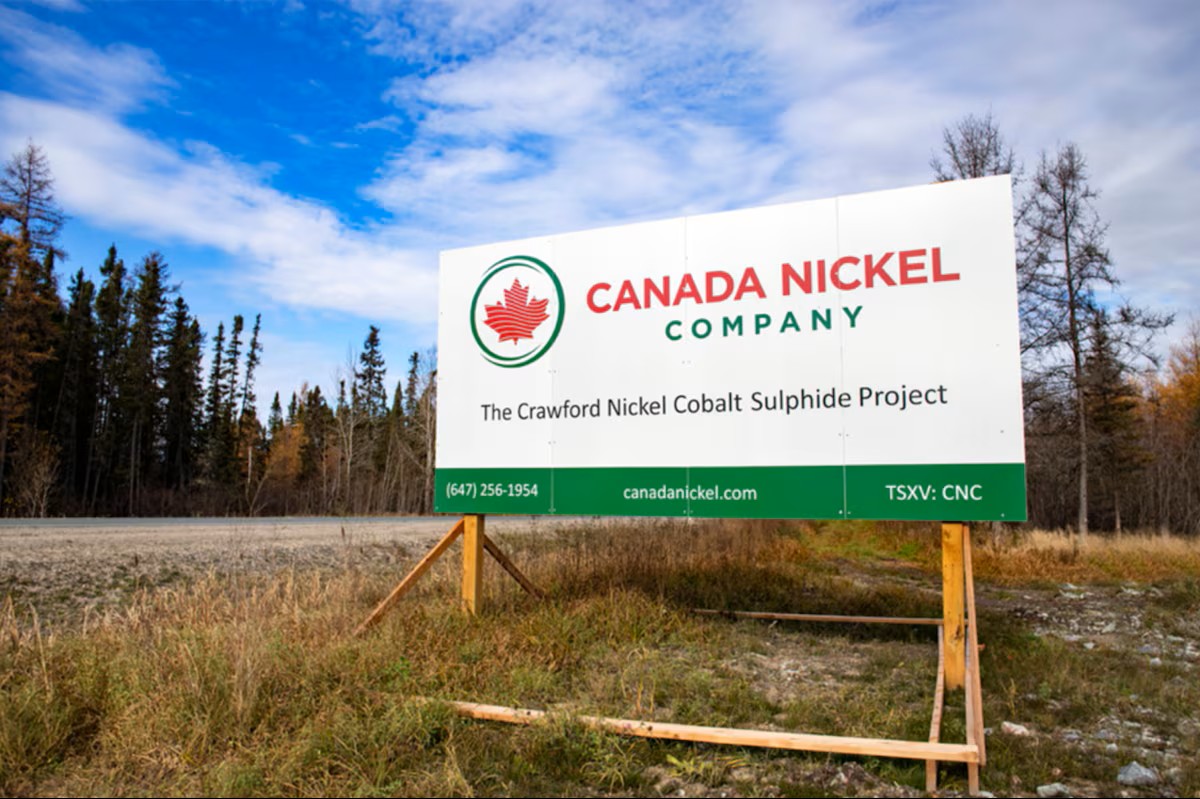
Canada Nickel's Crawford project is backed by an Export Development Canada letter of intent for $500 million as mandated lead arranger within a planned $1.5 billion debt package, alongside engagement from the US Department of Defense, Canadian Federal and provincial funding, and G7-allied agencies, including France's Infravia and Japan's JOGMEC.
Investment Risks Investors Should Continue Monitoring
Permitting delays, construction cost overruns, capital expenditure inflation, and shortfalls in metallurgical recovery remain the primary project-level risks, feeding into all-in sustaining cost (AISC) and capital intensity.
At the market level, weaker Chinese stainless steel demand, a reversal of Indonesian supply quotas, nickel substitution, rupiah movements, and interest rate changes could all weaken assumptions.
The Investment Thesis for Nickel
- Indonesia's shift toward one-year mining quotas and refinery permit caps signals a structural move toward supply discipline rather than a temporary policy adjustment.
- Declining ore grades and a 37% drop in MHP output point to a supply constraint that is likely to persist rather than resolve as quickly as prior downturns.
- The 21% recovery in LME spot pricing suggests the market is beginning to price in this floor rather than treating it as a modeling assumption alone.
- Stainless steel demand growth of 4.6% to 4.8% annually, against consensus models built on roughly 3%, indicates the deficit case may be understated in current forecasts.
- Investors should focus on project quality, jurisdiction, financing progress, and capital discipline rather than commodity exposure alone.
Commodity cycles are now increasingly shaped by government policy rather than production growth alone, and Indonesia's evolving strategy could alter long-term nickel economics regardless of near-term price volatility.
Investors should focus on durable competitive advantages, including jurisdiction, processing route, financing quality, and permitting progress, rather than short-term price movements or unconfirmed forward-looking claims. The investment case ultimately rests on whether Indonesia's supply quotas and resilient stainless steel demand continue to reinforce one another, a dynamic best tracked through the specific, dated indicators rather than through sentiment.
Analyst's Notes





Subscribe to Our Channel




.jpg)


Stay Informed


