




How Flexible Is West Red Lake Gold If Markets Tighten


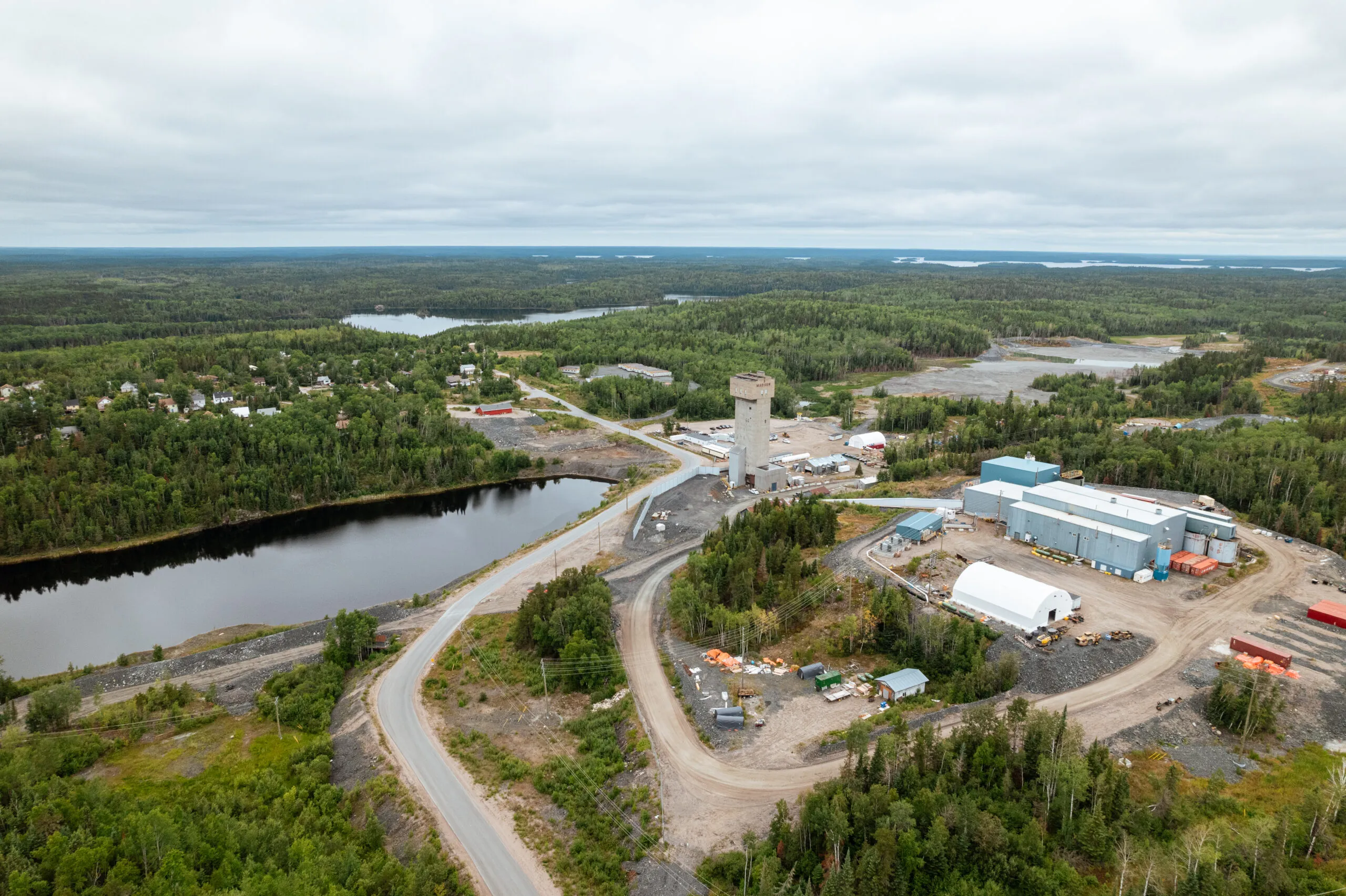
West Red Lake Gold's high-grade flexibility, shaft infrastructure, and self-funded production position the company to protect margins if gold markets or capital conditions tighten.
- Gold markets are entering a phase where capital discipline, cost control, and operational reliability matter more than headline commodity prices.
- In tighter financial conditions, mining companies with high-grade flexibility and pre-built infrastructure tend to outperform peers reliant on continuous external capital.
- West Red Lake Gold provides a case study in how technical preparation, standardized mining systems, and asset integration can reduce downside risk.
- The company's approach, definition drilling ahead of mining, shaft-based haulage targeting commissioning in Q1 2026, and centralized milling, creates multiple levers to protect margins if prices or liquidity tighten.
- The key question is not upside optionality alone, but whether operations can remain economically viable under less forgiving market conditions.
Market Tightening & Why Operational Flexibility Matters
Capital allocation in mining equities has shifted from growth-at-any-cost narratives to execution-driven returns. Rising input costs, compressed valuations, and more selective institutional funding have changed what investors reward. Companies that relied on continuous equity raises now face dilution risk and limited capital access. Free cash flow durability and margin resilience matter more than resource scale or exploration upside.
The period of easy capital that characterized 2020-2021 mining equity markets has ended due to cost inflation across labor, fuel, and consumables persisting even as liquidity conditions tightened. Stricter capital markets now penalize companies without clear paths to self-funding. Investors are prioritizing producers with demonstrated cash generation over development stories dependent on external capital.
Flexibility in mining refers to the ability to adjust production mix, scheduling, and capital deployment in response to commodity prices or funding conditions. Historical data shows that inflexible restart projects and single-asset producers have underperformed during market downturns. Operations without scheduling optionality or grade control often face binary outcomes when prices decline. The transition from optional growth to defensible production reflects recognition that downside protection now carries valuation weight.
Operational Systems as a First Line of Defense
Standardized underground mining systems reduce cost volatility and improve cash flow predictability. Continuous production loops - mucking, hauling, drilling, and blasting - operate on fixed cycles that allow for tighter cost control and fewer interruptions. Predictable mill feed and disciplined cycle timing directly influence unit costs, downtime, and reconciliation risk.
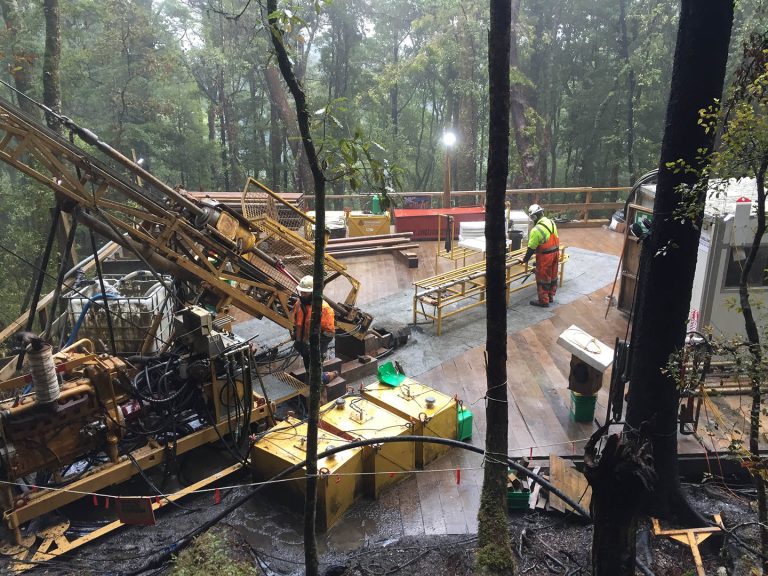
Underground operations benefit from repeatable processes that minimize variability. Standardized blasting and mucking sequences lower dilution risk by maintaining tighter control over ore boundaries. West Red Lake Gold Mines has prioritized definition drilling and measured ore blocks, dedicating 80 percent of capital raised to subsurface definition work.
Shane Williams, President and Chief Executive Officer of West Red Lake Gold, explains the company's emphasis on technical preparation:
"These are high-grade narrow vein mines, you need to drill them very tightly spaced… The majority of the money that we've raised has gone into drilling underground and understanding the model... That sequence needs to be six to eight months ahead of yourself to give you that time."
Remote mucking and blasting technologies allow operations to continue during safety-restricted windows or adverse conditions. Maintaining production during restricted periods translates directly to steadier EBITDA generation. Fewer operational interruptions reduce cash flow volatility and improve visibility into quarterly results.
High-Grade Geology as Margin Insurance
Grade directly influences operating leverage and margin resilience during commodity price downturns. High-grade operations move fewer tonnes to produce the same ounces, which lowers energy costs, trucking volumes, and processing intensity. This structural advantage compresses all-in sustaining costs and reduces sensitivity to gold price fluctuations.
High-grade producers maintain positive cash flow at lower gold prices, while marginal-grade operators face breakeven risk. West Red Lake Gold targets mill feed averaging in excess of 6 grams per tonne for Q1 2026, positioning the operation well above industry average grades.
High-grade vein continuity and visible gold presence influence recovery confidence and dilution risk. HQ core sampling and systematic wall-rock analysis improve ore boundary definition. West Red Lake Gold's focus on definition drilling before mining reflects this discipline.
Shane Williams describes the company's discovery of high-grade zones within known deposits:
"We did one stope out of this Triple 47 area and we got 9 grams going through the mill… We're now beginning to discover within these deposits the kind of jewelry box areas, and we've got into one and we're just about to get into another one from our drilling perspective. "
The 4447 zone in South Austin represents the first of these high-grade areas to enter production. Material from this zone processed in December 2025 lifted peak daily grades to 8.9 grams per tonne, serving as the predominant feed source for Q1 2026.
Infrastructure-Led Cost Control & Capital Efficiency
Existing infrastructure reduces capital intensity and improves operating leverage. Shaft haulage and centralized milling lower per-unit costs compared to ramp trucking and distributed processing facilities. These structural advantages become more valuable during tighter markets when capital availability is limited.
Shaft-based haulage systems offer lower operating costs per tonne than ramp trucking at depth. Vertical transport requires less energy and fewer vehicle hours than hauling ore up long ramps. West Red Lake Gold's shaft infrastructure is targeted for commissioning in Q1 2026, which is expected to further improve unit economics and reduce sensitivity to fuel price volatility.
Centralized processing eliminates the need for duplicate mills and tailings facilities across multiple deposits. Shared milling capacity allows for more flexible ore sourcing and scheduling. West Red Lake Gold's mill processes ore from multiple underground sources under a hub-and-spoke model, which provides optionality in production sequencing.
Shane Williams highlights the company's production efficiency relative to previous operators:
"The previous operator, Pure Gold, had an average gold production rate of around 4,000 ounces to break even. We have the luxury that the gold price is double what it was at that stage. 2,000 to 2,500 ounces a month is paying all the bills at Madsen."
Asset Integration & Scheduling Optionality
Integrated mine planning across multiple ore sources creates scheduling flexibility that single-deposit operations lack. Hub-and-spoke mining models allow operators to sequence higher-margin ore during weaker markets and defer lower-margin material during tight capital conditions. This optionality improves downside-case net present value.
Shared infrastructure reduces standalone project risk by allowing ore from multiple sources to feed a single mill. If one deposit encounters geological challenges, production can continue from other sources. West Red Lake Gold's operations draw from multiple underground zones, which distributes geological risk and improves production stability.
Accelerated ore access through shaft infrastructure shortens the timeline between development and revenue generation once commissioned. This provides optionality to sequence higher-margin ore during periods when gold prices or funding conditions weaken. West Red Lake Gold's operational flexibility allows the company to prioritize higher-grade zones during uncertain market conditions.
Technical Discipline as a Risk-Mitigation Strategy
Front-end technical investment reduces long-term dilution and execution risk. Definition drilling ahead of production creates measured and indicated resource categories that support more accurate mine plans. This approach contrasts with inferred-driven plans that often result in grade reconciliation failures.
West Red Lake Gold has invested heavily in underground drilling to convert resources and improve geological understanding before committing to production areas. This systematic approach reduces reconciliation risk and supports more predictable mill feed characteristics.
Operations that begin production without sufficient definition drilling often encounter ore boundaries that differ from geological models. Front-end drilling and test mining reduce these risks by validating geological assumptions before large-scale production.
Balance Sheet Strength & Capital Optionality
Cash runway and liquidity provide strategic optionality during market downturns. Companies with strong balance sheets can avoid forced equity issuance and prioritize value-accretive decisions over survival strategies.
West Red Lake Gold declared commercial production effective January 1, 2026. The company generated US$73 million in gold sales revenue during fiscal year 2025 and poured 20,000 ounces. In Q4 2025, the company generated US$30 million in revenue and ended the year with CAD$46 million in cash and gold receivables. Management reports the company is generating positive monthly cash flow.
Shane Williams describes the company's financial position:
"We're self-sufficient now. We're generating cash every month, that cash will be built up over the rest of this year. We don't expect any more need for cash now, it's self-generating... We are actually in free cash flow."
West Red Lake Gold's shareholder base includes approximately 30 percent institutional ownership from gold-focused investors, with major holders including APAC, Van Eck, Ruffer, and Silverspoon. Management, insiders, and advisors hold approximately 10 percent, aligning management incentives with shareholder interests.
Jurisdictional & Regulatory Context
Tier-1 jurisdictions provide infrastructure access, regulatory transparency, and permitting visibility that reduce non-geological risk. These advantages carry valuation weight during sector downturns when investors prioritize certainty over upside optionality.
Ontario offers established mining infrastructure, reliable power access, and experienced labor pools. Regulatory frameworks in established mining jurisdictions provide permitting transparency that frontier regions lack. West Red Lake Gold's location in the Red Lake mining camp provides access to established infrastructure and reduces execution risk associated with greenfield developments.
The Investment Thesis for West Red Lake Gold
- Operational predictability through standardized underground systems reduces cost volatility and improves cash flow reliability during uncertain commodity price environments.
- Grade-driven margin protection lowers all-in sustaining cost sensitivity during gold price pullbacks, providing structural downside protection.
- Infrastructure leverage from shaft commissioning and centralized milling is designed to compress operating costs and improve return on invested capital.
- Capital discipline through defined ore bodies and systematic definition drilling reduces dilution and execution risk common in restart scenarios.
- Jurisdictional safety from Tier-1 locations supports valuation resilience during sector downturns. Balance sheet strength through positive free cash flow eliminates dependence on external capital and provides optionality for value-accretive capital allocation.
- Asset integration across multiple ore sources distributes geological risk and provides scheduling flexibility unavailable to single-deposit operators.
Market tightening shifts investor focus from growth narratives to operational resilience. Flexibility across geology, infrastructure, scheduling, and capital directly influences downside protection and margin durability. West Red Lake Gold illustrates how engineered systems and disciplined planning can reshape restart risk profiles.
The case highlights a broader principle: in less forgiving markets, how a company operates matters as much as what it owns. West Red Lake Gold's operational framework, definition drilling ahead of mining, standardized production systems, shaft infrastructure targeting Q1 2026 commissioning, and high-grade ore access, provides multiple levers to protect cash flow during market stress. The company's transition to self-funded production removes reliance on external capital and positions it to allocate cash flow toward exploration, efficiency gains, or opportunistic growth. In a market where capital discipline and operational reliability now carry valuation weight, these attributes represent investable differentiation.
TL;DR
West Red Lake Gold offers a case study in operational resilience during tighter capital markets. The company declared commercial production January 1, 2026, generated US$73 million in gold sales during fiscal 2025, and reports positive monthly cash flow with CAD$46 million in cash and receivables. Key defensive attributes include high-grade ore targeting 6+ g/t mill feed, shaft infrastructure commissioning in Q1 2026, standardized underground mining systems, and hub-and-spoke milling from multiple ore sources. Definition drilling ahead of mining reduces reconciliation risk, while Tier-1 Ontario jurisdiction provides regulatory transparency. The company's transition to self-funded operations eliminates external capital dependence, providing scheduling flexibility to prioritize higher-margin ore during market stress.
FAQs (AI-Generated)
Capital markets now penalize companies without clear paths to self-funding. Flexible operations can adjust production mix, scheduling, and capital deployment in response to commodity prices, protecting margins when growth-focused peers face dilution risk.
The company targets mill feed averaging in excess of 6 grams per tonne for Q1 2026, well above industry averages. The 4447 zone in South Austin has delivered peak daily grades of 8.9 g/t.
Shaft-based haulage offers lower operating costs per tonne than ramp trucking at depth, requiring less energy and fewer vehicle hours. West Red Lake Gold's shaft is targeted for Q1 2026 commissioning.
Management reports the company is generating positive monthly cash flow following commercial production declaration. CEO Shane Williams stated the company expects no further need for external capital.
Approximately 30 percent institutional ownership includes gold-focused investors such as APAC, Van Eck, Ruffer, and Silverspoon. Management and insiders hold approximately 10 percent.
Analyst's Notes





Subscribe to Our Channel






Stay Informed






















