




PLS's Return to Dividends Signals a Lithium Cycle Turn & a Window for Near-Term Developers


PLS returns to dividends as lithium markets recover, highlighting stronger producer balance sheets and funding opportunities for near-term developers.
- PLS Group Limited reported fiscal year 2026 revenue of A$1.93 billion and declared a fully franked final dividend of 5 cents per share, representing approximately A$161 million in distributions to shareholders.
- The year was a record on production and sales: output rose 17% to 879,500 tons, and sales rose 17% to 891,600 tons, with underlying earnings before interest, taxes, depreciation and amortization (EBITDA) reaching A$1.14 billion.
- PLS strengthened its balance sheet through strong operating cash generation and an inaugural US$600 million bond offering, ending the year with A$2.29 billion in cash.
- Lithium Ionic Corp. sold its Salinas group of properties, including the Baixa Grande deposit, to a PLS subsidiary for US$37.5 million in cash while retaining a 2.0% royalty on future spodumene sales.
- With an estimated all-in sustaining cost near US$600 per ton and an offtake floor price of US$1,000 per ton, Lithium Ionic's Bandeira project illustrates the margin cushion that near-term, low-cost developers can carry into a recovering market.
The Signal: PLS Pays a Dividend Again
PLS Group (ASX: PLS), one of the world's largest hard-rock lithium producers, has just declared a fully franked final dividend as part of a record fiscal year 2026, with management describing the period as a shift from a defensive posture to renewed growth amid improving market conditions. That shift is the clearest operating evidence yet that the lithium cycle has turned.
For developers still years from cash flow, what matters is not the dividend itself but what it says about the environment they are now raising capital into. Lithium Ionic Corp.'s (TSXV: LTH | OTC: LTHCF | FSE: H3N) recent transaction with PLS is an early, concrete example of that environment already at work.
The Numbers Behind the Turn
PLS's fiscal year 2026 (FY2026) results, released August 24, 2026, describe a record year across the board. Production rose 17% to 879,500 tons, and sales rose 17% to 891,600 tons, both records. Revenue reached A$1.93 billion, and underlying earnings before interest, taxes, depreciation, and amortization (EBITDA) came in at A$1.14 billion, which PLS attributed to strong operational performance, higher realized pricing, and disciplined cost management.
The dividend underscores that strength. The board declared a fully franked final dividend of 5 cents per share, representing approximately A$161 million in distributions to shareholders. PLS also disclosed how it got there: strong operating cash generation and the completion of an inaugural US$600 million bond offering left the company with A$2.29 billion in cash at year-end.
Capital Discipline on Both Sides of the Ledger
PLS is putting the improved position to work rather than only returning it. Alongside the dividend, the company is progressing the restart of its Ngungaju processing plant and advancing studies for its P2000 and Colina growth projects, capital directed at expansion even as shareholders are paid.
That same discipline shows up on the buy side, and the message for developers is the practical one: recovering prices are already converting into real transactions and non-dilutive monetization, not just improved sentiment. PLS structured its purchase of Lithium Ionic's Salinas properties as cash upfront with deferred consideration tied to a future final investment decision (FID), not an all-in payment, a producer willing to consolidate but still pricing risk carefully.
What the Recovery Hasn't Fixed Yet
Equity markets haven't caught up. Lithium Ionic management has described commodity pricing stabilizing. At the same time, junior share prices continue to lag the underlying recovery. This gap cuts in developers' favor: it rewards those who can advance projects on cash flow and non-dilutive proceeds, not those waiting on a re-rated share price to fund construction.
The bigger risk lies upstream, in the supply chain. Refining capacity coming online, much of it in China at 5 to 10 times current consumption, is outpacing near-term spodumene supply, and industry participants see that gap widening. The next move in price could be sharp rather than gradual, a potential tailwind for developers if it coincides with a construction decision, and a reminder of residual risk if it does not.
Company Example: Lithium Ionic's Bandeira Project
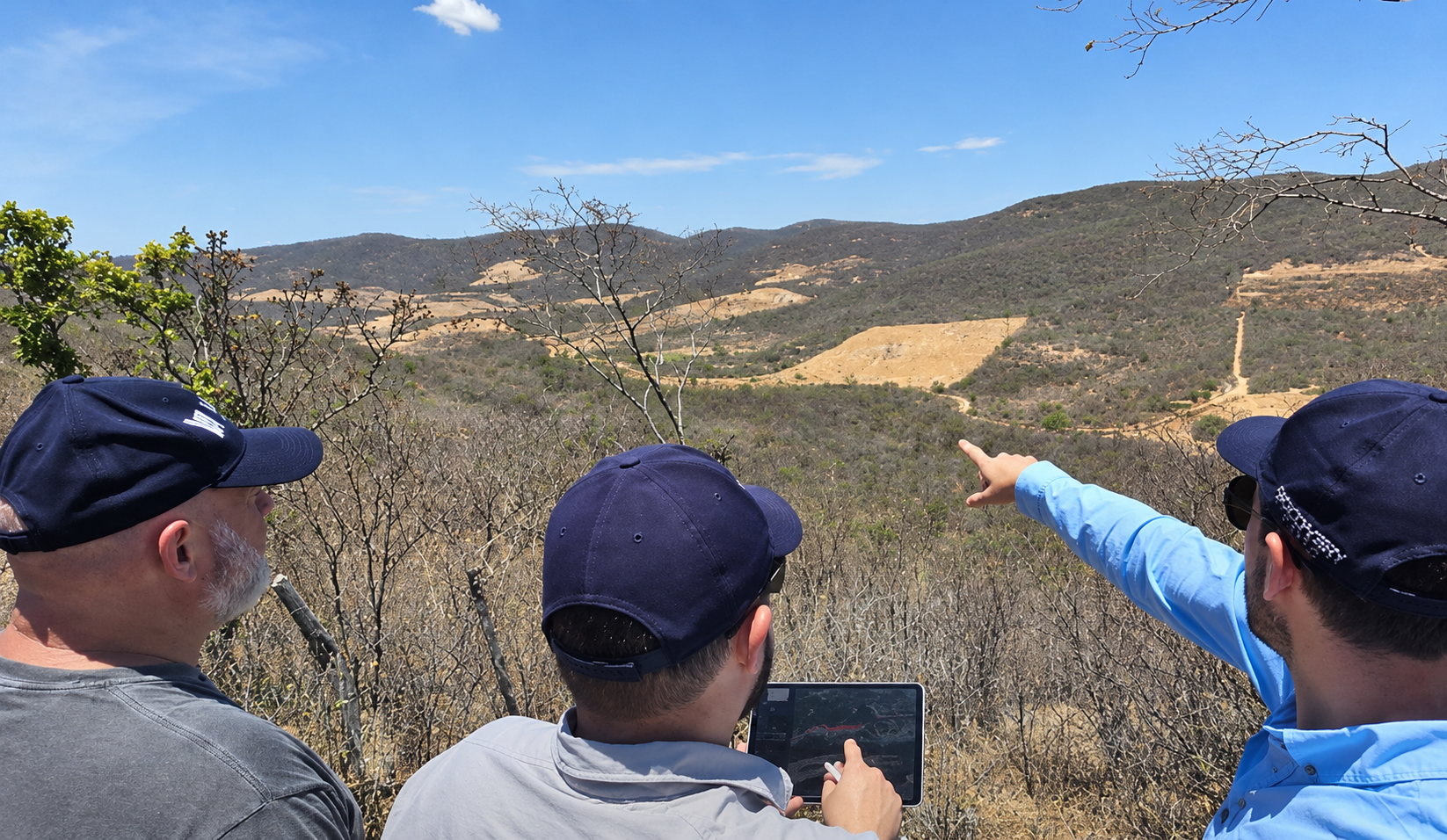
Lithium Ionic's Salinas sale shows exactly how a near-term developer turns a strengthening buyer's balance sheet into funding for its own flagship asset. The company sold its Salinas group of properties, including the Baixa Grande lithium resource in Minas Gerais, to a wholly owned PLS subsidiary for US$37.5 million in cash: US$30.0 million at closing, US$7.5 million payable on the earlier of a positive FID for PLS's adjacent Colina project or December 31, 2029. Lithium Ionic retained a 2.0% royalty on future spodumene sales from the Salinas claims, calculated free on board.
Chief Executive Officer of Lithium Ionic, Blake Hylands, framed the sale against a market that hasn't yet caught up to the commodity's recovery:
"We have this really unique time in the battery metal space, and in a lot of commodities, where pricing is there, and the equity market isn't quite there yet."
No new equity was issued. The proceeds go straight to procurement, early works, and construction readiness at Bandeira, Lithium Ionic's 100%-owned flagship project. Hylands put the project's cost position in blunt terms:
"Certainly for us as a low-cost producer, looking at $600 all-in sustaining costs, anything in the $2,000-a-ton range is significant to our project."
Pair that cost base with an offtake floor of US$1,000 per ton and a US$20 million prepayment due at FID, and Bandeira's margin holds even if pricing retreats from current levels. That is the structural advantage PLS's numbers describe, already built into one developer's project.
Regional Perspective: Brazil's Lithium Valley in a Recovering Market
China still dominates global lithium refining capacity; Europe is building conversion capacity and diversifying offtake but remains early by comparison. Brazil sits outside that dependency, with open trading relationships that give developers in its Lithium Valley flexibility in where they sell concentrate, an increasingly relevant edge as buyers look to diversify sourcing beyond a single jurisdiction.
PLS's entry into the district, first through its 2025 acquisition of Latin Resources and Colina, now through the Salinas purchase, concentrates ownership of adjacent ground under one well-capitalized operator. For Lithium Ionic, that consolidation converted directly into cash and a retained royalty rather than an extended hold on a non-core asset.
Where the Cycle Goes From Here
PLS's dividend confirms a recovery already underway. It also signals something forward-looking: a large, low-cost producer judged its cash position strong enough to fund growth, return capital to shareholders, and still have capital left for district acquisitions, all in the same period. If that allocation pattern holds across the sector, the developers best placed to convert the turn into funded construction decisions are those with a defensible cost position, contracted offtake floors, and assets attractive enough to attract non-dilutive interest from producers themselves. Lithium Ionic's Salinas sale, closing in the same window as PLS's record results, is an early test of that read-through already playing out.
FAQs (AI-Generated)
Analyst's Notes





Subscribe to Our Channel


.png)


.jpg)
Stay Informed


