




Marimaca Copper’s Engineering Discipline Aims to Reduce Build Risk & Protect Valuation


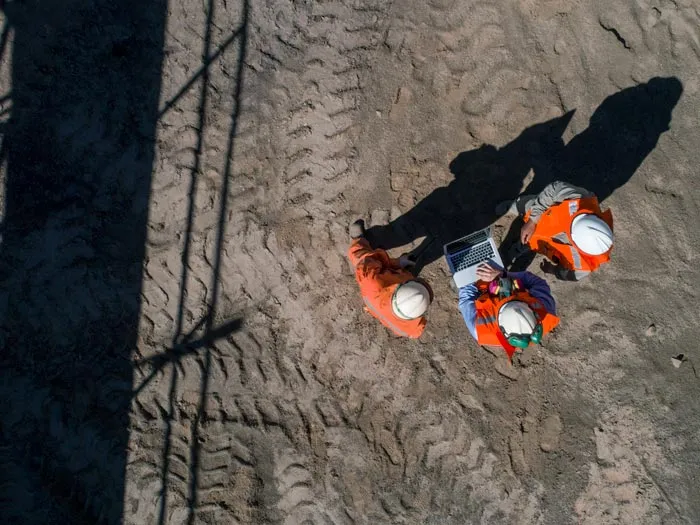
Marimaca advances engineering maturity, funding strength, and capital discipline to reduce build risk, protect valuation, and target self-funded copper growth.
- Definitive Feasibility Study (DFS) maturity and early detailed design work aim to reduce Capex and schedule variance ahead of construction.
- Sub-US$600M Capex and oversubscribed CAD$80M raise remove near-term funding pressure.
- Metallurgical testing and infill drilling improve recovery confidence and early mine-life cash flow visibility.
- Reliability-focused engineering prioritises uptime over marginal capital savings.
- Conservative financing strategy targets minimal dilution and a path to self-funded growth at approximately 50,000 tonnes per annum
Engineering Maturity & Risk Management as Investor Signals
The period between a Definitive Feasibility Study (DFS) and first production is typically where development-stage copper projects either protect or erode value, as cost overruns, design changes, and execution delays can compress Net Present Values (NPV) and trigger dilutive equity raises that weaken Internal Rate of Returns (IRR) and enterprise valuation. For first-time builders like Marimaca Copper, these risks are heightened due to potential gaps in construction experience and organizational alignment. Investors should therefore focus on how the company manages build-phase execution risk. Marimaca is addressing these challenges through detailed engineering, metallurgical testing, capital discipline, and a culture of operational transparency, supported by a sub-US$600 million Capex estimate and an oversubscribed CAD$80 million financing that removes near-term funding pressure.
President and Chief Executive Officer of Marimaca Copper, Hayden Locke, stated:
“I am very focused on delivering this and getting it right the first time rather than rushing it. That may be frustrating for some people, but I think in the long run that will pay dividends in terms of us not blowing up our capital structure by getting it wrong the first time.”
Primary Risk Categories at the Pre-Construction Stage
Technical & Construction Execution Risks
Marimaca's oxide project carries typical heap leach processing risk, particularly metallurgical variability across ore types and the operational transition from oxide material, amenable to lower-cost solvent extraction-electrowinning (SX-EW), to sulphide material, which would require higher-capital flotation or alternative processing routes. DFS work has firmed up recovery and cost assumptions through site-specific metallurgical testing, moving parameters toward project-specific validation, though the Pampa Medina sulphide target remains at an early stage and cannot yet be economically assessed without substantial additional drilling. From an execution standpoint, first-time builders lack the established procurement, contractor management, cost control, and escalation protocols refined by multi-cycle developers and projects entering construction with insufficient detailed engineering have historically shown higher Capex variance and schedule risk.
Financial & Organizational Risks
A sub-US$600 million Chilean copper development is financeable in a Tier 1 jurisdiction, but the mix of senior debt, streams, offtake-linked facilities, and equity directly affects dilution, cash flow allocation, and valuation sensitivity, particularly if inflation extends timelines and increases funding requirements. Organizationally, misalignment between site realities and executive reporting can create information asymmetries that lead to abrupt market repricing, while cultural tendencies to suppress negative operational updates, common in hierarchical project environments, represent a material but non-quantifiable risk that experienced mining investors incorporate into build-phase discount rates.
Engineering Discipline & Operational Reliability
DFS Maturity & High-Risk Design Validation
Marimaca’s completed DFS establishes the technical baseline for financing and detailed engineering after a multi-year refinement of resource, metallurgical, and capital inputs, while the company is advancing detailed design on high-risk components ahead of the broader program to validate assumptions early and reduce execution-path uncertainty; this reflects a deliberate shift toward higher engineering maturity before procurement and construction commitments.
Locke noted:
“Some companies have the DNA and the culture and the track record to be able to build from a much lower level of engineering. We're not like that. We're going to take our time and increase the level of maturity of the project to make sure that we minimize the level of variations that come through as we go into the execution phase.”
Capex Discipline, Metallurgy, & Early Mine-Life Confidence
The company applies a reliability filter to Capex optimization, retaining redundancy in critical systems, such as US$2-3 million for backup pumps, to avoid single-point failures that could halt processing and erode NPV, prioritizing operational uptime over marginal capital savings; in parallel, ongoing metallurgical test work is tightening acid consumption, leach kinetics, and recovery assumptions that drive Opex, while grade-control infill drilling for the first three to five years of production increases resource confidence during the highest NPV-weighted period and supports debt service predictability.
Locke summarized this approach:
“If you have one pump breakdown and then it shuts down your whole processing plant, well, that's a disastrous decision to save two or three million dollars. That's the kind of decision that we don't want.”
Protecting Capital Structure & Minimizing Dilution
Cash Runway & Engineering Optionality
Marimaca’s oversubscribed CAD$80 million equity raise removes near- to medium-term financing pressure, funding detailed engineering, metallurgical programs, and pre-construction work without reliance on market timing, which in turn supports higher-quality technical validation and reduces the risk of rushed assumptions that often lead to build-phase cost overruns.
Locke stated:
“We're very comfortable with our cash position. We don't have to think about raising money for the short to medium term.”
Financing Strategy & Path to Self-Funded Growth
For a sub-US$600 million Chilean copper development, Marimaca is assessing debt, streams, offtake-linked facilities, and strategic partnerships with a stated objective of minimizing dilution and preserving per-share value during ramp-up, while targeting approximately 50,000 tonnes per year of production as the threshold at which exploration and growth can be funded from operating cash flow, reducing future equity dependence and limiting exposure to capital market cycles.
Leadership Discipline & Operational Transparency
Marimaca is building its execution team with a specific focus on capital discipline, construction experience, and cultural alignment, recognizing that project failures often stem from behavioral biases in cost and schedule reporting rather than technical gaps; management has highlighted the difficulty of sourcing leaders who combine technical capability with conservative financial decision-making and careful capital allocation.
Leadership presence during construction is a core operational commitment. Locke emphasized:
"It's also going to be down to me and the senior leadership team being on the ground and actually at site. We're not going to do this remotely."
The company is also embedding a reporting culture that rewards rapid problem escalation and penalizes information suppression, while candidly acknowledging its status as a first-time builder relative to established developers such as First Quantum and using that constraint to justify a more conservative, engineering-maturity-first execution model rather than attempting to replicate the fast-track strategies of more experienced operators.
Locke stated:
“Especially in Chile, the culture is one where people typically don't like to deliver bad news. And so we're trying to create a culture where you don't get in trouble for delivering bad news. It'll be much worse if you don't deliver bad news.”
Risks Still to Be Resolved
The sub-US$600 million Capex estimate is time-sensitive, with inflation exposure increasing if construction is delayed, and while Chile has historically seen more moderate mining cost escalation than some jurisdictions, any schedule extension raises funding requirements; additionally, first-time builder execution risk cannot be fully eliminated, as planning, monitoring systems, and cultural controls reduce but do not remove the likelihood of build-phase adjustments. The end-2026 construction-readiness target is described by the company as ambitious, with limited schedule contingency, meaning delays in permitting, engineering, or financing could defer a construction decision into 2027 and shift both capital intensity and first-cash-flow timing.
The Pampa Medina sulphide target offers longer-term resource upside but remains at an early delineation stage requiring approximately 200,000-300,000 metres of drilling before a resource suitable for economic assessment can be defined, leaving its processing route, capital intensity, and valuation contribution unresolved; as such, it should be treated as exploration optionality rather than a near-term driver of project economics.
The Investment Thesis for Marimaca Copper
- Higher engineering maturity, including early detailed design on high-risk components, supports Capex credibility and reduces build-phase cost and schedule variance.
- An oversubscribed CAD$80 million financing removes near-term funding pressure, enabling technical validation and a dilution-minimizing project finance structure.
- Metallurgical testing and early mine-life infill drilling improve recovery assumptions, Opex visibility, and debt service predictability during the highest NPV-weighted years.
- A reliability-focused engineering philosophy and capital-discipline leadership model address operational and organizational risks typical of first-time builds.
- Residual risks, Capex inflation sensitivity, limited schedule contingency to end-2026 readiness, first-time builder learning curve, and Pampa Medina sulphide uncertainty remain identifiable within a risk-adjusted valuation framework.
- A path to self-funded growth at approximately 50,000 tonnes per year reduces long-term equity dilution and dependence on capital markets.
Ultimately, the transition from feasibility to construction is where valuation credibility is either reinforced or impaired. In this context, execution quality rather than resource scale becomes the dominant determinant of risk-adjusted returns. If management delivers on its engineering-first approach and maintains capital discipline through the build phase, the company has the potential to enter production with both operational momentum and balance sheet integrity intact, strengthening its standing within the copper development peer group.
TL;DR
Marimaca is prioritising engineering maturity, metallurgical validation, and balance sheet strength to reduce the typical value erosion seen between DFS and construction. With a sub-US$600M Capex, fresh funding, and a conservative, reliability-first build strategy, the company is positioning to minimise dilution, improve early cash flow certainty, and protect valuation, while acknowledging residual first-time builder and sulphide optionality risks.
FAQs (AI-Generated)
It reduces cost overruns and schedule delays, which protects NPV, IRR, and limits the need for dilutive equity during construction.
The oversubscribed CAD$80M raised funds for detailed engineering and pre-construction work, removing pressure to raise capital on unfavourable terms.
It places the project within a financeable range for debt and alternative funding structures, improving valuation and reducing equity dilution risk.
These programs improve recovery assumptions, operating cost visibility, and confidence in early cash flows that support debt service.
First-time builder execution risk, inflation sensitivity, tight construction timelines, and the still-early Pampa Medina sulphide opportunity remain key uncertainties.
Analyst's Notes





Subscribe to Our Channel





Stay Informed


