




Marimaca Copper: Pampa Medina Discovery Opens Growth Path


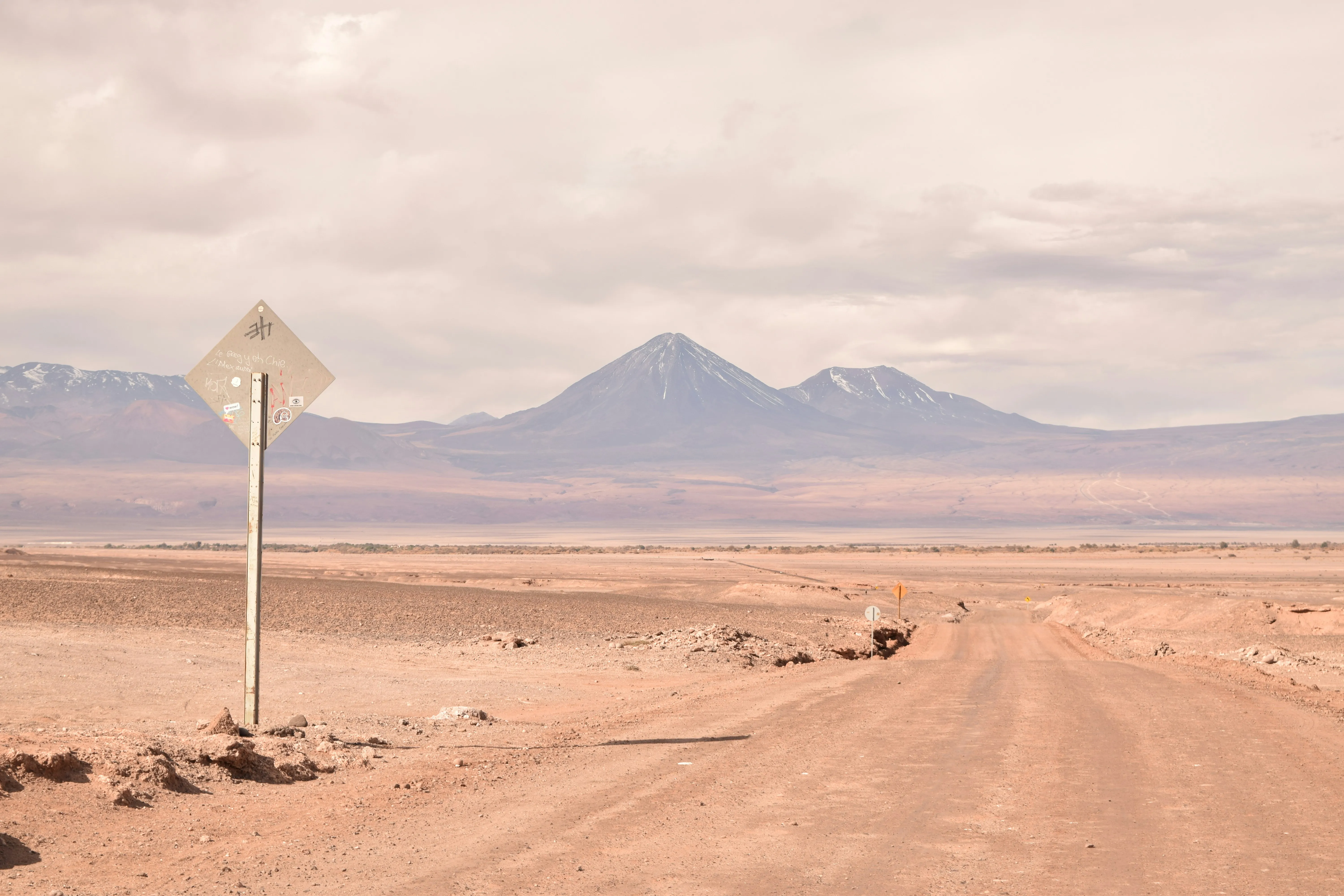
Marimaca Copper's Pampa Medina drilling intersects 162m at 0.61% Cu, extending oxide footprint 800m northeast while deep sulphide results are pending.
- Scout drilling at Pampa Medina intersected significant oxide extensions 800m from the historical mineralized footprint, with hole SMRD-30 delivering 162m at 0.61% copper from 220m depth, including high-grade intervals of 12m at 2.02% copper.
- The company is reevaluating the scope of its Pampa Oxide Preliminary Economic Assessment to capture a potentially larger oxide opportunity that could complement and extend the mine life of the existing Marimaca Oxide Deposit.
- Four deep sulphide exploration holes targeting high-grade bornite-chalcopyrite mineralization are underway with assays pending, representing potential for substantial resource growth beyond the oxide envelope.
- Copper prices retreated to $5.78 per pound on February 16, 2026, after reaching record highs near $6.30 in January, with institutional forecasts projecting recovery to $12,500 per ton by Q2 2026 amid supply deficits.
- ICP analysis is underway to assess potential silver credits from Pampa Medina mineralization, following the model of nearby Chilean manto deposits that generate significant by-product revenue.
Copper markets entered February 2026 following a sharp correction from record highs, with prices currently trading around $5.78 per pound after retreating from January's peak near $6.30 per pound, as of February 16, 2026. The metal reached a historic high of $13,238 per ton on the London Metal Exchange in January before pulling back amid weakening near-term Chinese demand ahead of Lunar New Year holidays.
Technical analysts at Economies.com project continued bearish corrective pressure, with key support identified at $5.51 per pound and resistance at $5.97 per pound. Trading Economics reports copper held near $5.90 per pound through mid-February following a week of extreme volatility, as investors balanced persistent supply tightness against signs of weakening demand in top consumer China.
Despite near-term headwinds, institutional forecasts for 2026 remain constructive. J.P. Morgan Global Research projects a refined copper deficit of 330,000 tons in 2026, with Q2 prices reaching $12,500 per ton and a full-year average of $12,075 per ton. Citigroup sees copper potentially exceeding $13,000 per ton and approaching $15,000 per ton if supply shortages and low inventories persist. Goldman Sachs Research estimates the copper market recorded a 600,000-ton surplus in 2025 but forecasts a much smaller surplus of 160,000 to 300,000 tons for 2026.
The Marimaca Story: Building a Tier-One Copper Developer
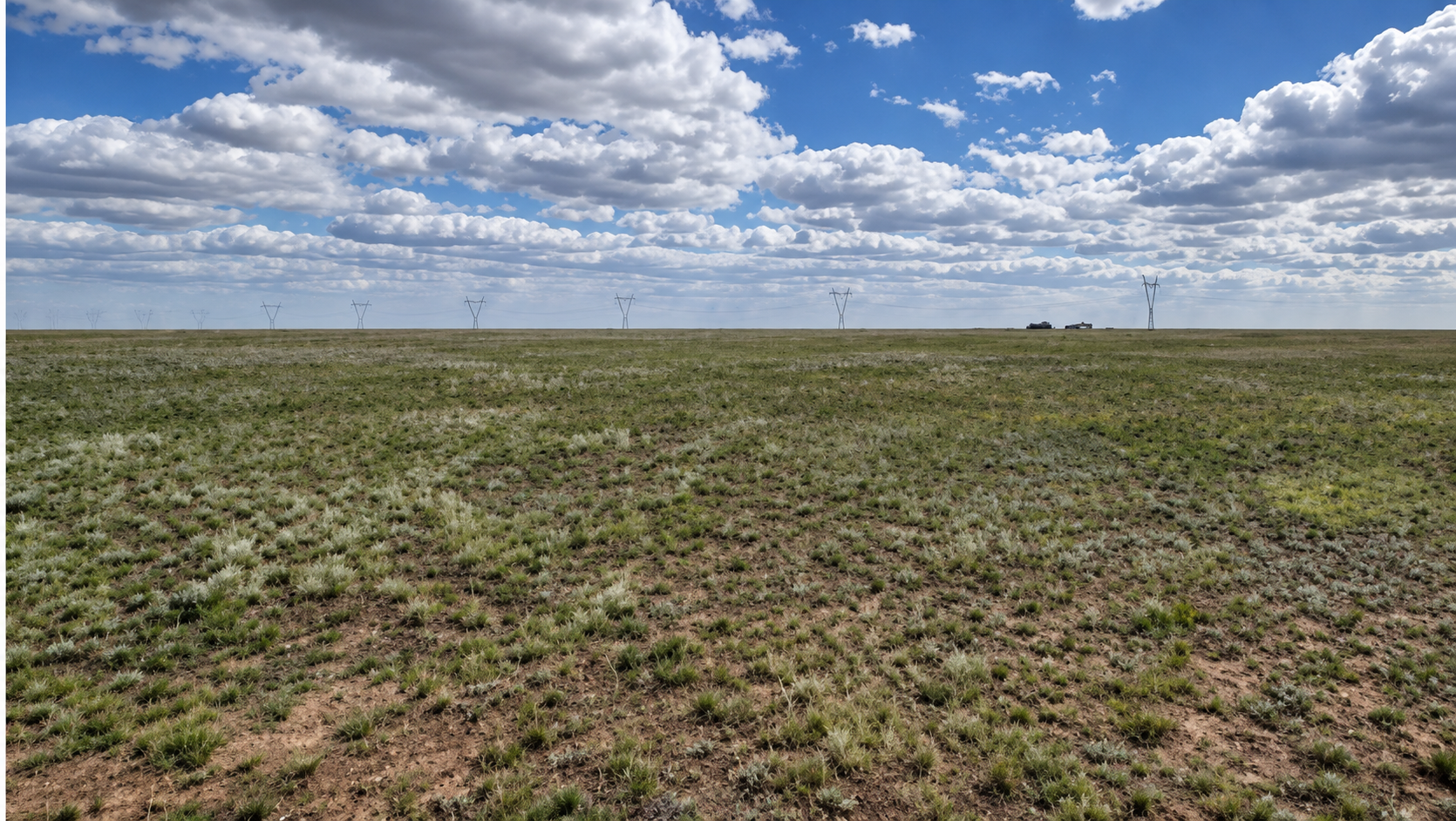
Marimaca Copper (TSX: MARI, ASX: MC2) is advancing two copper deposits in Chile's prolific Atacama Desert copper belt. The company's flagship Marimaca Oxide Deposit sits in an established mining district with excellent infrastructure access, while the nearby Pampa Medina deposit represents a significant growth opportunity located 28 kilometers to the east in a flat pampa valley at low elevation.
The company consolidated the Pampa Medina project area and surrounding land packages in 2024, acquiring approximately 14,500 hectares through a combination of wholly owned concessions and option agreements. This consolidation enabled Marimaca to reinterpret historical geological data and develop an updated model that has proven successful in the Phase II drilling campaign.
CEO Hayden Locke recently outlined the company's flagship project economics, stating the Marimaca Oxide Deposit:
"Delivered a 50,000 ton a year nominal capacity for sub $600 million US. So less than $12,000 a ton capital intensity which on a comparative basis is industry leading."
The project features life of mine all-in sustaining costs just north of $2 a pound. Locked noted:
"We're right on the threshold of the first quartile and the second quartile. So when you combine industry leading capital cost with pretty competitive operating costs, we're among the best return on invested capital metrics of copper projects."
Marimaca's technical team, led by Vice President of Exploration Sergio Rivera, brings over 40 years of experience in Chilean manto-style copper deposits. This expertise proved critical in recognizing the exploration potential that previous operators missed at Pampa Medina.
Discovery Drilling Expands the Oxide Opportunity
The Phase II drilling program at Pampa Medina delivered a significant discovery in the northeast sector, approximately 800 meters from the historical oxide mineralization footprint. Hole SMRD-30 intersected 162 meters of 0.61% total copper from 220 meters depth, including 36 meters of 1.04% copper from 228 meters and a high-grade core of 12 meters at 2.02% copper from 242 meters. An additional deeper interval returned 10 meters of 1.55% copper from 372 meters.
Adjacent hole SMR-29 confirmed the extension with 116 meters of 0.51% copper from 204 meters, including 24 meters of 1.62% copper from 296 meters and a high-grade section of 16 meters at 2.13% copper from 298 meters. These results demonstrate continuity of mineralization in an area previously considered low potential due to post-mineral uplifting. As Sergio Rivera, VP of Exploration stated,
"The previous interpretation of the north-east areas of Pampa Medina indicated low potential for mineralization given significant uplifting of the sedimentary sequences to the east, However, holes SMR-29 and SMRD-30 demonstrate that uplifting may be localized in smaller fault blocks, leaving intact mineralized sequence potential to the north-east."
The oxide mineralization consists primarily of atacamite, chrysocolla, and both secondary and primary chalcocite. These copper oxide minerals are amenable to low-cost heap leach processing, the same method planned for the nearby Marimaca Oxide Deposit. CEO Locke emphasized that
"Pampa Medina oxide project is both higher grade and higher acid solubility. So, it's just a really nice project."
The continuity of similar mineralization styles between the two deposits suggests potential for operational synergies and combined development scenarios that could substantially improve project economics.
High-Grade Sulphide Targets Await Results
While oxide discoveries generate immediate value through their processing simplicity, the deep sulphide potential at Pampa Medina could represent the larger long-term prize. Four deep exploration holes are currently underway targeting extensions of high-grade bornite-chalcopyrite mineralization in the host sediments beneath the oxide zone.
The drilling targets section N7440800, where high-grade sulphide mineralization has been identified in shallower drilling. Bornite, a copper iron sulfide mineral with a copper content of approximately 63%, represents some of the richest copper mineralization in manto-type deposits. When combined with chalcopyrite, these sulphide assemblages can generate significantly higher copper grades than the oxide zones above. Rivera commented,
"In the west, our deep sulphide exploration in the high-grade section N7440800 is progressing well. We are targeting the deep extensions of high-grade bornite-chalcopyrite dominant mineralization in the host sediments and are looking forward to updating the market accordingly."
The company expects to receive assay results from holes SWRD-01, SWRD-02, SWRD-03, and SMRD-33 in the coming weeks. These results will be critical in defining the scale and grade of the primary sulphide mineralization and could substantially increase the resource potential of Pampa Medina beyond the oxide envelope.
The Path to District-Scale Production
The Pampa Medina discovery positions Marimaca to potentially transform from a single-asset oxide developer into a district-scale copper producer with both near-term oxide production and longer-term sulphide potential. This diversification reduces project risk and extends the potential mine life well beyond initial oxide operations. CEO Locke outlined the scalability of the company's infrastructure, noting that existing water pipeline capacity could support expansion.
"The water pipeline could probably we could go another 60, 50 to 60% in terms of our water flow. So yeah, we can go to 75,000 tons, probably even 80,000 tons," Locke stated. When asked about ultimate production potential, he projected that "70 to 80,000 tons for 20 years doesn't look too bad."
A larger combined oxide resource could support increased production rates, improved economics through scale, and extended mine life. The proximity of Pampa Medina to the Marimaca Oxide Deposit, just 28 kilometers apart in flat Pampa terrain, suggests potential for shared infrastructure and reduced capital intensity compared to standalone development scenarios.
The company is also conducting ICP analysis on the 2025 Pampa Medina sample database to test for silver mineralization. Silver credits are common in Chilean coastal cordillera manto deposits, including nearby operations like Cachorro (Antofagasta Minerals) and Mantos Blancos (Capstone). Even modest silver grades can generate meaningful by-product revenue that improves project economics.
Location Advantages in a Proven Mining District
Pampa Medina's location in the Atacama Desert provides several operational advantages. The flat pampa valley terrain at low elevation enables year-round drilling and future mining operations without the challenges of high-altitude work or steep topography. The region benefits from established infrastructure including power transmission, roads, and a skilled mining workforce.
The Atacama Desert's extreme aridity, while challenging for water supply, provides ideal conditions for heap leach operations with minimal precipitation interference. The region's proven track record hosting world-class copper deposits reduces exploration and permitting risk compared to frontier jurisdictions.
Chile's established mining code and regulatory framework provide clarity for advancing projects through development. Locke noted an important fiscal advantage, explaining that
"there's also the overlay of the fiscal regime in Chile where 50,000 tons or less you fall under the old fiscal regime. So it's less onerous than the new fiscal regime for larger mines."
This tax structure consideration factors into the company's strategic planning for optimal production levels.
The Investment Thesis for Copper Developers
- Consider accumulation of quality copper developers when prices correct below $5.60 per pound, targeting developers with near-term production potential in established jurisdictions.
- Prioritize companies with oxide deposits in water-scarce regions that can utilize heap leach processing, avoiding the higher capital and water requirements of sulphide concentrator operations.
- Evaluate developers advancing multiple deposits within a single district for potential infrastructure sharing and lower capital intensity through shared facilities and sequential development.
- Monitor technical catalysts including resource updates, metallurgical test results, and economic studies that can drive rerating independent of copper price movements.
- Assess management teams' track record in deposit discovery and development execution, as technical capability often matters more than asset size for junior developers.
- Diversify copper exposure across development stages, balancing near-term producers with earlier-stage developers that offer greater leverage to copper price appreciation.
Marimaca Copper's Phase II drilling at Pampa Medina delivered results that materially expand the company's copper footprint and validate the technical team's reinterpretation of the district geology. The 800-meter northeast extension of oxide mineralization opens new areas for resource growth, while pending deep sulphide results could define a substantial primary copper target beneath the oxide blanket.
For investors, the company represents exposure to near-term oxide production potential at the flagship Marimaca deposit combined with significant exploration upside at Pampa Medina. The proximity of these deposits and similar mineralization styles suggest potential for integrated development that could generate operational synergies and improved economics compared to standalone operations. With industryleading capital intensity below $12,000 per ton and all-in sustaining costs just above $2 per pound, the flagship project ranks among the most attractive copper development opportunities globally.
Current copper market weakness creates a strategic entry opportunity for investors willing to look through near-term price volatility to the fundamental supply-demand dynamics supporting higher copper prices in the medium term. As global electrification and renewable energy infrastructure drive copper demand growth while mine supply faces depletion and permitting challenges, developers with quality assets in established mining jurisdictions are positioned to benefit from the next price cycle.
The pending deep sulphide results and ongoing ICP analysis for silver credits represent near-term catalysts that could drive further rerating of Marimaca's valuation. With the company targeting Q4 2026 for construction readiness and final investment decision, investors have clear visibility on value inflection points. Management's conservative approach to capital structure and focus on financeable project scale demonstrates disciplined execution that should appeal to risk-conscious investors seeking exposure to copper's structural growth story.
TL;DR
Marimaca Copper's Pampa Medina drilling intersected 162 meters at 0.61% copper 800 meters beyond the known oxide footprint, with high-grade intervals reaching 2.02% copper. Four deep holes targeting sulphide extensions are underway with assays pending. The flagship Marimaca Oxide Deposit features industryleading capital intensity below $12,000 per ton and production costs just above $2 per pound, generating 30%+ IRRs at $4.30 copper and 40%+ at $5.00 copper. The company targets Q4 2026 for construction readiness, with infrastructure capable of supporting 75,000-80,000 tons annual production over 20 years. Near-term copper price weakness to $5.51 support creates a tactical entry point for investors in quality developers with district-scale potential in Chile's prolific Atacama copper belt.
FAQ's (AI-Generated)
The 800-meter northeast extension demonstrates substantial growth potential beyond the historical oxide footprint while deep sulphide drilling could define a large primary copper target beneath the oxide zone.
Near-term price weakness to $5.51 creates an attractive entry point as the company advances projects during lower cost conditions while maintaining exposure to copper's structural bull case from electrification trends.
The 28-kilometer distance in flat terrain and similar oxide mineralization styles suggest opportunities for shared infrastructure, combined processing facilities, and reduced capital intensity compared to standalone development.
Assay results from the four deep exploration holes (SWRD-01, SWRD-02, SWRD-03, and SMRD-33) targeting high-grade bornite-chalcopyrite mineralization are expected in the coming weeks.
ICP analysis underway could identify silver mineralization similar to nearby Chilean manto deposits where silver by-product revenue significantly improves project economics, particularly in higher-grade sulphide zones.
Analyst's Notes





Subscribe to Our Channel




Stay Informed


