




Americas Gold & Silver and US Antimony Come Together to Build US Critical Mineral Hub


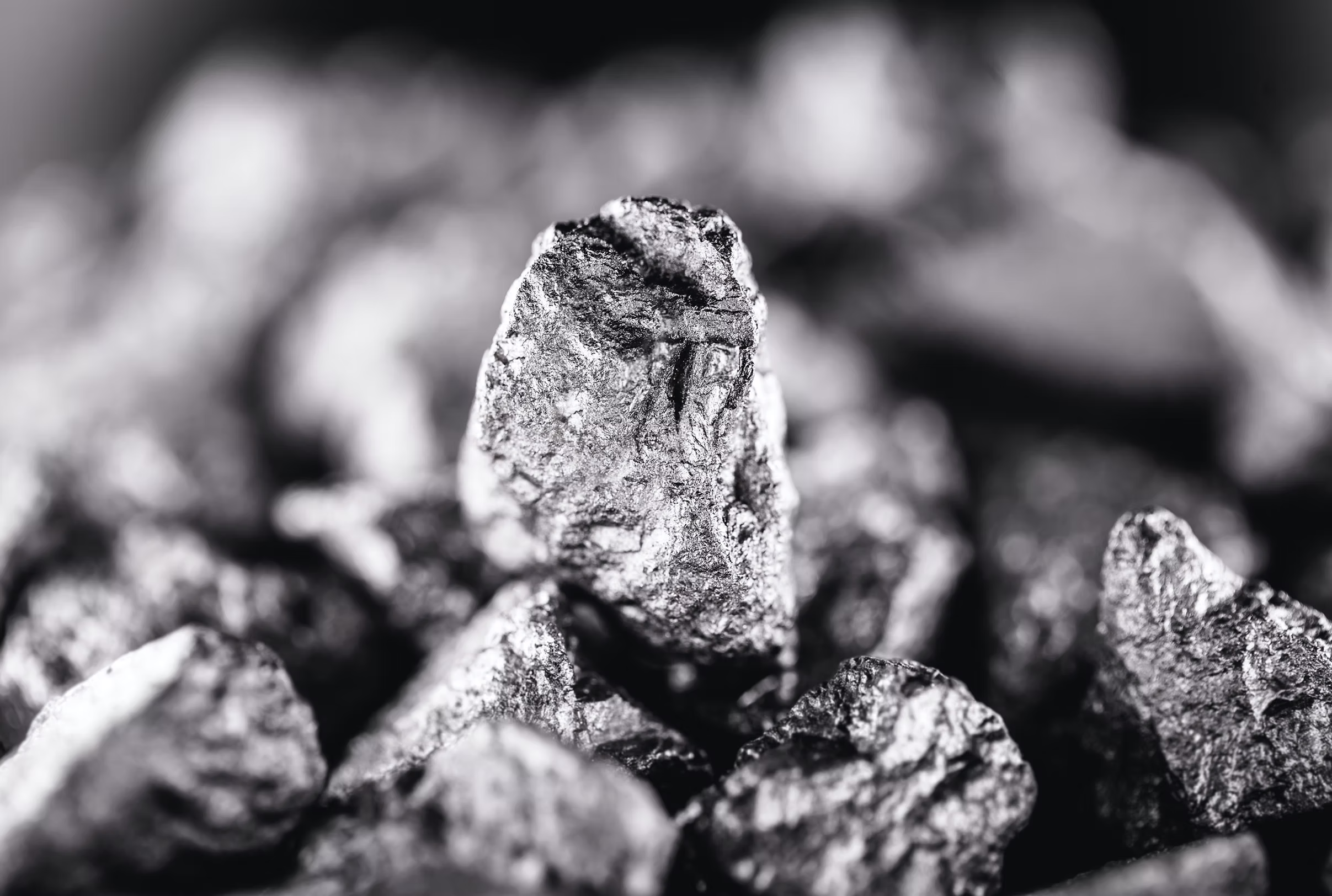
Americas Gold and Silver signs JV with US Antimony to build Idaho processing plant, unlocking critical mineral value and full antimony price exposure.
- Americas Gold and Silver has signed a definitive joint venture agreement with US Antimony to construct an antimony processing plant at the Galena Complex in Idaho’s Silver Valley, with Americas holding a 51% ownership stake and US Antimony holding 49%.
- The JV is designed to capture full market value for antimony production rather than the discounted prices Americas currently receives under its existing offtake agreement, with CEO Paul Huet estimating $50-$70 million in value currently being left on the table over the next two years at current prices.
- US Antimony contributes its processing technology, existing Department of War supply agreements reportedly worth $245 million, and established government relationships, while Americas provides the feed material and the permitted site adjacent to its existing mill.
- The facility is estimated to cost approximately $50 million and take around 18 months to construct, with both companies having submitted a joint white paper to the federal government seeking funding support under the $12 billion Project Vault critical minerals stockpiling initiative.
- Americas produced 561,000 pounds of antimony contained in concentrate from the Galena Complex in 2025, with production expected to grow as the company transitions toward mining high-grade silver-copper-antimony tetrahedrite ore and brings the recently acquired Crescent Mine into the production portfolio.
A New Antimony Partnership
Americas Gold & Silver Corporation announced on February 10, 2026, that it has entered into a definitive agreement with United States Antimony to form a joint venture aimed at constructing and operating an antimony processing facility in Idaho’s Silver Valley. The deal positions Americas to capture full market value for its antimony production, a critical mineral by-product of its silver mining operations at the Galena Complex that has historically been sold at a fraction of prevailing market prices.
Americas G&S Chairman and CEO Paul Huet explained the strategic rationale behind the partnership and the speed with which it came together:
“We managed to structure this in less than 30 days. That’s aggressive. That’s two teams that really quickly said, okay, look, we can do this together. And together it truly is one plus one equals three.”
The JV is structured as a separate entity with Americas holding 51% and US Antimony holding 49%. It will be governed by a six-member management committee, with three representatives from each company. Americas chairs the committee as majority owner.
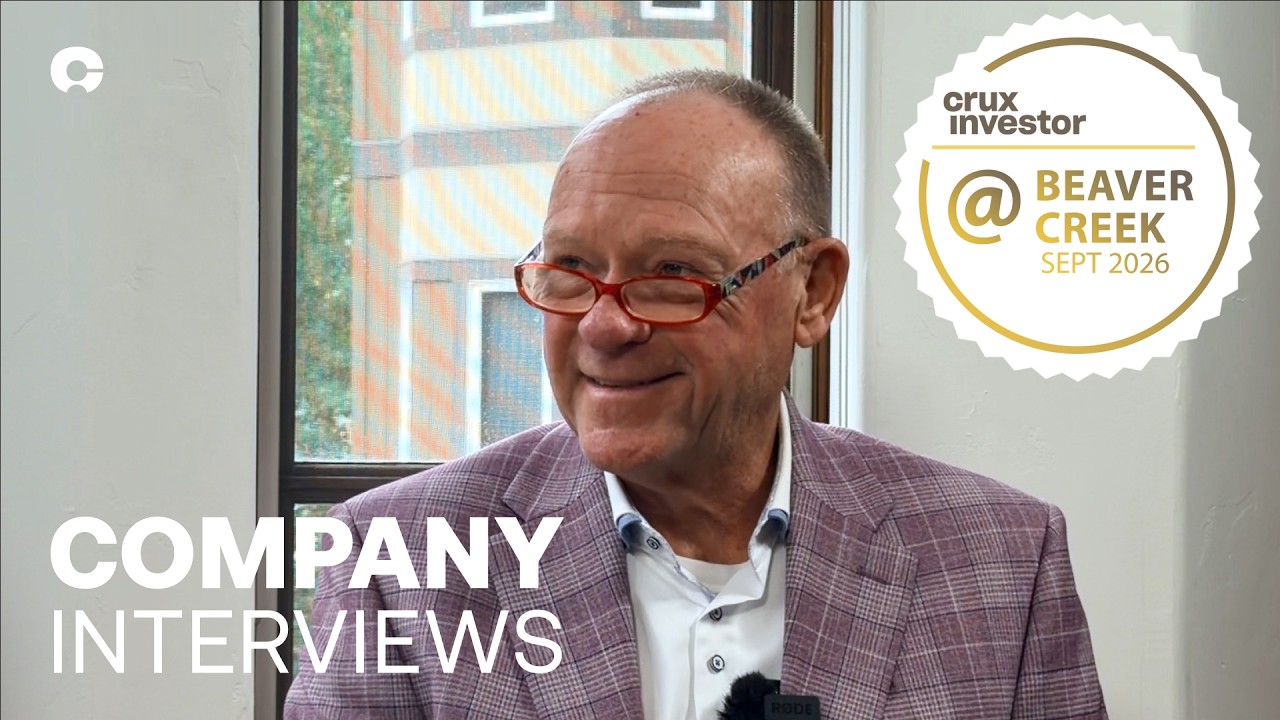
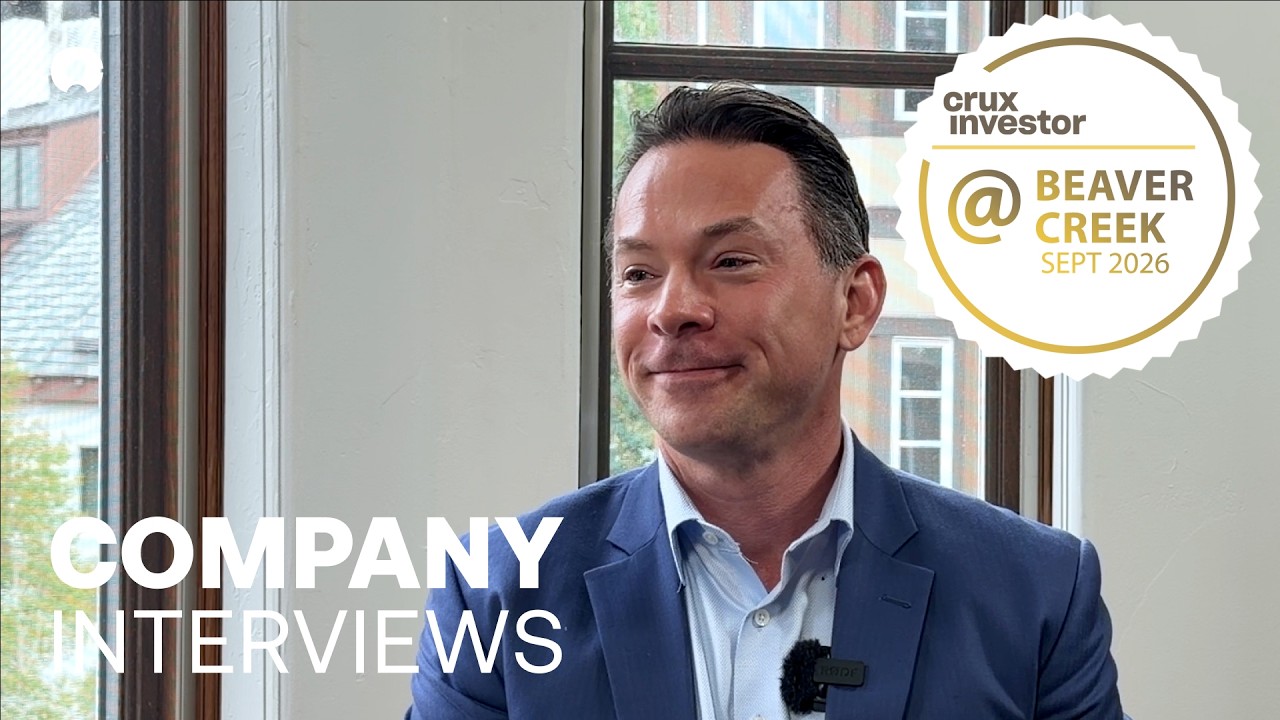
Interview with Chairman & CEO, Paul Huet
Understanding Antimony & Its Market Dynamics
Antimony is classified as a critical mineral by the US government. It is essential for defense applications, flame retardants, and lead-acid battery alloys, among other uses. Global supply has historically been dominated by China, which has created vulnerability in Western supply chains and elevated the strategic importance of domestic production.
Antimony prices have experienced significant volatility. At the time of the interview, prices sat at approximately $15 per pound. US Antimony CEO Gary Evans, who appeared on national broadcast media alongside Huet, has pointed to a potential price floor around $20 per pound as the US government works to establish critical mineral stockpiles.
“That new Project Vault that the US has put in - $12 billion coming into this stockpile of critical minerals - that’s trying to take the volatility out of the pricing.”
Huet emphasized that the Project Vault initiative, a $12 billion critical minerals stockpiling program, is designed to reduce price volatility and support domestic producers. The initiative creates a potential demand floor that underpins the economic case for the JV facility.
The Structure & Credibility of the Joint Venture
The partnership brings complementary capabilities. Americas provides the raw material, the permitted site at the Galena Complex, and over a century of mining history in the district. US Antimony contributes its proprietary processing technology, having recently built an equivalent facility in Bolivia within six months, along with its established relationships with the Department of War and the Defense Logistics Agency (DLA).
“The moment we went together, we provide the material for the next 80 plus years. And then they provide the expertise at producing that metal bar that we need for the Department of War. So instant credibility with us on day one.”
Huet described how the joint approach removed a significant barrier with government stakeholders. Previously, Americas faced skepticism about whether it could independently meet Department of War specifications. US Antimony’s track record of already supplying the government eliminated that concern. According to the press release, US Antimony has existing DLA agreements reportedly worth $245 million, which include price protection provisions and a markup component. The JV gives Americas access to these terms through its 51% ownership stake.
Capital contributions are split according to ownership percentages: 51% Americas, 49% US Antimony. The agreement includes deadlock provisions allowing Americas to buy out US Antimony’s interest at the higher of fair market value or 120% of US Antimony’s capital contributions, or US Antimony to sell at the greater of fair market value or 100% of its contributions.
Operational Insights & Future Prospects
The JV facility will be a leaching plant constructed on Americas’ existing permitted land adjacent to the Galena Complex mill. The estimated capital cost is approximately $50 million, with an anticipated construction timeline of around 18 months from the completion of an agreed project budget. Huet noted that engineering work is set to begin immediately.
Importantly, the facility is being designed with surplus capacity. While Americas’ material will have priority as feedstock, the plant will also be able to process antimony-bearing materials from other domestic and potentially international sources.
“We’re not providing 100% of the feed. This plant will get additional feed. We know there’s already four or five other contracts.”
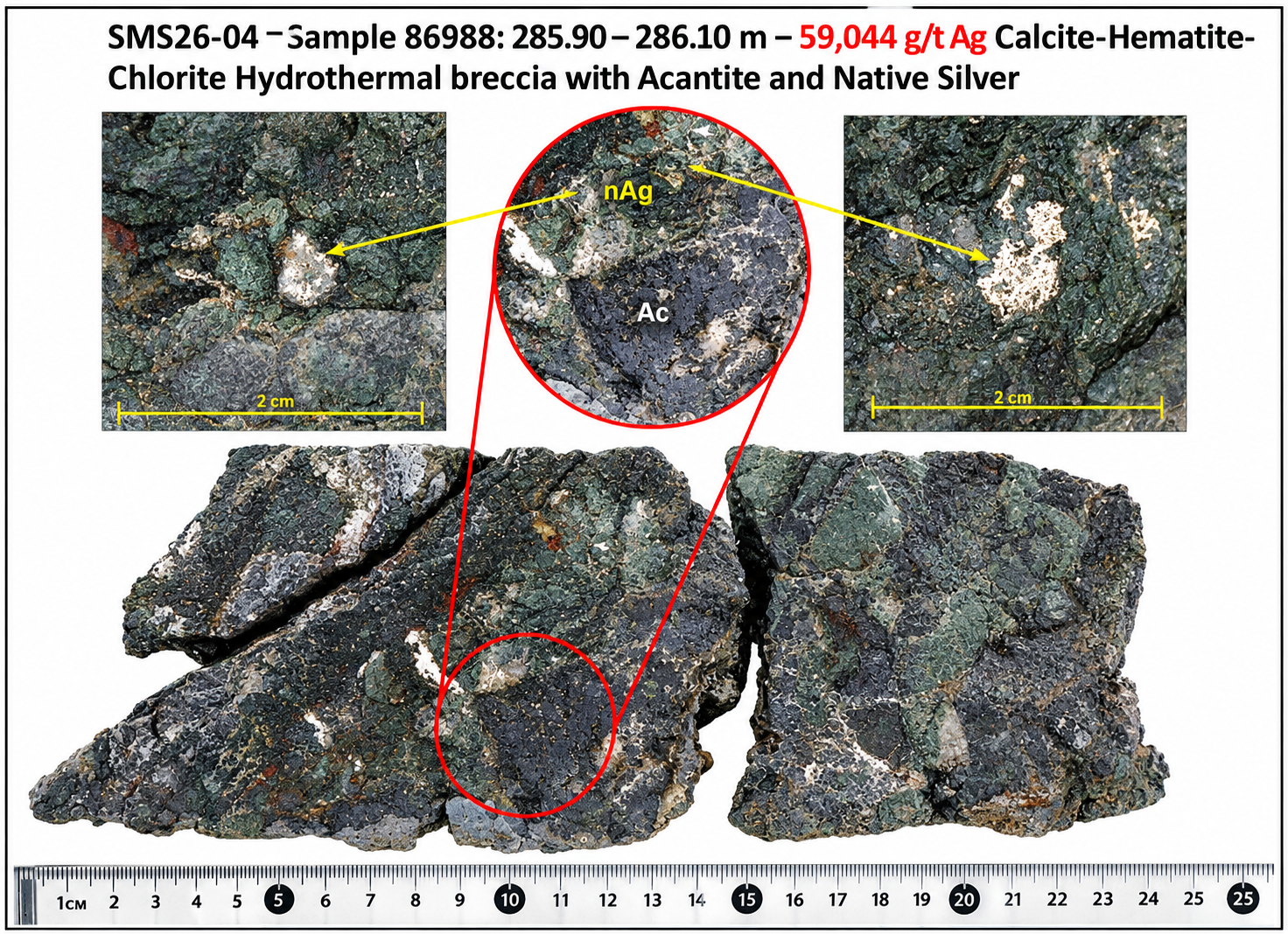
Americas produced 561,000 pounds of antimony contained in concentrate from the Galena Complex in 2025. Production is expected to grow as the company transitions toward mining high-grade tetrahedrite ore, which contains silver, copper, and antimony. The December 2025 acquisition of the fully permitted Crescent Silver Mine, located approximately nine miles from Galena, adds additional tetrahedrite-bearing ore to the pipeline and creates infrastructure synergies.
Navigating Market Volatility & Strategic Positioning
With antimony prices at approximately $15 per pound and silver trading above $80 per ounce, the current commodity environment is broadly supportive of Americas’ operating economics. However, Huet emphasized that the antimony component of his production comes at a marginal cost that is effectively zero, since the company is mining primarily for silver and copper.
“Our antimony comes at no cost… I’m not going out there to mine a ton of rock to get antimony. I’m mining a ton of rock and I’m getting ore. The antimony is included.”
This by-product dynamic creates a significant margin of safety. Even if antimony prices decline from current levels, Americas’ cost structure means the revenue is almost entirely incremental. The JV facility transforms this by-product stream from a partially monetized asset into a fully captured revenue line at market prices, plus 51% of downstream processing margins.
The government’s strategic interest in building domestic stockpiles adds a further dimension. Huet described conversations at the White House where officials urged him to consider not just domestic US requirements but also the needs of allied nations, suggesting total demand could be significantly higher than initial estimates of 50 million pounds.
Future Opportunities & Focus on Silver
Despite the significance of the antimony JV, Huet was clear that Americas’ core identity remains as a silver producer. The company is investing in drilling programs at the Galena Complex, transitioning mining methods, and integrating the recently acquired Crescent Mine to build a larger silver production platform in Idaho’s Silver Valley.
“We’re very focused in our silver world. We’ve got a great, great silver district. We just bought Crescent Mine. We’re going to have a bunch of drills turning.”
When asked whether the partnership with US Antimony could eventually lead to a corporate combination, Huet stated that the JV represents an “optionality for us and our shareholders that didn’t exist a month ago” without commenting on any merger discussions. The company also operates the Cosalá Operations in Mexico, providing geographic diversification across its precious metals portfolio.
The deal aligns with broader industry trends of vertical integration in the critical minerals space, government-backed domestic supply chain initiatives, and growing investor interest in companies with exposure to both precious metals and strategic minerals.
The Investment Thesis for Americas Gold & Silver
- By-product antimony monetization: The JV transforms a partially captured by-product revenue stream into full market-price exposure plus 51% of downstream processing profits, potentially unlocking $50–$70 million in incremental value over the next two years at current prices.
- Near-zero marginal cost antimony: Because antimony is mined as a by-product of silver and copper extraction, Americas’ cost of producing antimony is effectively zero, creating an unusually wide margin of safety regardless of antimony price movements.
- Government tailwinds and critical mineral designation: The $12 billion Project Vault initiative, existing DLA agreements reportedly worth $245 million, and White House engagement provide demand visibility and potential federal funding support for the JV facility.
- Vertical integration from mine to market: The JV creates the first fully domestic, mine-to-finished-product antimony supply chain in the United States, positioning Americas at the center of national security-driven procurement.
- Growing production base: The 2025 output of 561,000 pounds of antimony from Galena is expected to increase as the company mines higher-grade tetrahedrite ore and integrates the Crescent Mine acquisition, driving volume growth into the new processing facility.
- Silver leverage with critical minerals optionality: Americas remains a primary silver producer with exposure to copper and gold, while the antimony JV adds a strategic minerals dimension that is attracting government attention and investor interest in a way that pure silver plays do not.
Americas Gold and Silver’s joint venture with US Antimony represents a strategically timed move to capture value that has historically been left unrealized in the company’s production economics. By partnering with an established processor that already has Department of War supply agreements and government relationships, Americas has found a route to full antimony price exposure without shouldering the technology risk or regulatory uncertainty alone. The $50 million capital cost is shared proportionally, federal funding support is being actively pursued through Project Vault, and the construction timeline of approximately 18 months offers a relatively near-term path to revenue realization. With 561,000 pounds of antimony already produced in 2025 and volumes expected to grow as tetrahedrite mining expands, the facility should have ample feedstock from day one. The by-product cost structure means virtually all antimony revenue flows directly to the bottom line. For investors, the JV adds a critical minerals dimension to what is fundamentally a silver growth story, creating a dual catalyst that aligns with both precious metals strength and government-backed critical mineral security initiatives. The risk lies in execution - construction timelines, government funding outcomes, and antimony price stability - but the structural advantages of the partnership suggest the risk-reward profile has shifted meaningfully in Americas’ favour.
Macro Thematic Analysis
The Americas Gold and Silver-US Antimony joint venture sits at the intersection of three powerful macro themes reshaping the mining investment landscape: the re-shoring of critical mineral supply chains, the militarization of commodity procurement, and the emergence of by-product economics as a primary value driver in polymetallic mining operations.
For decades, Western nations outsourced critical mineral processing to lower-cost jurisdictions, predominantly China. Antimony is a textbook example: despite being essential for military applications, flame retardants, and semiconductor manufacturing, the United States has had no domestic refining capacity since the 1990s. The Trump administration’s $12 billion Project Vault initiative represents the most aggressive federal intervention in domestic mineral supply chains since the Cold War. It signals a structural policy shift, not a cyclical one, that will persist regardless of future political leadership because national security imperatives transcend partisan politics.
The defense procurement angle adds a layer of demand durability that commodity investors rarely encounter. Department of War contracts operate on different timelines and price mechanisms than spot markets. US Antimony’s existing DLA agreements reportedly worth $245 million with price protection and markup provisions illustrate this dynamic. For Americas, gaining access to these terms through 51% JV ownership effectively creates a government-backed revenue floor beneath a portion of its production.
Perhaps most importantly, the by-product economics of Americas’ operation create a structural cost advantage that pure-play antimony projects cannot match. Americas is mining for silver and copper; the antimony comes out of the ground regardless. This means the company can remain profitable on antimony at virtually any price above zero, whereas standalone antimony projects must justify their full cost structure against a single commodity. As Paul Huet stated:
“I’m mining a ton of rock and I’m getting ore. The antimony is included. Therefore, my cost for producing antimony is very, very low.”
This cost asymmetry, combined with government demand guarantees and a vertically integrated domestic supply chain, positions Americas at a rare convergence of strategic value and economic resilience in a market that is only beginning to price in the long-term implications of critical mineral sovereignty.
TL;DR
Americas Gold and Silver (USAS/USA) has signed a definitive joint venture agreement with US Antimony (UAMY) to build an antimony processing facility at its Galena Complex in Idaho’s Silver Valley. Americas holds 51% of the JV, US Antimony 49%. The deal vertically integrates Americas’ antimony production chain from mine to finished product, potentially unlocking $50–$70 million in value currently lost under existing offtake terms. Americas produced 561,000 pounds of antimony in 2025 as a by-product of its silver mining and expects volumes to grow. US Antimony brings processing technology, Department of War supply agreements, and government relationships. The facility is estimated to cost approximately $50 million with an 18-month construction timeline, and both companies have submitted a white paper for federal funding under the Trump administration’s $12 billion Project Vault critical minerals initiative.
FAQ's (AI-Generated)
Americas Gold and Silver (NYSE American: USAS | TSX: USA) and United States Antimony (NYSE American: UAMY) have signed a definitive agreement to form a joint venture to construct and operate an antimony processing plant at Americas’ Galena Complex in Idaho’s Silver Valley. Americas holds 51% of the JV and US Antimony holds 49%. The facility will create a fully domestic, mine-to-finished-product antimony supply chain.
The estimated capital cost for the facility is approximately $50 million. Capital contributions are split according to each partner’s ownership stake: 51% by Americas and 49% by US Antimony. Both companies have also submitted a joint white paper to the federal government seeking funding support under the $12 billion Project Vault critical minerals initiative.
In 2025, Americas produced 561,000 pounds of antimony contained in concentrate from the Galena Complex. Production is expected to grow as the company transitions toward mining high-grade silver-copper-antimony tetrahedrite ore and integrates the recently acquired Crescent Silver Mine.
Antimony is essential for military applications, flame retardants, and various industrial uses. Global supply has been historically dominated by China, creating significant vulnerability in Western supply chains. The U.S. government has designated antimony a critical mineral and is investing through the $12 billion Project Vault initiative to build domestic stockpiles and reduce dependence on foreign suppliers.
The JV is designed to capture full market value for antimony production that was previously sold at discounted rates under existing offtake terms. CEO Paul Huet estimated that $50–$70 million in value is currently being left on the table over the next two years at prevailing prices. Once operational, Americas will receive market-price payments for its antimony feedstock plus 51% of the processing profits generated by the JV, creating a new, high-margin revenue stream from an existing by-product.
Analyst's Notes





Subscribe to Our Channel

Stay Informed






















