Outsized Drill Exposure Through a Hybrid Exploration and Project Generator Model


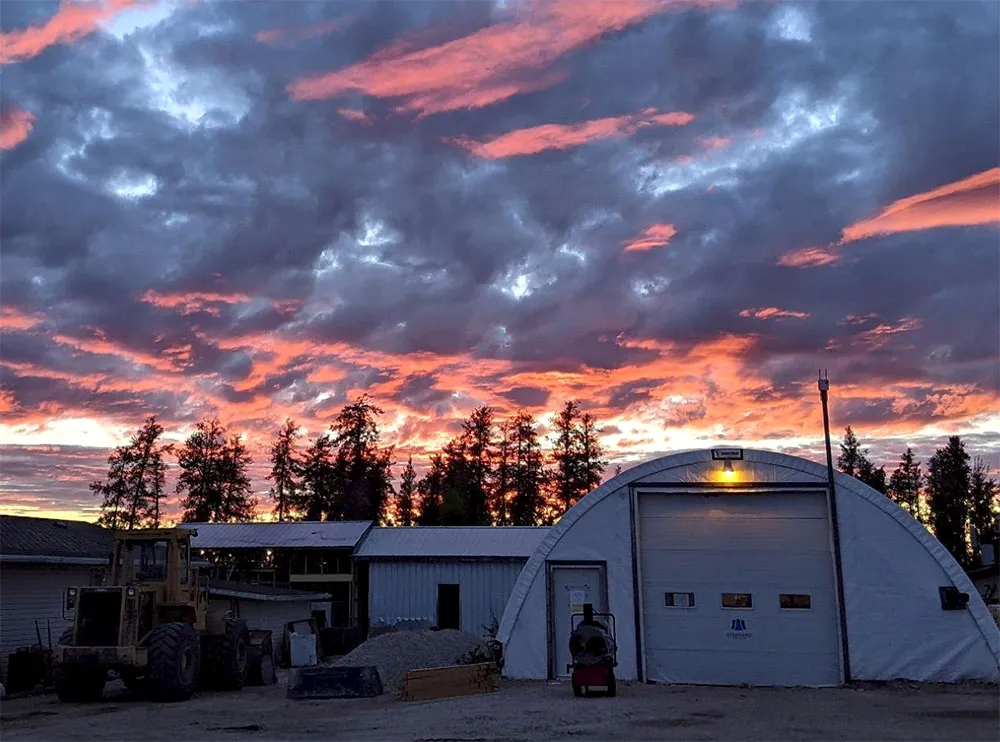
Standard Uranium: $15–20M market cap Athabasca Basin explorer running 3–4 drill programs in 2026, mostly JV-funded, with flagship Davidson River adjacent to NexGen's Rook I.
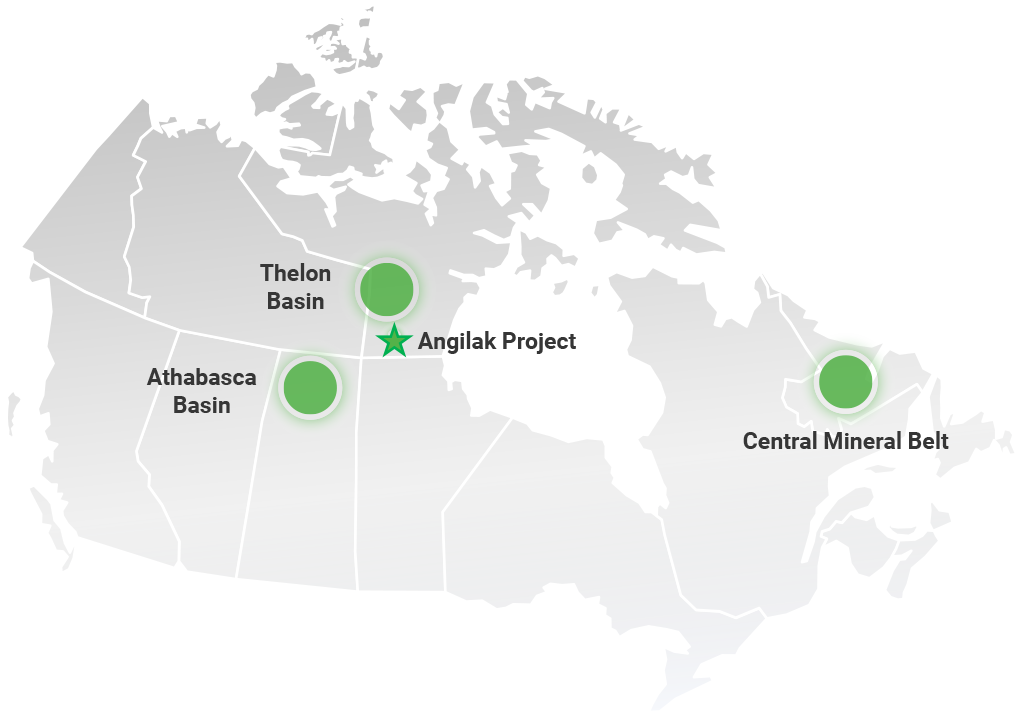
- Standard Uranium is a Canadian uranium exploration company operating in Saskatchewan's Athabasca Basin with 13 projects, several of which are under joint venture (JV) agreements with third-party partners.
- In addition to it's wholly owned exploration assets, the company employs a "project generator" model, inviting JV partners to fund exploration on most projects while retaining a 25% carried interest, a 2.5% NSR royalty, and operator fees that cover corporate overhead.
- Its flagship Davidson River project (30,000 hectares, southwest Athabasca Basin) is wholly owned and self-funded, with drilling planned for summer 2026, located adjacent to billion-dollar neighbours including NexGen, Cameco, and Paladin.
- With a market cap of approximately $15–20 million, the company has three to four drill programs scheduled for 2026, with JV partners funding roughly $7–10 million in total exploration spend - capital the company itself does not need to raise.
- CEO Jon Bey cited strong long-term uranium demand fundamentals, including nuclear energy's role in AI data centre power supply, a potential $3 billion Canada-India uranium deal, and forecasts of nuclear capacity tripling over the next 20–25 years.
Operating entirely within Saskatchewan's Athabasca Basin - widely regarded as the world's highest-grade uranium jurisdiction - Standard Uranium (TSXV: STND) has positioned itself as both an active explorer and a project generator. In a recent interview, CEO Jon Bey outlined the company's business model, flagship asset, JV pipeline, and the broader macro case for uranium investment. What emerges is a picture of a company attempting to manage exploration risk through capital efficiency while retaining meaningful upside on multiple projects simultaneously.
The Project Generator Model: Exploration with Built-In Cash Flow
Standard Uranium's defining strategic characteristic is its hybrid business model. Rather than self-funding exploration across all 13 of its Athabasca Basin projects - a capital-intensive approach that historically required continuous equity raises - the company transitioned, around 2023, to a project generator structure for the majority of its portfolio.
Under this arrangement, Standard Uranium identifies prospective ground, spends one to two years preparing a project for drilling (including First Nations agreements and permitting), and then invites a third-party JV partner to fund exploration. The typical deal structure involves a partner spending approximately $6–7 million over three years across three tranches of roughly $1.5 million, $2 million, and $3 million annually. In exchange, the partner earns 75% of the project at completion. Standard Uranium retains 25% equity carried through the earn-in period, a 2.5% net smelter return royalty, and charges operator fees for running the program with its own geological team.
The operator fees generated by running JV programs - estimated at $1.5–2 million annually - are designed to cover Standard Uranium's general and administrative costs, reducing the need for additional equity issuances to fund corporate overhead.
Risk Protections Built Into JV Agreements
The JV structure includes contractual protections for Standard Uranium in both success and failure scenarios. If a partner completes all three years of spend, they earn 75% and Standard retains 25% plus its NSR. If a partner fails to complete the earn-in - which Bey noted has occurred twice already - 100% of the project reverts to Standard Uranium, along with all data generated during the exploration period. That data can then be used to re-market the project to a new partner, often on updated terms.
Beyond the initial earn-in, contracts allow for dilution provisions if one party wishes to continue advancing a project and the other does not. Standard also retains the option to sell its 25% stake or to monetise part of its 2.5% NSR - the latter potentially worth up to $1 million for half the royalty under existing deal terms.
Additionally, once a project has sufficient exploration expenditure submitted to the Saskatchewan government, it can remain in good standing for up to 20 years, giving Standard significant flexibility on timing without forced expenditure obligations.
Davidson River: The Flagship Asset
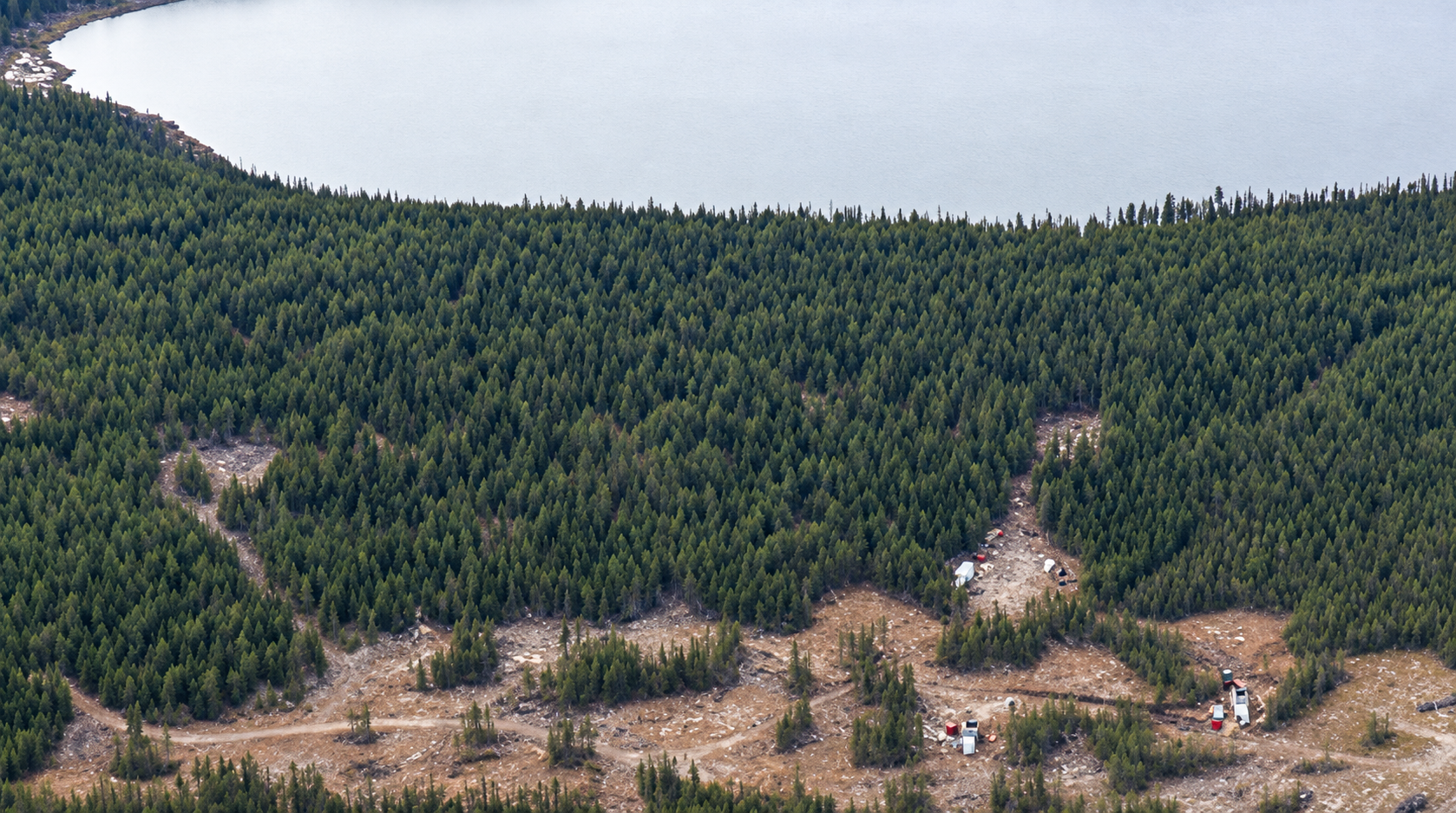
While the JV model governs most of Standard Uranium's portfolio, its Davidson River project is held entirely in-house and self-funded. Located in the southwest Athabasca Basin - which Bey described as likely to be "the hottest region in the Athabasca basin for the next few years" - the project spans 30,000 hectares with 70 kilometres of strike length across four conductors.
The project's geographic context is notable. Davidson River sits adjacent to NexGen Energy's Rook I project, one of the most significant uranium discoveries of the past decade. NexGen, which began as a 30-cent stock approximately 13 years ago, now trades near $15–16 per share with a market capitalisation of around $10 billion, and is expected to receive its final federal mining permit around May 2026. Other neighbouring companies - Cameco, Paladin, and Orano - carry market capitalisations ranging from $5 billion to $60 billion.
Standard Uranium plans its first drill program at Davidson River in several years commencing in May 2026, running through to August. The company has been working to attract major or large-cap partners for a potential JV on Davidson River with discussions ongoing.
Interview with Jon Bey, CEO of Standard Uranium Ltd.
2026 Drill Programs: Near-Term News Flow
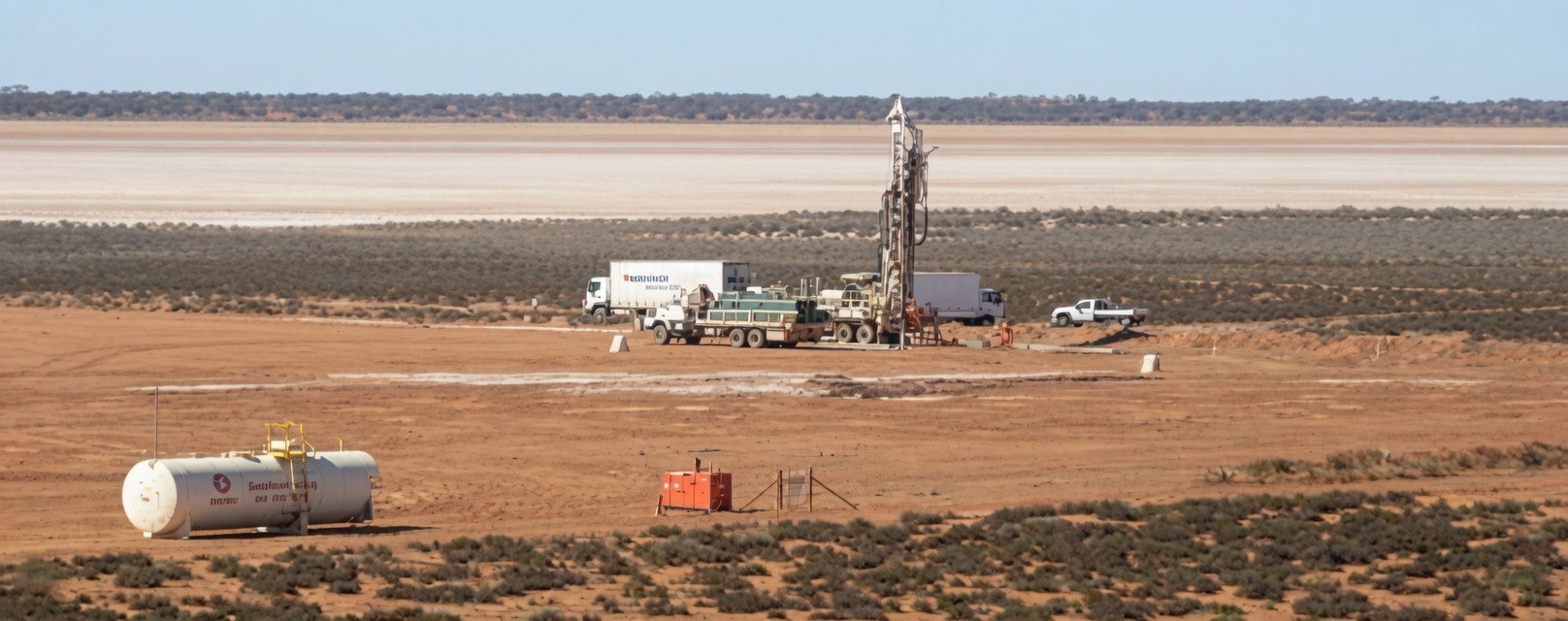
The company enters 2026 with concrete near-term catalysts. The Corvo project, held under JV with Aventis Energy, commenced drilling mid February, representing the first active program of the year. A second program on the Rokas project - under JV with Collective Metals - is expected to begin in early March 2026, pending receipt of a final government permit.
Following a spring break-up period, the Davidson River drill program is scheduled to begin in May. Management indicated that this level of activity - three to four active programs in a single calendar year - represents an unusually high level of exploration intensity for a company of Standard Uranium's size. The company also highlighted a commitment to investor communications from the field, with videography crews providing on-site updates throughout the drill season.
Partner Vetting and Portfolio Management
Bey outlined a structured process for evaluating prospective JV partners. Criteria include the reputation and integrity of the individuals involved, near-term capital availability (partners are not required to have all three years of funding in hand, but must demonstrate capacity for year one), and the quality of their technical team.
Partners typically review Standard Uranium's full project inventory under a confidentiality agreement and self-select the project that best fits their risk appetite and investor narrative. This process has resulted in approximately four to five active confidentiality agreements at any given time, with ongoing negotiations across multiple projects.
On the question of how large the portfolio can realistically grow, Bey noted that the Athabasca Basin is currently fully staked, but that parcels are periodically returned to the government when companies fail to meet mandatory exploration expenditure requirements. Standard Uranium's geological team monitors the province's online MARS staking system for such opportunities.
Macro Tailwinds: Uranium Demand Outlook
The investment case for Standard Uranium is partly dependent on the broader outlook for uranium and nuclear energy. Bey cited forecasts from the World Nuclear Association projecting global nuclear capacity to triple over the next 20–25 years. He also referenced the policy positions of the current U.S. administration - which has discussed quadrupling domestic nuclear capacity - and a pending Canada-India agreement worth approximately $3 billion to supply uranium for India's nuclear expansion.
Bey also noted the emerging role of nuclear power in meeting baseload electricity demand for AI data centres, which require reliable, around-the-clock energy sources that intermittent renewables cannot consistently provide.
"If you look at the WNA's forecast for where nuclear is heading over the next 20–25 years, it's going to triple. And if you listen to Donald Trump talk about what the Americans want to do, they want to quadruple where they're going. That is a massive demand for building nuclear reactors, large reactors, small reactors."
The uranium spot price, at the time of the interview, stood at approximately $89–90 per pound, having touched $100 per pound in the weeks prior.
Share Price Momentum and Investor Awareness
Bey observed that Standard Uranium's trading volume had increased approximately tenfold since January 2026, which he attributed to growing investor awareness of the company's fully-funded drill calendar for 2026. The company has been active at investment conferences and across social media channels, as well as producing field-based content to give retail investors visibility into ongoing exploration activity.
Despite the increased activity, the company's market capitalisation of $15–20 million remains modest relative to the exploration budgets being deployed across its portfolio - a discrepancy that management believes the market has not yet fully priced.
The Investment Thesis for Standard Uranium
- Capital efficiency: JV operator fees cover annual G&A, reducing shareholder dilution and the need for repeated equity raises
- Multiple shots on goal: Three to four drill programs planned in 2026, funded predominantly by JV partners, giving investors exposure to several exploration outcomes simultaneously
- Retained upside: 25% carried interest plus 2.5% NSR royalties preserved on all JV projects, with monetisation optionality at each stage
- Flagship optionality: Davidson River - 30,000 hectares in the southwest Athabasca Basin, adjacent to NexGen's Rook I, Cameco, Paladin, and Orano - wholly owned and unencumbered, with drilling commencing May 2026
- Downside protection: Contractual project reversion to 100% ownership if JV partners fail to complete earn-in; all data generated reverts with the project
- Strong geological team: Four in-house uranium geologists plus three on the board of directors, with further hires anticipated following additional JV deal closures
- Macro alignment: Uranium spot price near $90/lb, nuclear demand forecasts projecting significant capacity growth, and AI-driven electricity demand providing a structural long-term demand case
- Valuation gap: $15–20 million market cap relative to $7–10 million in exploration spend being deployed in the ground across the portfolio during 2026
Uranium is entering a period of structurally higher demand driven by converging forces. Global nuclear capacity is forecast to expand significantly over the next two decades as governments seek reliable, low-carbon baseload power - a requirement that neither solar nor wind can meet independently. In parallel, the exponential growth of AI data centres has created a new class of electricity consumer demanding 24/7 power at scale, with several large technology companies already entering long-term nuclear power agreements. Saskatchewan's Athabasca Basin, as the world's highest-grade uranium district, is positioned at the centre of this supply response.
"The future for the next 5, 10, 20 years is going to be phenomenal for the demand for nuclear power and for uranium."
TL;DR
Standard Uranium is a ~$15–20 million market cap uranium explorer in Saskatchewan's Athabasca Basin, using a project generator model to fund exploration across 13 projects with minimal shareholder dilution. Its self-funded Davidson River flagship sits adjacent to NexGen's $10 billion Rook I project, with drilling scheduled for May 2026. With three to four drill programs planned for 2026 and JV partner capital covering most exploration costs, the company offers leveraged exposure to Athabasca Basin exploration at a valuation well below its peer group.
FAQs (AI Generated)
Davidson River is the company's highest-conviction asset. At 30,000 hectares with four conductors, only major or large-cap partners are being considered, and discussions are ongoing.
Standard Uranium recovers 100% of the project plus all exploration data, which it can then re-deploy into a new JV deal on revised terms.
JV operator fees generate approximately $1.5–2 million annually, covering G&A without requiring additional equity raises to fund corporate operations.
The team monitors Saskatchewan's MARS online staking system for claims returned to the government when companies fail to meet mandatory expenditure requirements, bidding in real-time auctions.
Nuclear capacity forecasts projecting a tripling of global output, U.S. policy support for domestic nuclear expansion, AI data centre baseload demand, and a potential $3 billion Canada-India uranium supply agreement.
Analyst's Notes





Subscribe to Our Channel


Stay Informed