




Marimaca Copper's Pampa Medina Step-Out Drilling: 8 Things You Need to Know


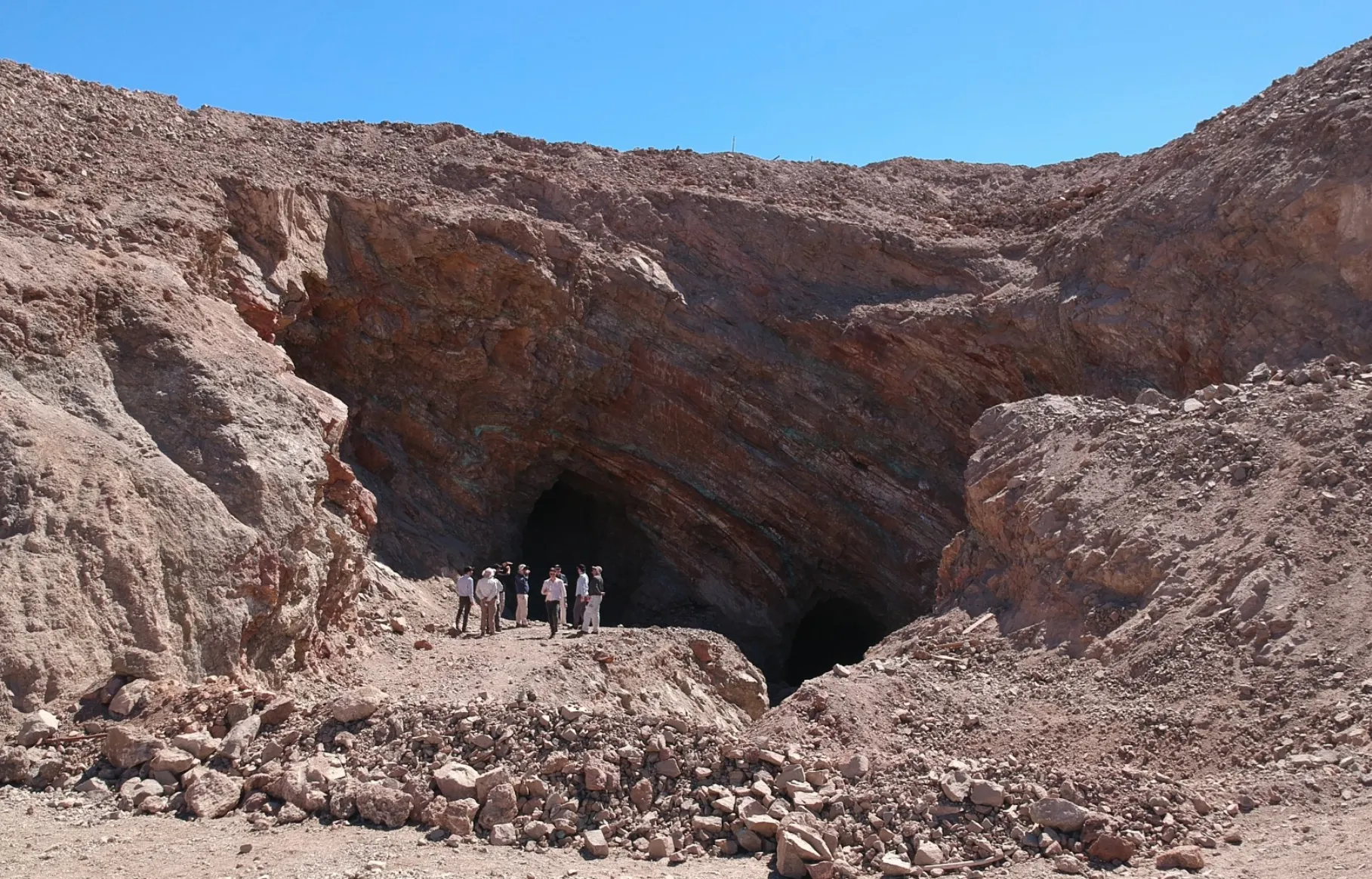
Marimaca Copper reports Pampa Medina step-out results 600m west of prior drilling limit, scales to 10 rigs and 100,000m in 2026.
- Marimaca Copper Corp. has reported high-grade copper and silver intersections from step-out drilling at its Pampa Medina deposit, with the headline western hole intersecting 74 metres at 1.21% total copper and 7.9 grams per tonne silver from 520 metres, approximately 600 metres west of the previously known western boundary.
- The area of interest now extends 3 kilometres by 2 kilometres with geophysics indicating the system extends beyond the current drilled boundary.
- Following completion of the 30,000 metre Phase II program, Marimaca is expanding to 10 drill rigs with a target of 100,000 metres at Pampa Medina in 2026, subject to results-based stage-gates.
- Silver mineralisation is correlated with copper grade across both oxide and sulphide zones, and the company has flagged silver streaming as a potential future mechanism.
- Pampa Medina sits approximately 28 kilometres from the Marimaca Oxide Deposit (MOD), which carries a completed Definitive Feasibility Study (DFS) delivering a post-tax net present value at an 8% discount rate (NPV8%) of US$1.1 billion and a 39% internal rate of return (IRR) at US$5.05 per pound copper.
Pampa Medina Step-Out Extends System with 100,000m Program Planned for 2026
Marimaca Copper reported step-out drilling results from Pampa Medina in March 2026, extending confirmed high-grade copper-silver mineralisation approximately 600 metres west of the previously defined boundary and announcing a planned scale-up to a 100,000 metre drill program in 2026, subject to stage-gates.
The update is relevant as Marimaca advances its flagship Marimaca Oxide Deposit (MOD) toward a construction decision while simultaneously building a sulphide growth pipeline at Pampa Medina, approximately 28 kilometres to the east.
1. Western Step-Out Extends System 600 Metres With Grade Broadly in Line With Prior Results
The latest western step-out intersected 74 metres at 1.21% total copper and 7.9 grams per tonne silver from 520 metres, approximately 600 metres beyond the prior drilling limit, with grade broadly in line with earlier step-out results.
The previous western step-out delivered 70 metres at 1.0% total copper from 434 metres. The new result, including a 48 metre interval at 1.62% total copper and 11.5 grams per tonne silver and a 12 metre high-grade core at 2.07% total copper and 17.2 grams per tonne silver from 532 metres, returned comparable grade and width to that earlier result despite the additional 600 metre lateral distance. This extension pushes the confirmed area of interest to 3 kilometres by 2 kilometres with geophysics indicating the system extends beyond the current drilled boundary. The company notes that sediment-hosted deposits are known to have a larger footprint, which is consistent with mineralisation remaining intact at this distance.
2. Infill Drilling Confirms Grade Continuity Between Step-Out Points
An infill hole on a 300 metre spacing between the new western step-out and the prior drilling limit intersected mineralisation in both the near-surface upper volcanics and the deeper lower sediments.
The upper volcanic horizon returned 36 metres at 1.08% total copper and 13.8 grams per tonne silver from 158 metres, including 6 metres at 3.01% total copper and 37.3 grams per tonne silver from 166 metres. At depth, the lower sediment horizon returned 24 metres at 1.37% total copper and 12.2 grams per tonne silver from 600 metres, including 10 metres at 2.58% total copper and 25.8 grams per tonne silver from 606 metres.
The result confirms mineralisation across two separate rock horizons within a single hole, consistent with the multi-horizon geometry identified across the deposit in prior drilling.
3. Grade Thickness Metrics Position Pampa Medina Above Global Sediment-Hosted Benchmarks
Across the high-grade corridor at Pampa Medina, 96% of drill holes return greater than 10 copper percentage metres (Cu%m) and 58% return greater than 20 Cu%m, above Kupferschiefer (approximately 7 Cu%m) and Kamoa-Kakula (approximately 16 Cu%m).
Cu%m allows comparison of mineralised intersections across different deposit styles and sizes. True widths at Pampa Medina are estimated at 80% to 90% of reported downhole intervals. Grade distribution across depth shows a similar pattern. Between 200 and 400 metres, 79% of drill holes exceed 10 Cu%m; between 400 and 600 metres, 75%; and between 600 and 800 metres, 83%.
4. Kupferschiefer Thickness Comparison Gains Additional Drilling Support
The company has restated the Kupferschiefer comparison with reference to new drilling data. No economic studies have been published for the Pampa Medina sulphide system and metallurgical work remains incomplete.
The Kupferschiefer is a sediment-hosted copper belt in Poland and Germany, operated by KGHM, with an average mineralised zone thickness of 4.5 metres at its Rudna operation. The estimated mining horizon true thickness at Pampa Medina is, on average, more than 10 times thicker than those deposits. A high-grade intersection at Pampa Medina shows a 26 metre mineralised zone at 4.1% total copper, including 6 metres at 12.0% total copper. The company has stated that bulk tonnage mining methods may drive lower unit costs in an eventual operation.
5. Silver Grades Introduce Streaming Financing Optionality
Silver is correlated with copper grade across both oxide and sulphide zones at Pampa Medina, and the company has flagged silver streaming as a potential future capital mechanism though no agreement has been entered into. Silver by-products are common in Chilean manto-type deposits; the company references nearby Mantos Blancos and Cachorro as comparable examples. As demonstrated by the elevated silver grades in the recent western step-out and infill drilling, the company has flagged this mineralisation as a basis for potential future streaming-based financing.
6. Two Holes Returned Below-Corridor Results Due to Structural Disruption
Two of the five reported holes returned lower-grade results where mineralisation was affected by faulting in one case and dyke intrusion in the other.
One hole encountered splays of the north-south Ancla Fault System, returning 18 metres at 0.55% total copper from 736 metres and 28 metres at 0.72% total copper and 5.9 grams per tonne silver from 840 metres. A second hole intersected both manto horizons but returned narrower, lower-grade intervals where mineralisation was affected by pre- and post-mineral dyking, including 16 metres at 1.00% total copper and 5.9 grams per tonne silver from 332 metres and 8 metres at 1.17% total copper and 5.0 grams per tonne silver from 368 metres. The 2026 definition drilling program is directed at the higher-grade corridors identified through Phase II.
7. Program Scale-Up to 100,000 Metres Introduces Both Growth Potential & Execution Risk
Marimaca's planned expansion to 10 rigs targeting 100,000 metres in 2026 represents a significant increase in capital commitment and operational complexity, subject to results-based stage-gates.
Phase II was a 30,000 metre, predominantly 300 metre-spaced grid program designed to define the extent of the mineralised system. The 2026 Phase III program has three stated priorities: definition drilling of the identified high-grade sulphide corridors; infill of identified oxide extensions; and large-scale step-outs to test regional continuity. Capital deployment under Phase III is conditional on results per the stated stage-gate structure. Running a 10-rig program in parallel with MOD detailed engineering, sectorial permitting and project financing workstreams introduces operational demands across multiple fronts simultaneously. With US$165.6 million in cash and no debt as of February, 2026, the company's stated financial position provides capacity to advance both workstreams.
8. Pampa Medina Advances a Two-Asset District Strategy Alongside a De-Risked MOD
Pampa Medina sits approximately 28 kilometres east of the Marimaca Oxide Deposit, positioning the company to transition from a single-asset developer into a potential multi-asset district operator, with the MOD advancing toward a construction decision and Pampa Medina serving as the primary sulphide growth pipeline.
The MOD is the more advanced of the two assets. A DFS completed in August 2025 outlined a post-tax net present value at an 8% discount rate (NPV8%) of US$1.1 billion and a 39% internal rate of return (IRR) at a copper price of US$5.05 per pound. The project received its Resolución de Calificación Ambiental (RCA) in November 2025, and detailed engineering and project financing workstreams are currently underway.
The 100,000 metre 2026 drill program at Pampa Medina is being executed in parallel with these MOD advancement activities, with the stated intent of defining a sulphide resource base that could complement the near-term oxide production planned at the MOD.
What Changes & What to Watch
The recent results reduce geological uncertainty on lateral continuity, reinforce the multi-horizon model, and provide the basis for an expanded 2026 drill program. Two holes affected by structural disruption remain a documented constraint in portions of the system.
Key items to monitor: remaining Phase II assay results, which the company has confirmed are pending and will be released to the market when received; completion of metallurgical programs, which will enable copper equivalent grade reporting; the MOD project financing process; and any update on silver streaming optionality. Geophysics referenced by management as indicating potential further extensions has not yet been detailed in a public release.
FAQs (AI-Generated)
Pampa Medina is a manto-style copper-silver deposit located approximately 28 kilometres east of Marimaca's Marimaca Oxide Deposit in Chile's Antofagasta Region. It hosts both oxide and sulphide mineralisation.
Marimaca has not yet completed initial metallurgical programs at Pampa Medina. Until recovery data for both copper and silver is confirmed, the company is reporting total copper and silver separately rather than combining them into a single equivalent figure.
The MOD DDFS was completed in August 2025, delivering a post-tax NPV of US$1.1 billion at an 8% discount rate and a 39% IRR at US$5.05 per pound copper. Environmental approval was received in November 2025. Detailed engineering and project financing workstreams are underway.
The Kupferschiefer is a sediment-hosted copper belt in Poland and Germany mined by KGHM, one of the world's largest copper producers. The comparison highlights the geological style of Pampa Medina rather than suggesting equivalent scale or economics at this stage.
The 2026 Phase III program targets definition of the high-grade sulphide corridor, infill of oxide extensions, and large-scale step-outs. The program is subject to results-based stage-gates, meaning the full 100,000 metres is conditional on ongoing drilling performance.
Analyst's Notes





Subscribe to Our Channel




Stay Informed


