




Millennial Potash Signs Non-Binding MOU for 4 Mt Gabon Port Ahead of Early 2027 DFS


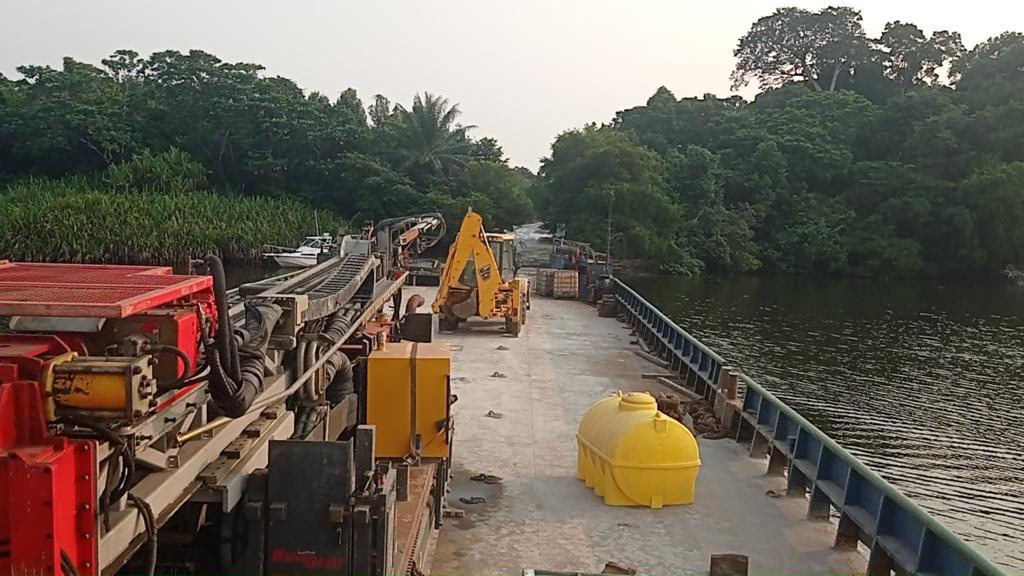
Millennial Potash signs a non-binding MOU with EXG Investments and Gabon for a 4 Mt/yr deep-water port near its Banio Potash Project.
- Millennial signed a non-binding MOU with EXG Investments and Gabon's Ministry of Transport for a deep-water port near Mayumba, with capacity of up to 4 Mt per year.
- The port would let Banio scale from the 2024 PEA rate of 800,000 tonnes per year toward 4 Mt in stages, and full capacity reserved for the company.
- EXG would own and operate the port. The release ties third-party port financing to Banio itself securing financing.
- The latest Phase 2 hole logged about 132 m of cumulative carnallitite and extends mineralization to the west. An updated MRE, the DFS in early 2027 and the ESIA follow.
- The company holds about C$20 million in cash with DFC matching support, and plans no equity raise before construction funding.
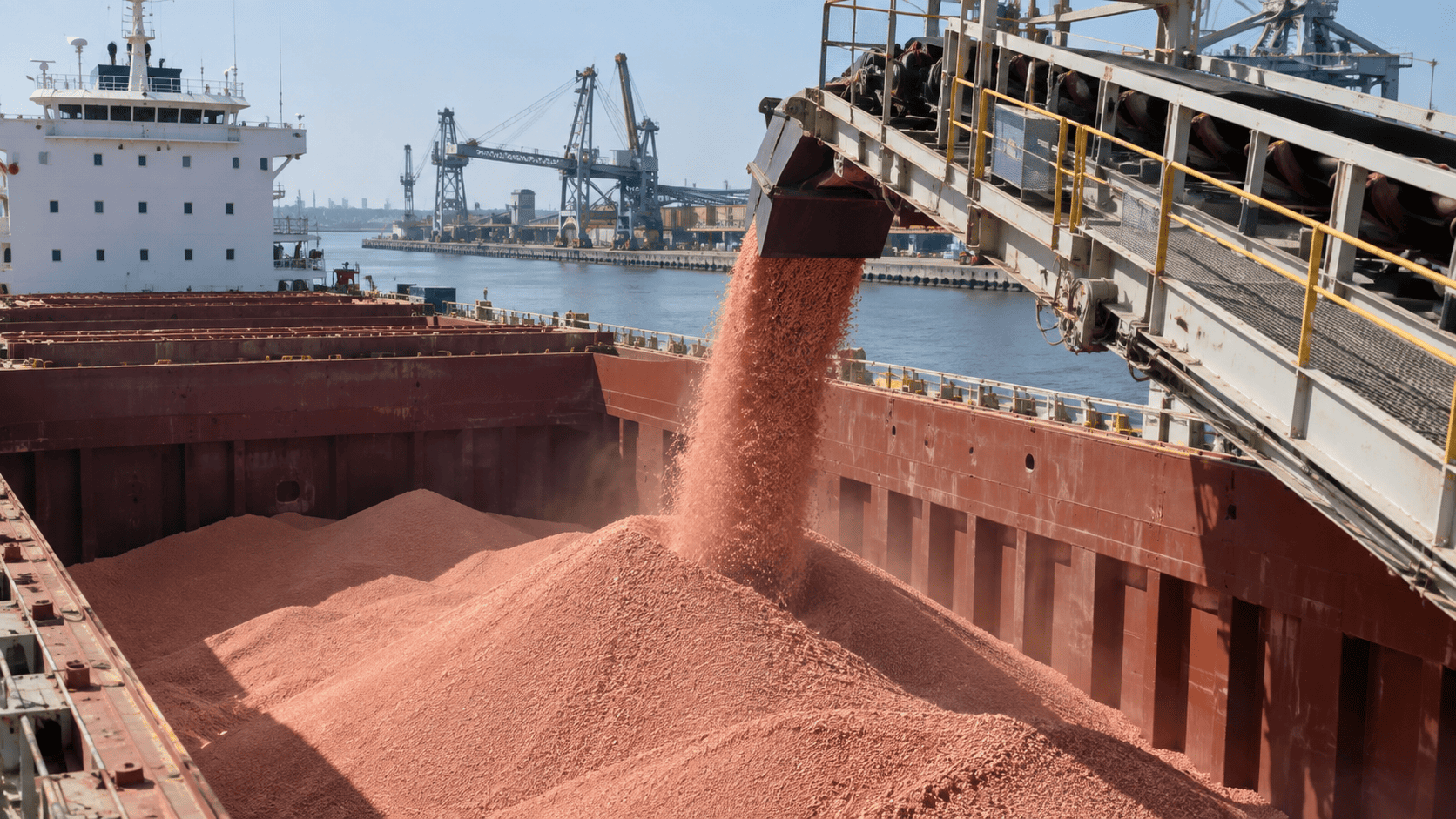
Millennial Potash Corp. (TSXV: MLP | OTCQB: MLPNF) has signed a Memorandum of Understanding (MOU) with Abu Dhabi-based EXG Investments and Gabon's Ministry of Transport, Merchant Marine and Logistics to develop a multipurpose deep-water port complex near Mayumba, in Nyanga Province. The proposed port is designed to handle up to 4 million tonnes (Mt) of marine shipments per year. The preliminary economic assessment (PEA) for the company's Banio Potash Project, published in 2024, used an initial production rate of 800,000 tonnes (t) per year.
The port targets the problem that has stalled many potash developers outside the major producing countries: moving bulk product from mine to ship at a competitive cost. In an interview with Crux Investor, the company described a structure in which EXG would fund, own and operate the port, with Millennial as its anchor user. The MOU is non-binding. A port feasibility study led by EXG is the next step, running alongside Millennial's own definitive feasibility study (DFS), an updated mineral resource estimate (MRE) and an environmental and social impact assessment (ESIA).
A Dedicated Deep-Water Export Route
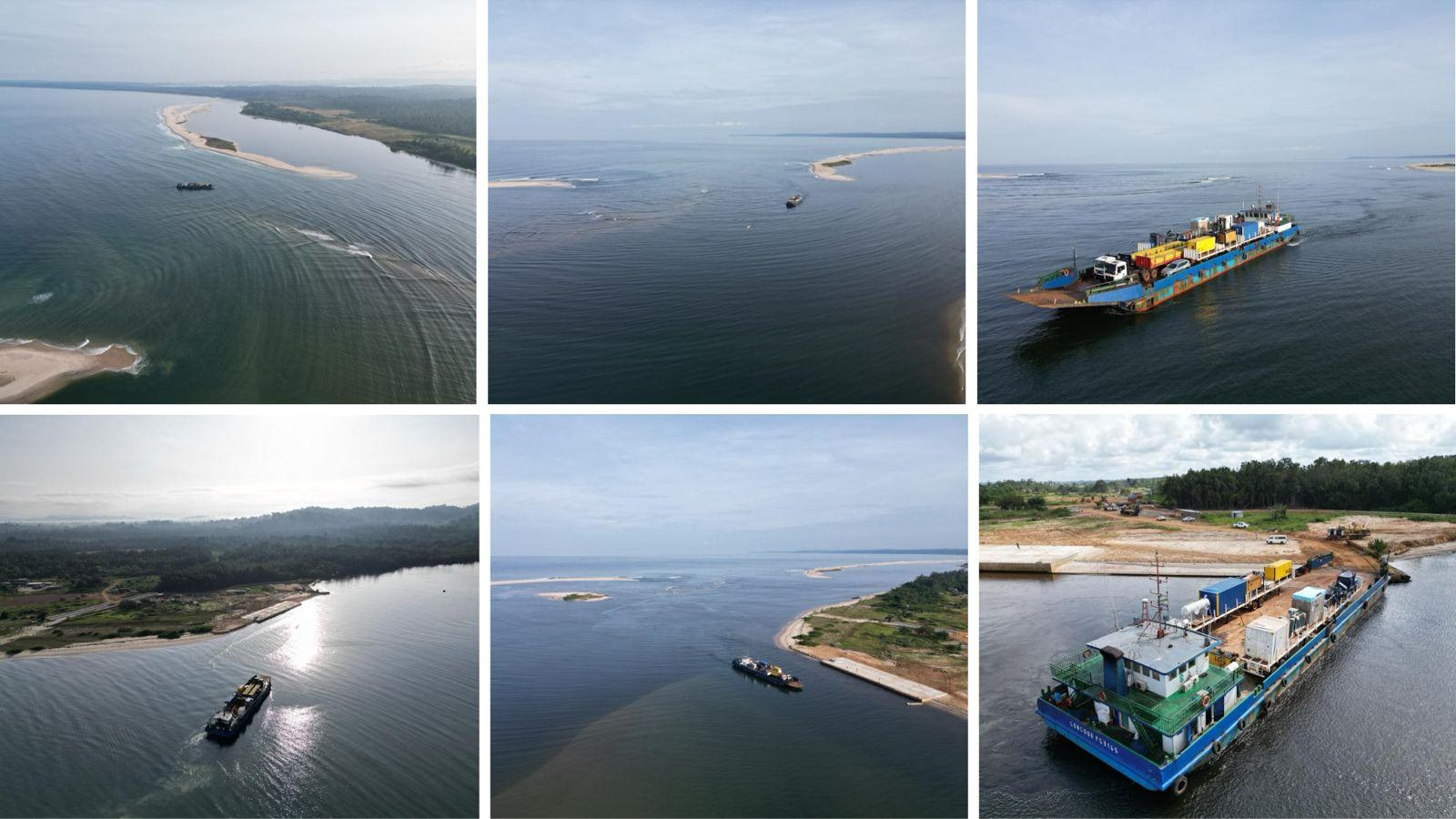
The MOU sets a framework for the three parties to cooperate on the development, management and operation of the Mayumba Port complex. It also covers logistics, storage and port services for Banio, and potential co-investment between the parties. The planned site is on the Atlantic coast just south of Mayumba, approximately 40 kilometers (km) from Millennial's identified potash resources. It is being designed for vessels in the 50,000 to 65,000 deadweight tonnage range, among the most widely used classes of ocean-going vessels.
EXG is a newly formed Abu Dhabi investment and development group focused on energy, maritime, trade and city infrastructure. According to Millennial's Chair, most of the senior team that built and expanded Abu Dhabi Ports moved into EXG during a reorganization, including the chairman of Abu Dhabi Ports, who now chairs EXG.
Under the structure the company described, EXG would build, own and operate the port and charge Millennial handling fees that fall as throughput rises. The Government of Gabon's role is licensing and support. Millennial holds an option to take an equity stake in the port, but the company currently prefers to keep its own capital requirement low. EXG is to begin a full port feasibility study at its own expense, with the parties aiming to finalize the agreement in roughly two to three months. The November 23 release is more conditional on funding than the interview: subject to Banio securing financing and proceeding to construction, the parties intend to explore third-party financing structures for the port, which could reduce any need for Millennial to fund it.
Scaling Production Toward Four Million Tonnes
The 4 Mt capacity changes the production planning for Banio. The DFS is assessing the 800,000 t base rate from the PEA as well as a ramp-up beyond it.
Chair of Millennial Potash, Farhad Abasov, laid out the staged expansion the company is targeting:
"We want to start with 800,000 tons in the next two, three years and then ramp it up realistically to about 1.2 [million tons], in other words [a] 50% ramp-up, and then eventually want to go 100% ramp-up from there."
Abasov described the sequence after that as 1.2 Mt to 2.4 Mt, and then to 4 Mt. He said the full 4 Mt allocation is reserved for Millennial, with other users able to take unused capacity until Banio needs it, and that the port can be expanded beyond 4 Mt. The release states the port is intended to provide year-round export capacity, reducing the risk of seasonal shipping interruptions.
Third-party users would lower Millennial's costs over time. Abasov pointed to an iron ore project in the region and to oil and gas operators that could use the port to bring in supplies and equipment. The Government of Gabon has pursued a port at Mayumba since the 1970s and, according to Abasov, sees potential for the complex to grow to 100 Mt per year over the next 10 to 20 years.
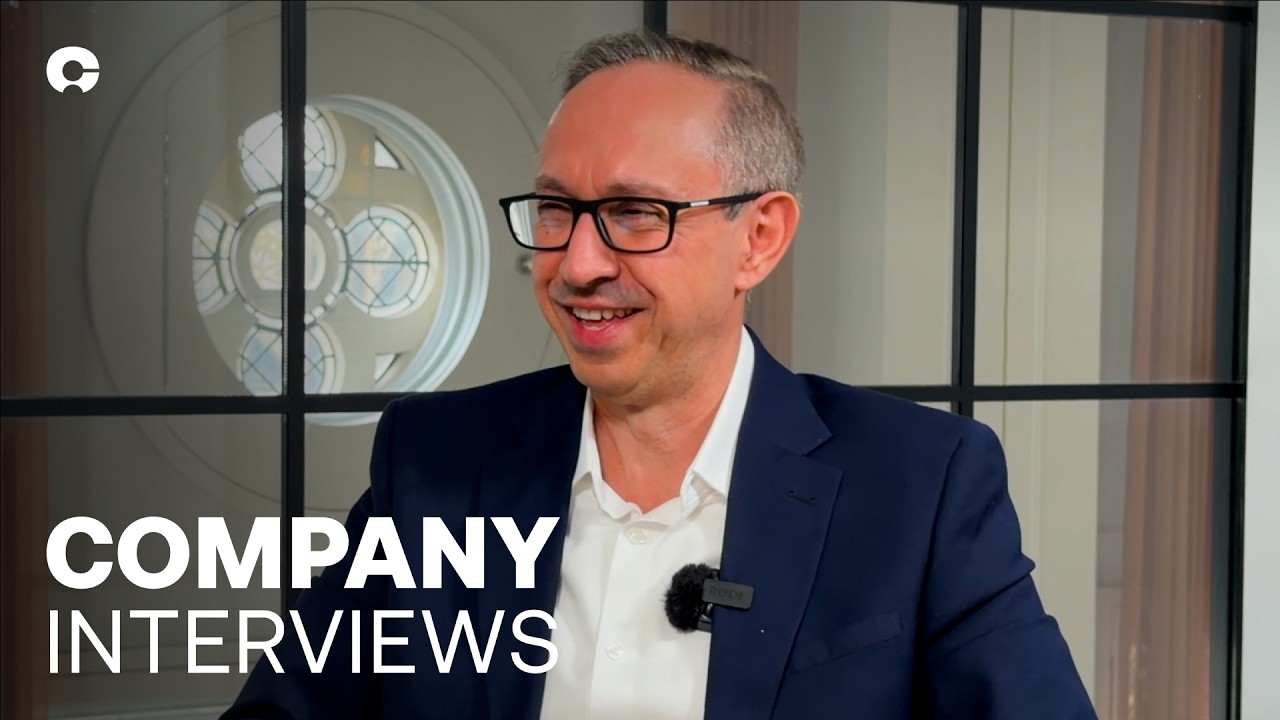
Interview with Farhad Abasov, Director & Chairman of Millennial Potash
Expanding the Resource Base Toward Feasibility
Banio's current resource base comprises a Measured resource of 648.2 Mt grading 15.7% potassium chloride, plus an Indicated resource of 1.8 billion tonnes and an Inferred resource of 3.56 billion tonnes, both grading 15.6% potassium chloride. The deposit is planned as a solution mining operation, which Abasov contrasted with underground potash mines that require capital in the billions of dollars.
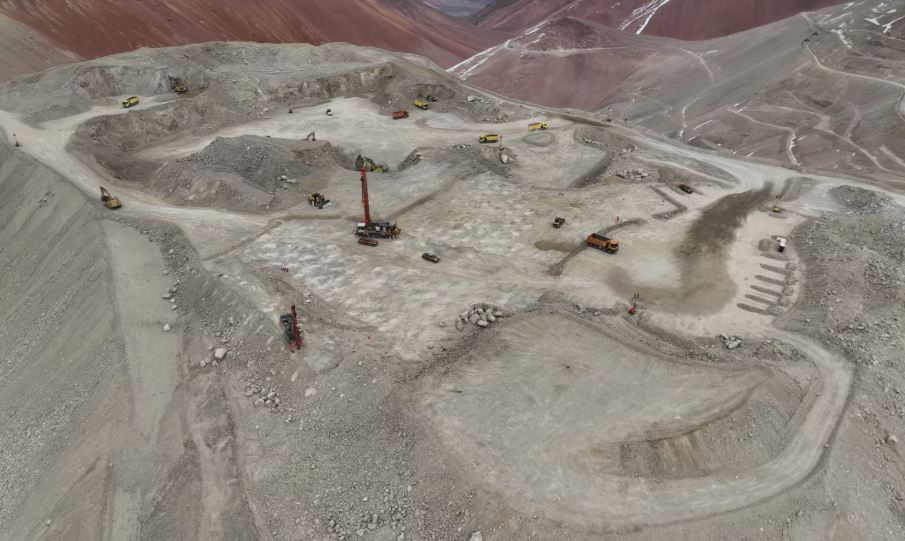
The Phase 2 drill programme is testing mineralization beyond the boundary of the 2025 MRE. The latest completed hole, located approximately 2.4 km northwest of the previous hole, intersected approximately 132 meters (m) of cumulative carnallitite potash seams based on preliminary logging. It is the furthest west of all holes drilled to date, and the evaporite salt sequence remains open in that direction. Core is being prepared for assay at the Saskatchewan Research Council, and drilling is underway at the third Phase 2 hole, approximately 2 km south of the first.
Abasov said results from the Phase 2 holes are to feed the updated MRE, targeted before the end of 2026, which then goes into the DFS. The DFS is targeted for completion around year-end, with publication likely in early 2027. Baseline studies for the ESIA are nearly finished, and the ESIA is targeted for the end of the first quarter of 2027.
Non-Dilutive Runway to Construction
Millennial holds approximately C$20 million in cash. The US International Development Finance Corporation (DFC) has released US$1 million of a US$3 million feasibility commitment, and the remaining US$2 million is matched against Millennial's spending as the DFS advances. Abasov said the company does not need to raise equity before construction funding, and that its spending will fall once drilling and the feasibility work are complete. Management holds approximately 15% of the company.
The DFC has also indicated interest in construction funding, including a proposed amount and structure that has not yet been made public. Millennial plans to share the DFS cost estimates with the DFC before announcing a financing package. Abasov said most of the construction capital is targeted from non-equity sources to limit dilution.
Commercial Offtake Amid Buyout Interest
Millennial is in advanced offtake discussions with large potash buyers in South America and Asia, and with US groups linked to its DFC funding route. Abasov said the company could place 30% to 40% of its product in the US. Over the longer term, it plans to keep about half of its output in Africa and develop the continent as a primary market. He also pointed to offtake interest from India and to project-level interest from China.
The company is running two tracks in parallel: building toward production while fielding acquisition interest. Abasov outlined a hybrid option in which a large potash producer would join as a strategic partner, contributing capital and helping build and operate the project, with a possible buyout later. In one of his earlier potash companies, an Israeli producer took a strategic stake and later acquired the remaining 83% at a 50% premium.
The Investment Thesis for Millennial Potash
- The memorandum of understanding with EXG Investments and the Government of Gabon creates a pathway to dedicated deep-water export capacity of up to 4 million tonnes per year, located approximately 40 kilometers from the Banio resource.
- The proposed port structure has EXG Investments owning and operating the facility, which would move a large infrastructure cost off Millennial's own balance sheet if a binding agreement and port financing are secured.
- A resource base of 648.2 million tonnes Measured, 1.8 billion tonnes Indicated and 3.56 billion tonnes Inferred supports the company's staged ramp from 800,000 tonnes per year toward 4 million tonnes per year.
- Approximately C$20 million in cash and matching support from the US International Development Finance Corporation fund the company through the definitive feasibility study without a planned equity raise.
- Monitor the EXG Investments port feasibility study and the final agreement targeted within roughly two to three months.
- Monitor the updated mineral resource estimate, the definitive feasibility study in early 2027 and the construction financing announcement that is to follow.
The thesis depends on converting a non-binding port framework and a large resource into a funded, permitted project. The next six months of feasibility, permitting and financing milestones will show how much of that conversion is achievable.
Macro Thematic Analysis
The global potash market is concentrated among producers in Russia, Belarus and Canada, which focus their distribution on the largest import markets: the US, Brazil, China and India. Abasov estimated the average global price at around $350/t to $370/t, varying by market. Africa sits outside those primary distribution channels. Abasov put African bulk prices at $400/t to $425/t, a premium he linked to weak distribution networks on the continent while major producers prioritise larger markets.
African demand is small by comparison. Abasov estimated the continent's market at 1.5 Mt to 2 Mt per year, against Brazilian imports of about 14 Mt. He sees most of the market's growth over the next few years coming from Africa, and potential for an African market of 4 Mt to 5 Mt per year, eventually up to 10 Mt, that a coastal Gabonese producer could supply. He expects prices to converge toward global levels as that supply develops.
Location is the second macro factor. Most undeveloped potash deposits are inland, where rail and port access add capital cost and delivery risk. Banio is on the Atlantic coast and, according to Abasov, roughly as far from China and India via the Cape route as Saskatchewan producers are.
TL;DR:
Millennial Potash has signed a non-binding MOU with Abu Dhabi's EXG Investments and Gabon's transport ministry for a deep-water port near Mayumba with capacity of up to 4 million tonnes per year, about 40 km from the Banio resource. Chair Farhad Abasov said EXG would fund, own and operate the port. The release ties third-party port financing to Banio itself being financed. The company is targeting 800,000 tonnes per year at first, then a staged ramp toward 4 million tonnes. An updated resource estimate, a DFS due in early 2027 and an ESIA come next. It holds about C$20 million and plans no equity raise.
FAQs (AI-Generated)
Analyst's Notes





Subscribe to Our Channel





Stay Informed


