




Mogotes Metals’ Albor Intercept Matches Filo del Sol Signature: 9 Things You Need to Know


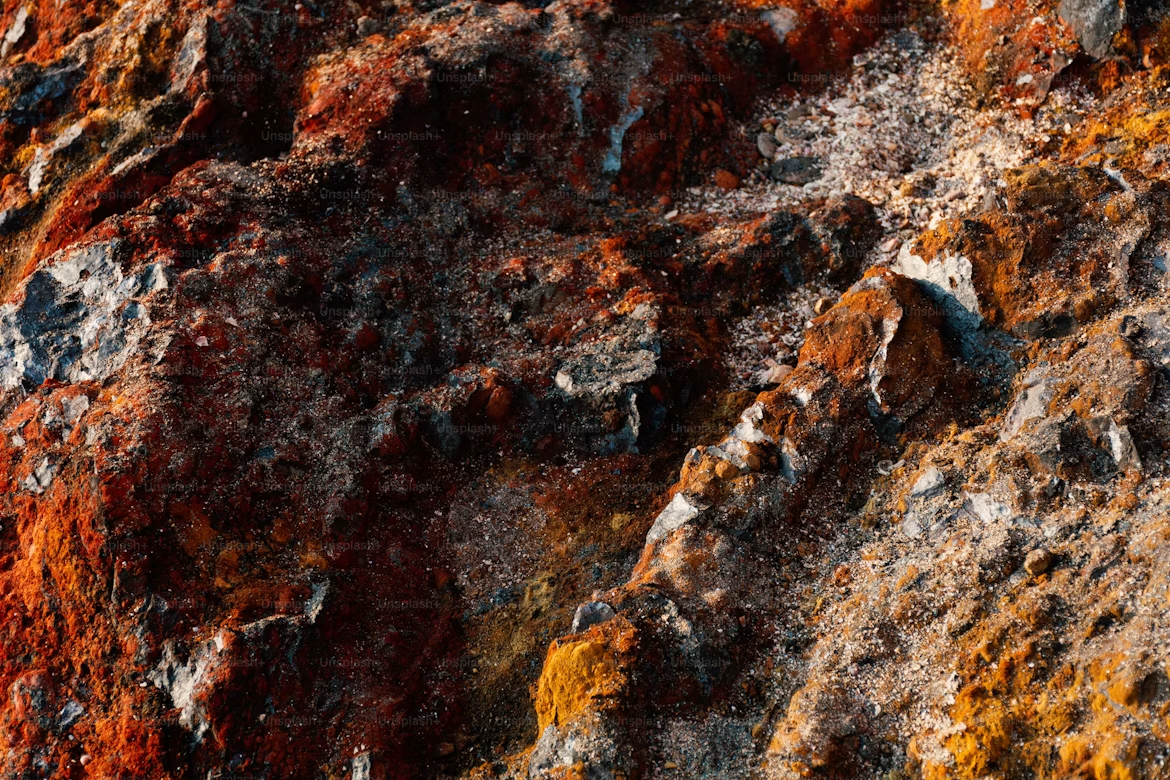
Mogotes Metals' Albor intercept returns high-grade copper, gold, silver, and molybdenum, with a mineral assemblage that matches that of Filo del Sol.
Project Overview
Mogotes Metals (TSXV: MOG | FSE: OY4 | OTCQB: MOGMF) reported in May 2026 a discovery intercept of 86 metres grading 0.7% copper, 0.55 grams per tonne gold, 2.7 grams per tonne silver, and 169 parts per million molybdenum. The result comes from the Albor target on the company's flagship Filo Sur project in Argentina, which adjoins Filo del Sol. The intercept establishes drill-confirmed mineralisation on Mogotes' side of the boundary at grades comparable to those reported across the adjoining project, marking the company's second confirmed discovery of the season and shifting its exploration narrative from a positional argument to a geological one.
1. The Discovery Intercept
The 86 metre interval runs from 108 to 194 metres downhole, within a hole that reached a total depth of 464 metres. The interval closes while still in mineralisation, leaving the lower portion of the hole untested by the reported assay. Arsenic across the interval carries a median of 2 parts per million, generally low for the district, with elevated arsenic confined to narrow structures rather than spread through the broader interval.
2. Higher-Grade Intervals Within the Intercept
Several intervals nested within the broader 86-metre result return grades well above the overall average. A 43 metre section from 111 metres graded 1.1% copper, 0.82 grams per tonne gold, 4.0 grams per tonne silver and 281 parts per million molybdenum, and within that section a 10 metre interval from 133 metres graded 1.4% copper, 1.2 grams per tonne gold, 4.6 grams per tonne silver and 383 parts per million molybdenum. A 5-metre section from 146 metres reached 1.75% copper, 1.1 grams per tonne gold, 3.6 grams per tonne silver, and 393 parts per million molybdenum, and a single 1-metre interval between 125 and 126 metres graded 1.67% copper, 1.62 grams per tonne gold, 1.69 grams per tonne silver, and 685 parts per million molybdenum.
3. Mineral Assemblage & Alteration Style
Mineralisation occurs in breccias, stockwork, and disseminations within an altered porphyry matrix, with pyrite, chalcopyrite, bornite, and covellite identified, along with fine-grained dark copper minerals interpreted as probable digenite. Localised supergene copper minerals, including malachite, brochantite, and probable chalcocite, occur alongside sulphide-rich veins that carry enargite. The porphyry-stage potassic alteration is overprinted by an interpreted hypogene epithermal enrichment stage, with anhydrite megacryst pegmatite veins and elevated molybdenum values cited as indicators of proximity to a porphyry heat source.
Chief Executive Officer and President of Mogotes Metals, Allen Sabet, puts the alteration continuity plainly:
"I do believe, from what indications we've seen, that the alteration continues from the Vicuña district straight through our property. We've always had mineralisation across our property."
4. Comparison to Filo del Sol
Company geologists have identified that the copper mineral spectrum and the presence of silver match the assemblage documented at Filo del Sol. The hypogene epithermal overprint observed at Albor corresponds to the telescoping process described in technical literature on Filo del Sol, and the same low-resistivity magnetotelluric signature that originally directed exploration toward Filo del Sol now extends across Filo Sur. Management characterises the Albor grades as closing the perceived grade gap across the property boundary.
Sabet is direct about closing the grade gap across the boundary:
"It puts to rest the notion that the low-grade stuff lies over there, and over here, where the boundary line is, that's where all the high-grade stuff is being found. That's gone now. We're in the high-grade zone, too. I mean, not the high-grade zone, but we have that potential, let's say."
5. Regional Position Within the Belt
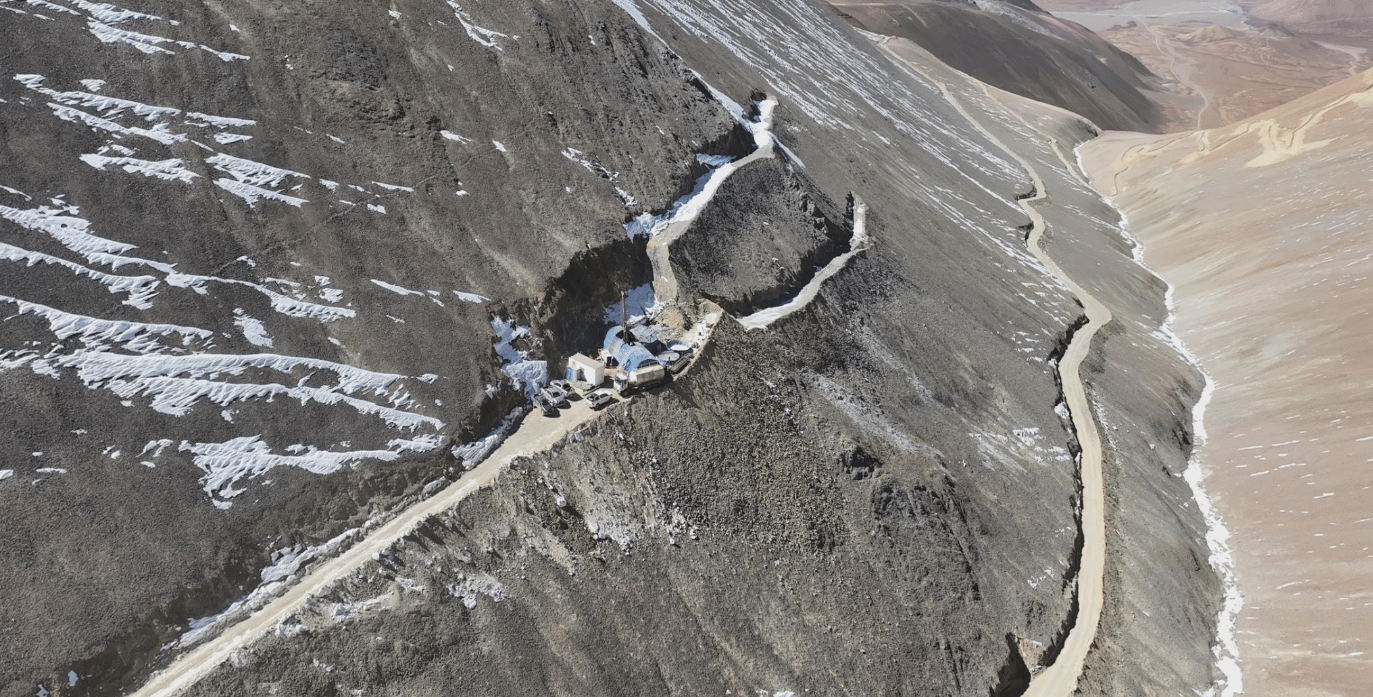
Filo Sur adjoins the southern limit of Filo del Sol directly, sitting on the same north-south-trending Middle Miocene belt, dated to 14 to 16 million years ago, that hosts Filo del Sol, Lunahuasi, and Los Helados. Albor itself sits within a 3.5-kilometre target trend that also includes Meseta, Luz del Sol, and Cumbre, all aligned within the regional Macho Muerto Fault Zone. Filo del Sol's preliminary economic assessment pit reaches its southern boundary, with mineralisation reported open to the south toward the Mogotes ground, while Meseta sits 1 kilometre south of Filo del Sol, and Luz del Sol sits 2.5 kilometres south of the boundary.
6. Geophysical Anomaly Validation
The discovery intercept confirms that the magnetotelluric and induced polarisation resistivity and chargeability anomaly models built ahead of drilling correspond to concealed porphyry and epithermal mineralisation rather than barren ground. The multistage alteration and varied mineral assemblage observed in the hole indicate a larger copper-gold-silver-molybdenum system extending beyond a single mineralised pocket. Leadership frames the result as the product of a four-year, sequential process, moving from early-stage targeting through to drill confirmation.
Sabet frames the four-year sequence in his own words, step by step:
"Four years in, we started with largely untested, unsampled ground and no electrical geophysics. We went and mapped and sampled, and it lit up. We did the electrical geophysics and got great big anomalies. We increased the land package, and then we drilled. We've worked it systematically and methodically through the stages of exploration."
7. Corporate-Level De-Risking
Mogotes maintains active projects in Kazakhstan, where it holds a 3-year option to acquire 100% of the Beskauga deposit, and in Montana, where it holds a 5-year option to enter into a joint venture for up to 60% of the Copper Cliffs project, alongside its Argentine exploration programme. Both projects fall outside the short Andean drilling season, which constrains Filo Sur activity to a defined annual window. The arrangement provides the company with a source of news flow during periods when Argentine fieldwork is not active, reducing reliance on a single asset and a single regional calendar for investor-relevant developments.
8. Remaining Assay Results
At the time of the discovery release, assays for the remaining 270 metres of the hole, covering the interval from 194 to 464 metres downhole, were still pending. The broader 2025 to 2026 drill campaign had been completed, with a further 3,681 metres of core, including holes on the Chilean side of the property, still to be processed and reported. The lower portion of the discovery hole and the bulk of the season's core, therefore, represented an open dependency for the read-through established by the reported interval.
9. Follow-Up Drill Programme Design
The company is designing a follow-up drill programme based on the current findings at Albor, with the next field season expected to commence in November 2026. The design process points to continued testing of the target trend that includes Albor, Meseta, Luz del Sol, and Cumbre, building on the geophysical and drill-confirmed targeting sequence already established at Filo Sur.
Key Takeaway for Investors
- The discovery intercept confirms high-grade copper, gold, silver, and molybdenum mineralisation within the Filo Sur target area on Mogotes' property.
- Several intervals nested within the broader intercept return grades well above the overall average, including sections exceeding 1.5% copper.
- The mineral assemblage and alteration style documented at Albor mirror characteristics reported at Filo del Sol, spanning the copper mineral spectrum, the presence of silver, and an epithermal overprint.
- Albor lies within a multi-kilometre-long target trend along the same structural corridor and regional belt that hosts Filo del Sol.
- The drill results validate earlier geophysical anomaly models and indicate a larger mineralised system extending across the property boundary, rather than an isolated discovery.
- The company maintains active projects in Kazakhstan and Montana alongside its Argentine drill programme, providing news flow outside the Andean drilling season.
Bottom Line
The mineral assemblage, alteration overprint, and magnetotelluric signature documented at Albor correspond directly to characteristics reported at Filo del Sol, and the drill result confirms that geophysical anomaly models built ahead of drilling correspond to a concealed, multistage copper-gold-silver-molybdenum system rather than an isolated zone. Together, the two findings convert Mogotes' adjacency to Filo del Sol from a positional argument into a geological one, with high-grade mineralisation now drill-confirmed on Mogotes' side of the boundary and showing characteristics that parallel those reported at Filo del Sol.
Analyst's Notes





Subscribe to Our Channel







.jpg)
Stay Informed


