




Mogotes Metals' Albor Intercept Shifts the Filo Sur Conversation From Prospectivity to Discovery


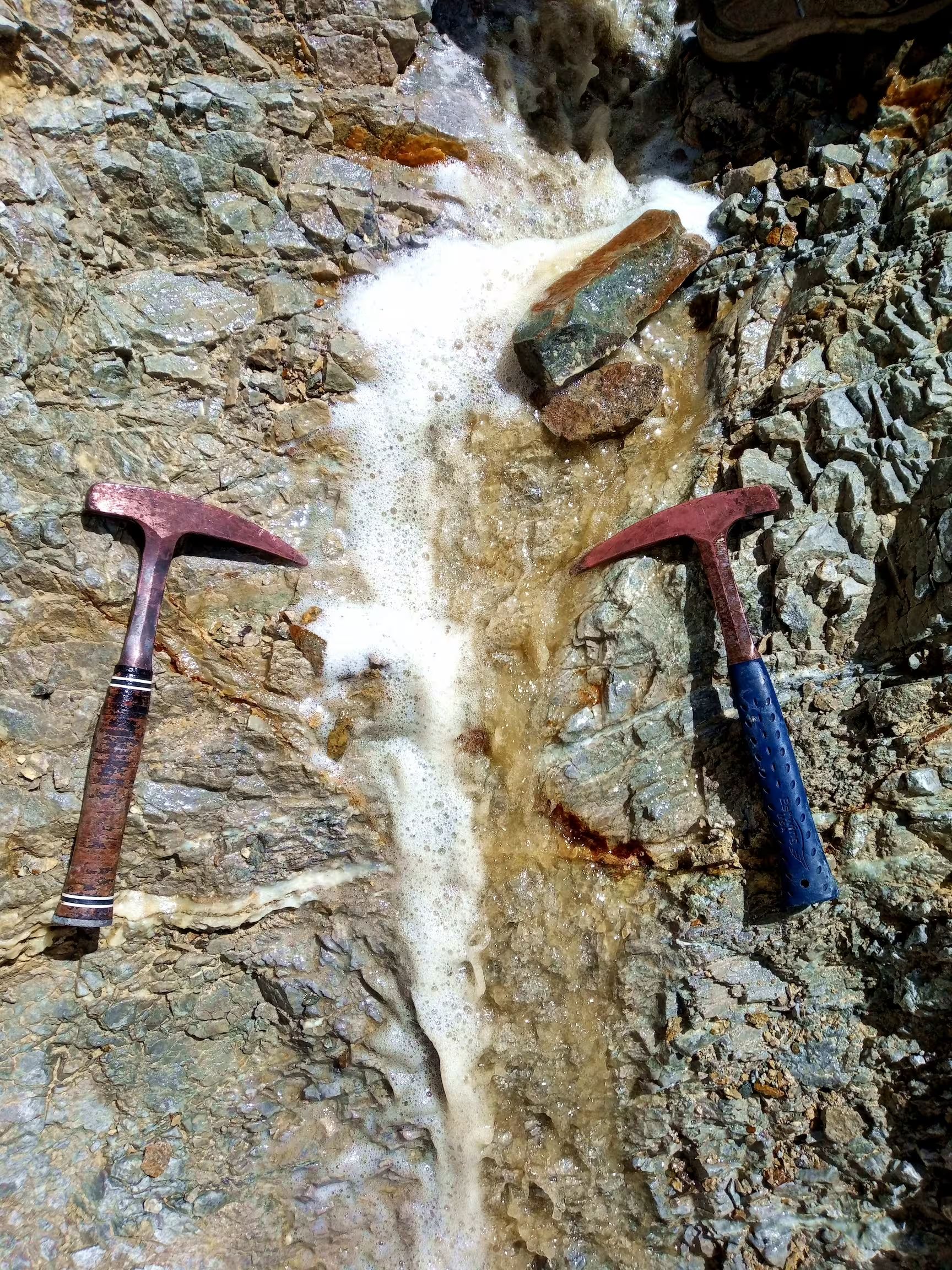
Mogotes’ Albor discovery shifts Filo Sur from exploration concept to emerging copper-gold system, with 2 discoveries in one season and major assays pending.
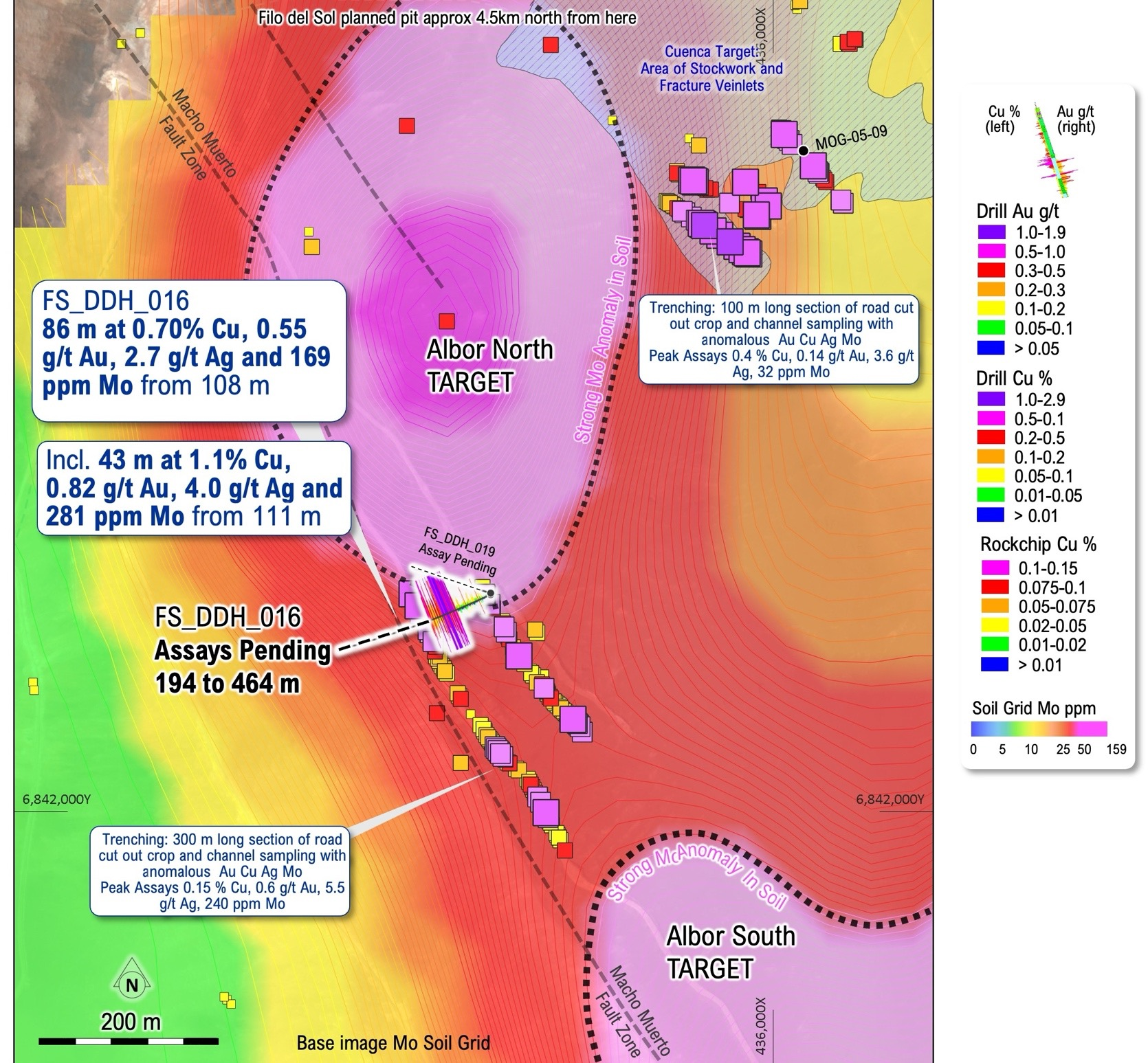
- The Albor target returned 86 metres at 0.7% copper, 0.55 grams per tonne (g/t) gold, 2.7 g/t silver and 169 parts per million (ppm) molybdenum from 108 metres depth; the reported interval ends in mineralisation with assays pending for the remaining 270 metres of a 464 metre hole.
- A higher-grade sub-interval of 43 metres at 1.1% copper, 0.82 g/t gold, 4.0 g/t silver and 281 ppm molybdenum from 111 metres displays multiple stages of mineralisation consistent with features documented at the adjacent Filo del Sol deposit.
- Albor is the 2nd copper, gold, silver and molybdenum discovery reported by Mogotes in the 2025 to 2026 inaugural drilling season at Filo Sur.
- The Albor target sits within a Miocene age target trend measuring 3.5 kilometres, comprising the Meseta, Luz del Sol, Cumbre, and Albor targets, aligned along the regional Macho Muerto Fault Zone.
- With C$40.1 million in cash and equivalents as of June 5, 2026, Mogotes is funded for a follow-up drill campaign, while 3,681 metres from the current season remains unreported.
What Has Happened
Mogotes Metals Inc. (TSXV: MOG | FSE: OY4 | OTCQB: MOGMF) moved the Filo Sur narrative into new territory on May 14, 2026, reporting partial assay results confirming a shallow, high-grade copper, gold, silver and molybdenum system at the Albor target in Argentina's Vicuña district. The intercept begins at 108 metres depth. The company filed a material disclosure on an incomplete result because the grades, multiples above anything previously reported at Filo Sur, met the materiality threshold before the hole was fully assayed. The announcement followed a prior discovery at the southern end of the Filo Sur property earlier in the same season, placing Mogotes in the unusual position of having identified 2 previously unknown mineralised systems in a single inaugural drill campaign.
What the Grades Reveal
The headline intercept of 86 metres at 0.7% copper, 0.55 grams per tonne (g/t) gold, 2.7 g/t silver and 169 parts per million (ppm) molybdenum starting at 108 metres depth carries investment significance on 2 counts: the grade is materially higher than Mogotes' prior results at the project, and the shallow starting depth reduces the strip ratio exposure that tends to weigh on early-stage porphyry economics. The higher-grade core of 43 metres at 1.1% copper, 0.82 g/t gold, 4.0 g/t silver and 281 ppm molybdenum from 111 metres, with peak intercepts reaching 10 metres at 1.4% copper, 1.2 g/t gold, 4.6 g/t silver and 383 ppm molybdenum from 133 metres and 5 metres at 1.75% copper, 1.1 g/t gold, 3.6 g/t silver and 393 ppm molybdenum from 146 metres, establishes that grades are concentrated within a defined breccia-hosted corridor rather than uniformly distributed.
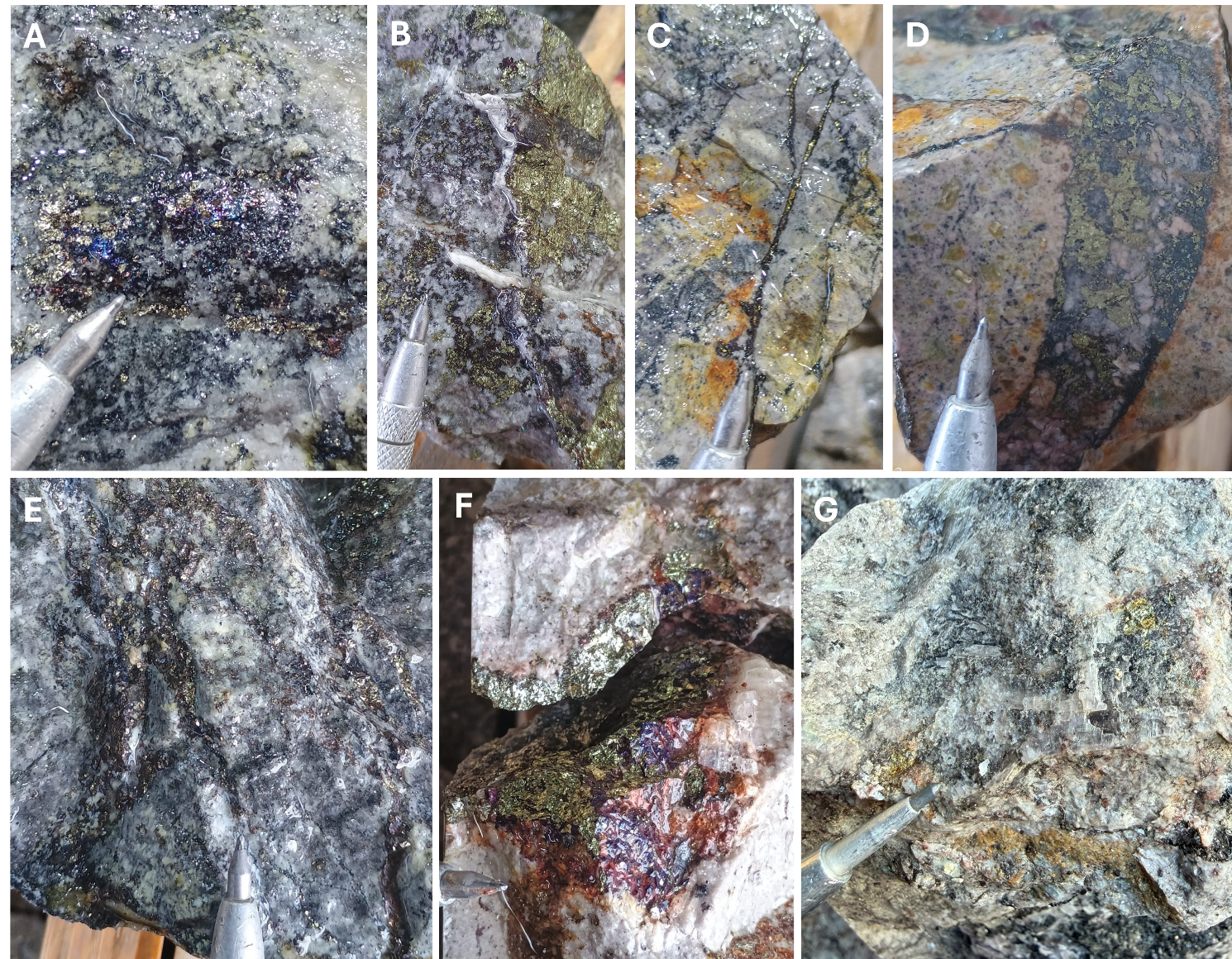
The presence of copper minerals across multiple generations, including chalcopyrite and bornite representing an earlier porphyry stage, and covellite and probable digenite interpreted as a hypogene epithermal overprint, is the detail most likely to draw geological attention. Multistage mineralisation of this kind is what elevated Filo del Sol from a standard porphyry to a system of exceptional grade density, as documented in a 2023 Economic Geology paper by Perelló, Sillitoe and colleagues that Mogotes explicitly referenced in the release. The company also notes generally low arsenic levels within the Albor interval, with a median of 2 ppm across the reported section.
President and Chief Executive Officer of Mogotes Metals, Allen Sabet, contextualised the mineralogy directly in a recent interview, drawing the parallel that investors are likely to weigh most carefully:
"You're seeing that there's a hypogene epithermal overprint. So, multiple phases of mineralisation. That's also what enriched the ground over at Filo."
A Second Discovery Changes the Statistical Argument
The press release confirms Albor as the 2nd copper, gold, silver and molybdenum discovery by Mogotes in its inaugural drilling season at Filo Sur. A single discovery in an inaugural drill season can be attributed to geological extrapolation from a well-mapped neighbour. 2 discoveries at opposite ends of the same property shifts the argument to one about system scale. The earlier discovery sits at the southern end of the Filo Sur property, while Albor, the subject of the May 14, 2026 release, sits further north. The press release identifies Albor as part of a Miocene age target trend measuring 3.5 kilometres, comprising the Meseta, Luz del Sol, Cumbre, and Albor targets, aligned along the Macho Muerto Fault Zone, which forms part of the regional structural belt hosting the Vicuña district's principal deposits.
Sabet described the significance of seeing mineralisation bookend the property in the same season, framing it as confirmation of a district-scale trend rather than isolated occurrences:
"From the southern end of our property, new mineralised discovery all the way through to the Lunahuasi in the north, and actually indeed for many kilometres north and south of here. So, there's no magical exception. We're in a mineralised district."
Whether the 2 discoveries are expressions of a single connected system or 2 separate mineralised centres is a question the current data cannot resolve, and it is also the most consequential valuation question Mogotes faces heading into its next field season.
Scale, Spacing & What Remains Open
Within that footprint, the discovery hole is the first modern diamond drill hole, alongside only a single historical reverse circulation (RC) hole, 300 metres deep, at one corner of the plan. The press release identifies 2 additional target zones at Albor that had not been drilled prior to this campaign. The system is also open at depth, with assays pending for the remaining 270 metres of the 464 metre hole, which ended in mineralisation.
The company deployed 4 rigs during the season, completing 6,207 metres in total, of which 2,652 metres have been reported to date. The remaining 3,681 metres, primarily from Chile holes subject to longer assay turnaround times, will be released in the coming months, meaning the current Albor intercept represents a single data point within a much larger unreported dataset.
What to Watch Next
The most immediate milestone is assay completion for the lower 270 metres of the discovery hole, which ended in mineralisation. What lies in that portion, whether grades persist, increase, or taper, will either validate or complicate the interpretation that Albor is proximal to a major porphyry centre. Following that, results from the remaining 3,681 metres of the season's programme, particularly the Chile holes, will test whether the district-level trend holds across the full property extent.
With approximately C$40.1 million in cash and equivalents as of June 5, 2026, Mogotes can fund a follow-up drill campaign without an immediate return to equity markets. The company is targeting a return to field work in November, at which point a redesigned programme informed by the full campaign dataset will narrow the focus from approximately 10 district-wide targets to the zones most likely to host the system's core. Investors should also monitor whether geophysical targeting and structural modelling advance ahead of the November field return, as placement quality in the next campaign will depend heavily on that interpretive work.
FAQs (AI-Generated)
Analyst's Notes





Subscribe to Our Channel








.png)


Stay Informed


