Nechí's Fully Drilled Reserves & Gravity-Only Method Give Mineros a Base That Growth Can Build On


Mineros' Nechí operation pairs about 1.24 Moz of reserves and gravity-only dredging with a targeted 30% to 40% lift in Colombian gold production.
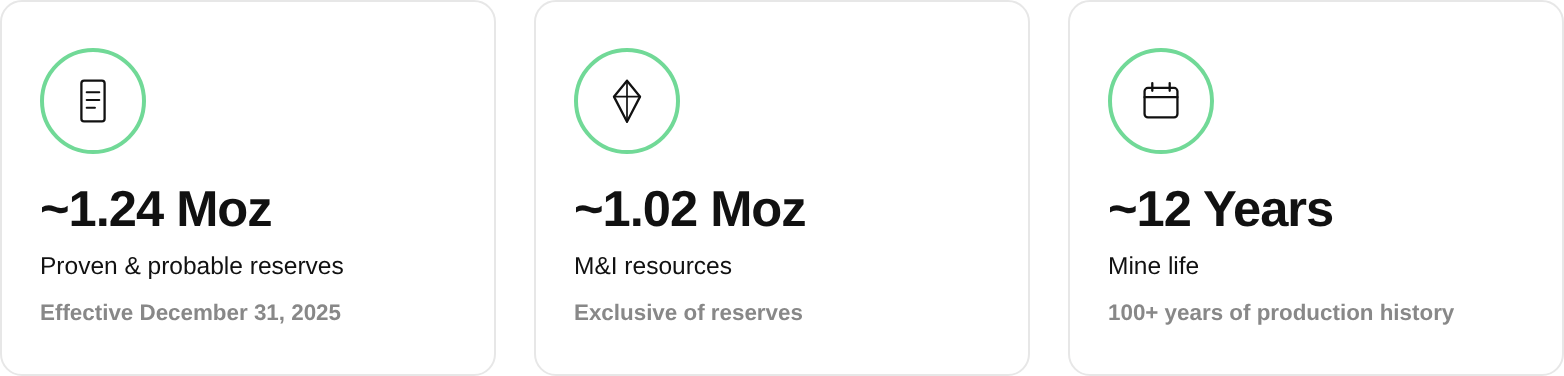
- Nechí has about 1.24 million ounces of proven and probable reserves, or about 12 years of mine life.
- The operation recovers gold by gravity with no chemical processing and runs on the company's own hydroelectric plants.
- Nechí production reached 42,568 oz in the first half of 2026, with full-year Nechí guidance of 87,000 to 93,000 oz.
- Mineros is targeting a 30% to 40% lift in Colombian output, toward 120,000 to 130,000 oz, through growth applications to the government.
- The Colombian lift is separate from the Porvenir project in Nicaragua.
Mineros S.A. (TSX: MSA | BVC: MINEROS | OTCQX: MNSAF) runs its Nechí alluvial operation in Colombia, which has produced gold continuously for more than 100 years, using closed-pond dredging beside the river, gravity recovery with no chemicals, and power from the company's own hydroelectric plants. The operation holds about 1.24 million ounces (Moz) of proven and probable (P&P) reserves, equal to about 12 years of mine life, and a targeted 30% to 40% production lift now sits on top of that base.
Nechí Reserves & Production Base
Nechí reports about 1.24 Moz of P&P reserves and about 1.02 Moz of measured and indicated (M&I) resources, effective December 31, 2025. M&I resources are exclusive of reserves. The resource is fully drilled and compliant with NI 43-101.
Production reached 42,568 oz in the first half of 2026, compared with 44,102 oz in the first half of 2025. Full-year 2026 guidance for Nechí is 87,000 to 93,000 oz.
Closed-Pond Dredging & Gravity Recovery
The mining method explains the predictability. Gold is recovered by gravity with no chemical processing, Mineros' own hydroelectric plants supply the power, and the company restores 7 to 10 hectares for every hectare disturbed.
Daniel Henao, President and Chief Executive Officer of Mineros, says the operation is straightforward once investors see how it works. Henao explained the setup:
"It's an open pit operation that is done close to a river, not in the river. It's predictable, and instead of trucking the ore out, we're simply pumping it."
Henao added that the operation has moved north about 30 kilometers in 100 years.
Colombian Growth Plan
Mineros is deploying about $25 million this year to expand processing capacity in Nicaragua, part of a program that also covers higher recoveries, better mine plans and mining methods, and tighter dilution control. Henao outlined the Colombian plan:
"We're working now on a growth strategy for a Colombian asset as well, doing something similar to what we're doing in Nicaragua, maybe 30% to 40% extra production."
Nechí has produced 80,000 to 90,000 oz in recent years, and Mineros sees room for higher production. The company intends to begin submitting growth applications to the government, aiming to take Colombian output toward 120,000 to 130,000 oz.
Regional Context & Investor Case
Henao cites positive developments in Colombia, including a new administration he describes as pro-investment and pro-development. Nechí itself has produced gold continuously for more than 100 years.
Mineros' other producing operation, Hemco in Nicaragua, has its own growth path through the Porvenir project. The Nechí lift is a separate lever, so the Colombian plan moves forward on its own timeline.
For investors, the case combines visibility with optionality. The reserve base and mine life give Nechí's production a long runway, and gravity recovery, company-owned hydropower and a fully drilled resource keep the operating profile easy to model. The targeted 30% to 40% lift adds growth that rests on government growth applications at Nechí rather than on Porvenir, so Mineros has more than one path to higher ounces.
FAQs (AI-Generated)
Analyst's Notes





Subscribe to Our Channel




Stay Informed