




Canada Nickel's $2.5 Billion Funding Plan Turns Government Into the Equity Partner


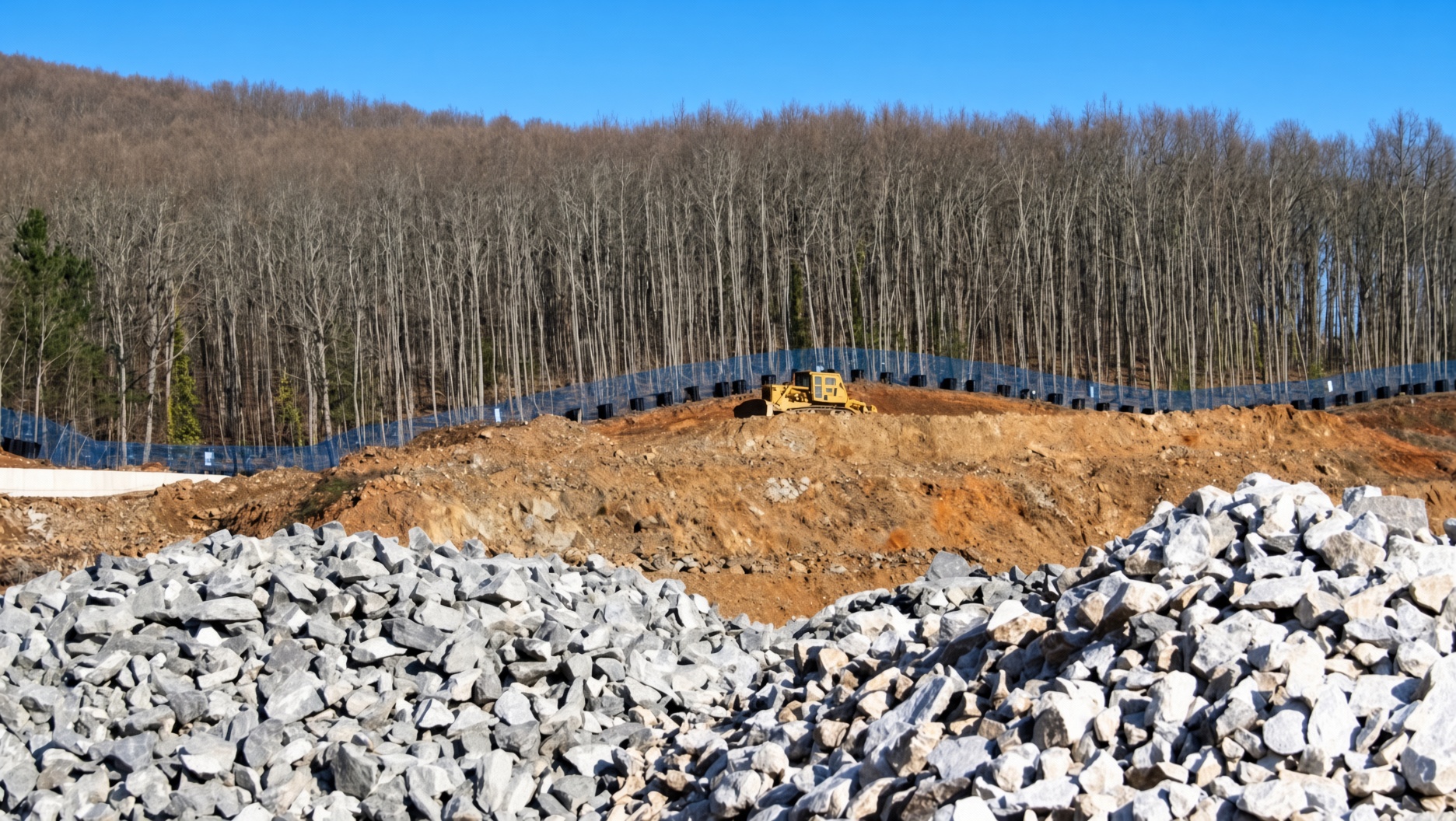
Canada Nickel’s Crawford project secures federal approval as a US$2.5 billion funding plan blends government tax credits, EDC debt, and strategic capital.
- A federal Decision Statement under the Impact Assessment Act (IAA) makes Canada Nickel Company Inc. the first mining project to complete Canada's federal environmental review process from start to finish since the legislation took effect in 2019.
- The company's targeted US$2.5 billion Crawford Nickel-Cobalt Sulfide Project funding plan splits into a US$1.0 billion equity component, including US$600 million in refundable federal tax credits, and US$1.5 billion in debt anchored by a letter of intent from Export Development Canada (EDC).
- A mandate with SB1 Markets is structured to advance those tax credits through a bridge facility, letting Canada Nickel draw on post-construction credits before the project is built.
- Canada Nickel is 1 of 5 mining projects selected for Canada's federal Major Projects Office (MPO) and 1 of 3 under Ontario's One Project, One Process (1P1P) framework, the earliest-stage project in the federal group.
- Chief Executive Officer and Director Mark Selby estimates the Crawford project alone would contribute $70 billion to gross domestic product (GDP), a figure management cites as driving the project's federal and provincial priority status.
Canada Nickel Company Inc. (TSXV: CNC | OTCQX: CNIKF) received a federal Decision Statement for its Crawford Nickel-Cobalt Sulfide Project in Timmins, Ontario, the primary yes-or-no approval under Canada's Impact Assessment Act (IAA). The company closed a C$21.0 million non-brokered private placement on August 28, 2026, providing near-term capital to fund permitting and engineering work toward a construction decision targeted for mid-2027. Behind both milestones is the funding architecture Canada Nickel needs to build the underlying US$3,543 million life-of-mine project, and specifically who is supplying the money.
What the Federal Decision Statement Actually Unlocks
The Decision Statement is the primary approval under the IAA, the 2019 federal legislation replacing the prior 2012 framework. Canada Nickel is the first mining project to complete that review process from initial application to final decision since the IAA came into force, a gap that reflects how few new mining projects have entered and exited the federal pipeline over that period.
For strategic investors, it is evidence the project is advancing relative to competing developments still earlier in the permitting queue. For a segment of institutional investors, it removes what has functioned as an open-ended timeline risk specific to Canadian permitting. For regulators, export credit agencies and government funding bodies still reviewing the project, the Decision Statement signals that Crawford has cleared its principal environmental hurdle and is moving toward construction.
Supplementary provincial and federal permits remain outstanding, but management characterizes those as technical filings tied to meeting defined requirements rather than discretionary approvals carrying comparable uncertainty.
Inside the $2.5 Billion Funding Plan: Equity, Tax Credits & Debt
Canada Nickel's own investor materials lay out a targeted US$2.5 billion funding plan for the Crawford Project, split between a US$1.0 billion equity component and US$1.5 billion in debt. The equity side is not conventional share issuance. Of the US$1.0 billion, US$600 million is expected to come from refundable federal tax credits under Canada's Clean Technology Manufacturing and Carbon Capture, Utilization and Storage (CCUS) programs. A further US$100 million is tied to Samsung SDI's existing offtake-linked capital commitment, and Canada Nickel is working with Scotiabank and Deutsche Bank on a process that could deliver an additional US$100 million to US$200 million, either through the sale of a further 10% to 20% project interest or a structured offtake financing.
The debt side centers on a letter of intent from EDC for US$500 million, with Canada Nickel now working toward a term sheet and, in parallel, discussions with a range of global export credit agencies it has engaged for approximately 4 years. The company has also signed a mandate with SB1 Markets, a Scandinavian bank active in resource-sector debt financing, for a bridge facility structured specifically to let Canada Nickel draw on its refundable tax credits, which are only paid out after construction spending occurs, ahead of that spending taking place.
Chief Executive Officer and Director of Canada Nickel, Mark Selby, on how much of the equity requirement government capital already covers:
“This is one of the things we haven't seen clearly yet: investors don't understand how much government capital is available. In that billion dollars of equity we need to build the project, we have 600 million dollars of refundable tax credits.”
This funding plan sits on top of Front End Engineering and Design (FEED) results that improved on the 2023 Bankable Feasibility Study (BFS): after-tax net present value at an 8% discount rate (NPV8%) rose from US$2.5 billion to US$2.8 billion, and after-tax internal rate of return (IRR) improved from 17.1% to 17.6%, while initial capital cost increased only 5%, from approximately US$1.9 billion to approximately US$2.0 billion.
Government Capital Replaces the Historic Trading-House Partner
The funding structure Canada Nickel is assembling breaks from the model that financed most single-asset junior developers through the 1990s and 2000s, when a foreign trading house partner would typically acquire 20% to 30% of a project at about a 0.8 to 0.9 multiple, supplying both the junior's equity requirement and access to low-cost debt. That role has been largely vacant in junior mining finance since, and Canada Nickel's targeted capital stack is meant to fill it with government tax credits, export credit agency debt, and offtake-linked capital instead.
Selby, on the scale of government involvement relative to prior financing cycles:
“This is a once-in-a-generation opportunity where governments are providing significant, effectively low-cost leverage to get these projects built. You would have had to go back to the 1950s and '60s to see similar government efforts.”
The gap this capital is filling shows up in how little of the market's recent equity financing has gone to nickel. Canada Nickel's bankers found that over a recent two-year period, only 1% of Toronto Stock Exchange (TSX) equity raises above US$10 million went to a commodity other than copper, gold, silver or lithium. Separately, Selby noted that of the approximately $300 million to $400 million raised across the sector over a four-year period, Canada Nickel itself raised 38% between 2020 and 2025. That concentration suggests nickel-focused developers have been financed by a narrow pool of specialist capital rather than broad market participation, a pattern management expects to shift as government investment expands into additional critical minerals, following the re-rating seen in rare earth elements after US government investment last summer.
Federal & Provincial Fast-Track Status
Selection into government fast-track frameworks has been selective rather than routine. Canada Nickel is 1 of 5 mining projects designated under the federal Major Projects Office (MPO), and management describes Crawford as the earliest-stage project among that group, with the other 4, by Selby's account, already carrying completed feasibility studies (FS) and permits at the time of their selection. At the provincial level, Crawford is 1 of 3 projects under Ontario's One Project, One Process (1P1P) framework, alongside Frontier Lithium's PAK project and Kinross's Great Bear gold project in northwest Ontario.
Selby ties that selectivity to Crawford's projected economic footprint, estimating the Crawford Project alone would contribute $70 billion to gross domestic product (GDP), alongside the company's engagement with local communities and First Nations groups and the project's carbon capture component. Those factors, in his account, informed the priority status Crawford has received relative to other mining projects still working through the same federal and provincial systems.
The Investment Thesis for Canada Nickel
- Canada Nickel has cleared the principal federal environmental approval under Canada's Impact Assessment Act, removing a permitting timeline risk that has historically limited institutional participation in the stock.
- The company's targeted funding plan for the Crawford Nickel-Cobalt Sulfide Project sources US$600 million of its US$1.0 billion equity requirement from refundable government tax credits, supplemented by an existing offtake-linked capital commitment, rather than relying solely on conventional share issuance.
- A signed mandate with a specialist financing bank is structured specifically to accelerate access to tax credits that would otherwise only become available after construction spending occurs.
- Selection as 1 of 5 federal Major Projects Office mining projects and 1 of 3 Ontario One Project, One Process projects places Canada Nickel among a small group positioned to receive government capital as funding programs begin active deployment.
- Front End Engineering and Design results improved projected project value and returns relative to the 2023 Bankable Feasibility Study while limiting the increase in initial capital cost to 5%.
- The Timmins Nickel District provides a multi-project pipeline behind Crawford, with management indicating several properties in the district may ultimately host larger deposits than Crawford itself.
Canada Nickel's Decision Statement is a permitting milestone, but its practical significance for investors lies in what it unlocks: access to a funding model in which government tax credits, export credit agency debt, and strategic offtake capital form the core components of a targeted US$2.5 billion project financing plan, a structure the company argues has no recent precedent outside of government-scale industrial policy efforts.
TL;DR
Canada Nickel's federal Decision Statement clears its main permitting hurdle for the Crawford Nickel-Cobalt Sulfide Project, but the more consequential development is the shape of its targeted US$2.5 billion funding plan, in which government tax credits, export credit debt, and offtake-linked capital form the core of the project's financing structure, positioned by management as a modern substitute for the foreign trading-house equity partnerships that funded prior generations of junior mining developers.
FAQs (AI-Generated)
Analyst's Notes





Subscribe to Our Channel



.png)
.png)








Stay Informed


