




Saudi Export Outage Outweighs US Crude Build, Keeping Brent Above $100


Refined-fuel shortages pressure transport margins but favor producers with stable export volumes, while repair timing guides position size.
- Brent fell $1.22 to $107.53 a barrel on September 16, after American Petroleum Institute (API) data showed a 7.1 million-barrel US crude build versus a forecast 1.6 million-barrel draw.
- The September 11 drone attack shut Saudi Arabia’s East-West pipeline and suspended Red Sea loadings, while Strait of Hormuz transits fell to 4 against a 10-day average of 18, supporting crude prices despite the US stock build.
- Repair estimates range from days to months, keeping crude’s supply premium sensitive to restart news.
- Without a published damage inspection, restart timing remains uncertain, making position size the clearest way to limit downside while retaining exposure to the supply premium.
- A confirmed restart of Red Sea loadings would remove the outage premium, while Brent above $109 and West Texas Intermediate (WTI) above $106 would confirm that supply constraints still support prices.
US Crude Build Pulls Prices Lower as Fuel Shortages Hold Brent Near $108
Brent futures fell $1.22 to $107.53 a barrel, while US WTI fell $1.64, or 1.55%, to $104.19. Both benchmarks had gained more than $3 to their highest levels since May 19 before API data showing a 7.1 million-barrel US crude build instead of a forecast 1.6 million-barrel draw triggered the pullback.
European diesel futures reached a record high, while US Energy Information Administration (EIA) data placed US distillate stocks 13% below their five-year average, confirming that the shortage is concentrated in refined fuels. Regional crude builds do not replace missing diesel and jet fuel, supporting fuel prices despite higher crude inventories.
Saudi Pipeline Attack & Low Hormuz Traffic Restrict Gulf Oil Exports
An attack by Yemen’s Iran-aligned Houthis forced Saudi Arabia to shut its East-West pipeline and suspend Yanbu loadings, temporarily closing its Red Sea export route. Saudi Arabia cut European shipments and offered Asian refiners crude through offshore tanker transfers near Sohar, Oman, preserving some Asian supply while reducing Saudi volumes to Europe.
Strait of Hormuz transits fell to 4 from 7 a day earlier, versus a 10-day average of 18. The waterway carried one-fifth of global oil and liquefied natural gas supply before the US-Israeli war on Iran, so simultaneous disruption across Hormuz and the Red Sea restricts export capacity and supports prices.
Repair Estimates From Days to Months Sustain Oil’s Outage Premium
US Energy Secretary Chris Wright estimates the closure will last days, while Andy Lipow, President of Lipow Oil Associates, says online images indicate repairs could take months, keeping the outage premium sensitive to restart confirmation.
$5.97 Diesel Compresses Freight & Airline Margins
EIA data show US on-highway diesel at $5.967 per gallon and Gulf Coast jet fuel at $4.017, nearly double its $2.031 January average. Freight operators and airlines whose surcharges or fares reset less often than weekly absorb the increase through lower margins.
Saudi Arabia rerouted Asian cargoes through Sohar but cut European shipments, showing that alternative routes preserve only part of export volumes. Producers outside Hormuz and the Red Sea can capture higher prices on stable volumes, while chokepoint-dependent producers face both price gains and shipment losses.
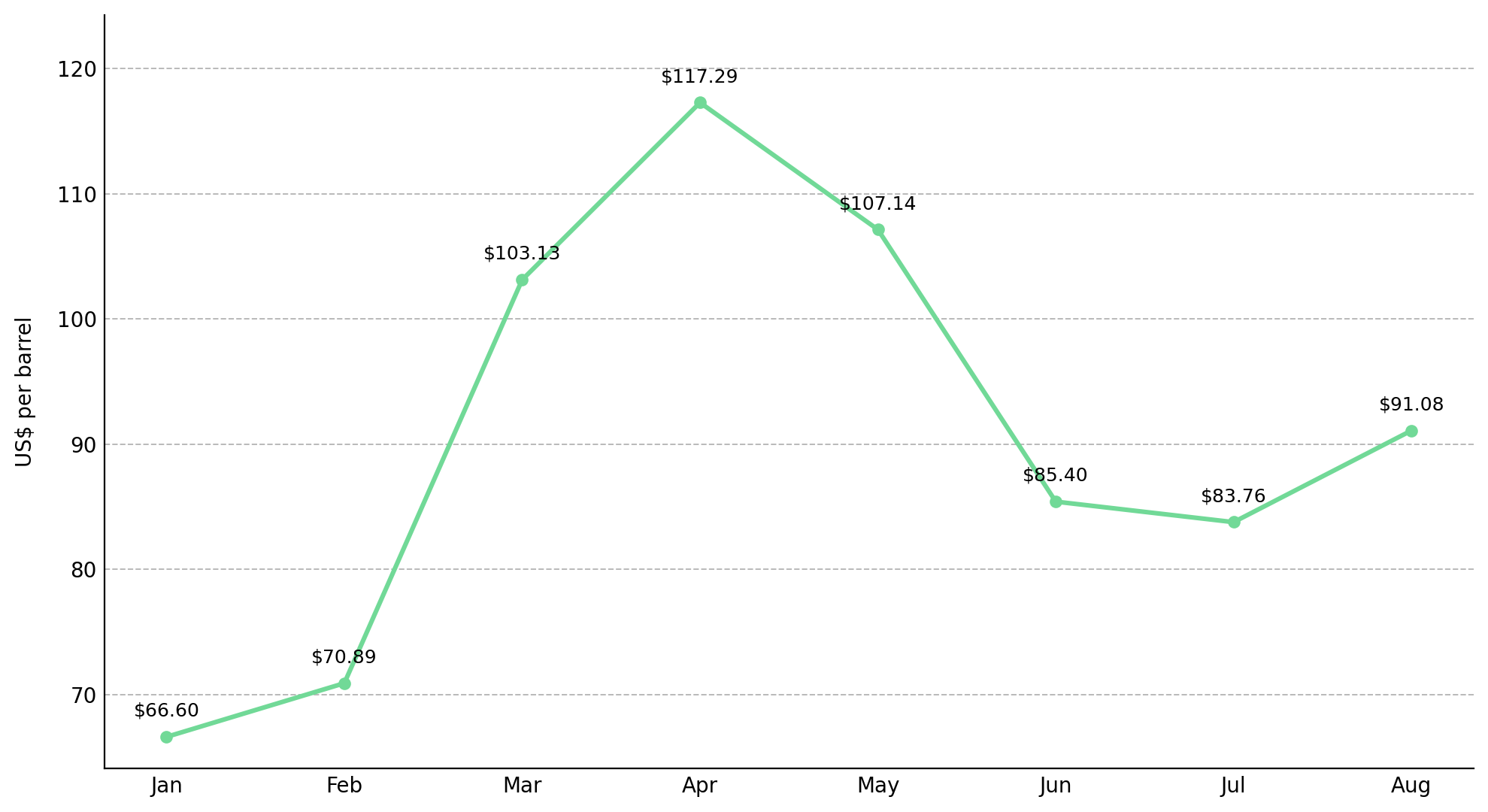
EIA data show Brent’s monthly average fell from $117.29 in April to $83.76 in July, illustrating how quickly a restart could erase the outage premium, while futures-based funds also incur roll costs. Sizing positions for a return to the $91.08 August average preserves exposure to further gains while limiting downside from a faster restart.
What Tests Brent’s $109 Bullish Case
The selloff reflected the US crude build, but the main supply constraint remains the disruption of two export routes. While Yanbu loadings remain suspended and Hormuz transits stay below their 10-day average of 18, producers outside both chokepoints can capture higher prices without shipment losses.
A confirmed restart of East-West pipeline flows and Yanbu loadings would weaken the bullish case by removing the outage premium, lowering fuel costs, and reducing the pricing advantage of producers outside the chokepoints. Brent’s failure to reclaim $109 as Hormuz traffic recovers would confirm the reversal.
The EIA Weekly Petroleum Status Report provides a weekly test, as distillate stocks remaining near 13% below the five-year average would confirm the refined-fuel shortage. A prolonged disruption would keep fuel costs elevated, adding inflation pressure that could keep interest rates higher for longer. Export route access should therefore be included in producer valuations because it determines whether higher prices translate into stable sales volumes.
Analyst's Notes





Subscribe to Our Channel






Stay Informed


